Showing posts with label BBC. Show all posts

Monday, 13 March 2023

Impartiality? Sure. As long as you’re impartial for us

It’s with some delight that I see Gary Lineker, ex-leading England footballer, returning to the BBC’s Match of the Day programme, on which he was an outstanding presenter and commentator.

Well, I say outstanding. To be honest, it’s been decades since I’ve watched Match of the Day. But people who know about these things tell me he really is outstanding.

Small-boat immigrants in the Channel
He was suspended because he put some tweets up about the UK government’s plans to stop illegal immigrants travelling across the English Channel in small boats. Those plans involve keeping them in centres that have yet to be built before deporting them back to the countries they came from, or to a range of third countries, that have yet to say they’ll take any. Except for Rwanda. It’s prepared to take 200.

For the record, more than 40,000 such immigrants arrived in Britain last year. If I've got the arithmetic right, Rwanda’s generosity represents around 0.5% of the total.

Gary Lineker
Lineker’s tweets compared the government’s language over its proposals to that of Nazi Germany in the 1930s. Well, perhaps that wasn’t entirely wise. There’s a good principle, known as Godwin’s law, that says that the longer an online debate goes on, the closer it gets to a comparison with the Nazis or Adolf Hitler. An often-quoted spin-off rule is that such a comparison should end the debate, and the person who has made it has lost the argument.

Still, the principle behind Lineker’s comment seems entirely justified. Perhaps rather than compare the government’s thinking to Hitler’s, we could compare it to that of other less controversial, more contemporary but still weird figures. Take Matteo Salvini, for instance, who as Interior Minister in Italy, closed the country’s ports to vessels that had rescued immigrants who’d been left drowning in the Mediterranean when the boats carrying them sank.

Presumably he felt that it was better to let people drown than to let them in. 

He also once said that what Italy needed was “a mass cleansing, street by street, piazza by piazza, neighbourhood by neighbourhood”.

It’s hard not to think that he sees certain people as pretty much sub-human. Which is, I think we can agree, more than a little ugly. Without even having to break Godwin’s Law. 

Incidentally, Matteo Salvini has congratulated the British government on its stance on illegal immigration to the country. Which probably tells you as much as you need to know about the policy.

Salvini: indifferent to the suffering of immigrants
and a great fan of the British government approach
In any case, the motivation given by the BBC for Lineker’s suspension, was that it needs to maintain its strict impartiality. Now, I think that’s an important principle. Perhaps, though, the BBC ought to start by setting its own house in order. Its Chairman, Richard Sharp, is a long-time donor to the Conservative Party. He’s also under investigation for having organised a loan for the then Prime Minister, Boris Johnson, at just the time when he was being considered for appointment to the chairmanship. That’s a decision over which the Prime Minister has serious influence.

I don’t know. It may just be me. But that history suggests to me that there’s a much bigger problem of impartiality at the BBC than Lineker. I can’t help feeling that impartiality matters more at the top of the organisation than at the level of a sports presenter.

It’s hard not to feel that there are people out there who think that impartiality is good, but only as long as it’s impartiality for them. Rather like Donald Trump, who’s keen on free speech, as long as its freely adoring of him.

In any case, impartiality is most important when it comes to news and current affairs. Football commentating? I’m not sure it matters that much. Besides, Lineker didn’t make his comments on air in his capacity as a BBC presenter, he made them on his private Twitter account. And he isn’t even a BBC employee, but a freelancer.

All this made it heart-warming to see how many of his fellow commentators and presenters on sports programmes supported him by refusing to do their broadcasts. That left the BBC’s sports coverage in tatters over the weekend. Which, no doubt, explains the end of the suspension.

A delight, as I say. Though perhaps more of a relief. At least, for as long as this setback to the Salvini trend in British politics endures.


Monday, 17 February 2020

The Skwawkbox, or master class in writing fake news

“The TV News is lying to us. I get my information from Facebook, friends and social networks.”

An interesting comment. Many people in the England, the US or other nations might well share the sentiment. In this instance, it came from Spain.

It could also have come from the left as plausibly as the right. The BBC has been upset by the attacks on it from the left, just when its very existence is coming under threat from a right-wing government. We might soon see a great public broadcaster muzzled by the right while the left does nothing to defend it.

In this case, the speaker was from the right. He was a supporter of the far-right Spanish party, Vox. The left-leaning paper El País was interviewing him for a study of where Vox gets its support.

He prefers to get his news from Facebook, his friends and social networks. Which is another way of saying that what he wants isn’t information, it’s confirmation. He will find those groups and posts, or friends, who believe what he believes, and always strengthen rather than challenge his views.

That’s much more comfortable. It’s also how fake news spreads. That’s true whether the fake news is generated by a propaganda mouthpiece of the right, such as Guido Fawkes in the UK or the White House in the US, or the left, such as England’s Skwawkbox.
Purveyors of fake news
A rare photo of publicity-shy Skwawkbox founder Steve Walker (l)
Paul Staines of Guidow Fawkes (c) and the White House ranter
In answering a recent FaceBook comment of mine, a critic pointed me to a link to a Skwawkbox page which had the headline:

EXCL: NCC FORCED TO REJECT UP TO 90% OF ANTISEMITISM EVIDENCE AS UNFIT – MULTIPLE DEATHS FOLLOW EXPULSIONS

The claim, right at the start of the headline, to exclusivity is clearly a source of pride to the writer. To me, it just says, ‘no reputable journalist has picked up this story’. Clearly, the poster of the link was, however, entirely disinclined to wonder about the item’s reliability.

The story itself opens with:

A Manchester woman has died within days of her expulsion from the Labour Party under a new disciplinary system.

The woman, whose identity has been confirmed to the SKWAWKBOX, is understood to have died on Tuesday as a result of a brain haemorrhage that locals are linking to stress brought on by her summary expulsion under a new ‘fast track’ process in which the party’s National Executive Committee (NEC) is expelling members against whom antisemitism complaints have been made.


It seems the person who pointed me to this piece had confidence in it. But all it’s saying is that someone, unnamed to us though the Skwawkbox claims to know who she is, is said by some anonymous source and their equally unnamed friends, to have died within days of being expelled from the Labour Party.

Given the headline with its reference of the lack of validity of ‘90% of Antisemitism evidence’, the implication is that the evidence against this woman was weak.

However, we can check none of this. We don’t know the name of the woman. We don’t know the names of the people living locally who commented on her death. We don’t know what evidence was brought against her, let alone whether any proportion of it, or none at all, was deemed invalid.

In fact, we don’t know whether the 90% figure is accurate. Any more than we know whether evidence rejected by the disciplinary bodies of the Labour Party ought in fact to have been admitted.

The piece is written in such a way that it’s impossible to verify any of its allegations. It may be that I’m too cynical, but I believe that anyone who makes claims that can’t be verified, is afraid of any kind of questioning. That’s likely to be because they’re afraid the case will fall apart if it’s examined too closely.

The naivety of certain commentators, such as my critic, lies in the refusal to see this obvious truth.

As a result, I thought the best response was to write a piece of my own, applying exactly the same journalistic standards as the Skwawkbox.

A reliable source leads me to understand that the woman who died in Manchester soon after being expelled from the Labour Party, had faced multiple charges of antisemitism backed by overwhelming evidence.

While a proportion of the evidence submitted was found to be too circumstantial or too weak, more than enough was both conclusive and believable, in many cases confirmed by multiple, independent sources.

Her death soon after the expulsion was a tragic coincidence. 


The same source confirms that the woman had a serious and long-term circulatory condition which was both inoperable and likely to lead to life-threatening trauma if triggered by, say, an external shock. My source confirms that she had such a shock, unrelated to the expulsion, before suffering a massive and tragically fatal aneurysm.

My heartfelt sympathy goes to the woman’s loved ones in this terrible moment for them. However, it has to be stressed that her death, while tragic, was not associated with the disciplinary action Labour had taken against her. Her expulsion was inevitable, given the incontrovertible evidence that she made antisemitic statements, repeatedly, over a long period.

There is no place for anti-Semites in the Labour Party.


Now here’s your challenge: prove that any of what I’ve said is untrue.

Thursday, 28 November 2019

BBC or Better Be Careful what you wish for

“Democracy,” wrote the American journalist and wit HL Mencken, “is the theory that the common people know what they want, and deserve to get it good and hard.”

There are times when some on the left seem convinced that they know what they want, and getting it good and hard might refocus their minds. Not that I’d like it to happen: we’d all suffer if they did.

What makes me say this is the internet meme I keep seeing, with a picture of Peter Falk as Columbo, making his trademark comment: “Excuse me sir… just one more thing” and then asking the (apparently) killer question, “why does the BBC never quiz the Tories about doubling the national debt to £1.9 trillion?”

Back in 2010, the Tories had promised that their austerity programme was a necessary evil to reduce the national debt. It is indeed ironic, at the very least, that after nearly a decade of the evil, the debt, far from being reduced, has doubled. So why doesn’t the BBC quiz the Tories about this sad state of affairs?

The BBC is primarily a news organisation. The doubled debt may be deplorable, but it isn’t news. It isn’t because nobody is quizzing the Tories about it. Not Labour, for instance. If Labour took up the issue in the current general election campaign, it would become newsworthy.

Why doesn’t Labour do that?

Because it would face a counter-attack demanding to know how it intends to reduce the debt. Since Labour is more concerned with some urgent spending commitments – on the NHS, Education and the Police, among many others – the last thing it wants to do is to paint itself into a corner as committed to debt-cutting.

The truth is that the national debt is not an issue in the election campaign. The NHS is. Education. The Police. Housing and homelessness. Workers’ rights. The issues, in fact, on which Labour is quizzing the Tories and on which the BBC also should.

That the BBC were planning to make life difficult for Boris Johnson on such matters is reflected in Johnson’s apparent reluctance to be interviewed by Andrew Neill. Jeremy Corbyn was badly mauled by Neill. Boris would doubtless prefer to be called gutless for ducking the same experience than run that risk. Not honourable or courageous, but wily.

If he doesn’t face the same inquisition as Corbyn did, that’s not the BBC’s fault. It’s Boris showing how deviously he plays the political game.

But back to the national debt. Let’s be clear: for instance, it would be wrong to think that the BBC doesn’t talk about it at all. It took me about three minutes to find a recent piece on the subject. It included a graph showing how the debt has climbed. It’s true that it shows £1.8tn rather than 1.9, but that seems to be down to its reasoning in terms of ‘net’ national debt. Don’t ask me what the difference is – at best I’d be guessing.
The BBC on rising national debt, in a piece from 6 November
It’s true, though, that the national debt isn’t front and centre of the BBC’s news coverage. We don’t get news bulletins telling us that “with the national debt at £1.9tn, double the level when the Tories came to power, rescue workers are still struggling to rescue survivors or recover bodies from the earthquakes in Albania”.

A TV channel that behaved in that way wouldn’t be providing news, it would be peddling propaganda. That’s the way things are in the US.

There’s nothing wrong with propaganda, as long as it doesn’t pretend to be news. This blog is propaganda, for a specific point of view (mine). If you don’t like it, that’s fine. There are plenty of others to choose from – the Skwawkbox on the left, for instance, or Guido Fawkes (or the Daily Mail) on the right. What those channels have in common is a lack of journalistic standards. We publish what we believe to be true, or in some cases would like to be true, without verification or evaluation.

If you’re more comfortable with reading material that confirms what you believe, stick to the propaganda. But I think we’d all do far better to have independent organisations publishing seriously checked material, which we can interpret as we wish. As C P Scott, the iconic editor of the Guardian put it, “Comment is free but facts are sacred”. I’d like to have my facts served up to me as accurately as possible. Then I’ll make up my mind.

The BBC doesn’t always get things right. But it does one hell of a lot better than most. For that, I’m hugely grateful.

By way of contrast, take a look at Hungary. It has just announced that it’s pulling out of the Eurovision competition. In itself, that’s hardly world-shattering. What makes the decision importance is its motivation: it’s undoubtedly because the Hungarian authorities see Eurovision as “too gay”. The Hungarian government is increasingly homophobic. There’s little doubt that’s why the nation has pulled out of the competition.

But the decision isn’t the government’s to take. It’s up to MTVA, the national TV network. The problem is, MTVA does what the government tells it to do.

See? What happens when you start demanding that your national broadcaster serves one side more than it currently is? There’s no guarantee it’ll support yours.

Knocking the BBC in Britain doesn’t necessarily serve the cause of the left. It’s far more likely to assist the hard right, which is just as critical of the organisation and far more powerful.

Be careful what you wish for. You may get it a lot harder than you wanted. And there may be nobody out there to cover your denunciations when that happens.

Tuesday, 24 September 2019

Boris Coup: Day 28

Isn’t it great? 

Today, on day 28 of his coup, we have official confirmation, from the highest court in the land, that Boris Johnson broke the law. Which means trying to avoid scrutiny by proroguing parliament wasn’t just a naked power grab, it was illegal.
The UK Supreme Court on its way to the ruling that
outlaws Boris and his coup
To those who’ve claimed that my use of the word ‘coup’ is over the top for what Boris has done, let me just say that an illegal power grab seems to be the textbook definition of a coup. No tanks on the streets, sure, but a coup all the same.

For the moment, the UK remains, however, a state ruled by law. This decision ought therefore to be obeyed. Johnson says he will respect it, but who knows? He broke the law with the prorogation itself, so no one can say with any certainty that he won’t try to break it again. One can only hope, but watch him carefully.

If Parliament holds its nerve, it can even bring him down now. If enough Tories, or more to the point ex-Tories kicked out by Boris, join with enough Opposition MPs, they can pass a no-confidence vote.

Then things would get really interesting. There would be an opportunity to form what many are calling for, a government of national unity. That’s when we’d come up against another hitch. Jeremy Corbyn, leader in name of the Labour Party, has said he would not support anyone other than himself to lead such a government. Few MPs – indeed few voters – would have any more confidence in him than in BoJo.

After all, why should they? Who led the fight back against BoJo’s coup, the one that led to today’s Supreme Court Decision against him? The Scottish and Welsh governments, and a series of individuals, most notably Gina Miller who has now won two major decisions against the government (the other one was to force a parliamentary vote on Brexit at all).

But where was Corbyn?

Why, he was plotting against his Deputy Tom Watson. He confirmed as much to Andrew Marr on BBC TV on Sunday, when he said that, while he knew there were conversations “about the role of deputy leader”, he “did not know that that particular motion was going to be put at that time.”

A non-denial denial. In other words, he knew about the plot. And to all those who say that Owen Smith mounted a coup against Corbyn when he ran for leader, I would reply that it was a legitimate political action, respecting the Labour Party Constitution, open, transparent, followed by debate, and with a result accepted by the loser.

What happened in the move against Watson was that a motion to abolish his position was brought in, without notice, at the end of a meeting, to try to nod it through with minimal debate. Now that’s a coup attempt.

So Corbyn played a minimal role in the fight against the Boris coup. And he showed himself capable of being as nasty and underhand as any machine politician. Indeed, rather like Boris himself.

So why would anyone want him to take over?

If a unity government is to be formed, therefore, there will be a lot of obstacles to overcome. We’d need both Labour and Tory MPs to rebel. In short, we’d need MPs to stand up to the deplorable leaders both main parties have inflicted on themselves.

Of course, we shouldn’t write off BoJo yet. There’s a chance he may just brave his opponents, even in defiance of the law. Or then again he may play on Corbyn’s obsessive ambition to get to Downing Street: Jeremy may not be able to resist the temptation of an election, even though he’s fifteen points behind in the polls.

Then Boris might get back with a Parliamentary majority. Which would mean he could exercise personal rule even within the law. Giving us hard Brexit, subservience to the US and an assault on basic rights.

Then we’ll really know what “taking back control” means.

Monday, 2 September 2019

Boris coup: Day 6

Confidence is surging in the Downing Street junta on Day 6 of the Boris coup.

Indeed, Boris Johnson is so sure of himself that he’s decided he can simply break off any further discussion with members of his own party who oppose a no-deal Brexit. Indeed he, or more likely Dominic Cummings, Lord High Executioner in this particular Junta, has decided that any Tory MP who votes against the government will have the whip withdrawn.

That means expulsion from the party and would prevent them standing in an election as Conservative candidates. Since expelling them would wipe out BoJo’s majority – currently one, with the support of the Democratic Unionist Party from Northern Ireland – that election could happen pretty soon after so drastic a step.
BoJo (l) and Philip Hammond
Once Cabinet colleagues, now friends no more
Two of the MPs targeted by this threat were until recently cabinet ministers: Philip Hammond, former Chancellor of the Exchequer, and David Gauke, former Justice Minister. That makes the threat still more remarkable. Unprecedented, even. But BoJo has shown that he’s not going to be tied by dull old traditions like consultation or fair play, at least not if they seem to be roadblocks to his unbridled ambition for his own advancement.

Indeed, it’s hard to talk about BoJo as a conservative any more. The way he systematically trashes anything like convention or protocol means he’s conserving little. A true radical, indeed, happy to change anything that irritates him, as long as it’s from a right-wing perspective.

Hard right wing, at that. Today an independent MP, Nick Boles left the Conservative Party precisely over BoJo wing’s relentless drive for a hard Brexit. He told the BBC ‘Today’ programme this morning:

The hard right has taken over the Conservative party. The Conservative party has fallen prey to an almost religious obsession with the hardest form of Brexit.

Where does BoJo draw his confidence from? Well, that’s not difficult to discover. He’s decided, as many pollsters and commentators have realised, that there are enough voters out there simple enough to confuse authoritarianism with authority. What most of us identify in BoJo and Cummings as obsession and blinkered focus on their own desires, many voters take as strength and firmness. And they like them.

That’s what BoJo’s gambling on. That there are enough of these simple souls to see them through to victory. A bold stance, but then nobody can question this coup leader’s boldness, whatever other qualities he may lack.

And it may pay off.

Wednesday, 29 August 2018

Transatlantic travel and comparisons

One of the pleasures of my job is that it gets me to the US from time to time. Specifically, to Boston and Massachusetts generally, which is great, not least because they’re pretty much the antithesis of Trumpland.

It was great flying across. The trip was uneventful, as flights generally are these days, out of Russian missile range. Air travel has become routine, with neither much sense of risk (thank God) or of luxury (small price to pay).

We landed half an hour early, which was no benefit at all. Traffic at Boston is so heavy there are never any gates free so arriving early means waiting for the previous plane to leave your designated gate. Half an hour early? You get half an hour wait on the tarmac.

The Americans have massively improved entry into the country. It used to be a painful process. But I’ve managed to get myself on to the Global Entry programme, so I glided through with ease. Besides, the officials at Boston are friendly, which isn’t the case at every US airport, so arriving here’s unusually pleasurable.

Getting through passport control quickly means you get to the baggage hall sooner. I know I should learn to travel with hand luggage only, especially for just three nights like this trip. But I hate having only tiny tubes of toothpaste or micro-bottles of shampoo, and I love getting rid of my case, so I check it in, small though it is.

The airlines have a great system so that if you travel with them often enough, they grant you certain privileges. My bag now gets a ‘priority’ tag when I check it in. This is a huge boon, since it means it’s now hardly ever the last case offloaded.
The great privilege of a 'Priority' label
Which does... pretty well nothing
On this occasion, about three-quarters of the luggage had appeared before my priority case. That unfortunately meant that it didn’t make the cut: it didn’t reach the carousel before the entire luggage belt broke down. This is the land of superfine, superfast technology, so when it fails, it fails spectacularly.

Ah, well. We went from super-early to pretty late, but who cares? At least I had the chance to go for a rest, where rest is what Americans take in a restroom. I loved the symbolism used though, I have to confess, I couldn’t conform since my bag still hadn’t arrived and I couldn’t put a bowtie on.
Tough dress conventions for this 'rest' room
After that, all I had to do was head for the hotel. Which was on the waterfront, so I was able to have a relaxing walk before crashing out. That was quite an experience: I associate Boston with bitter cold, but on my walk just before midnight, it was 30 Celsius rather than 30 Fahrenheit.

A pleasant walk on a balmy night
At 30 C, nearly barmy
Breakfast is one of the better US institutions. I enjoyed it over a copy of the New York Times. That’s the ‘failing New York Times’, according to the President of this fine country. The fact that the hotel provided that paper and no other was in keeping with what happened the previous evening, when I checked in. The clerk gave me instructions for logging on to WiFi. After selecting the service, the suggestion was that I call up CNN.com to get the hotel login page. That’s quite amusing, because I always use BBC.co.uk for the same purpose. Of course, both CNN and the BBC are just the kind of news outlets Trump detests.

Not just Trump. I notice that Jeremy Corbyn’s supporters use much the same language as the Trumpists to denounce the media and its supposed unfair hounding of the blessed leader. Interesting how people at the centre of personality cults, whether of Left or Right, always hate anyone who questions them. And as for dissent, that can only come from traitors. I recently read these edifying words:

We know who the conspirators are; who their backers are; where they are and why they want to destroy [our man and our movement].

Was the writer talking about Trump or Corbyn? It’s hard to tell. The threatening tone of ‘we know where they are’ is like Trump whipping up hatred against journalists at a rally. In this case, the words were a Corbynista’s.

Breakfast also reminded me of the meal on the flight over. It included ‘Butler’s Secret’ Cheddar. Sounds enticing, doesn’t it? Marketing people love the notion of secrecy. Odd, seeing as their work is all about publicity. Somehow, nothing’s so exciting as the notion of secret ingredients.

What turned up was something that looked, felt and, I can testify, tasted like perfectly ordinary Cheddar. And since its wrapping stated what it was, I couldn’t really see anything secret about it.
Butler's Secret. Proclaimed on the packaging.
Which was a relief, to be honest. After all, if I want transparency in anything, it has to be about what I’m eating. Why would I want the producers to keep what they’re putting in my food secret?

Still. At least I don’t suspect them of engaging in collusion. Which is a lot more than I can say for Trump.

Tuesday, 20 December 2016

Saying goodbye to Lionel Blue

As a young man in my first job, I suffered from the same problem as many my age: I found getting up in the mornings a terrible pain.

I invested in a radio clock. It was tuned to BBC Radio 4 and set to come on at 7:00 if I was feeling virtuous, 7:15 if I was feeling tired, which was more often the case. Either way, I wouldn’t get up but remained in bed, marginally awake, vaguely aware of the Today programme telling more all the latest ghastly happenings around the world. Just as it does still.

It was only at ten to eight that I would finally spring to life. Why? Because that was when ‘Thought for the Day’ came on, the Today programme’s five-minute nod to religion, when someone speaking for one or other of the many faiths, Christian, Muslim, Sikh, Hindu, or any other, gave us a snippet of holy thought designed to inspire and uplift. I found the tone sanctimonious and altogether far to forcedly cheery for the time of day, and from complete inertia I would leap into action and across the room to turn off the radio.

It amazes me still that I was somehow able, day after day, to be up, semi-washed, fully shaved, dressed and on the train to work at 8:12, even though the station was ten minutes walk away. Or, as I frequently discovered, a five-minute run.

Many years later, I found myself doing a great deal of driving for work. That meant listening to a lot of radio and, since I couldn’t be bothered to turn it off for five minutes, that included ‘Thought for the Day’. Little by little I came to appreciate it more: even if the speakers were sometimes immensely irritating for their obviously self-conscious wisdom, the wisdom itself was (occasionally) real.

No one, though, was as enlightening and also entertaining as Rabbi Lionel Blue. Every ‘Thought for the Day’ I heard of his was a joy and often insightful.

Lionel Blue, 1930-2016
He'll be missed
The one that sticks in my mind told two contrasting stories.

Blue was a hospital visitor, taking religious consolation to the sick and dying. Visiting one terminally ill man, he was struck by the attractive woman sitting in a waiting room near his ward. Told that his wife was with the patient, Blue took a seat near her. A little while later, the wife appeared and went up to the woman who had impressed him.

“You can go in now,” she said.

Blue later learned that she was the mistress, and the wife was leaving her a moment to say goodbye to her dying lover.

The other story concerned a funeral he attended in Paris. A wealthy middle class family was burying a son who’d died of Aids. There were many mourners in attendance, but one was conspicuous for his absence: the young man’s gay lover, in whose arms he had died, forbidden by the family from attending the burial.

For Blue, the first instance was a clear breach of all conventional morality, but in his view it was infused with love. The second conformed entirely to standard behaviour but, he felt, was untouched by love. He was well-placed to judge, as the first openly gay Rabbi in Britain, and a man who had suffered for his homosexuality as a young man. To my surprise, he once said, my 70s are nicer than my 60s and my 60s than my 50s, and I wouldn't wish my teens and twenties on my enemies.

To Blue, God was present in the first encounter, absent from the second.

That attitude sums up blue. Religion was a matter of love and of consolation, not of blind application of cold, inhumane regulation. It was something human, that spanned religions – he was closely acquainted with Christianity and no stranger to churches – and felt that faith was inherently bound into daily life. As he said:

Praying privately in churches, I began to discover that heaven was my true home and also that it was here and now, woven into this life.

It must be no surprise that a man of such attitudes was as much a friend of laughter as he was of love. He would end every ‘Thought for the Day’ with a joke. 

He died on 19 December, sadly impoverishing the legions of those who favour tolerance and moderation, at a time when we need them more than ever. So, in tribute to him, let me end with a similar joke, though not one I think he told.

A man climbs a hill to commune with God.

“Lord,” he says, “what is a million years to you?”

“A minute,” replies the Lord.

“And how about a million pounds?”

“A penny.”

“Could you give me a penny, Lord?”

“Certainly. In a minute.”


Best wishes to you, Rabbi Blue, and all our gratitude for the gentle kindness you gave us in a life well-lived.

Wednesday, 26 October 2016

Two Jews wandering through European cities, to the delight of us all

Trieste is a movable city. Apparently.

In the early nineteenth century it was in the Austrian Empire. Not many people think of landlocked Austria as a naval power, but back then it was a significant maritime nation and Trieste was one of its great ports.


The great Austrian seaport of Trieste
In 1867, a Hungarian element was added to Trieste’s nature, when it became a major port of the Dual Monarchy of Austria-Hungary.

But then at the end of the First World War, it was finally shifted again, into Italy where it remains today.

And all those changes of citizenship, which affected the citizens as much as the city, happened without anyone having to move anywhere.

Most of the people of Trieste were in some sense Italian. They didn’t speak Italian, but then in the late nineteenth century the notion of an ‘Italian’ language was so fluid as to be practically non-existent.

My Italian professor at college liked to tell the story of the new King of Italy, previously King only of Savoy in the far North West, sending two officers to represent him at the court of his new territory, the erstwhile independent Kingdom of Naples. Before heading abroad to this posting, the officers spent some time learning the foreign language, Italian. It was only after they had been in Naples for six months that they realised the Neapolitans had taken them for English: they wore strange uniforms and spoke a language nobody knew, and the locals found no other way of accounting for them.

The Italians of Trieste spoke Triestino. And they thought of themselves as Triestini.

It was a hugely cosmopolitan city: though they were in a minority, there were more Slovenes in Trieste, on the border of Slovenia (then also Austrian and now a separate state), than in the Slovene capital of Ljubljana. There were of course many ethnic Germans too, since Trieste belonged to a German-speaking state, and naturally many Jews, as in most of the major cities of Europe of that time.

Now picture one of those Triestini, Aron Ettore Schmitz. His name tells you so much about him, doesn’t it? That Aron, together with the Schmitz, says German-Jewish, which came from his father. Ettore is pure Italian, as was his mother. He grew to manhood at the time Freud was publicising his new methods of psychoanalysis and became fascinated by the problems of consciousness and the sub-conscious. He would wander his great city of Trieste and think great thoughts, passing many of them through the filter of Freudian analysis.

Gradually those thoughts turned into books. At the cost of terrible effort, he mastered Italian and wrote them in that strange language. No one was interested in the rambling meditations of a Triestine Jew so he published the book himself, and it lay on a small number of bookshelves gathering dust. It was called La Coscenza di Zeno; later, when it gained the fame it richly deserved, it was translated into English, most commonly as The Confessions of Zeno or as Zeno’s Conscience. It’s a stream of consciousness narrative as this Jewish man wanders around Trieste struggling to understand life and his place in it; the strongest memory it left in me, especially at a time when I was still smoking to excess, was the theme of the “last cigarette” – whenever anything happens in his life, Zeno smokes his “last cigarette” which sadly turns out only to be the last only until the next one.


Italo Svevo
Schmitz didn’t publish the book under his own name. He adopted a pseudonym that reflected his ancestry: he chose the word for Swabian (from South West Germany) as his surname, and a word for Ialian as his forename – Italo Svevo.

By great good fortune, Svevo chose to learn English from a young Irishman in voluntary exile working at the Berlitz school in Trieste at the time. He found the notion of a Jew wandering around a city and commenting on it far more interesting than most Italian literary critics did. He must also have been an exceptional teacher of English – I wish I could have been taught by him, as I know no one who handled the language better than he did. His name was James Joyce.

He took up the cudgels for Zeno’s Conscience and made it his objective to ensure it received a proper publication in its French translation. The French being the French latched on at once to a great literary phenomenon and received the novel with extraordinary enthusiasm. The Italians being the Italians only needed the French to admire one of their own novels to realise that it must deserve a great deal more than the obscurity in which they had left it.

Svevo’s literary career took off. As did that of Zeno and the wonderful, sparkling, magical, comical story he inhabits.

And what about Joyce? Inspired by Zeno, who was in turn modelled on Schmitz, he too wrote a book about a Jew wandering around a city and commenting, in a stream of consciousness, on all the strange things happening in it. But as befits Joyce, the city’s not Trieste but Dublin, the Jew’s not Zeno Cosini but Leopold Bloom, and the book’s not Zeno’s Conscience but Ulysses – another wonderful, rambunctious, brilliant, hilarious epic.

I don’t really know why I told that story. Except that I find it charming. And it was brought to my mind yesterday by a fine Reith lecture on the BBC, given by Kwame Anthony Appiah.

To whom, many thanks.

Wednesday, 6 January 2016

War, peace and halcyon days

1975. What a year. The longest, hottest summer I remember in England. I was between two phases of my existence and living at my grandparents’ house – rather overstaying my welcome, I’m ashamed to admit – but finding the time extraordinarily comforting and restful.

The BBC was running an adaptation of War and Peace on television and, in a time before DVDs or catchup, you just had to tune in each week if you wanted to know what was happening. I couldn’t wait in suspense a whole week at a time, so I borrowed my grandmother’s copy of the novel, an Everyman edition in battered red cloth covers which I’ve since inherited. I lay in the back garden surrounded by the vivid green of a lawn I did everything I could to avoid mowing, soaking in the sun while immersed in an extraordinary novel.

Last weekend, the BBC started a new serialisation. I had to watch it, if only out of nostalgia for that time four decades ago. But it left me less than fully satisfied. So I got hold of the Audible version and started listening to it, on the way to and from work, and during my lunch hour, on my phone.

On Audible, the book lasts some 61 hours. The BBC series covers six one-hour episodes. To say that it fails to do the novel justice would be to fall far short of the truth of the travesty if makes of the Tolstoy. It just hasn’t given itself the space to do otherwise. The worst aspect of it? The book presents us with a panoply of characters which is bewildering enough even when they appear to us over a number of chapters. In the telescoped timescale of the series, they’re just dumped on us in a great rush of confusion. It put me in mind of the rather cruel words of the Mossad spy genius Kurtz, in John le Carré’s The Little Drummer Girl. Talking about how two young women could switch identities in an airport, he explains:

“… they go to the ladies’ room, they switch tickets … they switch passports too. With girls, that’s no problem. Make up – wigs – … when you dig down, all pretty girls are the same.”

Without giving way to quite that degree of misogyny, I have to admit that the TV series did have something of that effect on me. The BBC provided a large number of pretty young women actors, but that just left me wondering who they all were. Was that one Julie Kuragin? Lise Meinen? Hélène Kuragin? Or even, I’m ashamed to admit, the key figure Natasha Rostova herself? I had only a hazy idea. And, to be honest, that did make following a complex plot a trifle difficult.


The 2016 BBC version of War and Peace.
Lots of lovely people. But which one is which?
Still, who cares? It’s splendid spectacle. And it’s spurred me to re-read the book, and I really mean read as well as listen: so that I can keep on going at home, I’ve downloaded the Kindle version too, for the princely sum of £0.00. 

Besides, series has reminded me of an idyllic time in my youth. How much more can I reasonably demand of the BBC?

Monday, 23 November 2015

A TV of strong female leads. At last

It felt like a long overdue change might be taking place, as we watched episodes from three TV series this weekend, all with powerful female characters.

Amazon released a couple of episodes of The Man in the High Castle some time back, but the full series came out at the end of last week. It’s set in a parallel present (well, parallel past now, since the book appeared in 1962). World War 2 was won by Germany and Japan. What had been the United States is now split into a huge zone covering the middle and eastern states, under the dominion of the Greater Nazi Reich, a smaller coastal area in the west administered by imperial Japan, and between them a neutral zone based around the Rocky Mountains.

An alternative reality for the United States
The key figure is Juliana Crain, well played by Alexa Davalos as conflicted, troubled and dangerous to all who come into contact with her. Around her are some powerful characters, mostly male – including an utterly vicious bounty hunter played with deeply sinister and blood-chilling panache by Burn Gorman – and together they make for great viewing. But don’t make my mistake and read the book before watching the series: I find myself constantly regretting the series’ divergence from Philip K. Dick’s novel. It presents the Japanese as significantly less heavy handed in their oppression than the Nazis; indeed, much of the narration focuses on a Japanese character whose torment is central to the action. In addition, the book is much more about the nature of fiction and reality, far less about the top-level story. Most of that seems to be gone from the series, at least in the first four episodes we’ve watched so far. Instead, it’s more concerned to tell a tale around the theme of occupation and resistance.

It’s still gripping, though, and Juliana’s character is complex and believable.

Meanwhile, the BBC has released the latest season of The Bridge, the Swedish-Danish police series centred around the character of Saga Norén, socially awkward to the point of autism, but a thorough and gifted detective with the Swedish police in Malmo. We were a little concerned about how the story would keep going having lost Saga’s opposite number from Copenhagen, Martin Rohde, denounced by her at the end of season 2 and now in gaol. But the series keeps going just fine, with the same bewildering cast of characters, the same highly-stylised and vicious killings, and Saga driving same Porsche with its weird shade of green.

Saga Norén and her weird-coloured Porsche 911
A sub-plot’s already been announced, in which Saga’s going to have to address her own complex past, above all in relation to her parents and the death, for which she blames them, of her sister. Chickens, one feels, are going to come to roost. Meanwhile, her new Danish partner has secrets of his own, including drugs and apparently a rather unusual view of sex. Plenty of promise there, then, for more Nordic noir at its most intense.

The other series has just been released on Netflix. Even the Guardian talked about Jessica Jones as unusual for being yet another Marvel comics spinoff, but unusually with a strong female lead. The eponymous protagonist is played by Krysten Ritter, and she has real complexity. Still shaken by PTSD, she seeks solace in two activities which donplay much of a role in most comics: heavy drinking and (occasionally) casual sex. She’s a compelling character, but not necessarily a nice one.

Jessica Jones: always interesting, not always nice
The basic story line is standard for a Marvel spinoff. She’s a super-hero, though with the neat twist that she’s retired from the game, making her living as a Private Investigator. She’s up against a super villain (David Tennant) with truly diabolical powers – indeed it’s because she’s a past victim of his that she’s a PTSD sufferer – and, again in an original departure, there’s nothing of the joker about his villainy, which is quite bleakly cruel. Much more like The Bridge indeed, than Guardians of the Galaxy, say.

I didn’t expect ever to feel anything more than slightly supercilious amusement at a comic-strip spinoff, but this one’s a cut or two above that. I’m looking forward to the next episode.


PS In a piece about strong female characters on TV, you might feel I ought to have said something about Nicola Walker. I haven’t forgotten her. Watch this space.

Monday, 19 October 2015

The bishops denounced the government that fawned on China that bought the companies that cripple the people...

There’s something wonderful about news stories that tumble in on top of each other, reinforcing each other and occasionally producing some delicious ironies.

So we recently had 84 Anglican bishops denouncing the “increasingly inadequate” British government response to the current refugee crisis. As well as being a welcome reminder that, however widely they may be shared, the xenophobic views currently in vogue are deeply immoral, the Bishops’ message also further undermines repeated claims by Tory Ministers to endorse Christian values.

That came within days of some remarkable TV, when Michelle Dorrell, attending the recording of the BBC programme Question Time, launched a forceful attack on Tory Minister Amber Rudd.

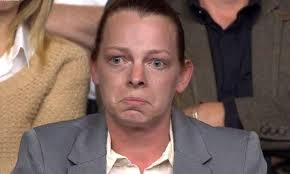
I voted for Conservatives originally, cos I thought you were going to be the better chance for me and my children. You're about to cut tax credits after promising you wouldn’t. I work bloody hard for my money, to provide for my children to give them everything they've got - and you're going to take it away from me and them. I can hardly afford the rent I've got to pay, I can hardly afford the bills I've got to do, and you're going to take more from me. 

Shame on you!


Michelle Dorrell: denounced the betrayal by the Tories she trusted
It was a powerful denunciation of a betrayal Labour predicted before the General Election. What a sad indictment it is that the Tories were able to dupe people like Dorrell, saddling us with Conservative government for at least another four and a half years. Dorrell, it seems, has learned the lesson and decided to vote Labour next time; to those who haven’t, I’d merely pick up her closing words “Shame on you”, and repeat the old American saying: fool me once, shame on you, fool me twice, shame on me.

On top of that, we have the edifying sight of Conservative Ministers – first George Osborne visiting China, now David Cameron with China’s leaders here in Britain – fawning on the Chinese. It seems the Conservatives want to hitch the British economy to China’s, so that it can draw all the benefits from such an advantageous relationship. Cameron is famously lazy; perhaps he hasn’t got round to the reading the recent briefing papers warning him that China’s economy’s slowing down.

The obsequiousness towards China has an ironic quality. The Tories are deeply opposed to state ownership of industry – or at least, they are if the state is British, which is a little odd, since they tend to be on the nationalistic end of politics. They’re apparently more than happy to invite the Chinese state to take positions in some key industries in Britain, notably in the second high speed railway line and more questionably still, in the nuclear power industry.

They seem happy with French state industries, too, buying into the British economy.

It appears that it’s only the British state the Tories distrust which, considering they run it, may say a lot about them.

One part of the state they’re running particularly badly right now is the National Health Service. It’s facing a financial crisis of historic proportions. The latest horror story is that neonatal intensive care units are unable to provide adequate staff cover any more. Terribly vulnerable infants – babies, mind – are at risk of death thanks to government policies.

A lot of the deference to China flows through the Foreign Office. So it was instructive to read of the cleaners there who wrote directly to the Minister – Foreign Secretary Philip Hammond – to complain about the lamentable wages they’re paid.

The cleaners aren’t employed by the Foreign Office but by a subcontractor, Interserve. Hammond passed the letter on to them. The cleaners now face disciplinary action and several of them, including their spokesperson, redundancy.

Michelle Dorrell got it wrong when she voted Tory. Perhaps it’s time for a lot of people to wonder whether they got it right when they go along with Tory Trade Union bashing. It seems that if you need any kind of help, you need someone powerful in your corner: the Labour Party or a Union.

Because while they may fawn on foreigners with a lot of money, the Tories certainly don’t have the time or the inclination to look after the less fortunate at home.

Even though they like to call themselves Christians…

Thursday, 8 October 2015

The Great British Bake Off, antidote to the bad news in a world dominated by superpower jostling

It’s great to come across the odd good news story out there, in amongst so much that’s bad.

Few are worse than the intensifying Russian intervention in Syria. What’s worst about it is that it reminds me of the behaviour of Germany in the run up to the First World War: Germany had emerged as a nation only rather late – it was proclaimed, ironically in France, only in 1871 – so it missed out on that precious time of empire building by so many other European powers.

Germany could have taken the intelligent decision that imperialism was inherently immoral (how on earth does one seriously justify a bunch of Brits, from a nation with terrible poverty, ill health and criminality in the nineteenth century, telling Indians how to live their lives?) and didn’t even benefit the imperial power that much (Britain remained racked by poverty, ill health and criminality when the Empire was at its height). Instead, it decided to get in on the act and carve out its own dominions, an ambition which led to increasingly intense clashes with France, Russia and Britain, and then the great 1914-1918 bloodbath.

So it’s worrying to see history repeating itself. The US under Dubya, enthusiastically supported by Tony Blair as British Prime Minister, went blundering into Iraq without international endorsement or legal basis, with results from which we’re still suffering twelve years on.

The worst aspect of that is that it established a precedent for ignoring the UN or norms of international legality, and simply using brute force, because one can.

Russia, reprising the role of Germany 140 years ago, instead of deciding that this kind of behaviour is reprehensible, leads to highly undesirable unplanned consequences, and ought to be avoided, has decided that anything the US can do, it can do too. So it’s blundering into Syria, making a painful situation far worse.

Why, if the latest reports are to be believed, it’s even rivalling the US in its capacity to create collateral damage, or even collateral mayhem: it seems four of its missiles may have hit Iran instead of Syria. I suppose one or two thousand kilometres of inaccuracy are to be expected in what specialists like to refer to as the “fog of war.”

Anyway, it’s in this context that I was delighted to find out about the winner of this year’s Great British Bake Off competition.

Now this is a pretty great programme. I watched it one year, though I gave up afterwards and watched neither of the last two competitions: I find the experience too stressful. It’s like watching England play rugby: it’s occasionally satisfying but often deeply depressing. In fact, in many ways the Bake Off is worse. At least on the rugby field, I know who to support and, therefore, by the simplest possible process of elimination, who to oppose. With the Bake Off, I sympathise with absolutely everyone, and want each of them to win, which means I’m distraught over the weekly elimination of a contestant, and inevitably disappointed over the final result by the failure of all the others who didn’t make it.

Nadiya Jamir Hussain, on her way to Bake Off victory
Still, I have to say that I take great pleasure over this year’s winner. She’s Nadiya Jamir Hussain, and she competed in a hijab.

We’re a long way from true assimilation in this country, and assimilation is never really reliable anyway (the Jews thought they’d achieved a high degree of assimilation in Germany in the nineteenth century, and look where that got them in the twentieth). Still, it’s good to see that a British woman can be celebrated by a British institution – the BBC had the year’s highest ratings for any programme, on any channel this year, for the final of the competition – even though she’s a Muslim.

At least there’s some progress, then.

Of course, we then have to return to all the everyday problems of racism in Britain – only today there’s been a new outcry over the poor level of dementia care offered to patients of Afro-Caribbean ancestry – but, hey, at least we can take a brief timeout to enjoy one positive event.


Postscript It was amusing to see the Guardian report that the Daily Mail failed to give front page coverage to the Bake Off result this year, as it had in the past. 

At least the paper that supported the Nazis in the 1930s has retained some consistency with its roots.

Saturday, 15 August 2015

Hoping to be wrong about Corbyn

It looks increasingly likely – to the point where it feels all but inevitable – that next month will see the consecration of Jeremy Corbyn as leader of the Labour Party.

Corbyn represents a vital ingredient in British political life. The man of principle who sticks to his guns, speaks his mind and maintains pressure on the powerful to stay honest. Or at least less dishonest than they would be in the absence of such scrutiny. One of the principal characteristics of such men, however, is that they never hold authority themselves, but limit themselves to holding authority accountable.

One glance at Corbyn’s track record makes the point clearly: he has voted against his own party’s instructions on 500 occasions. That’s great from the thorn-in-the-side politician, attacking all abuses from a position safe on the backbenches. But a leader needs discipline from his MPs, precisely the kind of discipline that he has, honestly and out of principle, refused to acknowledge.

What’s worse is that many of his positions are unpopular with a large proportion of the electorate. He wants the railways re-nationalised. Now, a great deal needs to be done to improve the state of the railways, but I can’t see how their ownership is the key issue here: I remember the old, dull, bureaucratic, unresponsive British Rail, and I can’t begin to see why anyone would want to go back to those days.

It’s true that the staff might have been better treated. And that’s a crucial point in understanding positions of the kind Corbyn advances: he sees workers exclusively as producers, in this case the railway employees delivering the service, and forgets that far more are consumers, who'd actually like to see a service that is efficient, a lot less expensive than at present and delivered with a smile.

The answer, I think most people would feel, is to find a way to improve conditions for employees, and not just on the railways, and put the financing of the services on a footing which keeps the prices more manageable. Ownership is entirely secondary to those requirements. Certainly, few voters think that state control is desirable, and many would be put off by a party advocating it.

A lot more will come out if and when Corbyn wins. His sympathies with Irish Republicanism, which I regard as legitimate, will be presented as support for the IRA. His past statements about NATO will be cited against him and turned into a warning that if he wins power, the UK will withdraw from the organisation, a prospect that will drive hundreds of thousands into the arms of the Tories. There is even talk of his wanting to re-open coalmines that shut after Thatcher broke the miners’ union – while I regard what was done to mining communities as one of the more shameful acts of her shameful rule, I have also been down a couple of working mines, and wouldn’t wish that working environment on anyone.

So, these are all the issues that leave me feeling that electing Corbyn will make it far more difficult than it already is for Labour to win office again, at least any time soon. The result would be that institutions that I hold invaluable, such as the NHS or the BBC, may well be driven into terminal decline by continued Tory rule.

And yet, I have to admit, I’ve been wrong in my political prognoses before. Simply looking around my local Labour Party, I know the enthusiasm of members for Corbyn is by no means limited to a few hotheads or, worse still, “entryists” sent in by other parties to vote Corbyn for their own nefarious reasons. Good people, intelligent people, back him.


Jeremy Corbyn
Cometh the hour, cometh the man. If I'm wrong. And I hope I am
Could I be wrong in my fears? A suggestion that I might be came in a recent poll which found that, of the four candidates for the leadership, Corbyn scored most highly for being in touch, intelligent, trustworthy and able to beat David Cameron in a TV debate. Why, he even ties with Andy Burnham – on 26% each – as the leader most likely to win the next election.

Interestingly, even amongst voters backing the far-right UKIP, Corbyn tops the poll on 39%. At first sight this may seem odd – right-wing supporters favouring the most left-wing candidate – but there’s no doubt that Labour has bled support to UKIP, and perhaps the cause has been insufficient radicalism: UKIP is certainly radical if nothing else, and though his radicalism is directed to profoundly different causes, so is Corbyn – he’s seen as another way to breach the bubble of complacency and conformism of establishment politics.

Maybe Corbyn will prove me wrong. Maybe he’ll prove a dynamic and mobilising leader. Maybe votes lost to his views and background will be more than made up by those attracted by a new campaigning approach to politics.

I hope that's right and I’m wrong. The alternative’s pretty depressing.