Showing posts with label Conservatives. Show all posts

Tuesday, 5 May 2020

The territorial imperative in practice

It’s curious the impact neighbours can have on your life.

Right now, I’m thinking of the neighbours at the front of our house, a pair of house martins, and one from next door, a Siamese cat.

The house martins I mentioned once before, when they turned up a few weeks ago and moved into the nest over our front door. It’s unlikely to be the same pair who were there last year, though one of the two of them may well have hatched there then. Since one of the things they’ve done is drive away a pair of larger house martins who clearly had their eye on the same nest, I can’t help suspecting that this is an ungrateful son or daughter taking over the parents’ place and kicking them out.

Kids, right? Think they’re owed a living.

My suspicions are reinforced by the fact that the female of the pair isn’t just smaller than the male, as they tend to be, but far smaller. Clearly a very young lady. Perhaps just a bit too sure of herself, a bit too convinced of her right to call the shots around the place.

We had a neighbour like that once. That was when we were living in Luton. She used to have parties that went on from about 10:00 at night until about noon the next day. We assumed that they were cocaine-fuelled, if only because I couldn’t imagine anyone being able to keep going that loudly for that long without some artificial stimulant to give them the energy.

The noise they made tended to follow a cyclical pattern. There’d be some silence when we’d think that we might perhaps be allowed to sleep. Then the voices would start up again, growing louder and louder as the revellers fell out with each other, until they were shouting abuse. That would sometimes culminate in the noise of breaking crockery, weeping, or loud lovemaking – well, sex, anyway - before returning to silence. Then rinse and repeat.

This was several years into the austerity programme of the Tory government, so the resource-starved police couldn’t do anything about the noise. One policewoman I was talking to did actually say, “Good God! I can hear her down the phone line!” That was through the intervening wall. 

The policewoman was sympathetic but couldnt help.

I’m glad to say that the young lady who has moved in over our front door is far more attractive and far more well behaved than that neighbour from hell. But pretty or not, she and her partner are just as good at making their presence felt. Not, I’m glad to say, at night. During the day, though, if we have the gall to step outside, or merely open the front door, they like to share their views on the matter with us.
The house martin making her displeasure known to us
Small in size but highly communicative
Now, I had a limited education, and was never taught house martin. So when they go and perch on the phone line that crosses our yard and chatter away to each other, to any other passing house martins, and above all at us, I really can’t make out what precisely they’re saying. But I have no trouble with the gist. It’s “who the heck do you think you are, wandering around this place as though you own it?” I’m cleaning up the language here a bit, but I think they add a request roughly translatable as “go away” though I suspect expressed somewhat more forcibly. And who can blame them?

It’s clear that they regard the place as theirs and our irruption into it as a gross and unwarranted invasion of territory, bitterly to be deplored. And they tell us so. Loudly and at length.

Another creature that makes that kind of point indisputably clear is our assault poodle Toffee. She now weighs in at not a terribly long way off 4 kilos, making her a no doubt daunting presence to any passing creature the size of a squirrel or smaller. But like Queen Elizabeth I, she has the heart and stomach of a King, and she thinks foul scorn that anyone should dare to invade the borders of her realm.

That was made clear to me when I saw her, flat on the ground at the bottom of our garden, barking into the hedge while her tail flailed from side to side so fast that I swear, had we been able to attach a generator to it, we could have driven a dishwasher off it.
Toffee making her displeasure known to the Siamese
Small in size but not in heart
The object of her anger? The Siamese cat from next door.

The previous occupants of our house had no animals, so the Siamese clearly got used to wandering in and out of the garden as the whim took him. Toffee, though, has no intention of allowing such liberties. So there she was, barking her heart out to defend our territory. Sorry, correct that: her territory.

It really is an imperative, isn’t it? The protection of territory. Humans have that instinct too. It inflames anti-immigrant rhetoric: we don’t want him here, he’s foreign. Or, indeed, racist thinking: we don’t want him here, he’s different. Or the American or British hostility towards international institutions: we don’t want to be with them, we’re different.

Natural, I suppose. Though also a bit sad.

After all, aren’t we supposed to have bigger brains and more powerful intellects than house martins or poodles?

Wednesday, 15 April 2020

'Official Secrets' and getting the perspective right on Blair

“I think we were lied into an illegal war,” says Katharine Gun, excellently played by Keira Knightley in a film well worth watching, Official Secrets.

Back in 2003, Gun was working at Britain’s communications spying centre, GCHQ, when she was included in the distribution of an email from the States, asking for blackmail material against a number of UN Security Council delegates, to push them into backing a resolution authorising war on Iraq.
Keira Knightley as Katharine Gun about to take a life-altering step
Sadly, it didn’t stop the war
Gun, appalled that the resources of GCHQ were being used merely to provide cover for the UK and US governments, leaked the email. To keep the spoiler small, let me just say that the film includes a particularly telling exchange about her role.

“You work for the British government,” she’s told.

“No, not really,” she replies.

“No?”

“Governments change,” she explains. “I work for the British people. I gather intelligence so that the government can protect the British people. I do not gather intelligence so that the government can lie to the British people.”

The film was an excellent way of spending a lockdown hour or two. It also brought back memories. Not particularly cheerful memories, accompanied as they were by a sense of disappointment and even betrayal.
Huge demos against the invasion, in London and around the world
Also couldn’t stop the war
Huge numbers, up to a million, had demonstrated in London against the war. Dubya Bush, US President, and Tony Blair, UK Prime Minister, had flopped from one unconvincing source of authority for war to another. They claimed Iraqi dictator Saddam Hussein had weapons of mass destruction, but weapons inspectors on the ground had found none. Blair went for a United Nations resolution because British legal opinion said he needed one. When he couldn’t get that authorisation, he asked his Attorney General to provide a different opinion, which he duly did.

Dubya had clearly decided to go to war in Iraq however weak the justification, and Tony Blair had decided to go along with him, with or without authority.

They went in, toppled a deeply unsavoury dictator, but at huge cost: as well as six-figure casualties in the fighting, the war spurred the emergence of ISIS, leading in time to its blood-chilling dictatorship and many more years of war to break it.

No Iraqi weapons of mass destruction were ever found. And, when the legal advice offered to the government was finally published, it confirmed all our suspicions: the Attorney General had warned that invasion would be illegal and potentially lay Ministers open to prosecution as war criminals, unless a covering resolution was obtained from the UN. He only changed that view when it became clear the resolution had failed.

Nothing people could say or do would change anything. Not the hundreds of thousands of demonstrators. Not Katharine Gun laying her job and liberty on the line. Not even the law would restrict its behaviour: it was going to war even if the action was illegal.

It was all deeply depressing.

That’s why I find it ironic now to be labelled a ‘Blairite’, as I have been by many on the far Left of the Labour Party. Far from an enthusiast for Blair, I felt betrayed by his behaviour over Iraq. And there were other issues on which I felt his government behaved reprehensibly. The Private Finance Initiative (PFI) has left public sector bodies, in particular hospitals, still struggling today. Blair even repudiated one of his best initiatives, the Freedom of Information Act, when he realised it could be used to force him to reveal information he would rather hide.

No, I was never a Blairite. And today, the committed supporters of Blair are few indeed. But the difference, in assessing Blair, between those of us who refuse the label ‘Blairite’ but don’t belong to the hard Left, is that we’re not prepared to write off his governments’ achievements as though they never happened.

Among others, they include the major assault on child poverty. The minimum wage. The Human Rights Act. Devolution of powers to the nations of the UK. Freedom of Information. The Good Friday Agreement. Huge investment in the health service.

The latter is particularly topical, given that the health service is today struggling so pitifully to cope with Coronavirus. Had the investment started by Blair continued, instead of being reversed in the name of austerity, how much better-placed would the NHS have been to cope with the present pandemic?

Lives have been lost due to austerity. Thousands of lives. That’s worth bearing in mind when we assess the Blair legacy.

Without being a Blairite, I’m in no doubt that the governments he led were infinitely to be preferred to the one we have now. And, in arguing for a return to a Labour government, that’s something we need to proclaim loudly. Things would have been better without the last ten years of Tory government.

What’s more, he achieved far more than those who followed him as leader, and who lost power to the Tories or failed to win it back. He achieved far more than Gordon Brown, Ed Miliband or Jeremy Corbyn. Whether their policies were good or bad, they were unable to enact any of them.

You can only do any good at all if you get into power. Which Blair powerfully demonstrated. And you don’t have to be a Blairite to understand that. 

I reject that label. But I also refuse to belittle the good he did among the harm.

Oh, and by the way, if you’re looking for a good way to spend a lockdown evening, you could do a lot worse than watch Official Secrets.

Saturday, 4 April 2020

Keir Starmer's challenge

Just twenty minutes before the results of the election for a new Labour leader were announced, I was still on tenterhooks. The signs had all been hopeful, but I’ve been disappointed by election results too often before. It was conceivable that the Party membership might have decided that the best person to replace Jeremy Corbyn as leader would be another Corbynist.

After two general election defeats under Corbynist leadership, it seemed insane to try our luck at a third. But was a presumption of sanity justifiable?

I’m glad to say that ultimately it was. Despite my anxiety, the new leader was Keir Starmer, elected on the first ballot with 56.2% of the vote. A comprehensive victory and a solid mandate.
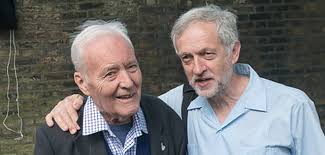
Keir Starmer (right)
with Jeremy Corbyn, whom he replaces as Labour leader
Starmer is a former of Director of Public Prosecutions, leading all public criminal prosecutions in England and Wales, a role he played with great effectiveness.

Before that he had been a defence barrister, notably defending the McLibel case, where McDonald’s threw all its weight as a major international corporation, into persecuting two individuals who had protested against them.

He was elected to Parliament in 2015. That meant being caught up at once in the string of crises that started with Jeremy Corbyn’s election as leader, followed by the 2016 referendum that led to Brexit, general election defeats in 2017 and, crushingly, in 2019, and finally the Coronavirus pandemic. If Starmer had been hoping for a quiet life, he must have been badly disappointed.

He served in Corbyn’s team for three years, even though he’s no Corbynist. That’s a key quality: without being a member, he’s established that he can work with a wing of the party which, though reduced to a minority now, still holds massive sway amongst the membership.

Corbynists were keen to drive non-Corbynist MPs out of Parliament. It’s deeply unpleasant and damaging to the party, forced to focus in on itself and riven by factionalism. That’s why, though there are understandable calls within the new Labour majority to retaliate in kind, they need to be resisted.

No purges has to be the watchword, and I think Starmer is well-placed to issue it.

That isn’t only for ethical reasons. A pure, homogeneous party is far too narrow. The insistence by Corbynism on its own version of socialism has driven many out of the party. Much more seriously, it has driven voters away. As Phil Wilson, a former Labour MP who lost his seat in the December 2019 debacle, puts it:

There was no need for Corbynistas to listen to them [voters]; they needed to listen to the Corbynistas. Corbynistas knew what was best.

We need to reach out to voters. That means that we need to reach out to those who walked away from the Corbynist Labour Party, without losing those who stuck with it because of Corbyn. We need to embrace all wings of the party.

In other words, we need to rebuild Labour as a broad church. That means including the Corbynists. Ironically, the very expression ‘broad church’ was treated as practically obscene in Corbynist circles.

This is a paradox. Starmer has to rebuild the Labour Party with the Corbynists but in spite of the Corbynism. Why? Because it’s the hard Left, most recently represented by Corbynism, that has ensured that Labour has held power in only thirteen of the last forty years.

In my lifetime, I’ve twice lived through an experience I would have hoped not to live through even once. That’s Labour falling under the control of the hard Left. It happened first in the early 1980s. In the 1983 election, Labour won fewer seats in parliament than in any other election since 1935.

Making the Party electable again took fourteen years. The bulk of that work was done by a leader from the soft Left of the Party, Neil Kinnock. He had the misfortune of losing two elections himself, but at each of them he increased the tally of Labour MPs. That prepared for Tony Blair’s victory in 1997.

In 2015, Labour did it again. We let the hard Left take control. And, lo and behold, the result is that we’ve once more been reduced to the lowest number of Parliamentary seats since 1935. Worse even than 1983: 202 seats compared to 209.

Keir Starmer, like Neil Kinnock, is a man of the soft Left. He’s indicated his willingness to unite the party, claiming he would neither trash the achievements of the Blair Labour government nor those of the Corbyn period.

He has pledged to work with the government to combat the Coronavirus pandemic, but to oppose it actively when it does too little, or the wrong thing, or the right thing too late.

He seems to have all the right attributes. He could indeed rebuild the Party. Whether he can do it in time for the next election remains to be seen – Corbynism has left us low indeed. But he might.

What he, and the Party generally, must do, however, is learn from this experience as, apparently, we didn’t learn from the experience of 1983.

It’s important to keep the hard Left on board. They must be free to act as a ginger group, they must be able to influence policy, they deserve respect and cordiality.

But the hard Left must never be allowed to take sole control of the party again.

Once was an error. Twice was ridiculous. Three times would be suicidal.

Monday, 27 January 2020

How Italian sardines kept the left's wall solid

A triumph for the left it maybe wasn’t. But a colossal setback for the hard, populist right it certainly was. And that’s the next best thing.
Demonstration in Rome by the Sardines movement
Mobilising against Salvini and showing him the door in Emilia-Romagna
Matteo Salvini is the leader of the populist, right-wing Italian party, the League. Until last year, he was deputy Prime Minister in a coalition, but then he pushed his luck too far. He brought down the government in the hope of precipitating an election he looked set to win, but his coalition partners switched to working with Democratic Party (Partito Democratico, PD), roughly equivalent to British Labour, though substantially more centrist.

Salvini is on record committing that he would “defend the natural family founded on the union between a man and a woman”. He also declared that he was “sick of seeing immigrants in the hotels and Italians sleeping in cars”. Or again, “The problem with Islam is that it's a law, not a religion, and it's incompatible with our values, our rights, and our freedoms.

On Sunday, elections were held in Emilia-Romagna, the region around Bologna, in north-central Italy, a longtime bastion of the left. It is rather like the “red wall” on which Labour counted for decades in the North of England, and which suffered such heavy losses at the election in December: seats fell to the Tories that had been Labour since they were first created.

Curiously, the PD uses rather similar language. But it’s in a position to apply it in very different circumstances: after the results came in, they could declare that “the wall held”.

The governor of the region was re-elected, and with a small but absolute majority. Stefano Bonaccini took 51.4% of the vote, his nearest rival 43.6%.

Salvini had spent much of his time in recent months campaigning around Emilia-Romagna. He claimed he was about to ‘liberate’ the region. But after the elections, Bonaccini could reply that the region had already had its liberation, 75 years ago, at the end of the Second World War – since when, in one form or another, the left has been in unbroken power there.

To what does he owe his success?

To start with, the PD is no party of the hard left, and Bonaccini is certainly no Corbyn. He’s a moderate leftist who can attract voters from the centre, rather than frightening them into the arms of the right. That’s important when you’re trying to protect you wall from a determined onslaught by the hard right.

But something special came out of the campaign in Emilia-Romagna. It led to the emergence of the kind of mass, popular movement that Corbynism inspired. Known as the ‘sardines’, from their ability to fill public squares to capacity at their rallies, they generated a huge momentum for the left – or at least against the right – that had been the exclusive preserve of right-wing populism in the past.

That combination, a moderate leader who could draw votes from the centre, with a groundswell of popular support from below, proved unstoppable in Emilia-Romagna. Even more encouraging, in December the sardines brought together a rally of 100,000, in Rome, a long way from the region where the movement was born. It may begin to make itself felt at national level now.

It’s far too early to be thinking of victory over a vicious, far-right movement in Italy. The national government, where the PD is in an unstable coalition with the bizarre and declining 5-star movement, could fall and let Salvini in. But the result on Sunday does at least give a glimmer of hope that he can be kept out.

And there’s a lesson for other countries too. Combine electability in the leader with a dynamic, mass movement and you can get the far right on the run. That’s the elusive formula we need to find in the US, in the EU, in the UK.

In Britain, in particular, it means that we too have a historic chance. If we replace Corbyn by an electable leader of the Labour Party, and Keith Starmer, the front runner for the moment, seems to be just that; if that leader can then retain and sustain the movement that Corbynism built; then we too can in time drive out the hard-right government Corbyn let in last December.

The movement doesn’t have to chant “Oh, Keir Starmer”, like it used to chant “Oh, Jeremy Corbyn”. There was something repellent about that cultish behaviour. Instead, it just needs to be as effective as the Sardines have been in Italy.

And working for a leader who can command real electoral support

Thursday, 23 January 2020

Thinking of choosing the hard left? You'll end up with the hard right

According to a leftie who keeps on at me on Twitter, the problem for Labour is that the 2019 election merely represents a continuation of its decline over many years now, with the 2015 result an anomalous blip in that downward trend.
Tony Benn and Jeremy Corbyn: architects of Labour misfortunes
That stance got me interested in taking a longer-term view of British politics. So I looked at percentages of the popular vote in eleven elections over the forty years between 1979 and 2019. Clearly, the relative strengths of the two main parties, Labour and the Conservatives, would be of interest. It struck me, though, that it might also be useful to set them in the context of the overall landscape of parties of the broad right (the Conservatives, but also the hard right parties of today or their earlier embodiments, Brexit Party, UKIP, the British National Party) or of the broad left (Labour, the LibDems and their earlier forms, the Alliance or Liberals, the Greens or Ecology Party, the SNP and Plaid Cymru).
How the left (broadly) performs against the right
compared with Labour alone
What emerges is a curious picture. The ‘left’, in this broad definition (orange line), consistently outperformed the ‘right’ (black line) except in 2015. That surge for the right was principally down to UKIP’s 12.6%; the Conservative result was still an anaemic 36.8%.

With either proportional representation or some arrangement between the constituents of the ‘left’, the ‘right’ would have had a majority of the popular vote for only two years out of the last forty.

Now popular votes don’t necessarily translate into Parliamentary majorities. But if big enough, they can deliver victory, and the ‘left’ tends to be significantly ahead of the ‘right’ most of the time. That suggests that if Labour, the SNP, the Liberal Democrats and the Greens could have pulled together, the Tories would have been out of power for most of the last 40 years, instead of in power for 27 of them.

Interestingly, Labour alone (red line) only outpolled the combined right for three elections – unsurprisingly, the three when Blair was leader and in government. The leftie on Twitter, and others of his ilk there or on FaceBook, are also constantly assuring me that Blair was the lowest of the low and worthy of nothing but contempt. However, if we’re interested in keeping the Tories out of power, it’s worth remembering that he was the only leader in four decades able to ensure that Labour could do that on its own.

For the rest of the time, it would have had to work in partnership with others to oust the Tories. That’s clear from the second graph comparing Labour’s performance (red line) directly with the Tories’ (blue line). Again, only under Blair did Labour outperform the Tories. Otherwise, we’re consistently behind.
Labour performance alone against the Conservatives
Interestingly, the worst results are not under Corbyn. The worst of all, naturally, is 1983. Then Labour was led by Michael Foot, although Tony Benn, the deputy leader, was the main architect of our overwhelming defeat.

Since then, our lowest percentages of the popular vote came in 2010 and 2015. The Tories, however, were down then too, winning by small margins. Looking instead at the gap between Labour and the Tories, the worst elections of all were 1983 and 2019, Benn’s and Corbyn’s. Indeed, it is Corbyn’s greatest achievement to have gifted the Tories their second-highest vote share in that forty-year period. The only higher result was Maggie Thatcher’s first win in 1979.

The significance is that her victory was the first in a series. Johnson’s was the fourth in a row for the Tories, and the first time since the nineteenth century that any party has increased its Parliamentary representation in a fourth election victory.

Corbynists always said that Jeremy would do something remarkable. He has. Although I’m not sure this is what they meant.

This takes us to the nub of the problem for the hard left. One told me recently that whatever we learned from the 2019 election, we should not on any account ‘abandon the programme’. For Corbynites, no compromise is possible on Corbynist policies. That makes any hope of collaboration with other parties impossible. And that, as the last eleven elections demonstrate, means that the right would continue to outperform us.

Above all, with the kind of programme championed by Corbynites now or Bennites in 1983, we ensure not just a Tory win, but a colossal one. Why does this happen? Because Bennites and Corbynites want Labour to mirror their views, not those of the electorate. And the electorate has no time for their policies.

In the current leadership election, we need to choose a leader who reverses that. We need a leader who listens to the voters and goes to them with a programme that they can endorse, even though that means compromise, even giving up on some cherished policies. That way we can win back Labour voters. And if, in addition, we can compromise enough to attract other parties to our banner, why, we could kick the Tories out for a generation.

The alternative is to choose Bennite or Corbynite orthodoxy.

And we know what that gets us: the likes of Maggie or Boris.

Tuesday, 14 January 2020

The Rebecca trap

Momentum is a faction inside the British Labour Party, with its own officers and policy lines which it works to get the whole of Labour to adopt.

It has just issued a document to all its members, to ‘consult’ them on which candidates to back in the forthcoming elections for Labour leader and deputy leader. It did have a recommendation to make, so essentially the invitation was to make a completely free choice from among the available candidates, just so long as they choose Rebecca Long-Bailey for leader and Angela Rayner for deputy.
Rebecca Long-Bailey, the Corbyn continuity candidate for Labour leader
There was little surprise in Momentum’s ‘recommendations’, the euphemism we like to use for instructions. Long-Bailey is the continuity candidate, the one who can be most counted on to follow in the steps of the current leader, Jeremy Corbyn.

Momentum was essentially set up to back Corbyn as leader of Labour.

Just in case you haven’t been following British politics closely in recent months, Mr Corbyn is the man who took Labour to defeat in a general election in 2017, and to disastrous defeat in 2019. With the full support of Momentum and its members on both occasions. Support which shows no sign of flagging, it should be added, as they scrabble around finding others to blame for the loss.

One of the major scapegoats Momentum has identified is the Media. Mostly Tory, it’s true that the media generally gave him a torrid time. It has to be said that Corbyn fed the media plenty of ammunition to use against him. Probably the most serious was his failure to take a clear position on the question that has most troubled Britain for the last four years, Brexit. He has equivocated, trying to appeal to each side and losing the trust of both, as the election results showed.

This kind of behaviour has allowed the media outlets ill-disposed towards him to run story after story alleging that he was unprincipled, gutless and untrustworthy.

The last thing we need is a continuity candidate who continues that kind of performance. So it’s sad to discover that even before she became a candidate for the leadership, Rebecca Long-Bailey has been engaging in what, at best, we can only call a little embellishing of her track record. Embellishment it has proved frighteningly easy to trash.

In 2014, she claimed that she had “been working as a solicitor with the NHS in Manchester for 10 years” when she had only been qualified for just over six years.

In her leaflet for the 2015 election, she stated that, “I studied law and became a solicitor for the NHS to help defend our health service”. Now, the words don’t actually say that she was employed by the NHS, but don’t they seem to suggest that? And when she claimed to have been helping to “defend our health service”, doesn’t that sound as though she had been going into battle to keep our hospitals and doctors’ surgeries going and public?

The reality is that she was working for a legal firm in Manchester and did some commercial work for the NHS as client. She was drawing up documents for NHS contracts and NHS estates. A courtroom champion of our great national institution? That she wasn’t.

To some extent I don’t particularly care about her distortions. MPs are as capable of being petty and grasping as all the rest of us. In business, I’ve dealt with people who lied on their CVs. It’s reprehensible but not that unusual.

I suppose it’s rather harder to stomach from members of the Corbyn faction who are always claiming to be so much more honest than the rest of us. Frankly, though, the hypocrisy may be unattractive, but I can live with it too.

No, the real problem is that these falsifications were so easy to disprove. And the right-wing press is moving in already. The Sunday Times has already run an exposé. Imagine if Long-Bailey actually became leader. What a meal they’d make of her!

Besides, if she engages in such shallow and easily discovered deceptions now, what would she do as leader? Would she, like Corbyn, keep feeding the Tory press the material they want? Would she too forfeit any trust the electorate might feel towards her and go down to yet another massive loss, pointing to bad press as her excuse?

And what of Momentum? What are they up to?
  • Have they not yet had enough of backing losers?
  • Have they developed a taste for seeing Labour routed and the Tories running the show?
  • Have they decided they prefer having someone they can control in the top job than to win an election and have to deliver the socialist policies they’re happier just to talk about?
I don’t know the answers to any of these questions. All I can see is that they’re cheerfully trying to walk their followers into the Rebecca trap, eyes wide shut. And I just hope that there are enough Labour members with their feet on the ground to say, “no thanks, not that trap, not again”.

Saturday, 11 January 2020

The unrepentant Corbynite

There’s a story that US President Harry Truman had a sign on his desk, “the buck stops here”. It seems it isn’t entirely true. A friend gave him the sign and he put it up for a while, but later removed it. 

I don’t know whether getting rid of it was symbolic of anything.

The notion’s a good one, though. It says that ultimate responsibility for what an organisation does, in this case the US government, lies with the person at the top. They can claim credit for much that goes right but the counterpart is that they have to take the blame for most of what goes wrong.

Not so, it seems, within the Jeremy Corbyn faction of the Labour Party.

Corbyn facing his electoral debacle: getting ready to move into denial mode
You know those doomsday cults that regularly announce the ending of the world? They usually give a date for when it’s going to happen and even a time of day. Then it doesn’t happen (so far, at least) and they usually come up with some excuse for why it didn’t: another reading is possible of the relevant Biblical text, or maybe more than one date is possible and we’ve simply moved on from one of them to the next, or whatever.

Anything, at any rate, rather than admit they were talking cattle excrement.

What’s true of a religious cult is true, apparently, of this political one as well.

Corbynists have been assuring us for years that Corbyn was set for a win in the forthcoming general election, possibly even a big win, and the consequence would be a radical transformation of British society in a socialist direction. Those of us who were a little more sceptical were invited to go forth and multiply, and courteously described as red Tories or even – and I’m told by one of them that this is the most damning political insult available today – Blairites.

This is curious because, if the mission of the Labour Party is to speak for the voiceless in British society, to protect the interest of workers, of the unemployed, of the sick, the very young, the very old, the poorest and neediest, then Tony Blair actually did them some good. He did so by simple dint of actually getting into office, where he could lead a government that hugely improved the health service, for instance, and took a lot of children out of poverty.

Corbyn, on the other hand, by failing twice to win an election, has done no good for any of those people. Indeed, by gifting the Conservatives a victory in an election that was eminently winnable, positively helped to inflict more damage on them.

I say this, by the way, as a Labour Party member who did not back Blair to be leader and would certainly not back him now. I simply state facts: Blair achieved more for those Labour is intended to protect than Corbyn ever did or, now, ever will.

Still, facts apparently don’t need to stand in the way of a good argument. And Corbyn has assured us that he won the argument in the election campaign. Just not the election itself.

Make of that what you can.

Ah, well. There’s some satisfaction, I suppose, when things turn out as you expect. That’s true even if people live down to expectations rather than up to them.

I’ve listened to and read Corbynists for four years now. I’ve been told again and again that he’s hugely popular, as can be seen from the young people chanting “oh, Jeremy” at his rallies. I’ve seen carefully constructed arguments for optimism whose authors point to the numbers of young people, supposedly pro-Corbyn, registering to vote, while old people, often anti-Corbyn, leave the electoral register (for the cemetery); they point to the number of women who have seen their pension entitlement pushed back and can therefore be counted to rally to the Guru; they point to the popularity in the polls of individual policies proposed by Corbyn and ignore his massive unpopularity in those same polls.

Why, I’ve seen analyses even in the last few months, showing that all these factors point to an electoral win for Labour, even perhaps a landslide.

The fervour of Corbynists’ beliefs left me fully dreading their reaction to the long-predicted electoral debacle of 12 December. I sadly expected the worst of them: denial of any responsibility and a feverish pursuit of scapegoats to blame instead. 

Unfortunately, the unrepentant Corbynites have entirely lived down to my expectations of them. The buck, for them, certainly didnt stop with the man at the top. It might have been more decent of them to show a little humility now that their doomed project has failed so dismally. They might have admitted their errors, if only to ensure that they don’t repeat them. They might have stopped talking down to the rest of us, as though events had fully vindicated their baseless beliefs instead of refuting them so comprehensively.

It would have been more decent. But it isn’t going to happen.

Friday, 27 December 2019

Not good for the Pope. Not good for Britain either

One thought can easily conjure up unrelated memories, can’t it?

I was reading about the present Pope the other day, and it brought to mind memories of the Falklands War. Or perhaps I should say Conflict, since war was never declared. And perhaps I should say Conflict over the Malvinas, to give the Spanish name for those islands, since that’s what the Argentinians call them.

What’s the link to Pope Francis? The Conflict brought to an end the military dictatorship in Argentina. That, incidentally, is why I always think the Argentinians won, even if they didn’t keep the islands: they got rid of one of the bloodiest and most brutal dictatorships in their troubled history, while we were stuck with Thatcher for another seven years, followed by further Tory government under John Major for another five after that.

It wasn’t just the supposed ‘victory’ in the Falklands that kept Thatcher in power and gave her a landslide election win the following year. She was helped by Labour having a brainstorm and going into that campaign led by the hard left, which played right into her hands. Sound familiar? Yes, just because we made that mistake 36 years ago doesn’t mean we’d learn from it and avoid it this year.

Francis, then Jorge Bergoglio and head of the Jesuit order in Argentina, lived through the dictatorship and its “dirty war”. Indeed, the darkest era in his past is that he may have contributed to two priests being tortured by the regime.
Esther Ballestrino
A significant influence on Pope Francis
A woman who played a major role in Bergoglio’s development was Esther Ballestrino. She headed the lab where he worked when he was still a chemist and hadn’t decided to become a priest. In 1977, her son-in-law and her pregnant sixteen-year-old daughter were abducted and tortured by the regime. In the absence of any news of them, Ballestrino joined with other women in founding the ‘Mothers of the Plaza de Mayo’ who would gather every week, demanding information, outside the presidential palace on that square in Buenos Aires.

Eventually, her daughter was released. But Ballestrino kept turning out with the other protestors. Unfortunately, the group was inflltrated by a man called Alfredo Astiz, from Naval Intelligence, nicknamed the ‘blond angel of death’. When the group published an advertisement listing the names of the ‘disappeared’ – the people abducted and about whose destiny no information was available – Astiz arranged for five women, including Ballestrino, to be arrested. They were tortured and eventually loaded, heavily drugged, onto a ‘death flight’: a plane that took them out to sea where they were dropped, hands and feet bound, out of the back of the aircraft.

So Esther Ballestrino died, one of the great sorrows in Pope Francis’s life.

And what memory did this conjure up in me?

I was conflicted over the Falklands War – conflicted over the Conflict. It strikes me as ridiculous that a group of islands off the coast of Argentina are possessions of a country, Britain, nearly 13,000 kilometres away. On the other hand, I loathed the Argentinian junta and deeply disliked the way they decided they could use military force to solve a territorial dispute. Above all, I disliked their obvious contempt for the views of the local population.

The use of military force and the trampling of the rights of the local inhabitants? It felt far too much like what the Israeli government does to Palestinians.

In any case, I can only be pleased with the way things worked out for Argentina, giving them a far more important victory than anything on the battlefield could have achieved: it freed them from a particularly nasty regime.

At the time, however, I remember being regularly sickened by the news. There was a day when I arrived in London from the suburb where I lived at the time, and caught sight of a startling headline in the local paper, the Evening Standard. The Argentinian cruiser Belgrano had been sunk by a British submarine, leading to the deaths of several hundred young conscripts. My stomach churned over that massacre, and even more over the gleeful celebration right-wing papers engaged in over it.
The Sun delighting in the deaths of conscript sailors
Then there was the recapture by British troops of the island of South Georgia. They took the surrender of the Argentinian garrison there. It was commanded by – Lieutenant Commander Alberto Astiz. Yes. The blond angel of death.

Both Sweden and France wanted to question him for the murder of some of their nationals. But the Thatcher government, pleading the Geneva Convention, had him questioned by a British policeman and, when Astiz refused to answer any questions, decided to release him and send him home.

So a torturer and murderer was treated with kid gloves, while the young conscripts on the Belgrano were sent to their deaths with callous indifference.
Alfredo Astiz, torturer, murderer, released by Thatcher
Funny to be reminded of all that by a book talking about Pope Francis. Funny but no fun. To me, that act of the Thatcher government ought to be remembered in perpetuity as a moment of glaring shame in the history of Britain.

Astiz was at last sentenced to life in prison in 2011. By the Argentines. Who again emerge from this sorry story, as they did from the war, with more honour than a deeply flawed Britain.

Friday, 13 December 2019

A bad awakening on Friday the thirteenth

Friday the thirteenth. Unlucky for some. Unlucky for the British Labour Party. Above all unlucky for those the Labour Party is intended to protect.

A party goes into an election seeking a fourth successive victory, something that has only happened once previously since universal suffrage was introduced in Britain. It does it after nearly a decade of ruinous austerity leaving the nation unprotected by a police force starved of resources, and with its national health service struggling even to survive. It does it under the leadership of Boris Johnson, a man entirely exposed as a liar and a cheat.

Such a party with such a leader stands not a chance of success.
Boris Johnson: gloating, entitled, triumphant
The face of Britain for maybe five years, and maybe more
And yet Boris has not merely succeeded, he has emerged with a comfortable majority. Why? Because the forces arrayed against him were so utterly inept that they couldn’t win an election that was offered up to them on a platter.

The Liberal Democrat party had a new leader, Jo Swinson, who ran a lacklustre campaign which left her party with ten fewer seats at the end that it had had at the beginning. One of the seats lost was her own.

Outside parliament, the People’s Vote campaign, far from uniting all the forces favouring continued British membership of the European Union, fell into faction squabbling and purges. Other Remain organisations came up with recommendations for tactical voting to keep the Tories out which contradicted each other. An unedifying, chaotic babble of voices with no clear leadership.

The worst of all, though, was Labour, because it was the biggest party and therefore had the most responsibility.

Jeremy Corbyn consolidated his place in Labour history as the second worst leader the Party has had, behind only Ramsay MacDonald, its first Prime Minister, who betrayed everything it stood for by forming a coalition government with the Tories in 1931. His action reduced the party’s parliamentary presence to just 52.

Corbyn campaigned as a man of principle, but wouldn’t tell the electorate where he stood on the biggest question of his time, Brexit. Most suspected that he remained what he’d always been, a Brexiter, but he compounded that suspicion by making it clear that his refusal to say was designed to avoid alienating either Leave voters or Remainers. Since both sides knew he was equivocating in order to make them both think he was on their side, both sides turned against him.

Few voters understood what was honest about that kind electoral opportunism.

Equally, Corbyn failed to act on allegations of anti-Semitism in the party. At first, my sense was that he was just extremely indolent and couldn’t bring himself to move quickly on the charges that were brought. But then I realised that there were skeletons in his closet too. For instance, he wrote a foreword for the reissue of Imperialism: A Study by John Atkinson Hobson, in which he described the book as “brilliant”. The book talks about European finance being controlled “by men of a single and peculiar race, who have behind them many centuries of financial experience,” which puts them “in a unique position to control the policy of nations”. No prizes for guessing which race Hobson meant.

Was that Corbyn’s problem in dealing with anti-Semitism? He might have had to take action against people expressing views like those he had endorsed in this foreword.

I don’t think many British voters care all that much about us Jews, either for or against. But they’re quick at identifying equivocation and evasion, and what Corbyn was doing over anti-Semitism was extremely dodgy. It wasn’t the anti-Semitism itself that killed him, it was the dodginess.

In the same way, it wasn’t the position he took over Brexit that damaged him, it was the sense that it wasn’t straight.

He compounded these strategic errors with tactical ones, starting with agreeing to the election being held on 12 December, to suit Boris Johnson’s timetable rather than his own. Corbyn, it strikes me, is not particularly bright and didn’t see that if Boris wanted the election now, that was an excellent reason for saying no. Instead, Corbyn went ahead and got creamed.

This is the second time we’ve been through this in my lifetime. The first was in 1983, the last occasion on which the hard left took control of Labour, and was reduced to its smallest parliamentary representation since 1935. That 1935 election, by the way, was significant because it was the first step back towards office by the Labour Party, after its catastrophe of 1931.

The election of 1983 was appalling, therefore. But it has been outdone by the 2019 one. In 1983, Labour emerged with 209 MPs, in 2019 with just 203. The 2019 election has taken over from 1983 as the worst for Labour since 1935.

The common theme Corbyn’s and the others’ dismal attempts to confront Boris was lack of leadership. None of them could rally the disparate forces opposed to his plans into a focused movement against him. Now he’s in with a vengeance, and his vengeance will be terrible.

He will, of course, now force Brexit through. Since it is not the fact of leaving the EU that will be hard or soft, but the nature of the trade agreement we negotiate or fail to negotiate with the EU, we are by no means yet safe from a hard Brexit.

Next will be the continued attacks on the poor and on public services. Boris will continue to promise greater investment in the police, in social care and in healthcare, but the reality will be otherwise. After a few years, the poor and many of the not-so-poor will be a great deal less well off than they are today.

What does all this mean? 

The fightback starts today.

The first step is to take back control of the Labour Party. Though Corbyn has said he will not lead Labour into another election, there are signs that some Corbynists at least will attempt to retain their dominance in the party. That may be less easy for them to do than they think. Some of the most zealous will certainly stick with the project but others may drift away, disappointed by the results. Others may simply realise that they would do better to work with other currents inside Labour, that a compromise that gives some of what they want is better than purity which gives them none of it.

Assuming that we can pull together to elect a leader who actually leads – and there are people who meet that requirement in Labour, such as Yvette Cooper or Keir Starmer – then a long slow process begins. After the crushing defeat of 1983, Labour lost two more elections before winning one. Can we win more quickly this time? Let’s hope so, but let’s remember what a long haul it was back then.

The other crucial step is to start the process of getting Britain back into the EU. That will certainly be a generational matter. I don’t expect to live long enough to see it myself, but it needs to be started. It is linked with the first step, since Labour has a crucial role to play in the process, and can’t while led by closeted Brexiters.

There are difficult times ahead. But difficulties aren’t overcome by not confronting them – Corbyn’s experience on Brexit and anti-Semitism shows that. A real leader will confront them, and real leadership is what we need.

Above all, we have to learn from our mistakes. Weve been through it twice, in 1983 and 2019: the hard left takes charge and we’re thrashed in the subsequent election. That demonstrates the principle that if you don’t learn from your mistakes, you merely repeat them.

Two such routs were bad enough. Let’s make sure we don’t have a third.

Thursday, 28 November 2019

BBC or Better Be Careful what you wish for

“Democracy,” wrote the American journalist and wit HL Mencken, “is the theory that the common people know what they want, and deserve to get it good and hard.”

There are times when some on the left seem convinced that they know what they want, and getting it good and hard might refocus their minds. Not that I’d like it to happen: we’d all suffer if they did.

What makes me say this is the internet meme I keep seeing, with a picture of Peter Falk as Columbo, making his trademark comment: “Excuse me sir… just one more thing” and then asking the (apparently) killer question, “why does the BBC never quiz the Tories about doubling the national debt to £1.9 trillion?”

Back in 2010, the Tories had promised that their austerity programme was a necessary evil to reduce the national debt. It is indeed ironic, at the very least, that after nearly a decade of the evil, the debt, far from being reduced, has doubled. So why doesn’t the BBC quiz the Tories about this sad state of affairs?

The BBC is primarily a news organisation. The doubled debt may be deplorable, but it isn’t news. It isn’t because nobody is quizzing the Tories about it. Not Labour, for instance. If Labour took up the issue in the current general election campaign, it would become newsworthy.

Why doesn’t Labour do that?

Because it would face a counter-attack demanding to know how it intends to reduce the debt. Since Labour is more concerned with some urgent spending commitments – on the NHS, Education and the Police, among many others – the last thing it wants to do is to paint itself into a corner as committed to debt-cutting.

The truth is that the national debt is not an issue in the election campaign. The NHS is. Education. The Police. Housing and homelessness. Workers’ rights. The issues, in fact, on which Labour is quizzing the Tories and on which the BBC also should.

That the BBC were planning to make life difficult for Boris Johnson on such matters is reflected in Johnson’s apparent reluctance to be interviewed by Andrew Neill. Jeremy Corbyn was badly mauled by Neill. Boris would doubtless prefer to be called gutless for ducking the same experience than run that risk. Not honourable or courageous, but wily.

If he doesn’t face the same inquisition as Corbyn did, that’s not the BBC’s fault. It’s Boris showing how deviously he plays the political game.

But back to the national debt. Let’s be clear: for instance, it would be wrong to think that the BBC doesn’t talk about it at all. It took me about three minutes to find a recent piece on the subject. It included a graph showing how the debt has climbed. It’s true that it shows £1.8tn rather than 1.9, but that seems to be down to its reasoning in terms of ‘net’ national debt. Don’t ask me what the difference is – at best I’d be guessing.
The BBC on rising national debt, in a piece from 6 November
It’s true, though, that the national debt isn’t front and centre of the BBC’s news coverage. We don’t get news bulletins telling us that “with the national debt at £1.9tn, double the level when the Tories came to power, rescue workers are still struggling to rescue survivors or recover bodies from the earthquakes in Albania”.

A TV channel that behaved in that way wouldn’t be providing news, it would be peddling propaganda. That’s the way things are in the US.

There’s nothing wrong with propaganda, as long as it doesn’t pretend to be news. This blog is propaganda, for a specific point of view (mine). If you don’t like it, that’s fine. There are plenty of others to choose from – the Skwawkbox on the left, for instance, or Guido Fawkes (or the Daily Mail) on the right. What those channels have in common is a lack of journalistic standards. We publish what we believe to be true, or in some cases would like to be true, without verification or evaluation.

If you’re more comfortable with reading material that confirms what you believe, stick to the propaganda. But I think we’d all do far better to have independent organisations publishing seriously checked material, which we can interpret as we wish. As C P Scott, the iconic editor of the Guardian put it, “Comment is free but facts are sacred”. I’d like to have my facts served up to me as accurately as possible. Then I’ll make up my mind.

The BBC doesn’t always get things right. But it does one hell of a lot better than most. For that, I’m hugely grateful.

By way of contrast, take a look at Hungary. It has just announced that it’s pulling out of the Eurovision competition. In itself, that’s hardly world-shattering. What makes the decision importance is its motivation: it’s undoubtedly because the Hungarian authorities see Eurovision as “too gay”. The Hungarian government is increasingly homophobic. There’s little doubt that’s why the nation has pulled out of the competition.

But the decision isn’t the government’s to take. It’s up to MTVA, the national TV network. The problem is, MTVA does what the government tells it to do.

See? What happens when you start demanding that your national broadcaster serves one side more than it currently is? There’s no guarantee it’ll support yours.

Knocking the BBC in Britain doesn’t necessarily serve the cause of the left. It’s far more likely to assist the hard right, which is just as critical of the organisation and far more powerful.

Be careful what you wish for. You may get it a lot harder than you wanted. And there may be nobody out there to cover your denunciations when that happens.

Friday, 25 October 2019

Boris Coup: Day 59 (yawn)

He came in with a roar, and is going out with a whimper.
Benito: an autocrat who kept Parliament and judges under control
But, in the end, it didn’t work out for him either
Boris Johnson, in his autocratic ambition, wanted to dominate British politics like Mussolini dominated the politics of Italy. He gaily suspended parliament, and only discovered afterwards that he didn’t have the judges on his side (Benito was much more careful in ensuring he could count on the judiciary), so his bold and splendid Trumpian act was ruled illegal by the courts.

No sooner had the suspension been overturned than it became clear how necessary it had been to him. He has yet to win a substantive vote in the Commons. Every time he pushes for something, the MPs push right back…

This has enabled him to present himself as the people’s representative blocked at every time by those pesky MPs trying to flout the people’s will. A latter-day David taking on the Goliath of the Establishment.

This is amusing. What can be more British establishment than a man who was educated at Eton and Oxford and has lived the life of an entitled grandee ever since?

There are, however, people sad enough to fall for this tale. But then there are people out there sad enough to believe that Britain will be better off outside the EU than in. Basically, there are a lot of sad people.

They’re also misled. By blocking Boris, MPs are doing exactly what they’re supposed to do. They’re holding government to account. Those who feel they should let Boris do just what he wants are endangering the very basis of our democracy. I hope we never see governments that can do what they want whether our representatives like it or not.

Now Boris has come up with a new Brexit arrangement rather worse than the one Theresa May agreed. He tried to force it through in just a few days (coup habits die hard) and was told by Parliament that they weren’t having that. So now he’s proposing a deal to MPs themselves: if they’ll let him have a General Election on 12 December, he’ll give them more time to scrutinise his bill.

This is a curious and interesting approach to compromise.

MPs are taking the extra time anyway, whether or not he concedes it to them. So it’s hard to see how Boris is offering them anything they couldn’t take for themselves. In return, he wants them to do him a favour. Poor Boris. He needs to take a few more classes on the art of the deal, which usually involves both sides offering the other something they couldn’t get any other way.

He should certainly take those classes from someone other than Donald Trump, who, like Boris, seems much better at claiming he’s made deals than actually concluding them. As he’s shown with North Korea.

Why does Boris want a general election? Well, he’s tired of being defeated in the Commons. He thinks an election would give him a majority. With a ten-point lead in the polls, that makes sense. Unfortunately, plenty of people even in his own party aren’t so sure. Boris has always liked to play the buffoon, but unfortunately a lot of voters now seem him as a buffoon. That lead might vanish in the campaign.

To get an election, Boris needs a two-thirds majority in Parliament. For that, he needs Labour MPs to agree. The Labour leader, Jeremy Corbyn, has been demanding an election, long, loud and frequently, pretty much since the last one. Why? He thinks voters love him and he can win. A ten-point poll deficit? He reckons he can turn that around.

His supporters agree, because last time he came from even further behind and came a far better second than anyone had expected. They seem to forget that coming second is of no value. There are no silver medals in parliamentary elections. Come second, and you’ve lost.

A lot of Labour MPs are beginning to wonder whether a general election right now’s such a good idea. After all, Corbyn did better than expected when he was barely known to the electorate. He was also up against a dismal campaigner, in Theresa May. This time, voters have had plenty of chance to see how he dodges the difficult questions, how he dithers in reaching a decision – why he’s even dithering now, over an election – and he’s up against a far better campaigner in Boris.

The net result of all this? We have no idea of how things will turn out. Will Boris get his deal through Parliament? Will he get his election? Will he win or will he lose?

Looks like we have further exciting times ahead. Rather like the last three and a half years since the referendum. Yawn.

Brexit started as a spectacular catastrophe. It’s morphing into a boring disaster. Alas, poor Britons.