Thursday, 29 March 2012

Fuelling a well-deserved reputation for political cunning

Tanker drivers in British trade union Unite are threatening to strike, which might leave the nation without fuel.

Unite is the main contributor to the opposition Labour Party, which has so far failed to denounce the threat.

So here’s how the present government would use competence and cunning to turn the situation to its advantage.

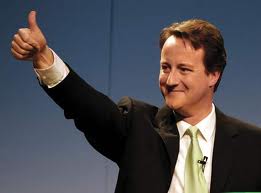
As the threat of the strike grows, it keeps calling on the union not to take action. ‘Don’t do this,’ it says, ‘you’ll leave the British people without their cars. Worse, you’ll leave them without deliveries to their shops. Worse still, you might leave them without ambulances or fire engines.’

As time goes on, David Cameron ratchets up the rhetoric. ‘A 78-year old grandmother in Leeds recovering from a stroke will be unable to stock up with food or get to hospital. Don’t strike! Surely you don’t want her death on your conscience?’

You understand that there’s always a 78-year old grandmother somewhere whose life would be threatened by a strike, so no-one can deny the claim.

Meanwhile, Cameron and his colleagues would pile the pressure on Labour. ‘Come on,’ they would say, ‘you owe it to your voters to tell your friends in Unite to think of the suffering they would cause. Tell your friends not to inflict such harm on the country. Speak out for your electors against your friends.’

From time to time they would replace the word ‘friends’ by ‘paymasters.’

Whether or not the strike happened, the government would emerge as the voice of sweet reason, the opposition as accomplices in an attempt to blackmail the nation. 


And that’s how it would play in the press.

Here’s how the same government would attempt to turn the situation to its advantage if it possessed neither competence nor cunning.

It would say to itself, ‘time to maximise the potential damage of the strike.’

No-one would say ‘hang on, it hasn’t actually been called yet. The arbitration talks haven’t even started. And the union has to give seven days notice of a strike anyway. So don’t go over the top, hold something back for later.’

Instead Cameron and his friends would try to maximise the pressure from the outset. They would call meetings of emergency committees. They would go on radio to predict dire consequences. They would call for calm but at the same time recommend filling up fuel tanks as soon as possible.

A senior minister, perhaps Francis Maude, might even advise storing fuel in garages, even though it’s illegal as well as dangerous to keep more than half a tank’s worth at home. A spokesman might have to go back to the media the following day to apologise for that advice.


Maude: yes, he's as hapless as he looks


The effect would be panic buying of fuel and queues at filling stations.

Quickly a backlash would set in as no strike is called. People would start to say that the government is fostering panic and talking rubbish. The opposition would come across as balanced and calm.

And that’s how it would play in the press.

And today’s test question is: guess which approach the British government has taken?

Wednesday, 28 March 2012

Science and the gospels: best not to confuse them

On a radio programme about the forensic investigation service the other day, Helena Kennedy QC, one of Britain's leading lawyers, pointed out that it would be wrong to put science on a pedestal and take it for gospel.

Helena Kennedy: a powerful statement on science and gospel
I immediately thought of the case of Shirley McKie. A former police detective in Scotland, she was accused of having left a fingerprint on a door frame at a murder scene. Because she denied ever having been in the house, she was suspended, then dismissed and finally charged with perjury. But in 1999 she was acquitted of any wrongdoing and eventually won £750,000 of compensation from the police for her treatment. 

Shirley McKie: rather proves Kennedy's point
I imagine McKie would not be at all inclined to put the fingerprint experts who testified against her on a pedestal, unless it was a very high one from which she could push them off. Two other experts later maintained that the fingerprint wasn’t hers. The whole business did little to enhance the standing of forensic science.

But then I got to thinking a little more about Helena Kennedy’s statement. It occurred to me that, while it is perfectly true, it becomes much stronger if you turn it round.

Don’t you get tired of all those people who keep telling us that revelation is the best guide to understanding nature? That scripture shows that the universe is 6000 years old? That the creation of the world in seven days isn’t to be seen as a metaphor for a long process but has to be accepted as a statement of literal truth?

Helena Kennedy is right. We shouldn’t take science for gospel. But I'd like to put it to her that we make an even worse mistake if we treat the gospels as science.

Monday, 26 March 2012

The 250K dinner that adds a little spice to the weekend

Political news is so dull, isn’t it, when there’s no juicy scandal doing the rounds?

Fortunately, this weekend the British were served a real treat. It turns out that the man the Conservative Party appointed as its treasurer had been suckered, by a team of journalists posing as foreign businessmen wanting to make a donation.

‘You’re based in Liechtenstein? No problem. You just set up a UK subsidiary or channel the funds through employees over here,’ he apparently said, or words to that effect. Smart, right? The law takes a bit of a dim view of political donations from abroad.

And this fine gentleman — Peter Cruddas, since you ask, but don't bother to learn the name as he’s already gone — made it quite clear that for a couple of hundred grand, or call it quarter of a million, they could have dinner with the Prime Minister and, indeed, get their complaints taken up by what he wittily refers to as his Policy Committee.

This is hardly the first time that journalists have mounted a sting of this kind, pretending to be wealthy businessmen with money to burn. Prince Edward and his charming wife fell for something similar just a few years ago, rather suggesting that the Tory Party is appointing to senior positions men whose intellectual acumen is fully up to that of the royal family.

Except that the royals seem a little smarter at learning from mistakes.

What I found most fascinating about the Cruddas business was the answer it provided to an issue that has long troubled me.

I couldn’t work out why the government seemed incapable of developing a coherent policy on anything. It was going to privatise the forests and then it wasn’t; it was going to launch an aircraft carrier without aircraft and now it’s decided that perhaps there should be some; it was never going to build a third runway at Heathrow, and now it says it might.

Obviously we could just put this down to the kind of moronic incompetence that led to the appointment of Cruddas. But these men shone at Eton and Oxford. There had to be another explanation.

You have to bear in mind that David Cameron prides himself on having practically wiped out the the Tory Party’s debts of £20 million. So, as they would say in the US, do the math: at 250 grand a pop, that’s 80 dinners.

Can you imagine the torrent of brilliant ideas that must have rained down on the Policy Committee? Perhaps Cameron started by seeing the characters who were against the third runway. Now they’ve seen a bunch who are for. And the policy of course follows.

And see how clever Cameron’s being? By saying that he hasn’t quite gone over to backing the third runway, he leaves the door open to a few more meals with the pro lobby. And then he can get going on the backlash from the antis, again at 250K a time.

He’s in clover. Just think of the war chest the Party will have for the next election!


Makes one proud to be an Englishmen to know we’re governed by such giants.


A political giant, as much for his intellectual as for his moral qualities

Friday, 23 March 2012

If you can't say it short, it's probably best not to say it at all

If this is a short post, that’s by design and not accident. 

Pascal once wrote ‘I'm sorry to have written you such a long letter; I didn't have time to write a short one’. Writing well, but short, is my driving aspiration, however mixed my success in achieving it.

Some epochal documents have, after all, been strikingly concise. The Constitution of the United States has been the rock foundation of a system of government now into its third century and which, for all its failings, has prospered and guaranteed a surprising measure of freedom. 

The Consitution is 7000 words long and took four and half months to draft.

It drew much of its inspiration from another text nearly six centuries older, Magna Carta. The Charter remains the foundation document of many legal systems around the world, not because its provisions have survived, but because it sustains the principle of the rule of law itself. 

Magna Carta is 3000 words long and took less than five days to draft.

Magna Carta: concise and to the point and it resonates down the ages
So it’s curious that the present British government has taken 22 months to enact its Health and Social Care Bill. It is 16,500 words long. It is confused and potentially extremely damaging to the NHS. The vast majority of clinicians and healthcare managers find it toxic, as do their professional associations. The groundswell in the electorate against the measure is only likely to grow as the consequences of its adoption this week become clear.

The moral of this story? If it takes you a long time to find the right words, you’re probably saying the wrong thing.

And for the rest of us? When the government starts pouring out the verbiage, take cover. The bullshit’s about to turn into a torrent, and what comes behind is likely to be a lot worse.

Wednesday, 21 March 2012

Wouldn't it be nice... a fable for our times

It was irritating when Carol, in all her cocky self-assurance, interrupted the professor to contradict his views.

‘But... honestly... come on... It was an incoherent mess. They weren’t even consistent with their own stated principles...’

But the professor had seen, and indeed seen off, a lot of over-enthusiastic undergraduates in his time.

‘You have to be careful. You’re trying to judge a historical subject by today’s standards, standards that are recent and didn’t necessarily apply then.’

‘But surely — we’re talking basic credibility here... even they must have seen that their words and deeds were in total contradiction?’

‘I think they would have said,’ the professor replied again, infinitely tolerant, speaking slowly as he considered the subject with the respect it deserved, ‘that it was the objective that mattered. Don’t forget that this was a time when there was a tendency to take an almost religious view of goals, as though they were divinely ordained and fulfilling them was a quasi-religious duty.’

‘But they didn’t! They failed dismally to hit their stated objectives.’

‘That was their tragedy. But it didn’t mean that they weren’t sincerely bent on achieving them.’

‘I thought religion was about the pursuit of virtue. What virtue was there in lying to achieve goals which they then failed to reach?’

‘Religion was by no means about virtue. Often it was about mere ritual. The repetitive incantation of meaningless formulas with little relation to reality.’

‘What sort of things did you have in mind?’ I asked, if only to put an end to Carol’s monopoly of one side of the conversation.

‘The kind of things we were talking about. ‘The surest way to growth is by cutting debt’. Obviously when no growth occurred and the debt remained stubbornly high the emptiness of the claim was clear to all who had eyes to see it. And it can’t have been a surprise: they knew their economics, they knew it couldn’t be true. But it’s as though they thought that saying it often enough would make it so.’

‘What about ‘we’re all in it together’?’ That was Carol again.

‘Well of course, that was the wildest claim of all.’

‘It was a blatant lie!’ She almost shouted.

‘Well, was it? Was it really? Certainly, it’s true that the 2012 budget benefited only the wealthy, allowing them to escape the effects of their own errors, while the poor bore the pain. But when the inevitable backlash set in, didn’t that turn the consequences of the policy back on its architects? When finally the majority rounded on the feckless minority and drove them from power? Didn’t they too find they had to pay a price?’

‘Out of power for a generation,’ I agreed.

‘And it was the turning point that made Britain the kind of society we see today,’ he concluded, almost triumphantly, ‘where despite our problems we seem to have understood that means based on falsehood can’t achieve an honourable goal, and no policy built on social injustice can lead to lasting gain.’


Osborne and his budget: a painful hangover from the past?

Monday, 19 March 2012

What goes around comes around. Sometimes like a boomerang

The film 300 earned its makers some $456 million, a tidy return on an investment of $65 million. But then the heroic tale of 300 Spartans battling to the death at Thermopylae against a Persian army of thousands has so many features to commend it, even if historical accuracy or simple plausibility aren’t among them.

Bloody and dramatic but not as bad as today
The background to the film is the long hostility between the great powers that faced each other across the fertile crescent of Mesopotamia, between the Euphrates and Tigris rivers. What’s fascinating is the way the players have changed down the ages but the essential conflict has persisted. 

The Persians at the time of Thermopylae were the Achaemenids, the dynasty that gave us Xerxes and Darius, and their adversaries again and again were the Greeks. In time, though, Alexander the Great led the Greeks in bringing down that great Empire. Out of its ruins rose another, founded oddly enough by a bunch of nomadic tribesmen from the north-east of the country, the Parthians. Meanwhile, the Greeks had fallen too, passing under the dominance of the Romans.

So for the next four centuries, Romans and Parthians faced off across that great border. For Roman leaders, the debate was always whether it was perhaps best to leave well alone and avoid picking a fight with the Parthians, or to take a chance in the knowledge that victory would lead to triumph, though defeat might lead to loss of power if not of life.

The same fighting and the same Roman soul-searching continued once the Parthians had in turn been replaced to the Sassanian dynasty, another 400-year Persian Empire. Its triumph came in the killing of one Roman emperor and the capture of another, said — with probably as much historical accuracy as exemplified by 300 — to have been used as a footstool by the Sassanian ruler to mount his horse.

In time, the Roman Empire morphed into the Byzantine, but between it and the Sassanians, unstable peace continued to alternate uncomfortably with bitter war until the seventh century. Then a terrifying new power emerged from the South to batter them both with the power of a hurricane. The prophet Mohammed died in 632; within two years the first Caliph Abu Bakr had welded the Arabian tribes into a single fighting force; within two years after that his successor Umar had beaten both those Empires, capturing key territory from Byzantium and entirely overwhelming Persia.

So it’s with a certain sense of irony — ‘amusement’ would be too strong a word — that I watch the present deepening dispute with Iran. We’re right back there again, among the Achaemenids and the Greeks, the Romans and the Parthians, the Sassanians and the Byzantines. Once again, the area of conflict is Mesopotamia, Syria, the Levant. And the Levant, of course, includes Israel.


Even the sabre rattling is the same. Peace? War? Is victory worth the risk of defeat?

The more things change, the more they stay the same.

And yet, and yet, there’s a fairly major difference. Leonidas, king of the Spartans at Thermopylae, is said to have replied to the warning that the Persians would turn the sky dark with their arrows, that the Spartans would therefore fight in the shade.

If only Israelis and Iranians were only armed with arrows. Sadly, it’s a bit harder to make brave jokes about the shadow cast by nuclear weapons.

It feels as though something old and familiar has come round again, another twist in the spiral of the old conflict with Persia. Still, if it’s not to be last twist, perhaps this time we ought to try to find a way of calming things down a bit.

Saturday, 17 March 2012

Enjoying St Patrick's: a cautionary tale

It being St Patrick’s day, I’m reminded of an occasion when I took two doctors from Belfast to visit some US hospitals. Our American hosts had issued us with name badges, and those for my guests were marked ‘Ireland’. Not ‘Northern Ireland’, just ‘Ireland’.

Isn’t that kind of historical ambiguity absolutely wonderful? At that time, there had been some seventy years of pain and bloodshed about whether there was a distinction between Northern Ireland and the rest of the island. Indeed, since the Good Friday Agreement was a long way in the future, we were still caught up in the depths of that misery, the murders, the bombings, the atrocities. So a blissful unawareness of the issues had a certain charm. As I
d found when a colleague of mine due to accompany me to Belfast came to ask about it.

‘Do I need to change money?’ she asked. ‘And will I need my passport?’

I tried to explain to her why the State in which we lived was called the ‘United Kingdom of Britain and Northern Ireland’. But I probably confused her still more by telling her that we wouldn’t have needed passports even to travel to Dublin, although that city really is the capital of an ostensibly foreign country.

‘No passports to travel to the Republic of Ireland?’

‘Nope. It’s probably because we
ve been such enemies for so long. It’s bred a sense of trust in each other.’

As I tell these stories, it occurs to me that they aren
’t really a reflection on the people who prepared those name badges or who didn't understand the chaotic arrangements between countries of the British Isles. It isn’t the people who are stupid, it’s the arrangements.

The visit with the Belfast doctors to the US happened, fortuitously, to include St Patrick’s day. And even more fortuitously one of my guests turned up on the day wearing a green sweatshirt. 


A badge marked ‘Ireland’. Green clothing. On St Patrick’s day. In a nation where everyone, but everyone, claims Irish ancestry. Wherever we went, he would find complete strangers coming up to him, seizing his hand and wishing him a happy St Patrick’s day.

Now this particular doctor was no extremist, but he was very firmly a Protestant and a Unionist. He lived in North Antrim, which made Ian Paisley his Member of Parliament and, while he didn’t speak as loudly, thank God, he certainly had much the same accent.

He kept his cool all day. But every time he received those congratulations, he replied with exactly the same words, cooly pronounced in his Antrim voice.

‘We don’t celebrate it.’

The reactions were a delight to behold. A glance at the name badge, at the green sweater; a moment to take in the accent, undoubtedly from somewhere in the Emerald Isle; and then a few seconds to absorb the import of the words. With a shake of the head, the bemused speaker would wander back into the crowd, defeated and disappointed.

It was completely appropriate. We had once more contributed to the sense of total incomprehension which is, above all else, the hallmark of Anglo-Irish relations.

Happy St Patrick’s Day! If you celebrate it.


Best way to enjoy the day. And maximise the confusion