Friday, 31 August 2012

Misty and the season of mists

Our Scottish break kept up its cultural joys for us, when we went into the John Muir house in Dunbar. That’s Muir as in Muir Woods, for those of you more familiar with the joys of California than those of Scotland.

We were there to see our daughter-in-law Senada’s latest creation: silk embroidery of a tracery of branches, displayed on a skylight so that when the sun shines (it happens in August, even in Scotland. Sometimes) it produces a pattern of light that brings a sense of trees – so dear to Muir – into the room, and splashes their shadow on the walls.

In Muir House: Senada's silk creation casts its light on us all
But then the holiday was over and we headed back to find our new little house. The cat, Misty, has now settled in well. He seems as happy as we are to be out of rented accommodation, to the point of having reverted to kittenhood: he’s taking to playing with things again in a way he hasn’t done for years. He also loves the windows, sitting for hours looking out of them. It must give him great satisfaction to know that, with his cat flap, he can get out there when he likes so doesn’t have to until he feels like it.

Misty: a cat will play with anything when he reverts to kittenhood
Not that he’s changed character at all. He still doesn’t come down to eat until I come down in the morning, even though he doesn’t need me to get access to his food. And while he seems perfectly happy with using the cat flap generally, if I’m around he likes me to let him out anyway. So if I don’t react fast enough he shows me his displeasure in the time honoured way, with a gentle swipe of the claws or nip of the teeth.

The other time-honoured tradition that we’re enjoying is the wood fire: we’ve put in a great new stove. Beautiful to see it lighting up the room in the evening.


Glorious. But in August?
Beautiful, that is, until I think that it’s still August (just). How the heck can it be that cold? Last night on the way home from the station I was sorry not to have gloves; this morning in the park with our dog I was sorry not to have worn a heavier jacket.

Oh, well. Autumn’s in the air. We may not have had a summer (unless we count that fortnight in March, and the Olympics), but we’re back on the way towards winter.

Life’s rich patterns, the rolling of the seasons. At least I have the joy of my cat teaching me manners and a fire to cheer the evening. And the memory of beauty in Scotland.

Wednesday, 29 August 2012

The glory of the Cameron government is all Latin to me

One of the glorious triumphs of the present British government is the introduction of so-called free schools.

These schools are free in the sense that we all pay for them out of taxes. They are free in the sense that they are not under local government control which means they don’t have to follow policies chosen by elected representatives or be guided by the general interests of the community to which they belong, or at least in which they reside. And they are free in the sense that their educational principles can be dictated by a small group of self-appointed experts on education.

One of the most outspoken supporters of free schools is a journalist called Toby Young who has become chair of governors at one of the first free schools opened. One of the handful, I might say, since schools have not been flocking to his banner as he rather suggested they might, before the last election.

An aspect of his school that has attracted particular attention is that it has made Latin a compulsory subject. Many argue that studying Latin will open children to the roots of our culture, presumably on the basis that reading Virgil will be easier and more stimulating to bored teenagers than reading Shakespeare or Dickens or, come to that, even Graham Greene.

They also suggest that a knowledge of Latin comes in handy when studying modern Romance languages. I’ve learned three of them, and I leave it to you to guess how invaluable I found it to know the behaviour of a deponent verb in Latin when I came to grapple with Italian, French and Spanish, none of which has such verbs. Or declensions. Or ablative absolutes. Or most of the conjugated forms. Or the ludicrous habit of sticking the verb pretty much anywhere in a sentence, often apparently at random.

I studied Latin for years and years. Five years at school. A couple of years as an optional subject at university. It left me in a particularly frustrating half-way house of understanding: when I came to do research on science in the eighteenth-century, a time when much of the material was still written in Latin, I had just enough mastery of the language to know what the writer was talking about, but not enough to know what he was saying about it. He was, say, talking about what happened to kinetic energy in collisions between elastic bodies, but was he saying it was conserved or that it wasn’t?

Blowed if I could tell. Very exasperating. If only they’d just written their own language, it would have spared me a great deal of pain.

Not that I think that a knowledge of Latin is completely without value. No. There came the day when we were introduced to the poetry of Catullus, for instance. Far beyond our power to understand, but what the heck, with a lot of help we managed to struggle through his short elegy 101.

What was it about? He’d travelled out from Rome to grieve for his dead brother. Standing there before the ‘mute ashes’ he pays his last respects, going through the conventional motions expected of a man at a funeral, presenting grave gifts wet with his tears.


Catullus, whose sorrow for the loss of his brother echoed down the ages.
At least as far as me.
And then came closing words that I found truly searing. At least once they’d been translated for me:

‘Atque in perpetuum frater ave atque vale’

‘And for evermore, brother, hail and farewell.’

There’s a deeply moving pathos to that long, forlorn goodbye, echoing down all eternity.

Worth seven years of study? Perhaps if that’s your choice, as it was mine. Worth investing public money in the compulsion of unwilling spotty fourteen-year olds? I doubt it.

But I hope before long we’ll be able to wish ‘ave atque vale’ to the government that came up with the idea. In perpetuum.


Postscript. People have pointed out to me that I tend to take a partisan line in some of these posts and don’t give the present British government credit for its achievements. 

To set the record straight and to re-establish my reputation for political balance, here is a full list of the most notable successes of that government so far:

Monday, 27 August 2012

Getting culturally improved in the Athens of the North

One of the great advantages of visiting Edinburgh at this time of year is being able to take advantage of the Festival, or more particularly of the Fringe.

As it happens, today seems to have been pretty much the last day. Since it is one of the great cultural events of this remarkable nation, we hurried into town while we still had (just) time, and took in a couple of shows.

The first we saw was a fine stage performance based on themes drawn from Shakespeare’s Tempest. A powerful tribute to one of the greatest figures not just of English but of world culture, it spoke directly to some of the deepest concerns of mankind’s psyche. OK, it was called The Magician's Daughter and had a cast of two supported by puppets but, hey, we had our granddaughter Aya with us and we had to find something that appealed to all present.


Ariel and Caliban: the Bard revisited for our time
We then climbed further into the esoteric by taking in a performance that ran through a series of metaphors on the human condition, involving juggling clubs, hula hoops, a trapeze and, at the very end, a pillow fight between the performers, Ken and Tina, and the audience.

Ken and Tina: revealing you have to climb high to
reach the peaks of culture offered by Edinburgh
It seemed only appropriate to round off the day with a visit to a bowling alley. After exploring the limits of our intellectual and aesthetic capacities, what could be more fitting than to put our physical skills to the test too?

Aya showing that the trials of her aesthetic sensibility
had done nothing to lessen her hand-eye coordination
The young man at reception in the bowling alley told us with great pride that he was Edinburgh born and bred, had lived there for 29 years (so far), and had never been to a single show at the Fringe. It wasnt many weeks ago that I mentioned my appreciation of the word curmudgeon so it was wonderful to come across so striking a living illustration of one today.

All in all we had an excellent day. Just goes to show that Edinburgh deserves its status as Athens of the North (and with little of the current economic unpleasantness of the Southern original). We who are privileged to live in the same country fail to take advantage of it to our great loss.


Aya rapt in 'Tumble Circus', her Dad rapt in Aya
Aya had a great time too.
Saturday, 25 August 2012

After the Olympics: why break up Britain?

Took a trip yesterday which might, in a couple of years, involve a border crossing. Possibly. Though probably not. 

We took a northbound train as far as the fine historic town of Berwick-upon-Tweed. There was a time that Berwick was jointly run by the English and the Scots but that involved an element of trust which, as most Scots would ruefully admit, ends up with regret on their side and prosperity on the other. For a while, the Scots guarded the north gate, the English the southern, but then visitors started noticing English soldiers on the north gate too and before long the town was English. All that’s left of the Scots heritage now is the fact that Berwick plays its football in the Scottlish leagues.

Beyond Berwick, we drove into Scotland proper. Though I use the word ‘proper’ in a loose sense. To give you an idea, we’re just twenty miles from Edinburgh and the town’s called ‘East Linton’, with that give-away ‘ton’ ending that says ‘Anglo Saxon’ in a deafening roar. Not that the word ‘East’ is especially Gaelic either.

Just to rub the message home, the village next door’s called Preston. There’s a bigger one of them in England (and quite a few smaller ones too). 

Ah, the Lothians, that glorious English bit of Scotland
Yes, this is the fine old English-speaking kingdom of Lothian, with its capital in that great Anglo-Saxon city, Edinburgh. All of which rather relativises that business about Scots independence. Independence from whom, exactly? The English? They’re right here, guys; take a look at the place names around you.

Still, that being said, I was never against the notion of Scottish independence per se, or not until recently at least. English nationalism isn’t an attractive force and, as the history of Berwick proves, it’s never been marked by generosity towards any nation that England can bully. It struck me that if the Scots wanted to go their way, well, what the heck, why not? I mean, no-one’s proposing an impermeable frontier between us, are they? They’d keep the same currency. They’ve already got a parliament. Independence wouldn’t be so much a quantum leap as a bit of incremental drift.

Now there’s nothing really inspiring about incremental drifting. Which may explain why no-one’s unduly inspired by it, even in Scotland. The great vote is due in the autumn of 2014, to coincide with the seven-hundredth anniversary the great Scots victory over the English at Bannockburn (I say ‘greatest’ as though there had been others. There have, haven
’t there?). 

If the polls are to be believed, the Scottish electorate won’t be voting for independence.

But Scotland’s run by the smartest political operator in Britain, Alex Salmond. You want evidence of his smartness? Look at the mess David Cameron’s making of trying to lead a Coalition government in England. He’s heading rapidly for the dustbin of history. Salmond didn’t even try to form a coalition, he just ran a minority government so successfully that it became the springboard to give him a majority administration of his own. Don’t rule out his being given a statue on Princes Street in the fulness of time.

Well, that smart an operator isn’t going to lose a referendum. How will he square the circle? He’ll get a second question on the ballot paper, a question for ‘devo max’, much extended devolved power for the Scottish parliament. Cameron says no but, hey, who even listens to him these days?

It’s devo max that’ll pass, and devo max that the Scots will get.

To be honest, I’m quite relieved. As I said, I wasn’t that worried about the breakup of the Union if it came to that. I feel much more English than I feel British, and the Welsh and Scots are even more tightly linked to their nations. In fact, the only true Brits are those who get the nationality by naturalisation, because they don’t opt for any of the constituent nations

But my attitude changed during the Olympics. The Team GB performance shone a different light on things. There were the Scots and the Welsh winning medals alongside the English under GB colours. There were some from Northern Ireland too, and that’s not even part of Britain at all.

Within a week of that triumph, England, on the other hand, was being thrashed on the cricket field by South Africa and, in the process, losing its hard-won and briefly-held status as world number 1 in that noble game.

Lamentable English failure after signal British success. Perhaps there’s something to be said for the Union after all.

So I’m delighted to be back in Scotland, delighted to be visiting my granddaughter
’s family and our friends, delighted to be seeing this beautiful country again.

And not a little relieved that there still isn’t an international border between us.

Wednesday, 22 August 2012

The making of an unexpected warrior

Amazing the things that float to the surface when you move house.

Some years ago I started to make an album of photographs I inherited from my father. One of those projects I’ll go back to in the future, when I have more time. Because some day I’ll have more time. Won’t I? Surely I will.

Anyway, I was looking at some of the photos and was struck, as I have been so often, by those of his time in the Royal Air Force during the Second World War.

I’m suspicious of the term ‘gentleman’, which traditionally meant a nobleman, and therefore someone who didn't work for a living, i.e. an over-indulged parasite on society, so I’m never wholly comfortable when someone uses it of me (that terrible thing in business: ‘thank you, gentlemen, for attending this meeting’; if I’m at the meeting, it’s because I’m working, and therefore not a gentleman).

If I'm sure of anything, it
s that my father, whether or not he was a gentleman, was certainly a gentle man, one of the gentlest I've known. So the idea that he rained destruction down on people from the skies is a hard one to reconcile with the image I have on him. Seeing him in uniform is, indeed, the only way for me to believe it true at all.

He was no happier with the idea than I am. It was a great relief to him that he never took part in the great raids on cities, because was assigned to 101 Squadron which did special operations: often a single plane dropping supplies to resistance groups, or paratroops into occupied territory. But he did have to drop bombs a few times and, as he would say, it was odd to fly over a field full of men and look back to see it just a mass of craters with barely a living soul left.

And that all happened when he was in his early twenties. Imagine giving that level of killing power to some of the 22-year olds you know today.

Of course, the truth is that we do. And we send them off to Iraq or Afghanistan, to conflicts in which it’s far less easy to believe than in the great struggle against Hitler. And rather more often than we’re comfortable about, it goes wrong, with one of these young men running amok with his hugely dangerous weapon destroying a lot of people, often including himself.

Oh, well. Bad news. Perhaps it’s better not to think about it and just concentrate on a few amusing photos instead.

My favourite is the last. Propped up agains the wheel of a Stirling bomber. And smoking a pipe! At 22 or 23: who does that? Still, makes a good picture doesn’t it?


I understand basic training can be pretty exhausting

A motorbike? Never saw him on a motorbike in my life.
Works though, doesn't it? Especially with that smile.

I sing of arms and the man. And the pipe

Monday, 20 August 2012

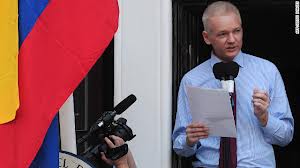
Julian Assange: tragic hero for our times

By tradition a tragic hero is a man (less frequently a woman) with the qualities for greatness, brought low by some flaw in his personality: Macbeth undone by overweening ambition, Othello loving not wisely but too well.

Julian Assange has to his name an accomplishment at least as notable as the victories won by those two heroes: through Wikileaks he has revealed abuses of power to a world that only guessed at them and was shocked by their extent.

Julian Assange addressing the world from the Ecuadorean Embassy in London
and getting a breath of (relatively) fresh air
Today he is up against difficulties that have led to his painting himself as a victim of persecution, a champion of free speech facing martyrdom for his beliefs. Prometheus taking on the gods, Mandela unbowed before the State. And when Assange appealed to word opinion yesterday, he even spoke out as a family man, a father denied the company of his children.

Yes, it’s an attractive self-image. 


And yet, and yet. The immediate cause of his difficulties is somehow not quite that noble. The flaw in his character isn’t quite the grand failing of a Cassius plotting against Caesar or a Lear giving away wealth and power out of love. No, it’s a failing much more appropriate to our time. The fatal flaw not of a Hamlet but of a Bill Clinton, another man who might also have been great without it.

He couldn’t keep his trousers zipped.

Which, come to think of it, rather relativises that stuff about the poor persecuted family man.

The irony of it all is that without being a legal expert, without even having seen the full evidence, but just based on the pretty extensive rehearsing of it in the media, and on my knowledge of how difficult a rape charge can be to prove, I’d have thought he had every chance of getting the accusations against him dismissed. Both those women in Sweden at some stage consented, so the issue is merely whether they were later forced to go beyond what they had consented to. And that’s their word against his.

With a good lawyer, he could surely beat that rap, couldn’t he?

I’ve been pointed to an article by Naomi Wolf that makes some pretty powerful points undermining the case against Assange. What it doesn’t do is challenge the standing of the Swedish judicial system. Now, I’m sure there are terrible miscarriages of justice in Sweden, just as there are everywhere, but given the choice, I’d be more inclined to take my chance on the Swedish system than on the British.

I’ve read some material about the Swedish attitude towards extradition to non-EU countries. It seems to me that the US would have some difficulty getting Assange extradited. More trouble, at any rate, than they would face in Britain. After all, the Brits constantly ship people off to the States for trial, even for crimes not committed in the US. It’s as though Uncle Sam has only to name someone over here for him to be sent over there.

Seems odd that Assange is so reluctant to try his luck in Sweden.

Unless, of course he has knowledge about his case which he hasn’t yet shared with us. Something that tells him that he shouldn’t be too confident about winning in Stockholm. If that’s so, it would be lovely to find out. Perhaps some internet site with a mission to disclose confidential information might tell us some day.

In the meantime, we have a curious spectacle. A man who wants to be seen as a whistleblower of historic stature is perhaps not being altogether candid about his own quandary. A man who is doing so much to protect his freedom is forced to live in a single room in a building he can’t leave. A man whose path to the reputation he covets is blocked by his apparent inability to master his appetites.

Yep. That seems to fit the bill. All the qualities that would make a tragic hero for our times.

Friday, 17 August 2012

Save us all from lazy politics

‘Law and sausage,’ said Otto von Bismarck, ‘are two things you do not want to see being made’.

Making law is by far the easier, which is why the lazy politicians I spoke about the week before last are constantly doing it. Here’s how it works.

Suppose a terrible crime is committed in Stamford, Lincolnshire. Or indeed Stamford, Connecticut. Perhaps a father killed his children, both under five, with a hacksaw.

There’s a massive scandal. In other words a few dozen journalists talk about next to nothing else for the best part of a week. The government feels bound to react.

What it should do is carry study the conditions in Stamford and other similar communities. It should find out whether this kind of crime is associated with particular economic or social circumstances. It should canvas informed opinion on how to deal with those problems, perhaps even looking at experience abroad on the most effective approaches.

Then it should adopt a sensible set of proposals and implement them. 


That takes time and costs money. The initial studies themselves are expensive enough and implementing the conclusions far more costly still. It might need more and better policing, better and more extensive social services support, tighter monitoring of children at risk, and so forth.

Meanwhile, once the initial furore has died down, the journalists who were demanding immediate action go back to their usual refrain, the need to cut costs. More police? More social workers? More support? Dream on.

So how does government square that circle? Easy. It passes new legislation. It receives the plaudits of campaigners by specifically targeting the killing of children with hacksaws. Pedantic lawyers point out that it wasn’t strictly legal to kill them before, but nobody listens. This terrible act has happened and it must be prohibited.

‘This must never happen again,’ they all chorus in unison, across politics, the media and the campaigning organisations.

The legislation provides for draconian penalties, including a minimum gaol sentence of 25 years, on which no judicial discretion can be exercised. Not that there was evidence of judges taking a particularly lenient view of infanticide with a carpenter’s tool before.

The opportunities for lawyers become immense. ‘Your honour,’ one will soon be pleading, ‘in common parlance a hacksaw has a blade not exceeding 20 mm in width and this one is at least 3 cm wide. It should be referred to more properly as an open-handled panel saw.’

There will also be gainful work for civil servants. Codes of application will have to be prepared for all the agencies affected: the police, the courts, social services. Consultants offering training courses will have a bonanza. Staff will be consulted and their comments fed back into new instructions and so on for at least as long as the full study would have taken.

That will about all the effect the new law will have. Its application requires effort and that requires manpower: more police and and social workers, for instance. But more police and social workers cost a lot more money, etc. etc.; see above for details.

One area where this kind of activity for its own sake is particularly prevalent, in Britain at least, is healthcare. We all really, really care about the National Health Service, so it’s almost a rite of passage for any new government to do something for, or at least to, the NHS.


The NHS. We love to love it.
And politicians love to muck it about
In the 27 years I’ve been working around the NHS, I’ve seen:
  • the old structure of governing boards, in which no one individual was responsible for the performance of a hospital, replaced by a bright new structure of General Managers who would be personally answerable 
  • control by the old geographically-based health authorities replaced by direct control of hospitals forming self-governing ‘NHS Trusts’ 
  • NHS Trusts, found not to be sufficiently powerful, gradually replaced by ‘Foundation Trusts’ with greater control of their affairs 
  • ‘General Practitioner Fundholding’ introduced so that GPs would contract for hospital services and negotiate the price to pay for them 
  • ‘Primary Care Groups’ to bury fundholding while still theoretically representing primary care physicians 
  • ‘Primary Care Trusts’ to beef up the powers of these organisations 
  • ...and now ‘Clinical Commissioning Groups’, smaller than Primary Care Trusts, to move power downwards once more towards GPs

Every one of these reforms has been announced with a fanfare, every of them has been found wanting and declared inadequate before being replaced by the next.

The Scots gave up on all this, and quickly went back to the geographically-based authorities (they call them health boards) to run their hospitals. There’s no evidence that Scotland does particularly less well than England.

What’s curious is that in among all these wonderful reorganisations, I’ve only really seen the English NHS improve markedly and visibly once: under the last government which increased funding by an impressive amount and cut waiting times – two years at their worst – to a statutorily backed maximum of eighteen weeks.

The current government intends to take £20 billion out of the English health service so it’s fairly obvious what kind of improvements we can expect in the next few years.

So what have all the reforms had in common? They’ve been dictated from above. They’ve required nothing more substantial than legislative effort. And they’ve given the impression that the government of the day was taking important matters seriously.

And one other thing: they all cost a fortune and spread massive demoralisation as the reorganisation axe fell.

Lazy men’s politics. Easy. Irrelevant. And massively damaging.