Sunday, 30 June 2013

How Wendy Davis stands up for us all. And Nigel Farage demeans us.

Every now and then, in the midst of all the ghastly and demoralising examples we see of morally rotten if not actually corrupt behaviour by politicians, we come across an instance of real courage and decency.

When it comes to rottenness, we have for some time been exposed to an instructive example in England, for instance. Here we
ve been enjoying the antics of UKIP, the United Kingdom Independence Party, ostensibly campaigning for British ‘independence’ from ‘Europe’. This is an extraordinary position to take, particularly at a time when:
  • we have just seen the sentencing a teacher who absconded with a fifteen-year old pupil and was only brought to justice thanks to a European Arrest Warrant 
  • it has become apparent that the only thing standing between us and continued intrusive snooping into our daily lives by the security services is the European Convention on Human Rights 
  • there is a chance of signing the biggest trade deal in history, one between the US and the EU

The reality is that UKIP is in fact anti-immigration, which means that it’s based on a lie. ‘Anti-immigration’ sounds superficially reasonable when it argues that we need to protect domestic resources for our own people, but it is in fact just a cover for racism: none of the anti-immigrant ranters ever denounces immigration by white English-speakers, from the Commonwealth, say, or the United States.

But it isn’t surprising that UKIP has a lie at its core. Its leader is Nigel Farage, who likes to present himself with a pint in one hand and a cigarette in the other, as a shining example of the ordinary Brit you could meet in a pub anywhere.

Actually, that may be true: I’ve met some pretty toxic individuals in pubs.

Above all he puts a lot of effort into cultivating an image of honesty. ‘You can trust me, guv’, that kind of thing. Sadly, the last politician who tried that was Tony Blair and look where that led. And it’s no different with Farage. He’s spoken forcefully against tax havens in the European Parliament (yes, not the least paradox of the man is that the only body to which he’s managed to get elected is the European parliament, from which he wants us to withdraw). Yet it
 recently emerged that he set himself up a special account in the tax haven of the Isle of Man. ‘A mistake,’ he’s assured us since, but isn’t that the plea of every politician caught with his hand in the till?

Wendy Davis: inspirational,
as she talks out a bad bill limiting freedom of choice
With the atmosphere being poisoned by men like Farage over here, it was a delight to read about Wendy Davis in Texas. She’s the State Senator who talked out a bill restricting access to abortion, by speaking for ten and a half hours, without taking a break, eating or drinking or even leaning on any furniture. It was an act of great courage and tenacity in defence of an important principle.

A key part of Wendy Davis's armoury in defence of principle:
comfortable shoes to support ten and half hours on her feet
Sadly, Davis has only won a stay of execution. The bill will return and this time Texas Republicans will ensure it has the time to survive any filibuster and become law. The effect, according to today’s Observer, will be to reduce the number of clinics offering abortions in Texas from 42 to five.

Now I fully understand the objections many have to abortion. To be honest, I’ve never met anyone who’s in any sense pro-abortion, least of all the women I know who’ve had one. It’s always seen as a at best a least-bad option. And no-one’s suggesting they should be made obligatory, under any conditions. The other side of the debate is called pro-choice for a reason: it believes women should have that choice, and whichever option they choose, it should be respected.

What is it with people who feel that they have the right to restrict, on the basis of their own convictions, the rights of other people to exercise a choice? Certainly, they have every right to follow their convictions themselves (though I notice that they often don’t, as Farage showed). But those convictions are their own. Others don’t share them. What gives those who uphold certain values the right to impose them on others?

It’s time to proclaim that the equality of rights, enshrined in the Declaration of Independence of the United States and shared – in principle at least – by other democracies, specifically means not limiting other people’s choices to suit the views of others, however sincerely held.

That’s why we need more courageous and decent politicians like Wendy Davis.

And fewer Farages. Thank you very much.

Friday, 28 June 2013

Information is light. Particularly in healthcare

28 June: a date to remember for healthcare information in the National Health Service.

The government has launched a service to allow ordinary citizens to compare the performance of surgeons, within a discipline, with each other. By name. We’ll be able to see how well an individual does relative to all the others in the specialty, and to the average for the country as a whole.

In particular, we’ll be able to see if a surgeon is an ‘outlier’: achieving results so desperately different from the average as to be seriously worrying.

Taking part in the scheme is voluntary for surgeons, but if they refuse they will be named. I rather suspect that those who are identified as refuseniks will face far too many embarrassing questions to want to stay out of the system for long.

The first part of the service, covering vascular and adult cardiac surgery, went live on the 28th, and quickly created a lot of discussion. It identified no outliers: everyone in the field is sufficiently close to the average not to be spectacularly under-performing. On the other hand, the figures show clearly something we’ve known a long time: the fewer of a certain type of cases a surgeon does, the poorer their performance is likely to be when they do one. The argument in favour of specialisation in the kind of procedures an individual surgeon undertakes is starkly made by the evidence.


Identifying outliers: above the line is really bad
Fortunately there were none for vascular surgery

Bruce Keogh, Medical Director of the National Health Service in England, was interviewed by BBC Radio in the morning. He admitted that there was much to be done to improve the service. There will be questions about the reliability of the data, which have to be addressed. Even more important, as he pointed out, the service currently only measures performance in terms of mortality, which is inadequate as there are so few deaths in surgery these days: we need to start looking at the impact of the operation on the quality of life of the patient as well.

Even so, Keogh was right to claim that the initiative is a highly welcome innovation, and all the more so because it’s an exercise in transparency at a time when the health service is reeling under the impact of several scandals concerning attempts to hide information about its failings.

I took particular pleasure in seeing this initiative take off, partly because I felt the health service needed some good news, but also because it reminded me of a man I knew and admired a couple of decades ago. Brendan Devlin was co-founder of the ‘National Confidential Enquiry into Perioperative Deaths’, NCEPOD (pronounced en-see-pod).

Devlin was a quiet-spoken Northern Irishman with an accent I’d have enjoyed listening to even if I hadn’t been fascinated by what he had to say. He had a remarkable way of seeing to the core of a problem and expressing an opinion as striking for its clarity as for its wisdom. One that has stuck with me was his reaction to the proposition that ‘one avoidable death in 5000 operations is an acceptable level.’

He would point out to audiences that there are 5000 plane movements a day at Healthrow, and would then ask:

‘Would we find one crash a day at Healthrow acceptable?’

The only acceptable rate of avoidable death, he never tired of repeating, was zero.

NCEPOD was a highly original initiative. Surgeons who took part submitted data about any death occurring during surgery, immediately before or immediately.

‘We guarantee confidentiality for anyone taking part, and it’s completely voluntary,’ he would assure us, before adding with a twinkle, ‘though we do name anyone who doesn’t volunteer.’

His contention was that, while the primary cause of death during surgery was severity of illness over which the surgeon was powerless, there was an unacceptably high rate of other causes, such as inadequate supervision of junior practitioners. The result of NCEPOD’s work was a major change in approach towards surgery in the NHS, in particular with systematic supervision of juniors performing surgery. Rates of avoidable mortality fell dramatically.

Today’s initiative goes one step further: like Devlin’s, it names those who refuse to take part, but unlike his, it also names those who do allow their figures to be published.

In one major respect, though, it mirrors Devlin’s work: it is based on the proposition that information can lead to change for the better. Just knowing how professionals perform will lead to pressure to improve performance. That’s why this is such a welcome development.

Devlin died in 1999 but it’s great to see that his spirit lives on in this initiative. I imagine he’d have been pleased to see the NHS launching it, and leading the world in transparency in healthcare by doing so. 

Wednesday, 26 June 2013

Healthcare gatekeepers

Curious the similarities and dissimilarities between the US and Europe.

On both sides of the Atlantic, we live in societies that proclaim the sanctity of human rights, and which honour them except when some overriding factor, such as the race or creed of the individual, makes it more convenient to flout them.

Equally, our societies uphold the rule of law, except when governments feel that it’s too constricting and they think they can get away with circumventing it.

Finally, our nations are built on the principle that power is exercised by consent and that government can only rule with the support of the people, except on those occasions when ministers want, say, to wage a war and therefore need to ignore the pusillanimous refusal of voters to see that this is the right thing to do.

However, striking though the similarities are, there are also major transatlantic differences. For instance, a large majority in the US remains wedded to the retention of the death penalty, a view they apparently regard as justified by the astronomically high murder rate they enjoy.

Another significant difference is the approach to healthcare. A great many European nations feel that a person needing care should receive it without consideration of his or her ability to pay. Many in the US, on the other hand, see this idea as a dangerous concession to socialistic thinking, one that infringes the individual’s fundamental right to be kept waiting for treatment while finance staff check on insurance or, in the absence of cover, other means of paying for care.

It has to be said that the European model of treatment free, or nearly free, at the point of care, does make it difficult to limit demand on hospitals.

In Britain, the issue was addressed by asking General Practitioners to act as gatekeepers. Except for emergency patients, hospital care was only available on referral by a GP to a hospital physician.

That ‘except’ is the problem, of course. Because people who don’t want to go through their GP just recategorise themselves as emergencies and turn up at Accident and Emergency departments. A good article in today’s Guardian relates some horror stories from the Bradford Royal Infirmary: a patient in A&E to have a false nail removed, another for a pregnancy test she could have bought from a pharmacy…

But these are exceptional cases. What is clear is that there is mounting pressure on A&E departments, leaving them under a strain that is close to unbearable, and putting hospital budgets in jeopardy. There is, it seems, an increasing tendency in society to view a hospital A&E department as a first port of call in injury or sickness rather than a last; at the same time, in a society where more survive into frail old age, a greater number of people are showing up with serious problems requiring treatment.

A&E may sometimes look like a substitute for a GP surgery,
but it really, really isn't


Clearly the GP as gatekeeper system is failing. I saw this when I was working with my local hospital: A&E attendances were climbing inexorably, and emergency admissions growing with them, putting services under intolerable pressure. 

One attempt at a solution the hospital explored was to open a general practice inside the hospital, right by the main entrance. This seemed a good idea: patients would have the impression they were going to hospital but would be seen by general practice rather than far more expensive hospital staff. The sustained increase in A&E attendance showed, however, that it wasn’t working.

In my view, the scheme had one great flaw: the practice was to one side of the entrance to A&E.

What I’d like to see happen is the practice to be set up right in front of A&E so that only people arriving by ambulance would be able to access emergency services directly. Everybody else would have to pass through the GP practice, where they would be triaged: those absolutely requiring hospital services would be passed through, the others would be treated by practice staff.

That would make GPs truly gatekeepers to the service.

It strikes me that it’s an idea worth trying. Apart from anything else, it might help us preserve the specific characteristic of the British system, an idea I rather like, not just because I prefer not having to reach for a wallet at a time when I’m already seriously off colour, but because, funnily enough, our system costs little over half as much as the American model.

Which sounds like win-win to me.

Monday, 24 June 2013

Shades of 1984?

It’s wonderful when two items in the news reinforce the insights each provides. Synchronicity, one might call it, or does that imply that the events described are gratifying? Because these ones certainly aren’t.

First, there’s the furore over the revelations by Edward Snowden. It seems our esteemed British institution, GCHQ or the Government Communications Headquarters, has been tapping fibreoptic cables and gaining access to colossal volumes of internet and telephone communications – as many as 600 million phone calls a day. Mind-blowing stuff.

GCHQ. A building as impressive as the Pentagon.
And an organisation just as troubling.
I didn’t know there were enough people to say that much to each other on a daily basis. Perhaps it’s just proof that we always find things to talk about even when we don’t have much to say.

Now I have mixed feelings about GCHQ’s activities.

In the first place, it reassures me that nobody can do anything with 600 million phone conversations. At least, not with all of them. It seems there are nearly 6000 employees at GCHQ, so it’s pretty easy to do the arithmetic: if none of them did anything else, each would have to listen to 100,000 messages a day. Since there are fewer seconds than that in 24 hours, they clearly aren’t listening to the lot.

More positively, I actually favour intelligent intelligence work. It’s what has kept the terrorist attacks in the West down over the last few years. And as well as being more effective, it strikes me as infinitely preferable, morally, than invading another country, killing a lot of civilians, and then clearing off again with our tails between our legs with nothing resolved.

On the other hand, even if our governments are making good use of this intelligence right now, there’s no guarantee they always will. That’s where the other news item becomes so interesting.

A second scandal that has been running and running, and has erupted again int he last few days, concerns the police penetration of various environmental groups, such as Greenpeace, for several years from the mid-nineties. Some of the undercover cops took their James Bond fantasies a long way, forming relationships with a several women and then abandoning them, some with kids they’d fathered. All a little upsetting, if I can indulge in a little British understatement, particularly as the organisations targeted were often no more threatening to society than groups of tree-huggers.

What makes things worse is that
 allegations have now emerged, from one of those cops turned whistle blower, that some of the undercover operations were directed against the family and friends of Stephen Lawrence. He was the black teenager murdered by a racist white gang while he was waiting for a bus home, twenty years ago. It’s clear the spying wasnt designed to uncover crime, but to try, by discrediting their targets, to protect the reputation of the Metropolitan police which was making a complete hash of its investigation of the murder.


Stephen Lawrence, victim of a racist murder
The police apparently ran an operation against his family
One of the friends targeted was Duwayne Brooks, a witness to the murder, who found himself facing charges of criminal damage. They were thrown out by the judge as an abuse of the legal process, which to a layman like me, sounds about as close as legal discretion will get to an accusation that the police tried to frame him.

So at the time that the Lawrence family, and Brooks as an eye witness, were depending on the police to help them obtain justice for an appalling crime, they were themselves targets for covert police action designed to discredit or even jail them. No wonder justice was for so long denied them (just two of the perpetrators have been convicted so far, and only last year, though it is well known who carried out the killing). We should probably just be grateful they escaped being made victims of even greater injustice themselves.

Now set that second story alongside the first. I bet you that somewhere among those 600 million phone calls a day, it will always be possible to find a few by some new victim of police harassment. And by selecting odd sentences out of context from some of them, and stringing them together, to present a damning picture of that victim. That could then be leaked to some open gutter masquerading as a newspaper, to turn the victim’s life into a living hell.

The Lawrence case shows what the police are capable of when they lash out in self-defence. Why not other parts of the security state? Why not ill-intentioned groups on the extreme fringes of our political life? Why not some of the deeply unhealthy elements in those fringes that now look poised to make a bid for a share of power in the future?

I’m keen on seeing intelligence intelligently used. But far less keen on the indiscriminate collection of information, with no clear security goal defined. Particularly as we know how easily secretive organisations can be tempted to abuse the power this gives them.

Saturday, 22 June 2013

Criminal Defence: just who's the criminal and what's the defence?

Great to see a sign advertising the availability of ‘Criminal Defence’. Now, I know what the words really mean, but I find what they could mean – if taken at face value – far more interesting. 

OK. So who's being defended?
And with what sort of defence?

On the one hand, they could mean the defence of criminals only. That idea opens up quite a can of worms. After all, no-one’s a criminal until convicted by a court. So a lawyer doesn’t know whether he’s really engaged in the defence of a criminal until the case ends. What’s more, he’ll only be sure of his ground if he loses. 

That might lead to awkward moments between lawyer and client in the cells afterwards.

In one scenario, the lawyer would be saying, ‘well, it turns out you’re a criminal after all, despite all your assurance to me, you vile piece of scum. So criminal defence fees apply and you owe me ten zillion pounds.’

In the other scenario, the client would be saying: ‘see? see? I didn’t do it. So I’m not a criminal and I’m obviously not paying for criminal defence. So, thanks, but you know what you can do with your invoice.’

Not sure how well the system would work, though. It would rather incentivise failure in the profession, wouldn’t it?

On the other hand, ‘criminal defence’ could mean that the defence itself is criminal. Not perhaps technically criminal, in the sense that it actually breaches the law, but morally criminal in the sense that it resorts to practices that are simply unacceptable in a society with any claim to upholding civilised values. Bullying rape victims in cross examination, perhaps, or even those ethically greyer acts such as getting telling evidence excluded on the basis of some trivial technicality.

But I have only to write those words to know that such an interpretation is quite untenable. No lawyer would ever sink so low.

Which reminds me of my wife’s favourite joke.

An engineer dies and finds himself in Hell. He looks around and immediately sees that it badly needs sorting out. He gets straight to work, installing air conditioning, escalators, refrigeration, proper lighting and ventilation. Within six months, he’s transformed the place.

News of his work filters upstairs. St Peter gets straight on the blower to Satan.

‘What’s are you playing at down there? In Hell’s name?’ I apologise for the weakness of the pun, but that
’s Peter for you: he has a taste for them. A historian in this matter, I merely record.

‘Great guy. Love what he’s done with the old place. Delighted to have him with us.’

‘Well, you won’t be having him long. Send him up here.’

‘Send him to you? No chance. He stays with us.’

‘You’re going to fight us on this? Watch out. We’re ready to sue.’

‘Sue? Don’t make me laugh. Where are you going to find a lawyer?’


Note to my lawyer friends: I really do know what ‘Criminal Defence’ means. And I appreciate the people who do it. I always remember the words of John Mortimer, pointing out that the defence barrister is the only person who stands alongside someone in trouble when the full panoply of the state’s arrayed against him. That’s admirable.

I just think that lawyers should be able to roll with the punches and take the jokes in good part. And, if they can’t, they’re probably paid enough to cope.

Thursday, 20 June 2013

You don’t have to be Orpheus to descend to Hell, you just need a ticket

Most major cities pride themselves on putting in underground railway systems.

Odd, really, since when you plunge into any of them they generally turn out to be pretty ghastly places. They show how right most religions are to place Hell underground.

The London tube is one of the worst. It always seems to be horribly crowded.

Now I know it
’s a bit of a paradox to say that. I mean, if I weren’t there to experience how crowded it was, it would be marginally less crowded. But like most others, I suspect, I view myself and anyone with me as travellers, and everyone else as a crowd.

Even without the crowd, the tube is painful. It’s hot and clammy and claustrophobic, partly no doubt because it’s really squeezed into its tunnels: there are often only inches between the edge of tube cars and the tunnel side.


The London Tube: no margin for comfort
Still, in being uncomfortable, the London underground’s no worse than most others.

For instance, I’m always amazed that people write in such flattering terms about the New York subway. It’s always struck me as desperately old-fashioned, noisy and bone-rattling. Badly out of place in the home of technological innovation.

As for the Paris metro, it’s particularly dismal. First of all, it stinks. I don’t know whether it’s burning brake pads or what, but the smell is one of the most unpleasant I’ve come across in any city’s underground system. Everyone always looks absolutely miserable too; again, I realise that I’m guilty of some kind of solipsism here: I regard all the others as being miserable, and making me miserable by contagion, but I appreciate that others might see things the other way round.

Occasionally, underground systems can be quite interesting. For instance, before the wall came down, the Berlin U-Bahn had quite a few ‘ghost stations’. These were closed stops on the eastern side of the wall, their names still in Gothic script from the thirties, no adverts up on the wall or the tattered remnants of posters decades old, dim lighting, armed police on the platforms making absolutely certain that no-one got off the trains from the west or, more important, tried to get on.


Ghost station on the U-Bahn in the bad old days.
Fascinating but spooky
That was pretty spooky and interesting, but it wasn’t exactly pleasant.

In fact, the only metro system that I’ve been on recently and found relatively tolerable is the one in Madrid. It’s one of the more modern ones, so that’s perhaps not so surprising, but it does show that things could be less awful.

What makes the Madrid metro more attractive? There really is space in the tunnels around the carriages, and the carriages themselves are wider. Stretch out on the London tube, and even I with my short little legs am practically touching the passenger opposite. In Madrid there’s space between the rows to fit in people, legs, luggage, whatever.


Madrid Metro: room to breathe. Until it fills up at least
The greater width and the clearance in the tunnels makes the whole system much airier and fresher. That’s helped by air conditioning which is actually switched on from time to time. And they even have mobile signal down in the tunnels.

It still isn’t exactly fun, particularly when the carriages fill. But it’s a lot better than Paris or London.

Still, to be fair to poor old London, at least the tube does have a couple of jokes associated with it.

‘Do you know the way to Turnham Green?’ is one. The answer is, of course, ‘Leave 
em out in the rain.’

And the classic ‘Is this Cockfosters?’ to which the answer is 
well, it’s certainly not mine.

And the tone of that joke probably reflects pretty accurately the quality of the experience of travelling on the system.


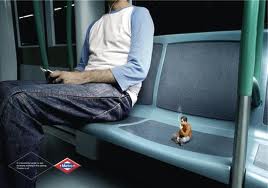
Unusual passenger in Madrid

Tuesday, 18 June 2013

18 June: a day to remember, but perhaps not to celebrate

Before 1973, the United States had never lost a war. Why, back in the eighteenth century, they beat Britain, the foremost naval force on Earth at the time and also one of its greatest military powers. They repeated the trick thirty years later, in the War of 1812.

Thereafter, they won war after war, not always to the greatest glory of the nation: defeats of native Americans were impressive and comprehensive though perhaps hardly the stuff of which proud legend is born. They also kicked the stuffing out of Mexicans (repeatedly, including multiple invasions in the twentieth century), the Spanish and pretty well anyone else who tangled with them.

Why, in 1865 they even scored a notable triumph against themselves and conquering oneself has to be the great test of will, hasn't it? At any rate, it was a victory over the most militaristic section of the country, the Southern States who seceded from the Union and precipitated a Civil War that was catastrophic first and foremost for themselves.

And of course, in the bitterest conflicts they faced abroad, they tipped the balance in the First World War and won the Second, with massive help from the Soviet Union in Europe, to all intents and purposes alone in the Pacific.

Then came January 1973 and the Paris Peace Accords between North Vietnam, South Vietnam and the United States. Those agreements provided a fig leaf to cover US withdrawal in Vietnam, and withdraw they did. Two years later, the North Vietnamese completed their victory over the South, confirming that what had happened in 1973 was the utter defeat of the US-backed side in the conflict, and very far from the ‘peace with honour’ that had been claimed.

For the first time in its history, the US had lost a war.

As so often happens, the first occurrence of an event was quickly followed by others.

Some have been minor. Following a terrorist attack on a marine barracks that left 300 dead, the US was forced out of Lebanon in 1983 having achieved none of its goals; ten years later, US troops were killed in Somalia and their bodies dragged through the streets, leading to another humiliating withdrawal.

Far more serious are two new conflicts which the West is still trying to pass off as victories. In Iraq the fact that Saddam Hussein has been overthrown is presented as some kind of victory; the huge loss of life among the civilian population as well as among Western soldiers is talked down, as is the fact that the regime is increasingly a puppet of Iran. The latest disaster is in Afghanistan, where the Taliban grows in power and strength every day, while the government NATO put in power is mired in corruption and disarray.


Afghanistan.
Well, that went so well, let's try our luck again somewhere else
Today, 18 June, NATO handed over responsibility for military operations in that country to the Afghan military. It did so despite knowing that the Afghan army has been infiltrated by Taliban agents, many of whom have turned their guns on NATO troops; it knows too that the same army has established a mode of operation in which it pulls out of areas where the Taliban wishes to carry out a mission, and only moves back once that mission is complete.

In other words, handing over to the Afghan army is tantamount to admitting yet another defeat and preparing the ground for a return to Taliban rule.

The series of failures of American, or American-led, armed interventions that started with 1973 therefore continues its disastrous course.


It’s far from clear to me that this series of defeats does anything to further the cause of democracy or human rights, or even simply the interests of the West. The countries invaded suffer enormously. The cost to our nations is far from negligible either. Might it not be a good idea to cut our losses?

But far from our nations drawing any wisdom from this experience, West is now considering taking a more active role in the Syrian conflict. Initially that would mean arming the rebels, even though the main rebel units – which would undoubtedly get their hands on any weapons sent out there – are controlled by Al Qaida, and it was to root out Al Qaida that we first went into Afghanistan. There is also talk of a more active intervention, imposing a no-fly zone, which would mean committing NATO forces once more, if only in the air.

Ah, well. Here we go again. Proving, as if proof were needed, that if you don’t learn from your mistakes, you condemn yourself to making them again and again.