Monday, 30 September 2013

Getting spooked about the White Widow

Where would we be without the spooks? They keep us safe at night. Don’t they?

And, boy, do we need protection. Right now, for instance, we live under the dreaded peril of the ‘White Widow’.

Isn’t that blood-chilling? For a few months as a teenager, my direct route home took me through a graveyard with a church tower from which, I was assured, many had seen the local ghost, the ‘Grey Lady’, leap. It certainly made the walk home an edgy experience. But what’s a ‘Grey Lady’ to a ‘White Widow’? Particularly as the widow really exists and, as an international terrorist mastermind, she has real weapons to hurt us with.


Samantha Lewthwaite, the 'White Widow'
At least, so we like to believe. Samantha Lewthwaite is the widow of one of the 7/7 bombers who killed 26 people in London in 2005, though it's possible she doesn’t really have any capacity to harm us at all. But who cares? She’s just too perfect a villain for us not to shiver at her name.

I mean, she’s white after all. Our terrorist bogeymen are supposed to be Middle-Eastern looking – and they’re supposed to be men. A woman, and a white woman at that? Wow. That’s the stuff real nightmares are made of. She’s a traitor, to her race, by Jove, as well as a deadly menace. All she needs is to make poison her weapon of choice to become a latter-day Lucrezia Borgia.

She’s been officially dubbed the ‘world’s most wanted’ by no less prestigious a voice than Britain’s Sun, which speaks with all the authority we’ve come to expect of a tabloid newspaper. Kenya has asked for an international arrest warrant to be issued against her, and Interpol has been happy to oblige, even though there’s no suggestion she was involved in the Westgate Mall attack, or even that she’s in Kenya.

In fact, that’s precisely the odd thing about this business. Not only can we not be sure she’s in Kenya, but nobody seems to know where she is. The phrase regularly used about her is that she’s ‘dropped off the intelligence radar.’

Now isn’t that interesting? Thanks to Assange and Snowden we now know that Britain’s GCHQ and the American NSA can find out pretty well anything they like about pretty much any one of us in pretty well no time. They can quickly establish whether I’ve ordered Jessie Keane’s Black Widow from Amazon, however underwhelming that novel may be, but they can’t locate the ‘White Widow’, though we’re assured she might overwhelm us all.

All that snooping. All that reading of e-mails. All that tracking of internet activity.

Come on, spooks. You tell us you only do it to keep us safe.

Doesn
’t the vanishing ‘White Widow’ make it a bit hard to sustain that claim?

Saturday, 28 September 2013

Sharing the pain

We’re all in this together.

David Cameron made that pronouncement soon after he formed the current British government in 2010.

David Cameron: sharing the pain
It made sense. The crash in 2008 affected us all. It was only right that we should all pay for the consequences, and the cure.

In fact, the government has done all it can to make sharing the pain a little easier. For instance, it provided a generous tax reduction for the people with the highest salaries. It is also now taking legal action to protect the right of bankers to go on paying themselves seriously interesting bonuses, against the officious interference of the European Union.

Sadly, the opposition Labour Party isn’t getting with the mood. Its leader Ed Miliband told the Party Conference last week that if he formed a government he would freeze energy prices for twenty months. What a wet blanket, spoiling the party.

And he’s had just the reaction he deserved. The cries of outrage have been deafening. I mean, how are the energy companies going to continue paying for the investment we need in renewable energy sources if they can’t charge enough to cover their costs?

Just because one of the big six companies, Centrica, announced in February they would use £500 million of their ‘surplus’ capital to buy back their own shares, doesn’t mean they’re not investing. They have to make that kind of payment to keep their shareholders happy, and we all need to keep shareholders happy, or they won’t share the pain with us.

And Centrica’s Chief Executive took only £5 million in pay last year, which is barely 200 times the national median income.

It was explained to me that the energy companies have to keep increasing their charges anyway, because of the weakening pound. The pound was at $1.58 at this time in 2010 and it’s sunk to $1.60 now. Meanwhile a barrel of oil, which cost $71.21 on average in 2010, hit an average of $87.67 this year.

Obviously the oil price will only affect part of the costs of the energy companies, but even so that’s a massive increase: 23%. So how can anyone complain that household energy costs have grown by 40% in the same period?

The trivial objection has been made to me that industrialists squealed just as loudly in the refrigerator manufacturing sector when CFCs were being banned, from the late 1980s. When the ban was adopted, the industry quickly found alternatives and settled down to making its fridges, and its profits, again.

This is nothing like the same situation. The objection to the Labour proposal from the six companies that dominate 98% of the market isn’t just carping by a bunch of oligarchs watching the gravy train come to a stop, it’s a matter of principle. If this terrible measure is adopted, Britain might find itself in the same position as the rest of Europe, where prices are growing less quickly, or even France or Spain, where they are falling.

Let’s remember that though the six companies seem to increase their charges absolutely in step with each other, this isn’t the classic behaviour of an oligopoly, protecting profits through unjustifiable price rises. It just reflects the fact that they are guided by the views of recognised experts who interpret movements in the industry in the same way. And the fact that prices rise quickly in response to increased raw material costs, but somehow fall much more slowly when they come down, is just a natural law of the sector, about which we can no more complain than we can about the law of gravity.

Ed Miliband needs to think again. He should not draw satisfaction from the terror of the energy company executives, thinking that it implies that they, at least, expect him to win the next election. Nor should he be pleased at the apparent popularity of his proposal. He should realise that this is immature, adolescent politics, and the mere fact that’s it realisable, popular and would bring much needed relief to the poorest in society, in no way justifies his behaviour.

Doesn’t he realise we’re all in this together? That he needs to pull with the government? How else can we achieve the kind of prosperous and just society we all desire?

Tuesday, 24 September 2013

Nations trek from progress, as empty causes devour flames of genius

For doomed youth, Wilfred Owen wrote, there would be flowers formed by ‘the tenderness of patient minds, and each slow dusk a drawing-down of blinds.’

Wilfred Owen: outstanding voice of the First World War
sacrificed to it
On 4 November 1918, with German resistance collapsing in France, French, British and American troops launched a new offensive. Apart from the war historians, nobody very much remembers what that was all about. We remember even less whether it was particularly important or not to force a way across the Sambre canal.

In fact, I have only the vaguest idea where the Sambre canal is. And in a world in which the only German soldiers on French soil are there by invitation, the idea of their fighting with each other for the possession of that obscure waterway strikes me as nothing short of madness. Germany is, after all, the most powerful and wealthiest nation in Europe and we tend to dance to its tune, without a bayonet or a bullet to enforce its will.

But back on that day in November 1918, Second Lieutenant Owen tried to take a group of men across that insignificant canal. He paid for that attempt with his life. A slow dusk came when the drawing-down of the blinds was for the poet himself. One more week and he’d have made it: yes, he died a mere week before the violence stopped in any case.

We were deprived of perhaps the finest war poet of that particularly senseless war. We may have been deprived of an outstanding poet of the peace that followed. A peace shot through with conflict, but of the social rather than the shooting kind, and which quickly degenerated again into renewed military butchery – in a single generation, as the second world war followed the first.

What words might Owen have found to sing that decline?

Poetry, of course, lived on, so that today we can read about ‘raising earthwards our cathedrals of hope’, a longing for this life rather than heaven, a hope that Owen would have recognised. As he would have resonated in sympathy with the idea of raising cathedrals ‘in demand of lives offered on those altars for the cleansing that was done long ago.’ Owen’s life was offered for a cleansing that left the world no less tainted.

Those cathedrals raised earthwards were celebrated by Kofi Awoonor, a Ghanaian prisoner of conscience who later became a Ghanaian politician and diplomat, but who was at all times a poet.

Kofi Awoonor:
another poet sacrificed to a cause
He died last weekend in the Westgate shopping mall in Nairobi, the Kenyan capital. He died when Islamist militants decided to wreak vengeance against civilians for Kenya’s military engagement against their movement in neighbouring Somalia. He died when armed believers decided to kill or maim at random, sparing only Muslims.

The blinds have come down for him too. Awoonor has been offered like Owen on an altar for a cleansing just as misguided. Owen proclaimed that ‘nations trek from progress’; so it seems do movements sure of their faiths, and one has now claimed his successor.

Nearly a hundred years ago, the imperial dreams of France, Britain, Germany, Russia and America, seemed important enough to sacrifice millions, including a poet of world stature. Today all those concerns are of little moment, but the poems maintain their capacity to move and amaze. How did the world gain by Owen’s death?

A century from now, I wonder whether the points of theological controversy that seem so crucial today, the beliefs that drive some to persecute Muslims, others to kill in the name of Islam, won’t also have lost their burning urgency.

And people will wonder what was served by the deaths of all those innocents in the Westgate mall. Or how the world was made a better place by depriving it of Kofi Awoonor.

Sunday, 22 September 2013

Battle lines in Britain

Time for the gloves to come off.

An electorate with little interest in politics doesn’t need complexities and sophistication. It needs clear, simple battle lines. So it’s a relief, as the British Labour Party starts its annual conference – with only one more to come before the next election – to see some clarity beginning to emerge from the main contenders.

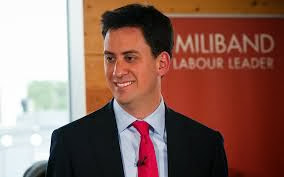
Ed Miliband: drawing lines
Ed Miliband, leader of the Labour Party, has denounced the government’s complacency in crowing over the anaemic economic recovery now taking place. As he points out, living standards have not fallen for so long since 1870.

Meanwhile, the government also likes to congratulate itself on falling unemployment, never mentioning that a million people have been excluded from the count of those out of work because they have zero-hour contracts: in other words, not technically unemployed, but tied to an employer who is under no obligation to give them any work or pay.

If there is some growth at last taking place again, it’s doing nothing to improve the position of the majority of society, and leaving the poorest way behind. As Miliband puts it, ‘the link between the growing wealth of the economy and family finances has been broken.’

That’s a message we need to hear repeated often and loud over the next twenty months leading up to the election.

The Tories are as aware of the potency of the argument, and are already hitting back. To Chris Grayling, Justice Minister under David Cameron, Labour merely want to clobber the rich.

‘So what do Labour want?’ he asks. ‘To penalise the wealth creators. Higher taxes for the rich. To pay for what Labour really desires – an ever bigger welfare state.’

Ah, yes. It’s true that Labour wants at least one increase in the welfare state. Miliband has pledged to do away with the ‘bedroom tax’, the reduction in benefit to anyone whose rent is being paid for out of the public purse. It seems that this initiative, now only six months old, has already pushed 50,000 people into arrears, leaving them facing eviction.

A great many of those people are disabled.

So Grayling’s statement is another helpful clarification of the battle lines. Miliband proposes to pay for repealing the bedroom tax by removing some tax advantages for hedge funds; by cracking down on practices in construction that deprive employees of security in order to reduce the employers
’ tax liability; and by doing away with a government initiative to fund companies whose employees agree to give up hard-won, legal employment rights.

Presumably, Grayling feels that this is all part of Labour’s desire to victimise the rich. He, on the other hand, is voicing the government’s concern for those in the top 1% income bracket, who have seen their wealth grow under the Tories, while all around the rest of society watches its living standards fall.

Let’s not forget that ‘wealth creation’ under Grayling’s government has involved the handing out of those million zero-hour contracts, as well as creating an environment in which minimum wage legislation is ignored: the suggestion is that large numbers of workers are being paid under the minimum, but there have been only eight prosecutions under the act.

Again, Miliband has made it a key proposal to enforce payment of the minimum wage, and part of that initiative will involve giving the legislation some teeth.

‘At the moment, if you don’t pay the minimum wage,’ he points out, ‘the maximum fine is £5,000. If you engage in fly-tipping, the maximum fine is £50,000. That is ridiculous. If you engage in systematic abuse of the minimum wage, you should have a maximum fine of £50,000.’

No doubt Chris Grayling would regard the insistence that employers respect wage legislation as another form of clobbering the rich. Those who agree with him should vote for his party. I hope rather more of us will wonder whether an economy that can support more million-plus a year bankers than the rest of Europe put together, shouldn’t be able to pay £6.31 to its poorest workers (those million-a-year bankers are on a minimum of £800 an hour).

Anyone wondering that should be pleased that Miliband is offering an alternative home for their votes. And anyone who feels that the poorest in society, such as the victims of the bedroom tax, should at last be given a break, can surely not duck the responsibility of supporting him.

The lines are clear.

Friday, 20 September 2013

True Glory

In among all the talk about war, or possibly no war, between Syria and the West in recent weeks, I’ve taken to thinking again about what it is that truly gives a nation its glory. And, quite frankly, I have to conclude that whatever it may be do in the arts, the sciences, the law or government, what really matters is its achievements in war. A victory or two give a country the fillip it needs, however badly it may be failing elsewhere.

That’s a factor not to be discounted in all the debate about firing cruise missiles.

No nation is immune to this kind of thinking, and least of all my own, Britain. Oh yes, our fine military tradition is the backbone of our sense of ourselves. And in among all our great successes on the battlefield, none is so glorious, none puts such a spring in our step, as the great, historic victory Britain won at Waterloo.

Wellington, glorious leader leading a glorious action.
Or was he?
‘The tale is in every Englishman’s mouth,’ writes William Thackeray in that superb novel Vanity Fair, and points out that we ‘are never tired of hearing and recounting the history of that famous action.’

Of course. It was such an unambiguous victory, and so unambiguously British.

Though, to be fair, there are some who are a little less sure of that than others. 


‘There was a bit of a German element, too, wasn’t there?’ these wet blankets point out.

Ah, yes. The Prussians. But they were just johnny-come-lately’s, showing up at the end of the day, when the best of the fighting was all but over. They made sure of a victory that the British Army had already won.

Well, up to a point. The French had wasting several hours trying to capture the forward position Wellington had established at the chateau of Hougoumont, on the right of his line. That position did indeed hold out against sustained infantry assault, and then a terrible series of cavalry attacks. It never fell.

See? Heroic work by the glorious British under the genius Wellington.

Again, up to a point. The French got a bit smarter late in the afternoon. They pulled their infantry and cavalry together and launched them, not at Wellington’s right, but at his centre, another defended forward position in the farm at La Haye Sainte. And this time they succeeded: the farm fell and with that French gain, Wellington
’s hold on the middle of his line became precarious.

Wellington had been in touch with the Prussian marshal Blücher since the small hours of the morning, and was expecting him to arrive on his left. So he’d only sparsely manned that part of the line. With his right heavily committed around Hougoumont he now had little force with which to shore up his centre.

In the end it didn’t matter much. By the early evening, the Prussians were fairly pouring onto the field, and Napoleon had to detach forces to deal with them. Wellington got out of jail free. 


Maybe that’s why the British general described the battle as ‘the nearest run thing you ever saw...’

Even so, he’d done well up to that point. And that was an unequivocally British success. Wasn’t it?

Perhaps not unequivocally, exactly. 


The idea of coalitions to fight wars isn’t new. Wellington headed one. Waterloo being in Belgium, then part of a combined Dutch-Belgian kingdom, Wellington’s 68,000-strong army included 17,000 – a quarter – from the Low Countries.

Still, that leaves 51,000 Brits, doesn’t it?

The King of Britain was at that time also Elector of Hanover. In Germany. 11,000 soldiers under Wellington were Hanoverian. And, as it happened, 6000 more were from Brunswick, along with 3000 from Nassau. Also both in Germany.

So actually only 31,000 of the soldiers were from the British Army. And, funnily enough, during the long years of Napoleonic occupation of Germany, other Hanoverians had escaped and made it to England, where they formed the King’s German Legion, 6000 of whom were in the specifically British contingent of Wellington’s army.

So even on Wellington’s side, only 25,000 soldiers were actually British. Slightly more, 26,000, were German. Which along with the 50,000 Prussians who rather turned the tide on the day, meant there were 76,000 Germans fighting the French – just over three times as many as there were British.

Still, we all need something to put a spring in our step. And if Waterloo does it for us Brits, why not?

Though personally, to be honest, I prefer to take something else from that epoch-making event, summed up in two other comments of Wellington’s. 


The first summed up his reaction to the dead strewn over the field of Waterloo: ‘nothing except a battle lost can be half so melancholy as a battle won.’ 

A dismal place, a battlefield. 

There’s talk today about negotiations starting at last between the two sides in the Syrian civil war. That's nothing like as exciting as a missile strike, nothing like as dramatic in outcome, nothing like certain of success. But perhaps by killing fewer people, it might be marginally less miserable than yet another battlefield, lost or won.

And Wellington’s other comment? 


‘I hope to God I have fought my last battle.’

There’s little hope that we have fired our last cruise missile. But maybe we ought to take heed of the sentiment behind the glorious general’s heartfelt wish, and be slightly less inclined to reach for the missile as a first resort rather than a last.

That would be a different kind of glory. But it might have more substance to it.

Tuesday, 17 September 2013

Washington shootings: which are the fundamental rights?

So it’s happened again. Yesterday, Aaron Alexis, the latest gun-wielding mass murderer to strike in the US, killed twelve people in the Washington Naval Yard, before dying himself in a firefight with police.

Oh, no. Here we go again.
The Chief Medical Officer of the MedStar Washington hospital centre, Janis Orlowski, said of a woman who survived being shot in the head and hand, that she was ‘a very, very, lucky young lady.’

Presumably Orlowski wasn’t really thinking through the implication of her words. It is, after all, a strange world where someone who has just been shot in the head is seen as lucky. Someone who was simply doing her job, in a country ostensibly at peace. That is, not currently under threat of war at home from other nations, though clearly not entirely at peace with itself.

Perhaps the most striking statement on the shooting was made by President Obama. He described it as a ‘cowardly act’. 


It seems to me that the most cowardly act of all was the failure of political leaders to take heed of his call for action to limit gun ownership in the wake of the Newtown horror.  Or for that matter to react to Aurora. Or Columbine. Or any of the other outrages that have, down the years, come along with a regularity that makes them almost habitual, without ever depriving them of their capacity to shock or, apparently, ever endowing them with the ability to galvanise society into action.

Remember the pain over Newtown? Remember the silence of the NRA as they let the dust settle? Remember them extending their tentacles a few weeks later, exercising their lobby muscle, calling in their bought Congressmen and Senators to ensure that even the mildest form of gun control became hopelessly bogged down in the legislative process?

Watch out for them doing the same again now.

And when the NRA says that the best way of stopping a bad guy with a gun is by means of a good guy with a gun, bear in mind that their point was proved yesterday: Alexis, the killer, was gunned down by the police. The NRA got that much right.

It’s true that on the way, twelve people, whose only offence had been to turn up for work, were killed, and eight more injured. Including the lucky lady.

Perhaps the NRA would say that this is the price of doing business. Protection of the fundamental right to keep and bear weapons is worth the occasional massacre of the innocents. After all, you can’t make an omelette without breaking eggs.

Personally, I prefer countries which establish strict controls on the ownership of guns. Funnily enough, they can serve a pretty mean omelette too. And knowing that you’re unlikely to be shot at while you’re eating it doesn’t spoil the flavour at all.

In fact, being able to eat a meal in safety seems as basic a right as carrying gun. Even more basic, in fact. And it was glaringly denied the breakfasters in the cafeteria at the Washington Naval Yard yesterday morning.

Monday, 16 September 2013

The US and Iran? Really? What brought that on?

The US might soon be talking to Iran. 

Just writing those words feels a little weird. It’s like saying that Napoleon and the Duke of Wellington have decided to meet at a café near Waterloo, to see whether they can’t patch things up over a good bottle of French White and a plate of snails.

Not that, if the US-Iran meeting takes place, it’ll necessary mean getting together in a room and talking round a table. No, that would be far too big a step for this early stage in proceedings. It’s possible that the US delegation might run into the Iranian delegation in the corridors of the United Nations building in New York, on the fringe of the General Assembly meeting, and stop to pass the time of day.

‘Good Lord! Hold on, hold on,’ Obama will say, ‘don’t tell me – it’s president Rouhani, isn’t it? I was sure I knew that face...’

President Hassan Rouhani of Iran: will Obama recognise him?
Well, the smile's hard to miss

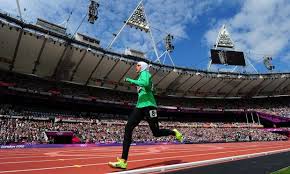
‘President Obama,‘ Rouhani will reply, ‘big fan. Always wanted to meet you. Did you see that we had a woman competitor in the Triathlon World Championships in London? See? You can talk to us now. We’re civilised.’

Shirin Gerami
first woman for Iram in an international tritathlon
wearing the Islamic clothing that did so much for her chances

Personally, I’d be perfectly satisfied with their having a casual encounter in a corridor. I’m a great fan of The West Wing and some of the best decisions in that spellbinding and realistic series were taken while stalking along White House corridors.

Actually, any kind of encounter would be welcome. It would be the first meeting between the heads of state of the two countries since the fall of the Shah. The first step towards calming tempers since they got hot eleven years ago, over the Iranian nuclear programme. For years we’ve lived with the prospect of possible war between the two greatest powers of a tinderbox region, Israel and Iran, if not between their sponsors, the US and Russia. 

Any kind of talk to release tensions has to be good.

Let’s hope it happens and let’s hope it leads to greater things. And if it does, let’s remember what was at the start of the process: the decision not to launch missiles at Syria.

And 
let’s not forget what was at the start of the process that led there. Just for the fun of it, here are the events that brought us the Syria breakthrough which may be gradually thawing US-Iranian relations today:
  1. Ed Miliband, leader of the British Labour Party, decided to oppose the government over action on Syria
  2. Miliband took the Labour Party into the ‘No’ lobby against joining an immediate US-led missile attack
  3. The British Parliament voted not to join that action
  4. Obama decided not to launch missiles until he’d consulted Congress himself
  5. Syria’s ally Russia took advantage of the delay to propose that Syria put its chemical weapons under international control preliminary to their destruction
  6. Syria agreed to UN control over its chemical warfare stocks
I bet Miliband had no idea that he was starting anything quite so big, when he decided that it was time, at last, to stand up to David Cameron.