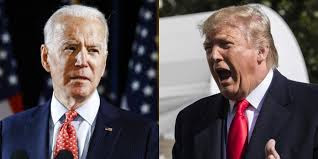
Friday, 29 January 2021

Hands off my vaccines

Potential lifesaver but also source of international tension
If you want the measure of your politicians and businessmen, don’t watch them under normal conditions, but in a crisis.

If you’re thinking, “yeah, OK, obviously, duh”, then Id have to agree with you. For two reasons.

The first is that nothing could be easier than to manage things when they’re running smoothly. I mean, I’ve never had a flying lesson, but I could pilot an airliner while everything’s going well. Watch the clouds while the autopilot flies the plane? Yep, I reckon even I could manage that. Just don’t ask me to do anything complicated, like, say, changing course.

The second reason is that normal conditions just don’t apply in politics. Take a look at the century so far. It started with wars in Iraq, Afghanistan, Libya and Syria, and that was just the Western powers. We had the crash of 2008. We’d barely begun to emerge from that when Brexit blew the EU open and the election of Donald Trump turned the US into the nation state equivalent of a truculent teenager.

Perpetual crisis is maybe why leaders get exposed so quickly.

Take Donald Trump himself. For three years, he stumbled along, making himself a laughingstock and his country look dangerously stupid, but he was sustained by relatively good economic news, and it didn’t matter that he’d inherited most of it.

Then along came Covid. He was revealed for what his opponents had always said: an incompetent unable to grasp the gravity of a crisis, choosing denial over decision, precipitating the worst failure of national will in US history. Before he even left office, US Covid deaths had overtaken the numbers killed in the Second World War.

The result? Trump was roundly beaten for re-election, in a result he called a “landslide” when it went his way four years earlier, but refused to acknowledge when it went against him. Other contests on the same day showed him performing less well than his Republican Party. It was Trump, rather than the Republicans, that voters chose to dump.

In Britain, Prime Minister Boris Johnson at first took as casual an attitude to the pandemic as Trump. Remember his gleeful announcement? “I was at a hospital where there were a few coronavirus patients and I shook hands with everybody.” Weeks later he was in Intensive Care, tying up resources that would have been available for other patients if he hadn’t been so irresponsible.

Since then, he's taken action too late and too little to bring the crisis under control. Now the UK has the worst Covid mortality rate in the world.

It isn’t just the right that has produced politicians as weak and as exposed by crises as these two. Again in Britain, the Labour Party, in one of its periodic fits of irrationality, plucked a Member of Parliament from well-deserved obscurity, to which it has since again relegated him, and made him leader. Like Donald Trump, Jeremy Corbyn – a name you may remember if you like to keep up with has-never-beens – still retains residual support amongst people who say things like “what a leader he’d have been without Brexit”.

Unfortunately, Brexit was his crisis to face. He needed to rise to the challenge. Instead, he ducked and flailed and avoided ever taking a position, hoping to retain support from both Brexiters and Remainers, but ultimately winning only distrust from everyone. As with Trump, the approach ended in unqualified failure. In his case, that was the worst Labour election result for four generations.

Would-be leaders never have an easy ride. Crises are inevitable. It’s how they deal with them that matters.

So the behaviour over Astra Zeneca’s failure to fulfil the EU’s order for Covid vaccines is highly revealing. And far from edifying. For anyone concerned.

Ursula von der Leyen and Boris Johnson
The EU and UK not playing together nicely
Astra Zeneca is a commercial undertaking. If it can’t fulfil an order, it shouldn’t take it. Or, turning things around, if it takes an order, it has the obligation to deliver. It’s not for the client to live without the product.

Britain, as ever under Boris Johnson, or the US under Trump, is behaving like a sullen teenager. “I’ve got my vaccines and I’m damned if I’m giving any up.” The government claims its entitlement is clear. It signed its contract before the EU, and that contract entitles it to all UK production. Britain will pass on to others only any excess it eventually finds it has. “I’m all right, Jack, and as a good Christian, I’ll help others only out of my leftovers”. 

Of course, the UK could publish its contract with Astra Zeneca, so everyone can see it has priority for deliveries. But it refuses to, on the grounds of ‘national security’. That’s always been the bent politician’s excuse for hiding what it would be embarrassing to reveal.

The EU has published its own contract, though without the prices or order amounts. On the face of it, it does seem to support the EU’s argument: Astra Zeneca is obliged to supply vaccines, including from its UK facilities, to fulfil the order.

Then the EU rather spoiled things. Having been loud in its demands that vaccines be distributed equitably around the world, with priority for the poorest countries, it’s threatening to block vaccine exports if it doesn’t get the number of doses it wants. The talk was all of bridges, but when things turned difficult, up went the walls. 

Not a pretty sight. No one involved comes out looking good from all this. But that’s the way with crises, isn’t it?

You get to see what leaders really are, however little they like it.


Tuesday, 26 January 2021

Sweet 68 at last

My birthday struck me as a good moment for some reflections on age. Specifically, that there are ages it’s more fun to reach than others. Just because of the numbers involved, I mean.

For instance, I enjoyed 63, because I’d liked being 21, so I thought three times more might well be three times better. 64 was good because of the Beatles. But now I’m 68, and that’s a magic number, because of the events ’68, the May-June days and all that, French students battling with police and France in a revolutionary blaze.

Iconic image: police v protesters in Paris
Not that it ever was, really. I remember hearing Maurice Grimaud, then ‘Préfet de Police’ or Police Chief of Paris, explaining, as he was about to retire many years later, that he could never understand all the myths around May-June ’68. In his view, the police never lost control. The fighting was always restricted to the relatively small district of the Latin Quarter, the old University neighbourhood, and it led to  no deaths. Not much of a revolution, he seemed to be suggesting.

It was only as the message permeated up the chain of command that it became more terrifying. Grimaud was calm. The ‘Préfet’ or main central government official for Paris, was worried. The Interior Minister was scared. The Prime Minister was terrified. And the President of the Republic, Charles de Gaulle at that time, was in a blind panic and ran off to Baden-Baden in Germany. There he joined up with the French occupation forces, ready to mount a new Resistance to retake France, just as he had in 1940 after the French surrender to the Nazis.

He was met in Baden-Baden by the commander of the French forces, General Jacques Massu. There’s an apocryphal story about de Gaulle walking up to him and grasping his hand.

“Hey, Massu,” the story has him saying, “as big a fool as ever?”

“Hello, General,” Massu replied, “as big a Gaullist.”

Massu apparently told de Gaulle that he had no business being in Baden-Baden and packed him off back to where his duty required him, in Paris.

As for the disturbances, they died down. There were some reforms, mostly in the university sector, most of them since rolled back. Back then, it was all exciting, suggesting long and uplifting visions of radical change into the future. We still hadn’t had Tricky Dicky Nixon, Nicolas Sarkozy, Silvio Berlusconi, Maggie Thatcher or, worst of all, Donald Trump to put any dreams of that kind firmly back on the backburner.

Now ’68 is just a part of the mythical background of our lives. But for a moment it was a much more present part of mine. I didn’t get to Paris for the first time until the spring of 1969, but even then, in the yard behind the youth hostel where my school group stayed, there was a huge pile of cobble stones building up, as the Paris authorities got rid of the old cobbles that had proved such useful missiles for the students to fling at the police.

At least my age this year will remind me of those heady times each time I think of it. For now, and in the middle of a lockdown with no visitors or restaurants, it’s started more quietly, with a great meal prepared for me by Danielle. It involved fish cooked in breadcrumbs, because I’d expressed a preference for Wiener Schnitzel and then decided that, no, I wouldn’t have meat but might prefer fish. As Danielle pointed out, cooking fish in breadcrumbs was a great compromise between the two.

Wiener Fischel
It was excellent.

I also have a cake (of course). With just one candle. I can’t remember what the age is, but at a certain point you stop getting a candle for each year. A single candle seems right, anyway. 

After all, it marks one more year down and another starting.

One candle for one more year


Sunday, 24 January 2021

96th birthday of a lady with a double identity

Today would have been the 96th birthday of my mother-in-law, Jeannette. Well, I casually say Jeannette, but her naming was just a tad more complicated than that. You don’t know the story? It’s a good one.

Jeannette, as we always called her
The flower was given to Danielle by our son David
It came from where we scattered her ashes
- in a Strasbourg river
I’m not sure exactly what happened between Jeannette’s parents at the time of her birth. It sounds like they couldn’t agree on a name. Her father favoured ‘Elise’, her mother ‘Jeannette’. But it was the father who had the advantage, since he was the one registering her birth. Down she went as Elise in the official archives.

But Jeannette’s mother was a forceful lady. Her daughter’s birth certificate was in the wrong name? No problem. She merely scratched out the forename and substituted the one she (the mother) wanted. Her name was Jeannette, and it was clearly marked on her birth certificate.

France tends to be quite strict on documents. But Jeannette was from Alsace, in the far east of France, a region that swapped hands between France and Germany three times in 75 years. Regulations aren’t always as religiously followed there, especially in small country villages.

Other documents were based on her birth certificate. The ‘livret de famille’ or family booklet. Her national identity card. Her passport when she came to get one. It all went smoothly, to the point that she never even became aware that she had a different name.

It was my fault that her relative calm was shattered. In the early years of the century, Danielle and I were living in France. Already then it struck me that Britain was dangerously likely to give way to its uglier demons and leave the EU. Since I didn’t want to jeopardise my right to live in a European country more committed to civilised values, I decided to take advantage of being in France and married to a Frenchwoman, to take out French nationality.

For that, Danielle needed to prove her own right to citizenship. And that meant proving that her mother had been entitled to it. She submitted all the necessary paperwork and we waited for the response.

“Sorry,” they told us, “we have no record of a French citizen born on 24 January 1925 and called Jeannette Brugner.”

Danielle sent in all sorts of documents, official ones, in that name, that did rather suggest Jeannette existed. But they were having none of it. Until it emerged that there had, indeed, been a girl born on that date, in Strasbourg, and with the right surname, but a different forename.

“Could your mother be Elise?” they asked Danielle. 

Jeannette discovered that she was. The French authorities made an effort, sorted out the paperwork and a couple of years later, I was granted French nationality. As a result, I can now live in Spain in some security, despite Brexit, since a Frexit is still highly unlikely (not that there isn’t a small minority of French citizens calling for it).

When I first met Jeannette – there’s no point calling her Elise – she was still not 60, and seemed far younger. Her dynamicsm and excellent spirits were no doubt fostered by her job, as an assistant in the YWCA in the nearby city, Basel in Switzerland. There she was looking after young women, most of them apprentices, many in the pharmaceutical industry so present in that city. Full of life and fun, they communicated those qualities to Jeannette.

But then there was an accident. She was knocked off her bike by a car, on her way home. That need not be too disastrous – it’s happened to me too. But in her case, she was thrown into a deep excavation made by roadworkers, with steel beams sticking vertically from the bottom. Both her hips were shattered.

Sadly, she never made a full recovery. Instead, she grew increasingly disabled, and in pain, both from the injuries and from the rheumatoid arthritis which increasingly affected as she grew older. By the end of her life, it was becoming unbearable for her to keep surviving, but it was hard to help her with that problem in France. There, at least at that time, physicians simply could not consider the possibility of ending treatment on a patient. Again and again, Jeannette would fall ill, be hospitalised, and then find herself subjected to surgery which did nothing to ease her suffering and, indeed, inflicted more pain on her.

Danielle had to argue with the physicians to stop intervening with her mother.

“But she’ll die,” they told her.

“Yes,” Danielle replied, “it’s time to let her go. That’s what she wants. And you shouldn’t block her.”

She was with Jeannette for her last few nights. And on the last one, with Jeannette’s breathing becoming increasingly strained, Danielle couldn’t prevent the tears rising to her eyes. Jeannette woke and saw her.

“Don’t worry,” she said, “it’s OK.”

And squeezed her hand.

Soon afterwards, she slipped away, in calm at last.

Today would have been her 96th birthday. But what cruelty it would have been to have imposed the extra dozen years on her. Better that it be us, the survivors, who celebrate her life and raise a glass to her memory.

Saturday, 23 January 2021

Patria: the terror of terror

Occasionally, I come across a book that so vividly conjures up an experience I’ve never had, that I feel I’ve actually been there.

That’s the case of Patria, or Homeland as it’s translated into English. The author is Fernando Aramburu, a native of the Basque country and fluent speaker and writer of the language. He opens his novel with one of its principal characters, Bittori, deciding to return to her home village from San Sebastián where she has been living in voluntary exile. 

Why was she in exile? The Basque armed group ETA had executed her husband. Or, to put it in less charitable but arguably more accurate terms, the terrorist group ETA had murdered him.

Why has she decided to go home now? Because ETA has just announced that it is definitively abandoning the armed struggle without victory. It’s a background theme throughout the novel that years of terrorism ultimately served no purpose. Victims were murdered or maimed, perpetrators were killed or gaoled for long terms, on both sides lives were broken, and all to no good. 

One of the secondary themes of the book is that writing and broadcasting in the Basque language, as is the case of one of the characters, and indeed of Aramburu himself, does more for the culture than ETA ever did.

In her childhood, Bittori’s best friend had been Miren. When they were approaching adulthood, they decided they wanted to be nuns. That came to nothing, though, and instead the two best friends married two best friends. As they told each other, now only an axe could separate. 

Only an axe or terror, as it turned out. Because Bittori’s husband, Xato, was a small businessman and when he couldn’t, or wouldn’t, keep up with ETA’s increasingly steep extortion demands, the organisation mounted a campaign against him, with graffiti around the town denouncing him as an oppressor and, even worse, a snitch. 

This is where the novel most powerfully showed me the terror of terror. Because as the campaign intensifies Xato’s friends drop away from him. Even his best friend, Miren’s husband, Xosian. The cycling club no longer wants him on its outings. He’s not welcome in the bars. And his wife, too, finds herself increasingly isolated. Perhaps one of the most searing moments of the book, and of the fine series developed from it by Netflix, is a flashback to her in the rain over her husband’s dying body, while no one from the apartments around dares to come to help her.

Bittori alone in the rain with her dying husband Txato
Elena Irureta playing Bittori,  José Ramón Soroiz as Txato
in the TV series of Patria
What makes things worse for Bittori is that one of Miren’s sons joins ETA. He’s seen back in the town, after years away, at just the time Xato is killed. So did Bittori’s husband die at the hands of her former best friend’s son? That’s one of the questions that haunts her and she wants answered, so that she and her husband – with whom she has regular if rather one-sided conversations at his graveside – can at last rest in peace when they are reunited in the tomb.

In the meantime, Bittori and Miren’s friendship can’t endure. Miren becomes politically radical to stand by her son, after he’s arrested and condemned to a long sentence in gaol. But how can Bittori, widow of an ETA victim, possibly be close to sympathisers or members of the organisation that murdered her husband? 

Families as well as friendships are destroyed by the terror. Miren’s other two children not only don’t share their brother’s ETA beliefs, they find them abhorrent. But how can they speak out? To their mother, the disagreement would look like treason, but to the organisation, it would look like an offence punishable by death.

Opposition to ETA isn’t permissible. But even neutrality is impossible. That’s what Xato discovered. He took no action against the terrorists, but because he failed to provide the support they demanded of him, he had to die. Similarly, the ETA militant’s brother and sister find they have to leave town in order simply not be sucked into activism themselves. Sitting on the edges won’t be tolerated. Showing sympathy to a target won’t be either. That’s why Bittori can count on no one after her husband is murdered, and moves away.

Until the end of the armed struggle. When she comes back looking for answers. Then the town, and the two families, have to start facing up to some of them.

It’s a compelling novel, with excellent characters, deep and complex, flawed and damaged but often also noble and generous. They’re also funny, despite their sadness, with the tragedy underlining the humour. And, as well as the problems of the terror, they also have to face the many problems of ordinary life, some of them serious, such as terrible illness, or being gay in a society in which many still regard homosexuality as the worst of sins (ironically, that includes ETA itself, despite its pretensions to being left-wing and modernising). 

A rich, moving, amusing and charming book, turned into a TV series that does it justice. With a powerful lesson. Strongly to be recommended.


Thursday, 21 January 2021

Farewell to dishonour, a welcome to hope

Hope on the left replacing dishonour to the right

The old saying has it that there’s honesty among thieves. Like so many ancient saws, it’s mostly rubbish. The men who are disloyal to others are unlikely to show much loyalty among themselves.

Take the case of Rudy Giuliani. A former Mayor of New York, he went way out on a limb to try to reverse the verdict of the US people in voting against Donald Trump in November. The lawsuits he brought on Trump’s behalf lost him what little credibility he had left, and yet somehow, by dint of organising a press conference by a sex shop and wearing hair dye that ran down his face, he contrived to make himself look even more disreputable.

Rudy Giuliani made a fool of himself
on behalf of a man who has since abandoned him
All in the service of a man who is now refusing to pay Giuliani his legal fees. And who, as he pardoned the corrupt and the criminal in his fan base, simply ignored poor Rudy altogether. Unless there’s a secret pardon for him out there, Giuliani will face any legal repercussions of his oh-too-energetic, if ultimately vain, defence of the man who has now cut him loose and turned his back on him.

Trump was as unappealing as ever as he went off into the long goodnight that awaits him. “We did what he came here to do – and so much more,” he told the small group that came to see him off, with hardly a mask in sight.

What on earth did he mean? When he first ran for the presidency, he repeatedly shouted that he would build a wall along the Mexican border, and Mexico would pay for it. Four years later, he’s built a few miles, and Mexico hasn’t paid a penny towards it. 

He promised he’d make America Great Again. Today, America has lost prestige and credibility. As well as withdrawing from the Paris Agreement on global warming and the Iran nuclear pact, he was in the process of leaving the WHO in the middle of a global pandemic. He was even threatening NATO. What’s more,  by pulling out of the proposed trade deal with nations around the Pacific, the Trans-Pacific Partnership, he allowed China to gain a decisive advantage in a key region: the Chinese, left out of the original proposal, stepped into the gap he left and are now the dominant partner in a similar agreement brokered with them.

In his commitment to making sure that he would hang on to power, and make himself, if not America, great again, he sent a mob to invade the Capitol building in a violent attempt to overturn the will of the American people. An attempted coup to hold on to power, the first time that’s been tried in US history. Subverting American democracy may have been one of the things he “came here to do”, but if so, he never mentioned it in his campaign literature.

But it’s the ‘so much more’ that is most significant. That would cover the 400,000 American Covid deaths on his watch, a total now set to overtake the total US dead in the Second World War. A stunning achievement, but hardly one to boast about.

That’s significant, but what makes it even more so is that the pandemic is a crisis, and crises are particularly powerful demonstrations of political truth. It’s in a crisis that we can fully assess a leader. On that measure, Trump has not merely failed, but failed spectacularly.

The sting in the tail of Trump’s speech was his final promise, or perhaps I should say threat. “We’ll be back,” he said.

As it happens, I don’t think he will. There’s talk about his making another run for the White House in 2024, but I’m not sure that his health will allow him to. That’s ‘health’ in the physical sense, but also in the financial sense – he’s facing crippling bankruptcy – and even the legal sense, since the lawsuits against him will be starting up in earnest in the near future.

Besides, he may actually find himself convicted in his impeachment trial. I think that’s still unlikely – it would require all Democratic senators to vote to convict, plus seventeen Republicans – but it’s looking a little more possible than it did a week or so ago. After all, it’s one thing to call on Republican Senators to vote a Republican President out of office – something that would be alien to the core of their being – but a maverick Republican who’s out of office? That might just happen, especially now that the former Senate leader, the Republic Mitch McConnell, is saying that he could be persuaded to vote for conviction.

That’s all the more the case since several of those Republicans would like their party’s nomination themselves, so convicting Trump and banning him from holding office would suit them very nicely. And the rest of us too.

This means that we might at last be able to consign Trump to the dustbin of history where he belongs. A thief without honour even to other thieves. And a major vandal to his own nation.

I have no idea whether his replacement, Joe Biden, has it in him to be a great President, or even a good President. What I’m absolutely certain of is that he is bound to be a better President. That’s a low bar, and Biden’s sure to clear it.

He does need to be good. He’s probably facing the worst crisis that any President has inherited since Franklyn Delano Roosevelt, when he entered the White House in 1933, with his country in the throes of the great depression. Biden faces the Covid pandemic, a serious economic crisis, a terribly divided society both racially (those Black Lives Matter demonstration were about real and harsh injustice) and politically (that invasion of the Capitol was just one act in an ‘uncivil war’, as Biden referred to it, which isn’t over yet).

At least he has an excellent team about him, not least of whom is his Vice President Kamala Harris. What a joy it was to see the first woman, the first person of colour, and the first person of Indian descent, sworn in as Vice President, immediately after the first Celebrity TV nonentity President had left the White House.

In his inaugural address, Biden certainly gave us some cause to hope he can rise to the challenges he faces. These words were particularly necessary today:

And so today, at this time and in this place, let us start afresh. All of us. Let us listen to one another. Hear one another. See one another. Show respect to one another. Politics need not be a raging fire destroying everything in its path. Every disagreement doesn't have to be a cause for total war. And, we must reject a culture in which facts themselves are manipulated and even manufactured.

But the same sentiments were put even more powerfully during the high point of the entire ceremony, the reading of her poem The Hill We Climb by Amanda Gorman.

Amanda Gorman stole the show at the inaugural
“A skinny Black girl,” she told us, reciting for a president

We lay down our arms so we can reach out our arms to one another.
We seek harm to none and harmony for all.
Let the globe, if nothing else, say this is true:
That even as we grieved, we grew.
That even as we hurt, we hoped.
That even as we tired, we tried.
That we’ll forever be tied together, victorious.
Not because we will never again know defeat, but because we will never again sow division.

That’s the antidote to the cruelty and dishonour Trump sowed. America has a huge task ahead. But at least it can now approach it with more hope than at any time in the last four years. 

Tuesday, 19 January 2021

A late Twelfth Night, and 'Popping to Paris' in Valencia

Queen for the day
Our neighbour Isabel being regal
Here in Spain, the great celebration associated with Christmas isn’t the day itself, but twelve days later, the Feast of the Kings. Twelfth Night, as we English rather pedantically but accurately call it. At any rate, it’s the big moment for the kids.

Being logical themselves, this is the moment when the Spanish give their kids presents. After all, it celebrates the day when the baby Jesus received presents, twelve days after his birth, from three Kings who came out of the East. Or possibly three wise men. The Bible’s not all that clear. In fact, they may even have been Magi, but since I have no idea what a Magus is, I discard that option.

Anyway, out here the great celebration is the Festival of the Kings, so for the purposes of this post, I’m going to assume it was Kings. Apparently, they brought gold, frankincense and myrrh. I suppose one useful thing out of the three is pretty much average for Christmas presents.

It’s not clear, from biblical scholars, whether any of them brought cake. But cake is served on 6 January in Spain. ‘Roscón’ it’s called, and very good it is. A bit like French brioche.

As for the French themselves, though, they serve ‘galette des rois’ for Twelfth Night. That roughly translates as Kings’ cake’. Does that make you think of Marie Antoinette and ‘let them eat cake’? I suppose that would be Queen’s Cake. And she didn't say it anyway.

French galette
Now, funnily enough, bringing together the themes of French and Spanish celebrations of ‘the Kings’ is exactly where I wanted to get to in this post. Isn’t it odd how serendipity sometimes guides the written word? 

Why do I say that? Because this year we celebrated ‘the Kings’ in Spain, with three of our Spanish neighbours, but in the French way. And not on the right day. It was too cold on 6 January and, if we have people around at all at the moment, it’s outside, to reduce the Covid risk. We had to wait until well after the day, but that doesn’t matter, because our French pâtisserie made it clear to us that they’d be supplying ‘galettes’ until the end of the month.

French patisserie? Yes, you read that right. We have our own French pâtisserie, in central Valencia. It’s called ‘Passage à Paris’, as you can see for yourself. I suppose the name could be translated as ‘popping over to Paris’. 

Nearly twenty years ago, as I learned from the ExpatValencia website, a young Frenchwoman was working as an analyst for the French railway company SNCF. I think that’s an analyst as in someone who looks at data and works some magic to get information from it, rather than someone who helps colleagues work out whether they’re crazy to be working there. She has rather specific features (légèrement typé, as she puts it), down to her father being Vietnamese, a background also reflected in her name, Nelly Tran Hoang. 

Back then, she liked to pop into a pâtisserie near her work, where she got to know the chef, Fabien Frebourg. Twenty years on, they’ve got married, produced two kids, opened and run two pâtisseries in succession in the Paris region, before deciding to leave an environment where they felt there was too little security and far too much drizzle and cold weather, to move to Valencia.

And another fortuitous happening: they actually live in the outlying neighbourhood of La Cañada, as do we, so we don’t have to travel into Valencia itself to get our cakes. We can just order them over the phone and collect them from her place when she gets home.

Fabien and Nelly
Phenomenal pâtissiers and almost neighbours of ours
Photo by Julie Strodau (@julie_stor)
So our neighbours had proper French galette with us. And nearly the traditional way. The custom is for the youngest person present to get under the table and call out the names, each of whom is served a slice, so that it’s entirely random who gets the ‘fève’. Normally, that means ‘bean’, but in this case it’s a little ceramic figure and whoever gets it is the King or Queen of the Feast of the Kings.

A ceramic fève from a galette
Can remove a dentistry crown, but grant a nice paper crown
The ‘youngest person present’ in our case was 63, so we didn’t ask her to get under the table. Instead, she just covered her eyes and called out names until everyone was served, and we could find out who was going to mount the throne for the day.

In our case, the Queen was our immediate neighbour Isabel, and very regal she looked wrapped in her shawl and wearing her crown.

Everyone enjoyed themselves. I don’t think they felt they were betraying their own national traditions by having excellent galette instead of roscón, especially as we were washing it down with fine Spanish cava. Which, indeed, made the enjoyment even greater.

A good day, and one for which we’re deeply grateful to Nelly and Fabien, and their inspired decision to give up grey Paris for sunny Valencia, so we can enjoy their Passage à Paris.


Saturday, 16 January 2021

Trump, Twitter and Freedom of Speech

Poor old Trump! So many of his former collaborators and enablers are deserting him, now that he’s only days away from losing power. As someone I follow on Twitter so aptly put it, the shits are deserting the drowning rat. What hurts him most, is that he can’t sound off about it on his favourite communication medium, Twitter.

Trump: his megaphone has gone
Some have reacted to his ban from Twitter as an assault on free speech. People talk a lot about freedom of speech (well, I suppose talking is what it’s about). Often, they seem to suggest that freedom of speech is, or should be, unlimited.

To be fair, they have good authority for that belief. Trump’s American. Here’s what the first amendment to the US Constitution says on the subject:

Congress shall make no law … abridging the freedom of speech, or of the press…

That seems absolutely clear and unqualified. There can be no legal measure that abridges freedom of speech.

And yet, and yet… The United States inherited English Common Law against defamation. So libel and slander are illegal in the US just as they are in Britain. It’s true that American law makes it a lot less easy to win a libel case than British law does (which is why many plaintiffs prefer to sue in Britain rather than the US). In particular, truth is an absolute defence in the US – a true statement cannot be defamatory. With “public figures”, the plaintiff also has to prove “actual malice” by the defendant to win a case. 

Even so, harder though a libel case is to win across the Atlantic, libel laws exist and therefore in a real sense they ‘abridge’ the freedom of speech.

What’s more, if two or more people agree to commit a crime, or to adopt illegal means to achieve even a legal end, they are guilty of conspiracy. They may not have committed the actual crime planned. The mere fact of having planned to do it is in itself a crime.

Like it or not, that constitutes another abridgement to freedom of speech.

Finally, the US Supreme Court has determined that incitement to actions in the far future is not a crime, but incitement to illegal acts to take place imminently is. In particular, incitement to riot is criminal. This means that incitement is only free speech protected by the First Amendment if the action being incited isn’t imminent. Otherwise, there is no such protection.

Again, this is a clear abridgement of freedom of speech. That’s particularly explicit in this case, because the Supreme Court’s decision constitutes a stated limitation to the protection offered by the First Amendment.

There’s nothing in the least bit surprising or unusual about these limitations. No democracy allows defamation, conspiracy or incitement. I can’t see any reason why they should. I rather suspect that even the people who were upset about Trump’s freedom of speech would oppose lifting all bans on defamation, conspiracy, incitement or other abuses of free speech.

It seems that in the United States, as in any democracy, freedom of speech is by no means unlimited. On the contrary, it’s heavily qualified by laws that limit its abuse. And one of the things it most strictly limits is incitement.

There is no right to incite.

Before the mob attacked the Capitol in Washington DC, Trump told it:

Republicans are constantly fighting like a boxer with his hands tied behind his back. It’s like a boxer. And we want to be so nice. We want to be so respectful of everybody, including bad people. And we’re going to have to fight much harder. …

… You have to show strength, and you have to be strong.

It’s for judges to determine whether these words meet the legal test for the crime of incitement. They may well still get that chance, if Trump is prosecuted once he loses his presidential immunity. But to me, in a purely lay sense, they sound exactly like a textbook case of incitement.

I repeat. There’s no right to incite. In other words, Trump isn’t merely exercising freedom of speech, he’s abusing it.

Twitter, in the absence of a court decision, felt it had to take the decision to prevent such abuse continuing. It decided it couldn’t and that meant banning Trump.

In one sense, Twitter had every right to take that decision. It’s a private-sector company. Like any other private organisation of its kind, it has the right to set its rules and exclude anyone who breaks them. Specifically, it isn’t under any obligation to protect freedom of speech generally. Think of a newspaper like the Daily Mail or the Guardian in Britain. They’re under no obligation to give everyone who wants it space in their pages to peddle their views. Nor is Twitter.

That, however, leads to a different issue. Is Twitter – or Facebook or any other social media platform – like a newspaper or not? Because a newspaper can be sued, for instance, for libel. But who gets sued if a tweet is defamatory? Is it Twitter or is it the author of the tweet?

That’s a much bigger question, and one that governments need to start to  address. How do we control abuse of free speech on those platforms? Can they be treated as publishing companies with responsibility for their content? Or are they merely platforms, no more responsible for the content they distribute than the printing press is for the content of the newspaper produce on them? 

It’s likely we need to get to a position which is somewhere between the two. That’s immensely difficult to define, but it needs to be if we are to protect freedom of speech while controlling its abuse. 

As far as Trump is concerned, on the other hand, the abuse is clear. And that means that the Twitter ban is entirely appropriate.