Showing posts with label Conservative. Show all posts

Friday, 5 July 2024

What a relief it was to have it confirmed by an exit poll last night that Labour, led by Keir Starmer, was on its way to a massive win over the Conservatives in the election of 4 July. 

The BBC projecting of the exit poll for the Labour landslide
July the fourth. Celebrated in the US as Independence Day. In Britain it was the occasion that the electorate marked its independence of a Conservative government that had nothing more to give. Another moment to celebrate.

I may have overstated when I said that it had nothing more to give. With most governments, including ones we don’t like, we can usually point to one or two achievements and have to admit, even if between gritted teeth, ‘well, it’s true, at least they did that.’ I can think of nothing, in all honesty, which fourteen years of Conservative rule have left in a better state than when they came to office.

That’s even on their own terms. The Tories were obsessed with public debt when they came to power, but they leave it higher now than back then. They were also obsessed with immigration, ignoring the overwhelming evidence that many sectors of the economy need immigrants – healthcare, agriculture, catering for instance – just to keep turning over. But even they admit that illegal immigration is out of control.

The health service is in crisis. Schools are crumbling, literally, with ceilings falling in due to dud cement. The Tories presided over the terrible self-inflicted wound of Brexit. The party of law and order has seen prisons releasing inmates early because they can’t handle the numbers. The police force hasn’t the resources for its task. And the nation’s rivers and the sea off its beaches are flooded with untreated sewage.

As you can imagine, that’s why it’s a relief to see that government go.

But in 1997, when Tony Blair came to power, I reacted with joy, not just with relief. That’s because, whatever his faults, he was a man that inspired. And indeed his government, despite its many errors, the most appalling of which was the Iraq War, did much to be proud of: huge improvements in the health service, freedom of information, devolution to the constituent nations of the United Kingdom, the Good Friday Agreement over Northern Ireland, and much more. 

In 1997, we could sense all that promise and, boy, it felt good to be alive.

But Blair’s government was elected by 13.5 million people. They represented 43% of the votes cast. Britain uses a first-past-the-post system, by which it only takes one more vote than any other candidate, without necessarily having a majority of the votes cast, to win election in a parliamentary constituency. That’s why a government can win a landslide majority in the House of Commons on a minority of the votes, as Blair did in 1997. 

Taking 43% is actually quite respectable.

The 2024 election also gave Labour a landslide majority in the Commons, but this time it took only 9.7 million votes, 3.8 million fewer than won by Blair in 1997. And that represented only 33.8% of the votes cast, not a great deal more than one vote in three. Putting it another way, there were very nearly two votes against Labour for every vote for it.

What makes those figures particularly stark is that at the previous election, in 2019, Labour had its worst result since 1935. It took just 202 seats in the Commons, under half its haul this time. And yet it took 32.1% of the votes cast – so though it has more than doubled its total of seats, Labour only added 1.7% to its percentage of the popular vote.

That’s the difference between the catastrophic defeat last time and the historic landslide victory at this election (Starmer will have more Labour MPs behind him than Blair did).

What this means is that what has taken Starmer to Downing Street isn’t a huge wave of support. It’s a tsunami of dissatisfaction, even bitterness, directed against the Tories. A well-deserved tsunami. But it leaves Starmer with a massive task to win positive support for Labour. He has to do it quickly. His majority of over 170 looks unassailable, enough to carry him through to victory at the next general election too. However, if you look at the percentages of votes cast, you can see that it’s a lot more fragile than that, with a couple of percentage points marking the difference between massive victory and crushing defeat.

After all, looked what happened between 2019 and this year. Back then, it was the Tories who won a landslide. This year, they’ve lost 250 seats and emerged with the lowest number of MPs in their history. That’s how quickly and how massively things can switch around.

Starmer understands all that. In his first speech as Prime Minister, he explained:

our country has voted decisively for change, for national renewal and a return of politics to public service. When the gap between the sacrifices made by people and the service they receive from politicians grows this big it leads to a weariness in the heart of a nation, a draining away of the hope, the spirit, the belief in a better future. But we need to move forward together. Now, this wound, this lack of trust, can only be healed by actions, not words. I know that. But we can make a start today, with the simple acknowledgement that public service is a privilege and that your government should treat every single person in this country with respect. If you voted Labour yesterday, we will carry the responsibility of your trust as we rebuild our country. But whether you voted Labour or not – in fact, especially if you did not – I say to you directly my government will serve you. 

He knows he needs to rebuild trust and he can only do that by serving the electorate, especially the two-thirds of electors who voted against him. I wish him well with that task. It’s a big one, and Britain needs him to succeed in it.

Before I leave, I have to mention the man he defeated, the outgoing Prime Minister, Rishi Sunak. When he announced his resignation, he said:

Whilst he has been my political opponent, Sir Keir Starmer will shortly become our Prime Minister. In this job, his successes will be all our successes. And I wish him and his family well. Whatever our disagreements in this campaign, he is a decent, public-spirited man who I respect.

It’s refreshing to hear a politician talking about an adversary as someone he can respect. One of the worst aspects of politics today – especially in such campaigns as Trump’s in the US – is the apparent belief that it’s not enough to defeat the other side, you have to eliminate them.

Adapting a phrase from Macbeth, I can say of Sunak that nothing in his time in office became him like the leaving of it. 

Thursday, 2 January 2020

Please, Daddy, leave me my Corbyn blindfold. It's so comfortable

It has been obvious since the earliest days of Jeremy Corbyn’s Labour leadership, that his supporters have been wearing rose-tinted spectacles.

Indeed, it is their very inability to imagine any kind of flaw in their hero that marks them out as forming not so much a political current within the Labour Party, as a veritable Cult. Members have urged me to “have faith” in the leader or to “believe” in his vision for the future. That’s the very language of religion, and it leaves no place for the rational, questioning thought essential in politics.
Keir Starmer (l) and Jeremy Corbyn
Colleagues but not mutual admirers
Given that Corbynism was a Cult, it was obvious that when Jeremy led us to inevitable defeat, his worshippers would quickly set out to find explanations that cleared him of all responsibility.

In passing, I should say that the sheer scale of he defeat surprised me. I hoped right to the end that, even when defeated, we might at least deny Boris Johnson a majority. I knew that would take a miracle, but I kept hoping. It struck me as much more probable that Boris would emerge with a majority of up to 40. In fact, his majority was 80, while Labour was reduced to just 202 parliamentary seats, our worst result since 1935.

That will certainly see the Conservatives safely through to the next election and, quite probably, to the one after. Only twice, in single general elections, has Labour gained the more than 124 seats it would need for even a bare majority next time. Once, in the landslide it won under Attlee after the Second World War, it did so after a period in government as Churchill’s coalition partners; just once has it done it from Opposition, in 1997 under Tony Blair.

Labour has a mountain to climb from the pits where Corbynism has consigned it.

If the scale of our defeat was greater than I expected, I have also been surprised by the sheer relentlessness of the Corbynists in pursuing their alibis. The preferred line at first was that much-loved whipping boy, the media. Vicious, biased coverage of the election in particular, and Corbyn’s leadership more generally, had undermined Labour and handed Boris Johnson his victory.

But that was only one of many ‘the dog ate my homework’ excuses. Today another seems to be gaining ground. It is that it was Labour’s endorsement of a second Brexit referendum that lost if for us. The argument goes like this:

  • Labour did ‘very well’ at the 2017 election. I’ve put ‘very well’ in quotes because one Corbynist said exactly that to me today. Just in case anyone reading this doesn’t know, Labour lost in 2017, so ‘very well’ doesn’t seem terribly accurate. ‘Less badly than expected’ I will, however, allow.
  • In 2019, Labour went to the country with the same leader and broadly the same manifesto, and it lost massively.
  • The only thing that had changed in between was that Labour had endorsed the Second Referendum position. So that’s what caused the rout.

QED

Unsurprisingly, the argument does, however, omit to mention one or two other key factors. The stance on the referendum wasn’t the only change between the two elections. Here is a small selection of others:

  • Corbyn had become better known to the electorate. The more they knew him, the less voters trusted him. By the time of the election, he was the most unpopular Opposition Leader since records began.
  • The 2017 election had been flattering to Corbyn because Theresa May, then Prime Minister, turned out to be by far the weakest campaigner I had ever seen at the head of the Conservative Party. By the time of the 2019 election, she had been dumped.
  • Boris Johnson, her successor, was utterly unscrupulous, entirely deceitful and ruthlessly effective in campaign mode and, as many of us forecast, ran circles around Corbyn.

So why are the Corbynists coming out with this line about its all being down to the Second Referendum stance?

It may not be unrelated to the fact that Keir Starmer has now emerged as at least the initial frontrunner to replace Corbyn as leader of the Labour Party. He has a large lead in a poll of Labour members over his nearest rival, the Corbynist candidate. He is, of course, one of the chief architects of the endorsement of a Second Referendum

Naturally it suits Corbynists to paint him as the villain of the piece.

But it isn’t just to favour their candidate that they do this. It’s also because it is another piece in the Denial Wall they’re building around their Corbyn Dreamland. It was that nasty Keir that snatched our defeat from the jaws of victory. The Cult guru remains as flawless as ever.

We’ve seen that this belief takes some wilful blindness to inconvenient facts. That wilfulness is forcing me to revise my view that they wear rose-tinted glasses. It’s beginning to look to me as though they’re wearing a blindfold.

One that’s made of velvet, of course. It’s beautifully comfortable. Which is why they dread the idea of being forced to take it off.

Monday, 11 November 2019

Elections in Spain, and the lessons for the Elections in Britain

Be careful what you wish for.

That seems to be the main lesson from the results of the General Election in my adopted country Spain, on 10 November. A lesson that some people in UK politics might do well to learn. If it isn’t too late already.
Seats won in the Spanish Parliament
The PSOE have the most but are even further from a majority
Take the socialists, or PSOE. 

Its leader, Pedro Sánchez, had been acting Prime Minister since the previous election in April. He headed the biggest party in Parliament, with 123 seats, but that was still well short of the magic number for a majority, 176. He tried to cobble together an agreement with other groups, principally working with a party to his left, Unidas Podemos, but the negotiations repeatedly failed. Both sides blamed the other, and there seems little point in trying to assign responsibility now.

Sánchez decided that he had no choice but to go the country again. He may have been right. After failing to negotiate himself a coalition, he may indeed have had no other option. But far from growing his parliamentary presence to 140, as he had hoped, a position from which he might have had a better chance of building a majority, he ended up losing three seats, leaving him on just 120.

A message for Boris Johnson: merely calling an election doesn’t guarantee that you’ll emerge with the wins you hoped for. Besides, sometimes hung parliaments happen because the electorate is split and unable to endorse one party or another. Then politicians have to find ways to work together.

As for Unidas Podemos, it too paid the price for failing to reach an agreement to govern. Its 42 seats were reduced to 35. A breakaway party from Podemos, Más País, won three seats, so even taken together, these left-wing groupings are down four. If the discussions between Sánchez and the Podemos leader Pablo Iglesias were tough before, they’re going to be a lot tougher now.

The great losers of the night, however, were the centrist grouping, Ciudadanos, Citizens. They couldn’t quite make up their mind about what they stood for, which may be a cautionary tale for Corbynists: if you equivocate, you’ll be punished.

They proclaimed they would not under any conditions join a Sánchez-led coalition, though they claimed to be in the centre and therefore open to working with either side. At the time, they had 57 MPs and could have had a role in leading the country. It was a clear statement that they wanted no part in government, and voters can’t see much point in electing parties that don’t want to govern. 

Besides, there is in Spain a question as central as Brexit is in Britain, which is Catalan separatism. They chose to take a hard position against the separatists, moving them away from the centre ground to positions more closely associated with the far right. Voters prepared to vote for far-right views will generally prefer a far-right party. That they did on this occasion, reducing Ciudadanos from 57 seats to just ten.

Perhaps another lesson for Corbynists flirting with pro-Brexit positions.

The day after his election debacle, the leader of Ciudadanos resigned.

May yet another lesson for Corbynism, and more particularly, for Corbyn.

So who were the great winners of the day?

The traditional right, the equivalent of British Conservatives, the Partido Popular or Popular Party, turns out to be rather more popular than at its disastrous low in April, when it won just 66 seats. This time it took take 88.

But the biggest winner of all was the far right, Vox. It only entered parliament for the first time in April, with 24 seats, far more than they should ever have won, but still containable.

This time, they’ve taken 52. More than twice as many as last time.

And what’s that all down to?

Why, the massive error of Ciudadanos in wanting to be a centrist party and then lurching rightwards, and the failure of the centre left and left to find common ground. They preferred to remain pure in support of their principles than to compromise and enter government. The result was that the far right gained.

In Britain, the situation isn’t entirely similar. There is a party of the far right, but it’s losing momentum as the Conservatives become the voice of the far right themselves, losing their moderate MPs on the way. There is no separate party like Unidas Podemos, instead a faction of the Labour Party, the Corbyn tendency, has taken control of the party.

Even so, there’s much to learn for Britain from the Spanish experience.

  • Refusal to compromise doesn’t always yield the results you want.
  • Accommodating the far right lets it devour you
  • Equivocate and the voters will punish you
  • Sometimes you just have to live with hung parliaments, because voters themselves are divided

A former boss of mine used to say that the trouble with having your back to the wall is that you can’t read the writing on it. The writing from Spain strikes me as fairly powerful. But politicians in Britain, with their backs to the election wall, may no longer have the time to read it.

As the dust settles on 13 December, the day after the British general election, we shall see whether they, like the Spanish, are going to have to learn their lesson the hard way. And, sadly, voters with them.

Wednesday, 6 November 2019

Boris, Trump and tripping the lie fantastic

There was a time when voters valued honesty in politicians. Not that they expected ever to find any. There’s an old joke about a man lost in a wood and stumbling into a clearing, in which he sees a blind old woman, a pink elephant and an honest politician. So who does he ask to show him the way?

The answer is, of course, the blind old woman, as the other two are just figments of the imagination.
Boris and the great lie
But even if we didn’t expect honesty from them, we kept up a vaguely optimistic pursuit of the honest politician, or maintained the notion as some kind of ideal towards which we might aspire.

Not any more, it appears. In Donald Trump, we have a US president who, if we really push our generosity, may feel is not an actual liar, in the sense that he may not always be deliberately stating as a truth something he knows not to be true. It may rather be that he suffers from a pathological inability to tell the truth from anything he happens to want to believe. Or, worse still, happens to want his voters to believe.

He may simply be lying, but it may actually be that he thinks that his wanting to believe something is true, makes it true.

North Korea hasn’t actually disarmed at all? So what? The disarmament deal that Trump proclaimed after his first meeting with Kim Jong Il is the best disarmament deal there ever was.

All that nonsense about Trump putting pressure on Ukraine to dig up dirt on his opponent? All made up. The fact that a transcript of the call exists, and it confirms the allegation, is neither here nor there. It never happened.

Isn’t a great achievement that China is paying for the tariffs Trump has put on its exports to the US? The miserable line about tariffs being paid by the population of the importing country, not the exporting one, is just an inconvenient factoid. An unattractive notion, and therefore untrue.

But in Britain too we have our version of Trump. Like Trump in the US, Boris holds the highest elective office in Britain. Unlike Trump, I think he has sufficient knowledge and intellectual horsepower to know when a statement is actually false. So when he utters a falsehood, he is undoubtedly lying.

And he seems to lie as naturally, as casually, as automatically as he breathes.

Perhaps the most embarrassing instance came when he visited Whipps Cross hospital in North London. When the father of a child who had been admitted to the appallingly understaffed and overstretched emergency department accused him of only being there for a photo opportunity, Boris replied that there were no press present. That was despite the fact that, as the father pointed out, the press were clearly visible just a few steps away. 
Omar Salem points out the photographers at Whipps Cross
whose presence Boris had just denied
The father, Omar Salem, is a Labour activist. But that doesn’t alter the fact that he’s a father, his child was seriously ill, and the staff were hopelessly overstretched. It seems that Boris’s first instinct is to lie, even when it’s obvious that he’s going to be caught out almost immediately.

There were so many other instances. Another was the decision of the Daily Telegraph to apologise for an article Boris published in the paper, forecasting that a post-Brexit Britain would overtake Germany as an economy within a few decades. It seems his argument was based on an analysis he’d ready which simply didn’t bear it out.

Perhaps the most notorious deceit ever was the one Boris associated himself with during the Brexit referendum campaign, that leaving the EU would free £350 million a week to invest in the NHS (the National Health Service). It was particularly barefaced, because it deliberately overstated the contributions the UK made to the EU, ignored the subsidies it received back from it, and left out of account the additional costs associated with Brexit and the revenue loss it was likely to entail.

A far wilier campaigner than Theresa May, his immediate predecessor, far being put off by his terrible track record in this field, Boris has boldly taken the battle to his Labour opponents, precisely on the grounds of the NHS. That takes courage for a Conservative, because this is traditionally Labour’s strong ground. But Boris is promising to spend more on the health service, to employ more clinicians, even to build more hospitals.

In other words, Boris is promising to address the very scandals that the distraught father tackled him over at Whipps Cross.

And yet Conservative Central Office has instructed candidates to sign no pledges on the NHS (or indeed on climate policy). So Boris is making the promises but preparing the ground for reneging on them. As he did over Brexit, when he promised to deliver it by 31 October, “do or die” – he didn’t do, but he didn’t die either.

What’s most surprising about this trail of blatant lies and broken promises is, in an election as wide open as any I’ve seen, with four major parties contesting nationally, as well as the SNP massively powerful in Scotland, Boris continues to lead the polls. At nearly 40%, his standing is weak, but way ahead of anyone else’s.

Above all, what that 40% means is that, for two voters out of five, honesty in a politician is simply not an important consideration. They see it as perfectly legitimate to vote for him anyway.

Sadly, 40% is enough to win in a wide-open field.

You can fool some of the people all of the time, or all of the people some of the time, but in Britain, you only need to fool 40% on election day to get to do what you want for the next five years.

Wednesday, 20 March 2019

Hey, New Zealand: couldn't you lend us Jacinda for a while?

It’s a tale of two accidental leaders…

Jacinda Ardern was never meant to be Prime Minister of New Zealand. Or at least not yet, not so early as to make her the youngest in a century and a half. She was serving as Deputy Leader of the New Zealand Labour Party when, just seven weeks ahead of the 2017 General Election, the then Leader, Andrew Little, stood down in the face of the dire poll standing of the party.

That’s not an issue for the British Labour Party under its present leadership. It trails a thoroughly discredited Tory government in the polls, at a point when it needs to be well ahead to stand any chance of winning the next election. But Corbynists shrug such matters off. There’ll be a surge, they say, as there was last time. They ignore the fact that the surge wasn’t enough to win and only produced a defeat less drastic than had been feared.

Funnily enough, Corbyn was an accidental leader too. He only stood for the leadership because no one else on the left was prepared to throw his name into the hat. He had no expectation of winning and, indeed, only made it onto the ballot because political opponents within Labour agreed to nominate him as a way of giving the left a chance to be in the game. They didn’t think he’d win either, and how they must be regretting it now.

As it happens, Ardern didn’t win the General Election. She came second with 46 parliamentary seats to the National (conservative) Party’s 56. But coalition negotiations allowed her to assemble a government and she took office. Since then, she’s impressed again and again, including in her personal behaviour: giving birth while in office in a way that charmed the nation.

At no time has she been more impressive than in response to the dire events that took place last Friday, 15 March. A new and far more dreadful Ides of March than those that marked the assassination of Julius Caesar. In Christchurch, a terrorist opened fire in two Mosques killing 50 worshippers and injuring many others.

Her statement to Parliament moved me to tears. She found an extraordinarily powerful way of expressing her total solidarity with the victims and their friends or relatives. It was a moving statement that said that these Muslim immigrants belonged to New Zealand and New Zealand belonged to them. It was a highly effective way of rejecting the views of anyone who might be inclined to nurse  xenophobic feelings towards the victims, a sense that it was tragic but nonetheless, they were somehow wrong to have come to New Zealand, that they were in some sense responsible for the attack on them.

She said:

We cannot know your grief, but we can walk with you at every stage. We can. And we will, surround you with aroha, manaakitanga and all that makes us, us. Our hearts are heavy but our spirit is strong.
Jacinda Ardern with the victims
Showing aroha, manaakitanga and ... leadership
She spoke of “us”, embracing all New Zealanders. And she underlined the message by using the Maori words for love and a much deeper sense of hospitality. The Prime Minister was saying categorically and clearly that the victims belonged in New Zealand and deserved its welcome.

Talking of the presumed perpetrator who, following her example, will not be named here, she said:

A 28-year-old man – an Australian citizen – has been charged with one count of murder. Other charges will follow. He will face the full force of the law in New Zealand. The families of the fallen will have justice.

He sought many things from his act of terror, but one was notoriety.

And that is why you will never hear me mention his name.

He is a terrorist. He is a criminal. He is an extremist.

But he will, when I speak, be nameless.

And to others I implore you: speak the names of those who were lost, rather than name of the man who took them.

He may have sought notoriety, but we in New Zealand will give him nothing. Not even his name.


I find it hard to read these words, courageous, outspoken, resolute, without feeling a pricking of tears in my eyes.

Compare them with what Jeremy Corbyn said when asked whether, in a second referendum, he might vote for Brexit:

It depends on what the choice is in front of us. If we’ve got a good deal in which we can have a dynamic relationship with Europe which is all the trading relationships and so on that might be a good way forward that unites the country.

“It depends”. A prevaricating, vacillating reply. And why does he make it? Because he thinks there is a Brexit deal that can unite the country. Which means he wants to pull in the xenophobes who voted to leave the EU out of a dislike of immigrants. Where Ardern tells xenophobes that New Zealand stands for different values, Corbyn tries to appease them.

He must know he can’t. Any deal that he would call ‘good’ would involve a softer Brexit that leave voters would regard as a betrayal. He’s making the same error so many others have made before him, not least David Cameron who called the Brexit referendum: he’s throwing raw meat to people who will only demand more, when they see that pushing their demands gives results.

Ardern stood firm and she’ll be admired for it. Corbyn yielded and he’ll be despised. Two accidental leaders, but only one is truly a leader, showing that accidents can turn out well on some occasions and pitifully badly on others.

How I wish we could borrow her for Britain, to lead Labour, and eventually the country. And send Corbyn back to his allotment to tend to his vegetables. He’d be much happier. As would Britain.

Alas, New Zealand wouldn’t let her go. But can we perhaps can find her like ourselves? At least she’s shown us what to look for.

Monday, 17 April 2017

Corbyn and Peter Pan politics

“Every time a child says, ‘I don't believe in fairies,’ there is a fairy somewhere that falls down dead.”

Peter Pan leads the way to a fantasy land
where fairies depend on children's beliefs

“I believe it because it is absurd,” said Tertullian, one of the fathers of the Christian church. It’s a powerful and highly sophisticated statement.

Christianity, like any belief system, requires faith, an ability to believe despite a lack of evidence, even against all evidence. After all, you need no faith to believe that the sun will set in the West: that’s the definition of the West. To believe that a man can be executed and rise on the third day, that does require faith.

This is as true of trivial beliefs as these more profound ones, such as Peter Pan’s statement about fairies. Or the belief that a portly, white-bearded man in a red suit will come down a chimney to bring good children presents.

I find it impossible to make such an act of faith. I say that even though I know the great comfort that faith provides. It’s no accident that the words “communion” and “community” are linked: shared belief creates a community and belonging to one is a deep human need and a source of consolation in a difficult world.

Even so, I can’t make that leap. Like Diderot, I find it less of a miracle that Lazarus was brought back from the dead, than that nobody, but nobody, chose to record the fact. Surely, somewhere there’d be something from a neutral third party: a spice merchant from Asia Minor, a Roman officer writing home, perhaps a sailor from Alexandria, even if all they were saying was “there’s a really weird tale going around this place at the moment, about a guy called Lazarus. They say, would you believe, that he died but a visiting miracle-worker brought him back to life.” Instead, nothing, nada, nix. The only authority is from the gospel writers themselves, those who were promoting the belief in the first place.

Not a problem, of course, for those like Tertullian who believe because it is absurd. But for someone like me, looking for evidence to support a point of view (which isn’t quite as strong as a belief: it can be overturned by new evidence), I simply can’t accept the story on such thin backing.

So I’m deprived of the child’s joy in waiting for the tooth fairy to call, believing in the fairy even though no one’s ever seen her. Or indeed the sense of belonging that inspires a mass at its best, even though no one’s ever documented the conversion of a biscuit and a chalice of wine into flesh and blood. Or indeed, the atmosphere at a meeting of Corbynistas, encouraging each other to further acts of faith, even though no Opposition leader in history has ever won an election from a base of unpopularity as dire as their guru’s.

That’s a double misfortune for me. In the first place, because I can’t enjoy the simple comfort of the believer drawn from the mere fact of belief. There must be joy in the fervour of the Corbynist who can, like Tertullian, convince himself of the truth of an absurd notion, such as John McDonnell’s that Corbyn can turn the poll position around in twelve months. I can’t share in it.

Then there’s the second misfortune. A child whose parents are sufficiently indulgent, and sufficiently well-heeled, will wake up in the morning to find that a coin has replaced the tooth she placed under the pillow on going to bed. Unless the parents are exceptionally indulgent, an adult who does the same with a lost tooth is likely to suffer acute disappointment. Generally, indeed, we expect adults to grow out of such childish beliefs.

In the case of Corbynist fancy, not growing out of it has serious consequences for everyone in Britain: clinging to the belief that Corbyn can defeat the Tories prevents us replacing him by someone who might make some progress against them. That simply ensures continued Tory rule. The results are all about us to see: hospitals offering doctors nearly £1000 to do a shift in A&E to prevent complete collapse into unsafe service, kids from poor backgrounds far less likely to attend good schools, families of dying invalids deprived of basic support.

Unlike the Peter Pan claim, in the Corbyn fantasy, it isn’t lack of belief that kills. On the contrary, it’s belief itself. The longer we cling on to that absurd faith, we ensure the suffering, even death, of more people – not fairies, let me stress, but people.

Personally, I can’t believe that fairies exist and depend on the belief of children to assure their own survival.

I can’t believe that the universe is run by a God who took human form to suffer and die to redeem humankind from a fate to which he’d condemned it in the first place.

And I can’t believe that the least popular Opposition leader in my lifetime has the slightest chance of winning a general election.

Well, it would be absurd, wouldn’t it?

Wednesday, 3 June 2015

Charles Kennedy: a loss for us all, not least in the Labour Party

There have been a great many tributes paid to Charles Kennedy since his death, as there are when any leading political figures die. But, and many people have commented on this fact, in his case more of them seem to be sincere than for most others.


Charles Kennedy:
witty, fun and right on at least two great questions...
This owes a great deal, no doubt, to the fact that he was a lot more likeable than most. He could be funny, and entertain on TV comedy shows, as effectively as he could outline an argument on more serious ones. He conjured up smiles, in others as well as himself, despite having much to cry about: a long, painful battle with alcohol in the course of which he lost the leadership of his party, the Liberal Democrats, as well as terrible family losses, the most recent the death of his father just weeks before the 7 May General Election.

And at the election, he lost the parliamentary seat he’d held for 32 years.

An appealing character, beset by tragedy. No wonder his death has attracted widespread, genuine sorrow.

To me, though, there are two particular aspects of his life that are most to be regretted. Two major issues on which he proved himself right, when so many others around him, were wrong.

The most significant was the Iraq War, which he consistently, outspokenly opposed. At a 2003 rally in Hyde Park following a great demonstration against the war he said:

It's no wonder that people are scared and confused. I say this to you quite seriously as somebody who personally happens not to be a pacifist but has the utter respect for anyone for grounds of conscience who is. As somebody who is not actually anti-American but is deeply worried by this Bush administration. And as someone who is under no illusions about the brutal dictatorship and the appalling regime which is Saddam Hussein.

The event has proven him entirely right. What we were scared and confused about has been more than verified, as ISIS runs amok across Iraq and Syria. George Bush and Tony Blair may well have rid us of the “appalling regime” Saddam Hussein led, but they have allowed it to be replaced by something far worse still. Of the major parties in the UK, only Charles Kennedy’s Lib Dems stood out against the pressure for war.

He subsequently led his party to its best ever election results, taking 62 seats in 2005. But then the difficulties with alcohol caught up with him, and he was forced out. In 2010, it was Nick Clegg who led his party and, though he took fewer seats, he nonetheless won enough to force the Conservatives into dependence on him.

And again he got things right. The Lib Dems were, alongside Labour, an anti-Tory party. A coalition with Labour was conceivable; a coalition with the Conservatives was a betrayal of everything that a large number of the party’s supporters believed, and for which they had given it their support. Charles Kennedy was the leading voice inside the parliamentary party to oppose entering that coalition. But Nick Clegg took the party into it, and the results were as catastrophic as expected: it has been reduced to just eight MPs at this year’s election. Kennedy was not one of the small number to hold on to their seats.

It will take a generation for the party to crawl back from that debacle. Though I’m in the Labour Party, I regret that: under Kennedy, the Lib Dems were often able to prick Labour’s conscience, and not just over the Iraq War, even on our constantly eroding civil liberties. The loss of that spur will be felt by us all.

Charles Kennedy embodied the Lib Dem voice at its best. Witty, likeable, intelligent, and right on at least two great matters, his death is a heavy blow. We’re all the poorer for it.

Friday, 10 April 2015

The tale of the posh grocer and the plain grocer. With a moral for the Labour Party

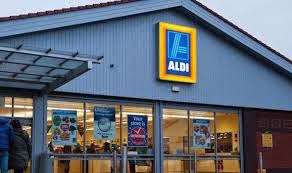
The earth trembled in Britain this week. The heavens shook. We learned that one of the cheeky, cheap and cheerful German supermarket chains, Aldi (the other one’s Lidl), had overtaken top of the range Waitrose, in market share.

Upstart cocking a snoot at the establishment
Admittedly, neither has a huge share, and the difference isn’t great – 5.3% to 5.1% – but it’s nonetheless one of those watershed moments, because of the characters involved. Aldi, you see, operates out near-Spartan shops, small, a little dingy – fundamentally functional and little else. A setting that says, loud and clear, no frills – and cheap.

Oddly, though, Aldi maintains high quality for its low prices. No doubt the style of shop and the small numbers of staff help, but it also has a strategy which says that it will only sell what it can get, in good quality, in time to get to the shop. The lamb chops are pretty well guaranteed to be there each time you visit, but that particular soft drink your kids liked so much last time? Nope. They may not have been able to pick up another job lot at a fantastic price.

If you shop at Aldi, you have to plan to visit two shops. You go to Aldi first and buy everything off your list that they happen to have, knowing that it will be fresh, good and competitively priced. Then you go to one of the other grocers to pick up the rest.

Waitrose, on the other hand, caters self-consciously for the toff end of the market. Wide aisles, far more choice, pleasant light, all stock replenished as it runs out (well, nearly all), lots of air, courteous helpful staff in every aisle. And prices that frequently make your eyes water.

If you like, Waitrose is the place for antipasto, Aldi for starters. Except, oddly enough, that Aldi also does antipasto. And a great antipasto at a great price. When it has any, however, and that isn’t always.


Top of the range. And overtaken
The fact that Aldi has pulled ahead feels like a parable for our times. Many would feel more comfortable shopping at Waitrose, where the experience itself is so much more pleasant, and where you can pick up grocery bags you can feel proud to be seen with. But most people have purses that suit Aldi far better. If they’re beginning to realise that, and come to terms with shopping for quality at a good price, that has to be healthy.

It’s like our politics. We have a Conservative party led by people who feel right for power. Educated at our best private schools. Accents you could cut with a knife, and fully trained to make sure it’s the right knife. Who know how to behave in at a garden party, on a yacht or in the royal enclosure at Ascot. But may be not quite so sure about a working men’s club in a colliery village where the mine has closed down.

Many people would like to have their lifestyle and admire their easy fashionable manners. But they can’t afford them. Waitrose aspirations with Aldi pocketbooks.

They’d do far better to settle for Labour. Less up market, no doubt, but more in touch with us Aldi people. Able to deliver good quality but without costing you an arm and a leg (or perhaps I should say without costing you a social safety net in case you ever need one, or decent healthcare if you’re sick).

The only sad thing is when Labour decides to be more like the Conservatives. Aldi aping Waitrose. That’s not what gave Aldi its success, and it won’t help Labour. After all, people who want Conservative will vote for the real thing, not for the imitation.

As for people trying to sell goods far below Aldi’s quality but at at Waitrose prices, well that makes no sense at all. Unless you’re a UKIP voter.

What this week’s news about the grocers shows is how important it is to be yourself. Be proud of what you are. And do what you do supremely well.

Monday, 6 April 2015

Happy New Year! Thanks to British Conservatism

Happy New Year!

Surprised? Asking yourself what year starts on 6 April? Whether there’s some calendar you’re unaware of, in one of the world’s great religions?

Here’s a clue. It’s not a matter of celebration for most people.

No, 6 April is the start of the British tax year. 

But is that really the answer to the right question? Or are you now wondering “why on Earth does the British tax year start on 6 April?”

The ecclesiastical year was used for centuries for administrative purposes throughout Christendom. It contains Quarter Days: Lady Day on 25 March, marking the annunciation to Mary that she is to bear the child of God, Midsummer day on 24 June, Michaelmas on 29 September and Christmas on 25 December.

Note the spooky exact nine months between Lady Day and Christmas Day. Almost as though they’d been specifically picked to correspond to the canonical length of a human pregnancy. We’re being told that the birth of Christ was a truly human event, not a supernatural one (begotten not created, and all that.)

In this system, the year started on the first Quarter Day, 25 March. The British tax authorities followed that convention. Religiously.

“OK,” I hear you cry, “but that still isn’t 6 April, is it?”

“Patience, good sir or madam,” I reply, “the story is not yet complete.”

For over a millennium and a half, Europe lived by the Julian calendar, named after that skilful general, wily politician and outstanding murder victim, Julius Caesar. Alas, however, his calendar is based on their being 365.25 days in the solar year, the time it takes the Earth to travel round the sun. The extra quarter of a day was compensated for with a leap year every four years.

In fact, 365.24 is a better approximation. So 1600 years on, the calendar was out with respect to the seasons by as much as 12 days. Pope Gregory XIII decided this had to stop, so he introduced the aptly named Gregorian Calendar in 1582. This skipped ten days, and decreed that a year divisible by 4 would only be a leap year if it wasn’t also divisible by 100 (so 1900 wasn’t a leap year), unless it was also divisible by 1000 (so 2000 was a leap year).

“OK,” you object, “but 25 March plus 10 days only takes us to 4 April.”

“Hold on,” I counter, “we’re not there yet.”

Britain is famously one of the great conservative countries, if “great” and “conservative” are words that can be used together. This is a nation whose regime, a limited monarchy, has merely evolved since the eighteenth century; by contrast, France has had three monarchies, two Empires and is now on its fifth republic.

Oddly, there’s little to choose between the two countries in quality of government. Though perhaps that’s not so odd.

Anyway, Britain was officially Protestant by the time of Gregory’s reforms, and wasn’t having anything to do with this strange Papist change to the calendar.

“What, it is a leap year, unless it’s a century years, except if it’s a year divisble by 400? Who’ll even remember?”


Gregory XIII
Author of a necessary reform to the calendar or of a Popish plot?
So we stuck with the Julian system. Good enough for Caesar, good enough for us.

But by the mid-eighteenth century, it was all getting too much. Goods would arrive in London days before they’d been sent from Calais. A settlement sent on time from Edinburgh would arrive way over deadline in Milan. It was all too confusing.

So in 1752 Britain swallowed its pride and, with a sense of being excitingly innovative, switched from “Old Style” dates to “New Stye”. By then the gap had grown by another day, so the skip had to be eleven days, not ten. There was a lot of suspicion and resistance, as people felt they were being robbed of part of their lives, but the change went through.

Britain wasn’t by any means the last to make the change. Russia, even more conservative, clung on into the 20th century. It took the Communist revolution of 1917 to bring the calendar in line with the West, by which time the difference was thirteen days. But with all the bloodshed, I suspect losing a couple of weeks wasn’t a top priority to most Russians. Though deep-rooted conservatism culminating in violence might give them something to ponder even today.

In Europe, Greece was the last country to go, losing its thirteen days in 1923.

One body that wasn’t going to put up with being robbed of any of the time due to it was the British Treasury. So it stuck with the old dating of Lady Day, adding eleven revenue-collecting days to the tax year when the change took place. 

Well, nominally adding eleven days, though that kept it the same length, if you see what I mean.

So there you have it.

“Hang on, hang on,” you complain, “eleven days after 25 March still isn’t 6 April. 25 plus 11 is 36. March has 31 days. 36 minus 31 is 5. So why doesn’t the tax year start on 5 April?”

“OK, OK, you’re right,” I have to confess.

In 1800, which wasn’t a leap year in the new system, the tax authorities decided to nick an extra day again. So they shifted the start of the tax year on one more day, taking us to 6 April.

And then in 1900, they decided that they’d had enough.

“What, some century years we have to add a day, others we don’t? Who’ll remember?” they asked. And they stopped doing it.

And that really is the end of the story.

Happy New British Tax Year!


Friday, 3 April 2015

As we stifle in consensus over austerity, is the SNP the only hope for an alternative?

The great debate wasn’t that great. If it was even a debate.

Four men, David Cameron for the Tories, our current Prime Minister, Nick Clegg, his deputy for the Liberal Democrats, Ed Miliband, leader of the opposition for Labour, and Nigel Farage of UKIP, well for himself, and anyone who prefers bigoted belief over reason and evidence, faced off to three women, Leanne Wood for Plaid Cymru, Natalie Bennett for the Greens and Nicola Sturgeon for the Scottish National Party.

This was the single Prime Ministerial debate before the UK General Election on 7 May, televised last night. With seven contenders, no debate was really possible. Each candidate responded to a series of questions, and occasionally candidates cut across or challenged each other, but it was all a bit stilted.


The seven contenders in the Party Leaders' debate
So we learned little from the event. Except perhaps that the Celtic Fringe has a lot to teach England.

Leanne Wood persisted throughout in addressing Wales and Welsh voters. She seemed to have little to say to any other part of the United Kingdom, which seriously reduced the national impact of what she had to say. Even so, she did at least speak out against austerity, and for both the European Union and immigration, pointing out that leaving the former would do great damage, while threats to limit the latter were already harming her country.

That’s Wales, by the way, not Britain.

Nicola Sturgeon, on the other hand, was far more impressive. I’m sure that I’m far from the only Englishman who felt envious of the Scots, after listening to her. Why don’t we have someone so bravely and clearly articulating a message of the moderate left?

And I stress that word ‘moderate’. Many, and I include myself, have referred to Sturgeon as ‘radical’. But in reality she is not proposing anything revolutionary, or even particularly reforming: there’s no programme for mass nationalisation of industry here, or even of serious redistribution of wealth. Indeed, in many ways her programme is one for a conservative left wing: to maintain and protect the National Health Service, to keep access to tertiary education free. Even the most dramatic of the SNP’s positions is a demand for non-action, not for action: not to build the successor to the Trident nuclear deterrent.

This is a programme well to the right of the Attlee Labour government’s of 1945, which set up the NHS, along with the apparatus of the welfare state. It’s to the right of the programme of the Wilson Labour government of the 1960s, with its talk of storming the commanding heights of the economy. It’s telling that today the limited programme of the SNP seems to be the most daring on offer.

Amongst the representatives of the whole of Britain on show, only Natalie Bennett spoke for a similar anti-austerity view. A little dull, and representing a small minority of the electorate, she was never going to set this election alight.

Alongside her, we had Nigel Farage, beginning to sound far more wooden than he has in the past, certainly not the firebrand he once was and who won such massive support last year. To him, every question could only be solved by cutting immigration and leaving the EU – or was that leaving the EU in order to cut immigration?

And then we had Cameron proposing more and intensifying austerity, in the mistaken belief that all that matters is reducing national debt and eliminating the government deficit.

Against him, Miliband is at least speaking for the NHS, improving education and – at last – unequivocally denouncing the abomination of zero-hour contracts. This is the exploitative mechanism in which a worker is tied to an employee, but can’t count on any guaranteed level of work or earnings. That Miliband attacked it is welcome; but that he still seems committed to more austerity, if a lighter variety than Cameron’s, is dismal.

So it takes Nicola Sturgeon to speak out for the Centre-Left. The moderate Left, as I said. A little fresh air in the stifling atmosphere of the austerity consensus.

It’s sad that it should be so. But I suppose we can take some comfort that there is one voice, at least, clearly articulating arguments that badly need to be heard.

Sunday, 19 October 2014

The great immigration deception

Ah, what a joy. In Britain, we’re going to be talking an awful lot about immigration between now and the general election next May. 

It’s a measure of the triumph of the far right, notably UKIP, and its followers in the press (which sadly make up rather a large proportion of our fine media), that this should be the case. At a time when the economy is in the doldrums and living standards falling, nothing could be better than to have an easy scapegoat to hand. Hence we like to make immigrants the focus of concern and fear, rather than government or leaders of industry.

And yet the population of immigrants in the UK is 7.5 million, compared to 5.5 million UK citizens living abroad. The net effect, therefore, is to contribute only 2 million to the overall population, about one person in 30. When we talk gaily about reducing free movement, let’s remember that we’d be jeopardising the rights of the one in twelve of us who would prefer to live abroad, as well as of those who come to live in the UK from elsewhere.


Kevin Maguire gets it right in the Daily Mirror
A lot of the anger against immigrants is channeled into hatred of the EU. But as it happens two-thirds of new migrants to Britain come from outside the EU.

And why do they come? The vast majority keep essential sectors of the country running. It seems practically impossible to recruit enough Brits to pick our harvests and work our farms, so we use foreigners. Our catering industry depends on foreigners. But perhaps most striking of all, huge numbers of our healthcare staff are from abroad.

We need these people. Essential services would fail without them. And why do we need them so badly?

The Cameron government, in its sustained drive for austerity, has put significant effort into cutting costs in healthcare. The result, among other damage, is that we are training far too few nurses, even though far more apply to enter the profession than are accepted. The result is that we have to make up the shortfall from abroad.

Among the loudest to denounce immigration, as a flow of people “stealing British jobs”, are a great many of the working poor or the simply poor, who would be entirely dependent on the NHS if they ever fell sick And therefore wholly reliant on those foreign nurses we keep recruiting.

That’s perhaps the most obvious area where the very people who seem most attracted by UKIP would suffer if UKIP’s policies were ever adopted. But whether it’s in food distribution, in the building sector, in transport, in catering, removing immigrant labour would also create havoc in their lives.

And yet UKIP, and the Conservatives who are trying to steal their clothes, and even many voices in Labour who lack the courage to stand up to them, are all playing the anti-immigrant card.

Because the alternative, from their point of view, would be far worse. It would mean admitting that the economic difficulties we face are caused by austerity policies, such as the decision to train too few nurses.

It might also mean facing up to the most striking statistic of all. At a time when public sector workers are being told to make do with 1% increases in pay, or no increase at all, where the bulk of private sector workers are being offered increases that barely keep pace with inflation, if that, Chief Executives of major companies are taking annual raises in the region of 20%.

That’s the bitter truth that is being hidden behind the rhetoric about immigration. The real problem in our economies throughout the West today, isn’t the inflow of migrant workers. It’s the shameless, relentless increase in inequality.

It’s so much easier to blame someone with a different language or skin colour than to face that harsh fact.

Friday, 10 October 2014

The toxicity index climbs again

So Britain has its first elected, openly far right wing MP.

I say “openly” because previously such characters popped up in a party that likes to pass itself off as democratic, the Conservatives. Enoch Powell, for example, was for a while a leading figure among the Tories, but in 1968, he made one of the most notorious of racist rants, which has come to be known as the “rivers of blood” speech. He told his audience that anti-discrimination legislation, due to be voted on the following day, awoke in him an echo of the foreboding the Roman poet Virgil spoke of, when he saw the Tiber foaming with blood.

That was his reaction to an attempt to protect ethnic minorities from racial discrimination.

Today, the heirs to that kind of thinking can make themselves at home in their own party, UKIP. Its leader, Nigel Farage, gave the measure of the party this very morning, following yesterday’s election of his first Member of Parliament, when he proposed closing the borders of Britain against immigrants with HIV.

One of the achievements of Barack Obama was to do away with just such a ban in the US.

The proposal shows a complete want of humanity. Someone living with HIV needs compassion and may need support; Farage offers rejection and exclusion. On top of that toxicity, the idea is actually unworkable. The only people it would exclude would be, as the US discovered, those with the courage to admit they’re infected. Those who decide to hide their state, or aren’t even aware of it, will simply come in as before.

Nasty and useless. That’s pretty much UKIP through and through.

And now they have a voice in parliament.

As it happens, their success of last night, in the Clacton by-election, wasn’t quite the breakthrough some might like. Their candidate had until a few weeks ago been the Conservative MP for the same constituency. He’d merely switched party. As a result, he enjoyed the advantages that go with incumbency.

Even so, it’s a significant and depressing achievement.

In a sense, the worse news came from several hundred miles away, near Manchester, where another by-election took place yesterday, in the constituency of Heywood and Middleton. Labour held the seat before yesterday’s vote, and it hung on to it, but by little over 600 votes – a narrow win, and over UKIP, to boot. 


That majority is little over one tenth of what the previous incumbent enjoyed.

Liz McInnes: celebrating a victory in Heywood and Middleton
But by far too narrow a margin
Curiously, Labour improved its share of the vote over last time the seat was fought, at the general election in 2010. But the improvement was just one percentage point, and Labour lost the 2010 election. So not a lot of comfort in that result: Labour needs a much bigger improvement that that if it’s to win an overall majority next year.

Still, nothing’s so depressing as the fact that its narrow majority was over UKIP. In a traditional Labour area, the xenophobes ran it close.

That means a lot of people are going for a narrow-minded party devoid of fellow-feeling for those who most need our support and protection.

I’d like to have ended this piece with a punch line. But this isn’t really much of a joke. Not the kind you laugh at, anyway.

Tuesday, 27 May 2014

After an Earthquake, reconstruction

So now we’ve had the earthquake in Britain. UKIP topped the poll for the European elections. We know the worst, and we know its extent.

After an earthquake, the first task is rescue and recovery. But actually this one wasn’t that scary. It’s nasty to see success for a party which, while strenuously declaring itself to be neither racist nor homophobic, somehow keeps turning up spokespeople who express thoroughly racist and homophobic views. Nevertheless, these were elections for the European Parliament, and though UKIP ran a campaign claiming that 75% of our legislation is made in the EU, the reality is that power still remains in London.

Victory in a forum which exerts little power over us? It’s not as catastrophic as success in Westminster elections would have been.

So no rescue or recovery. Instead we move straight to the next phase: reconstruction. And there we certainly have a lot of work to do.

While UKIP came top, it took just over 2% more of the vote than Labour. The last time the elections were held, in 2009, Labour fared miserably; it has rebounded into a perfectly respectable position. It has even forced the Conservatives into third place. That’s the first time they’ve fallen so low in a national poll. Not the first time for ages, the first time ever, in their entire history.

All that’s good. What’s much more worrying is that Labour took under 1.5% more of the vote than the Conservatives. That’s far too anaemic a lead for an Opposition party a year out from a general election: there tends to be a swing back towards government in the last few months and Labour is perilously close to losing its lead.

It isn’t clear whether that wisdom remains true in the new environment created by UKIP, with four parties in contest. Or five, if we include the Greens, and we should, since they overtook the Liberal Democrats, junior partners in the present government, last week. 


Maybe there will be less of a resurgence of government popularity in these circumstances than in the past, but I don’t think Labour should rely on that faint hope. Especially as a lot of UKIP supporters in these elections are likely to return to backing the Conservatives next year.

No, reconstructing a politics in Britain based on simple liberalism and tolerance is going to depend on Labour taking positive action itself. And the big question is going to be, what sort of action?

Commentators are all saying that UKIP’s success is going to force the other parties to consider its agenda more seriously. And that agenda has just two points: anti-immigration and anti-EU. The Tories will find it easy to move closer to those positions, but what about Labour?


Ed Miliband's task for Labout
win support back from UKIP without adopting its positions

Adopting a similarly little-England and xenophobic stance would be wrong in itself. Labour stands for inclusiveness and for international collaboration. Coming down hard on immigrants and opposing the EU means betraying fundamental principles.

But in any case it would do Labour no good. If I’m going to vote for a party which has those views, why would I vote for one that has only adopted them recently and doesn’t really believe in them? I might as well vote for the real thing. No, Labour needs to do something much harder. It needs to take on the UKIP discourse and show how profoundly misguided it is.

It has to argue the case for the EU, a reformed EU by all means, but the EU all the same; and it has to argue the case for Europe’s open borders – surely one of the great extensions of human liberty the European experiment has given us. And also deeply necessary, at a time when we need immigration to shore up an ageing workforce.

Labour needs to argue that case with conviction to win back enough supporters from those tempted by UKIP to give it a 5 or 6 point lead. That would be sufficient. But it isn’t going to be easy.

Put off by the scale of the challenge? 


Marine le Pen: the French have a real, devastating earthquake
Think of our friends in France. There the elections were won by a Front National which even UKIP is shy of, because of its racism. And the Socialists, far from coming second, came a poor third, massively diminished by a weak and ineffective President Hollande.

At least reconstructing after our own earthquake is a much more manageable task.