Showing posts with label SNP. Show all posts

Thursday, 23 January 2020

Thinking of choosing the hard left? You'll end up with the hard right

According to a leftie who keeps on at me on Twitter, the problem for Labour is that the 2019 election merely represents a continuation of its decline over many years now, with the 2015 result an anomalous blip in that downward trend.
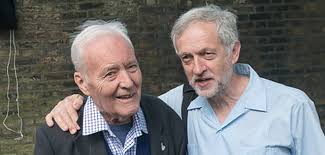
Tony Benn and Jeremy Corbyn: architects of Labour misfortunes
That stance got me interested in taking a longer-term view of British politics. So I looked at percentages of the popular vote in eleven elections over the forty years between 1979 and 2019. Clearly, the relative strengths of the two main parties, Labour and the Conservatives, would be of interest. It struck me, though, that it might also be useful to set them in the context of the overall landscape of parties of the broad right (the Conservatives, but also the hard right parties of today or their earlier embodiments, Brexit Party, UKIP, the British National Party) or of the broad left (Labour, the LibDems and their earlier forms, the Alliance or Liberals, the Greens or Ecology Party, the SNP and Plaid Cymru).
How the left (broadly) performs against the right
compared with Labour alone
What emerges is a curious picture. The ‘left’, in this broad definition (orange line), consistently outperformed the ‘right’ (black line) except in 2015. That surge for the right was principally down to UKIP’s 12.6%; the Conservative result was still an anaemic 36.8%.

With either proportional representation or some arrangement between the constituents of the ‘left’, the ‘right’ would have had a majority of the popular vote for only two years out of the last forty.

Now popular votes don’t necessarily translate into Parliamentary majorities. But if big enough, they can deliver victory, and the ‘left’ tends to be significantly ahead of the ‘right’ most of the time. That suggests that if Labour, the SNP, the Liberal Democrats and the Greens could have pulled together, the Tories would have been out of power for most of the last 40 years, instead of in power for 27 of them.

Interestingly, Labour alone (red line) only outpolled the combined right for three elections – unsurprisingly, the three when Blair was leader and in government. The leftie on Twitter, and others of his ilk there or on FaceBook, are also constantly assuring me that Blair was the lowest of the low and worthy of nothing but contempt. However, if we’re interested in keeping the Tories out of power, it’s worth remembering that he was the only leader in four decades able to ensure that Labour could do that on its own.

For the rest of the time, it would have had to work in partnership with others to oust the Tories. That’s clear from the second graph comparing Labour’s performance (red line) directly with the Tories’ (blue line). Again, only under Blair did Labour outperform the Tories. Otherwise, we’re consistently behind.
Labour performance alone against the Conservatives
Interestingly, the worst results are not under Corbyn. The worst of all, naturally, is 1983. Then Labour was led by Michael Foot, although Tony Benn, the deputy leader, was the main architect of our overwhelming defeat.

Since then, our lowest percentages of the popular vote came in 2010 and 2015. The Tories, however, were down then too, winning by small margins. Looking instead at the gap between Labour and the Tories, the worst elections of all were 1983 and 2019, Benn’s and Corbyn’s. Indeed, it is Corbyn’s greatest achievement to have gifted the Tories their second-highest vote share in that forty-year period. The only higher result was Maggie Thatcher’s first win in 1979.

The significance is that her victory was the first in a series. Johnson’s was the fourth in a row for the Tories, and the first time since the nineteenth century that any party has increased its Parliamentary representation in a fourth election victory.

Corbynists always said that Jeremy would do something remarkable. He has. Although I’m not sure this is what they meant.

This takes us to the nub of the problem for the hard left. One told me recently that whatever we learned from the 2019 election, we should not on any account ‘abandon the programme’. For Corbynites, no compromise is possible on Corbynist policies. That makes any hope of collaboration with other parties impossible. And that, as the last eleven elections demonstrate, means that the right would continue to outperform us.

Above all, with the kind of programme championed by Corbynites now or Bennites in 1983, we ensure not just a Tory win, but a colossal one. Why does this happen? Because Bennites and Corbynites want Labour to mirror their views, not those of the electorate. And the electorate has no time for their policies.

In the current leadership election, we need to choose a leader who reverses that. We need a leader who listens to the voters and goes to them with a programme that they can endorse, even though that means compromise, even giving up on some cherished policies. That way we can win back Labour voters. And if, in addition, we can compromise enough to attract other parties to our banner, why, we could kick the Tories out for a generation.

The alternative is to choose Bennite or Corbynite orthodoxy.

And we know what that gets us: the likes of Maggie or Boris.

Wednesday, 6 November 2019

Boris, Trump and tripping the lie fantastic

There was a time when voters valued honesty in politicians. Not that they expected ever to find any. There’s an old joke about a man lost in a wood and stumbling into a clearing, in which he sees a blind old woman, a pink elephant and an honest politician. So who does he ask to show him the way?

The answer is, of course, the blind old woman, as the other two are just figments of the imagination.
Boris and the great lie
But even if we didn’t expect honesty from them, we kept up a vaguely optimistic pursuit of the honest politician, or maintained the notion as some kind of ideal towards which we might aspire.

Not any more, it appears. In Donald Trump, we have a US president who, if we really push our generosity, may feel is not an actual liar, in the sense that he may not always be deliberately stating as a truth something he knows not to be true. It may rather be that he suffers from a pathological inability to tell the truth from anything he happens to want to believe. Or, worse still, happens to want his voters to believe.

He may simply be lying, but it may actually be that he thinks that his wanting to believe something is true, makes it true.

North Korea hasn’t actually disarmed at all? So what? The disarmament deal that Trump proclaimed after his first meeting with Kim Jong Il is the best disarmament deal there ever was.

All that nonsense about Trump putting pressure on Ukraine to dig up dirt on his opponent? All made up. The fact that a transcript of the call exists, and it confirms the allegation, is neither here nor there. It never happened.

Isn’t a great achievement that China is paying for the tariffs Trump has put on its exports to the US? The miserable line about tariffs being paid by the population of the importing country, not the exporting one, is just an inconvenient factoid. An unattractive notion, and therefore untrue.

But in Britain too we have our version of Trump. Like Trump in the US, Boris holds the highest elective office in Britain. Unlike Trump, I think he has sufficient knowledge and intellectual horsepower to know when a statement is actually false. So when he utters a falsehood, he is undoubtedly lying.

And he seems to lie as naturally, as casually, as automatically as he breathes.

Perhaps the most embarrassing instance came when he visited Whipps Cross hospital in North London. When the father of a child who had been admitted to the appallingly understaffed and overstretched emergency department accused him of only being there for a photo opportunity, Boris replied that there were no press present. That was despite the fact that, as the father pointed out, the press were clearly visible just a few steps away. 
Omar Salem points out the photographers at Whipps Cross
whose presence Boris had just denied
The father, Omar Salem, is a Labour activist. But that doesn’t alter the fact that he’s a father, his child was seriously ill, and the staff were hopelessly overstretched. It seems that Boris’s first instinct is to lie, even when it’s obvious that he’s going to be caught out almost immediately.

There were so many other instances. Another was the decision of the Daily Telegraph to apologise for an article Boris published in the paper, forecasting that a post-Brexit Britain would overtake Germany as an economy within a few decades. It seems his argument was based on an analysis he’d ready which simply didn’t bear it out.

Perhaps the most notorious deceit ever was the one Boris associated himself with during the Brexit referendum campaign, that leaving the EU would free £350 million a week to invest in the NHS (the National Health Service). It was particularly barefaced, because it deliberately overstated the contributions the UK made to the EU, ignored the subsidies it received back from it, and left out of account the additional costs associated with Brexit and the revenue loss it was likely to entail.

A far wilier campaigner than Theresa May, his immediate predecessor, far being put off by his terrible track record in this field, Boris has boldly taken the battle to his Labour opponents, precisely on the grounds of the NHS. That takes courage for a Conservative, because this is traditionally Labour’s strong ground. But Boris is promising to spend more on the health service, to employ more clinicians, even to build more hospitals.

In other words, Boris is promising to address the very scandals that the distraught father tackled him over at Whipps Cross.

And yet Conservative Central Office has instructed candidates to sign no pledges on the NHS (or indeed on climate policy). So Boris is making the promises but preparing the ground for reneging on them. As he did over Brexit, when he promised to deliver it by 31 October, “do or die” – he didn’t do, but he didn’t die either.

What’s most surprising about this trail of blatant lies and broken promises is, in an election as wide open as any I’ve seen, with four major parties contesting nationally, as well as the SNP massively powerful in Scotland, Boris continues to lead the polls. At nearly 40%, his standing is weak, but way ahead of anyone else’s.

Above all, what that 40% means is that, for two voters out of five, honesty in a politician is simply not an important consideration. They see it as perfectly legitimate to vote for him anyway.

Sadly, 40% is enough to win in a wide-open field.

You can fool some of the people all of the time, or all of the people some of the time, but in Britain, you only need to fool 40% on election day to get to do what you want for the next five years.

Wednesday, 14 June 2017

An election of all the losers

Who needs a “none of the above” option on a ballot paper? Certainly not the British electorate. It has found a way of delivering that verdict using just the classic old “pick one candidate” form.

The 8 June election was the one everyone lost.

The poor old Liberal Democrats won only a handful more seats, taking their total to 12. That’s far behind the glory days when after two generations of hard work, they peaked at 57 under Nick Clegg, becoming a real force in British politics. Unfortunately, Clegg took them into coalition with the Conservatives, securing himself a cabinet seat on which to park his bum, but turning his party into mini-Tories. Why would anyone vote for a Tory lookalike when they can choose the real thing instead? It’s going to take a long time yet to come back from the car crash the Lib Dems created for themselves under Clegg – who lost his own parliamentary seat on 8 June.

Then there was UKIP. This is the far-right United Kingdom Independence Party which used to be led by Nigel Farage. He made clear what “Independence” meant in his book: he spoke at the Republican Party congress in the US and disappeared up Donald Trump’s fundament at the earliest possible opportunity after the Donald took the White House. Farage is a perfect expression of the Brexit spirit: it removes us from dependence on all those shifty Europeans, instead making us completely subservient to the Trumpiverse.

In one of the better pieces of news from the election, UKIP saw its vote fall from 3,881,099 to 593,852. Essentially a wipeout, and it couldn’t happen to a more deserving bunch.

Then there was the Scottish National Party. It reached previously unimaginable heights of success in 2015, taking 56 out of the 59 seats in Scotland, reducing the Conservatives, Liberal Democrats and Labour to just one seat each. There was, inevitably, only one way for the SNP to go but the extent of its fall was impressive: a loss of 21 seats, leaving it still the largest party north of the border, but much chastened. That was the price of insisting on another independence referendum at a time when the electorate had become tired of the subject.

The fate of the Conservative Party was a joy to behold. Theresa May went for an unnecessary election to convert her small majority into a much larger one. “Strong and stable” was her mantra, repeated to the point of nausea; in the event, she lost her majority altogether, leading to her scrabbling to find a little provisional stability by a pact with Northern Ireland’s pious and bigoted Democratic Unionist Party. That means fumbling to form an enfeebled government within which her own position is substantially weaker.


Theresa May promised strength and stability
but ended up feeble and fumbling
And finally, there was Labour. Most people, and I was very much of that number, expected the leader Jeremy Corbyn to run a weak campaign and take the party to its worst result since 1935 or at least 1983. Well, we were all wrong. Corbyn found an inspiring dynamism that I didn’t expect him to produce and the party did far less badly than expected. It had a huge surge in its popular vote (but even the unhappy Tories achieved an increase, if a far smaller one). Disappointingly, the surge only delivered Labour 32 more seats, leaving it just four ahead of the number it took from the defeat of 2010. However, the 2010 score had one great advantage over that of 2015: it was close enough to a majority to make the victory at a future election a realistic prospect. We are, at least, back in that position again.

In many ways, Labour emerged strongest – or at any rate, least injured – from the election. There’s no denying that it was defeated, but it is on the way up where all its main rivals are on the way down. That’s encouraging but mustn’t lead to complacency. There’s still a mountain to climb: Labour needs twice the growth – 64 additional seats – to secure a parliamentary majority at the next election than it achieved at this one.

That’s going to need some brilliant, inspiring and effective opposition over the next few years. Perhaps not many years: minority governments tend not to last long. But for that time, long or short, we’re going to need to see Corbyn at his best, the dynamic figure who emerged from the election campaign, to consolidate the party’s position today and prepare to take the huge step remaining to get back into office.

In fact, it means winning the confidence of a far bigger tranche of the electorate. So, next time, unlike this one, voters don’t go for “none of the above”. And we don’t see another election of all the losers.

Saturday, 3 December 2016

A triumph for the LibDems. A defeat for the Tories. A warning for Labour

It’s always satisfying to see a Tory government being given a bloody nose. 

It’s even more satisfying when it’s a victory for those who don’t accept the Brexit verdict as irrevocable. 

And it’s best of all when it’s administered to an unpleasant individual of thoroughly toxic views.

All that happened this week.

Zac Goldsmith ran an unpleasant Tory campaign to be Mayor of London last year, calling on racist and Islamophobic notions to try – and, fortunately, fail – to beat Labour’s candidate, Sadiq Khan, whose name is probably enough to explain the racism and Islamophobia. Not to justify them, of course, but certainly to explain why an unprincipled candidate would resort to them. 

This year, he resigned from the Conservative Party and from Parliament to precipitate a by-election in his constituency of Richmond Park, where he ran as an independent against the government’s decision to build a new runway at nearby Heathrow airport.

The Liberal Democratic candidate, Sarah Olney, a strong supporter of continued membership of the EU, chose not to campaign on the airport but to focus on Brexit instead. To widespread surprise (including my own), she snatched the seat from Goldsmith, converting his majority of 23,000 votes into her own of nearly 1900.

An excellent result.


The defeated candidate (for local MP and London Mayor)
and the victorious LibDem
If I have a quibble it’s that we had to depend on the Liberal Democrats to win this victory. The main party in opposition to the Tories is my own, Labour. It should be the one challenging the government, and all the more so since the Liberal Democrats were in coalition with the Tories between 2010 and 2015. That was both a betrayal of principle and counter-productive: it reduced the party’s presence in Parliament from 62 to eight. The Richmond Park result may suggest that things are turning around for the LibDems (though one win doesn’t make a resurrection), but it certainly reflects a Labour failure.

Why do I say that?

If Sarah Olney’s win owed a great deal to the LibDems’ position against Brexit, undoubtedly the biggest question for the vast majority of voters, her party was able to make it their own because Labour’s silence on the subject has been deafening. 

Why is it so quiet? Silence is always hard to interpret, but occasionally it gets broken. John McDonnell, a close ally of the party’s leader Jeremy Corbyn, recently described Brexit as an “enormous opportunity”. This seemed to confirm a suspicion many of us felt that the Labour leadership wasn’t particularly comfortable with the party’s official policy of backing continued EU membership. 

Meanwhile, siren voices on the right of the Labour Party are calling on us to address anxieties over immigration in Labour’s traditional voter base. Again, this provokes suspicion, in this case that we are being urged to move rightwards, to counter the challenge presented by the extreme anti-EU and xenophobic United Kingdom Independence Party, UKIP. As another of Corbyn’s allies, Diane Abbott, recently pointed out – correctly – Labour can’t win by being UKIP-lite. If people want UKIP policies, they’ll vote UKIP. Labour doesn’t beat them by accommodating them, but by explaining that turning against foreigners won’t address any of the real problems affecting our supporters, which are poverty, insecurity and joblessness. Instead, we need to tackle the causes of economic decline – not least of which is the decision to leave the EU.

That’s hard to do if you’re not too sure about the EU yourself. Hence the silence.

The problem is that silence isn’t leadership and leadership is what voters are crying out for. Labour isn’t doing leadership right now. There was recently a Parliamentary vote, on a motion advanced by the Scottish National Party, to investigate Tony Blair’s role over the Iraq War and his possible misleading of Parliament at the time.

There are two positions one can legitimately take on the issue. 

The SNP’s would be that Blair behaved unconscionably and needs to be held to account by Parliament. 

The majority Labour position, with which I agree, isn’t simply one of “hands off our former leader” but rather argues that the problem was that Blair had far too much authority, allowing him to commit the country against its will. So it was an institutional issue, not a personal one, and it needs to be tackled at that level. That ties in, for instance, with the calls for Parliament and not just the present Prime Minister to have the final say over Brexit.

A third position is illegitimate. That’s to have nothing to say on the matter. It’s striking that all three of Corbyn, McDonnell and Abbott stayed away from Parliament at the time of the debate.

Silence, like over the EU.

Nature abhors a vacuum. Similarly, voters abhor silence. While it stays quiet and on the fence, refusing to lead, the group that technically controls the Labour leadership leaves the Party vulnerable to attack by those who flow in to fill the political vacuum – whether from UKIP or from the LibDems.

So the Richmond result isn’t just a victory for the LibDems. It isn’t just a black eye for the Tories. It’s also a serious wake-up call to Labour.

The leadership needs to make up its mind: start leading, on the issues that matter to the electorate, or see our support continue to erode. Otherwise – please just stand aside and let someone else take over. 

Someone who has something to say. 

Someone who’s prepared to get out in front and lead.
-->

Tuesday, 9 June 2015

After Scotland and Turkey, do we all have to become nationalists?

What a joy it is to see a people, saddled with a centralising, increasingly autocratic ruler, turn out and vote to stop him gathering still more power to himself.

That’s what happened on Sunday in Turkey. The HDP, generally described as “pro-Kurd” – the difference from a Kurdish party is that the HDP, under its co-Chairman Selahattin DemirtaÅŸ, wants to extend its appeal beyond the Kurdish 20% of the population – took enough seats in the general election to deny the ruling party a parliamentary majority. Suddenly, Recep Tayyip ErdoÄŸan, the former Prime Minister who had moved to the symbolic office of President in the hope of turning the post into something with real executive power, has to go back to the drawing board.

Selahattin DemirtaÅŸ of the HDP
which put Erdogan firmly in his place this weekend
So an essentially nationalist party, albeit one that has decided to broaden its appeal outside its region, has, without coming even close to winning the election, made such a breakthrough as to transform the political atmosphere.

Of course, that’s a phenomenon we know sadly well in Britain too. Here, as in Turkey, a nationalist party representing one part of the nation, has won a sweeping victory in its own region, Scotland. The Scottish National Party has reduced, for now at least, the previously dominant Labour Party to only one seat. And, like the HDP, it has found a way to articulate a message that is more than nationalist – indeed, its leader, Nicola Sturgeon, has emerged as a more committed evangelist for moderate social democracy than anyone the Labour Party has found in recent years.

That’s not to say that everyone in the SNP is particularly nice. I had this from a supporter, probably a member, on Twitter the other day: “…your [Labour’s] demise in rUK [the rest of the UK, without Scotland] is also assured. You have as much future as the UK – none.” It’s intriguing that someone can take so much gloating pleasure from the notion that the rest of the UK has no future – a prospect that would cost us dear, but gain him nothing.

Incidentally, that is the classic definition of envy: delight in harm to someone else, for its own sake. So when it comes to the politics of envy, this statement perfectly expresses it.

Nevertheless, it does seem that in its majority, and at the top of the party, the SNP manages to offer a real alternative to the traditional, rather monolithic and uninspiring parties that have dominated the scene for so long. Like the HDP in Turkey. It’s true that the SNP remains entirely nationalist – Scottish, where the HDP is simply pro-Kurd – but it does seem as though nationalist politics might, at the moment, be quite an incubator for social-democratic or liberal thinking.

Sadly, nationalism is also an incubator for far less agreeable things (perhaps rather like my Twitter acquaintance). The far-right, xenophobic, homophobic United Kingdom Independence Party is nothing if not deeply nationalistic. So is the Islamophobic, authoritarian Front National in France. Like the HDP and the SNP, these are parties that are gaining support and upsetting the excessively comfortable political arrangements that suited our leaders in the past.

The uglier face of nationalism:
Marine le Pen of the FN in France, like Nigel Farage of UKIP in England
Does that mean if we want to see some change, we have to choose nationalists of the left or right?

How dismal the prospect would be if the answer to that question were “yes”. Because, and again my SNP-supporting adversary seems to make the point, it doesn’t take much for a nationalist of the left to flip into something pretty hateful and little different, in brutality of outlook, from a nationalist of the right.

Which means that we need to find that flame that lights up the HDP and SNP and light it in our old, non-nationalistic parties of the Centre-Left. The next few months are going to be crucial in Britain, to see if we can pull that trick off with Labour. But we need to see it happen in a great many other countries too.

In the meantime, though, we can at least celebrate the result in Turkey. it doesn’t matter that the HDP has nationalistic roots. At least it has given an increasingly autocratic politician a bloody nose.

To be fair, one even has to have a little sneaking admiration for Erdogan himself. For the moment, at any rate, he seems at least to have accepted the people’s verdict. There are plenty of countries – Russia for instance – where that couldn’t be guaranteed.

Sunday, 7 June 2015

Too soon to write off Labour. If we learn our lessons

There seem to be frequent reports at the moment of the death of the British Labour Party. I’m inclined to consider them greatly exaggerated.

Listening to a recent programme on the BBC – What’s Left, chaired by the Observer’s Andrew Rawnsley – I was amused to hear speakers declaring the 2015 results the worst for Labour since 1918. Two of the panel were Labour MPs, the rest journalists or academics. Even the MPs shared the doom-laden view.

It just feels way over the top to me. Certainly, it was a lamentable result. We were beaten, and still worse, we weren’t even able to prevent David Cameron and his Tories winning an overall majority – right up to polling day, the opinion polls were suggesting he would at most emerge as leader of the biggest single party in parliament, only able to cobble together a minority administration. Instead, he took a small but working majority.

So it was lousy. But the detail suggests things were less dire than the prophets of doom claim. Perhaps I should say, like to claim.

Labour’s share of the vote was actually up on 2010. By only 1.4%, it’s true, which is anaemic, but that was marginally more than the Tories managed – they only increased their share by 0.8%. That still left them 6.5% ahead of Labour, which is certainly a sound defeat, but hardly catastrophic.

The biggest failure of Labour was to protect its Scottish heartland. From 40 seats in Scotland, it feel to just 1. Hugely damaging. On the other hand, overall it lost only 24 seats – in other words, outside Scotland it added 15 seats to its tally. With Scotland still heading inexorably for independence, Labour was going to have to wean itself from its reliance on Scotland in any case. The fact that it has been able to increase its number of seats in England and Wales is a necessary step towards guaranteeing its long-term success.

And let’s not forget that Labour hadn’t put itself in the best possible position to win. Ed Miliband is principled, insightful and probably great company. But he’s virtually unelectable: he’s accident-prone, constantly making disastrous gaffes, and with his lieutenant Ed Balls, apparently unable ever to get off any fence. They would repeatedly dodge the hard questions, preferring to appear a little Tory to Tories, a little socialist to lefties, and convincing nobody.

Andy Burnham, Yvette Cooper, Mary Creagh, Tristram Hunt, Liz Kendall
Will one of them turn Labour's fortunes round as the next leader?
Peter Mandelson rightly points out in today’s Observer that, under their leadership, they failed to answer such opportunistic policies as Chancellor George Osborne’s proposal to devolve more authority to local government in the North of England. That was a policy Labour should have adopted before the Tories, but it failed either to adopt it or to respond to it. The result? Losses to the Tories in the North, another heartland area, including Ed Balls’s own seat, and deep inroads by another adversary, the far-right UKIP.

If despite these self-inflicted handicaps, Labour could still improve its standing outside Scotland by fifteen seats, and marginally improve its popular vote, what could it do with a more effective, more dynamic and, above all, more assertive leadership?

It strikes me that this is no time to throw one’s arms up in despair and talk about defeat on a historically unprecedented scale. Instead it’s time to take stock sensibly of where we stand, without understating the scale of the debacle but also without ignoring the more reasons for encouragement. And make sure we never again saddle ourselves with leaders so hopelessly out of touch with the needs of the day.

Because if we shoot ourselves in the foot like that again, then we would indeed be in serious trouble.

Wednesday, 13 May 2015

Faced with two options, Labour should look for a third

A great debate is getting under way inside the Labour Party, over what went wrong in the British General Election. It is boldly, unflinchingly and resolutely facing up to entirely the wrong question.


Which path to the light?
The high road? The low road? Left? Right?
Or should Labour turn around and look for something else entirely?
That question is posed in terms of whether Labour needs to go back to its winning ways under Tony Blair, as New Labour, or take a more Left-wing stance, as favoured, some suggest, by his successor Gordon Brown. The Blairite view is that Labour turned its back on people with aspirations, focusing exclusively on the poor and vulnerable.

Staunch Blairite Peter Mandelson, popularly nicknamed “the Prince of Darkness”, has bemoaned the fact that under the doomed leadership of Ed Miliband, the party was instructed to get out there with the message that “we are for the poor, we hate the rich – ignoring completely the vast swathes of the population who exist in between…”

Expressing essentially the same objection, he said that “we were sent out and told to wave our fists angrily at the nasty Tories and wait for the public to realise how much they had missed us. They weren’t missing us. They didn’t miss us.”

Mandelson isn’t entirely wrong: those fundamentally negative messages would damage Labour. But as someone who also went door to door a little for Labour, I can assure you no one told me to present that view. There will come a time when Ed Miliband, gallant loser and therefore a figure much loved by the English, will start to see the sympathy flow back towards him and I’m sure, when that happens, no one will pretend he was against aspiration.

Equally, I’m convinced that neither he nor Ed Balls who, as Shadow Chancellor (Finance spokesman), was with Miliband the main architect of Labour’s defeat and even lost his parliamentary seat as a result, were opposed to wealth creation. They wouldn’t deny the entrepreneurs responsible for it the right to become rich in the process. On the contrary, I think they saw themselves as committed to wealth creation, as the only way out of the difficulties the nation faces, and merely felt that there had to be some better regulation of just what was permitted in its name – and that the rewards people took should reflect real contribution. Huge bonuses for bankers operating their institutions at a loss ought, for instance, to be curtailed.

The Blairites are at least nominally committed to the same thing. At most, there’s probably a difference in degree between the two sides: should the top rate of tax be at 45%, 50% or 55%? Nobody’s proposing the rate of the sixties, 97.5%.

Sadly, however, the debate is going to be about backing “modernisers” (read Blairites) or “old Labour” (read those closer to Miliband). Whereas it should, in fact, be about entirely other matters.

It’s true that Tory economic policy is inequitable: the richest have doubled their wealth over the the last ten years, despite the crash, while those least able to bear it are suffering devastating hardship. But the real issue is that it doesn’t even work. Growth is stuttering. The debt is up, not down. The pain of constant cuts in government spending isn’t being rewarded by gain in economic recovery.

The answer isn’t simply to call the Tories nasty or hate the rich. It’s to offer an alternative to the constant cuts. We’ve known since Keynes that austerity doesn’t work. And yet Labour’s answer has been simply to offer the same with some mitigation of its worst effects.

We should be arguing for an alternative to austerity. We need to communicate the message that there’s no better time to borrow that when interest rates are just about zero. If the funds go into stimulating the economy, more people will find real jobs. They’ll pay more taxes, and they’ll buy more goods. A virtuous cycle will be kicked off, where the economy starts to fix itself, and the need for further government borrowing goes down as tax revenues go up. Without soaking the rich – simply by the sheer organic effect of relaunching the economy.

But what that means is denying the premisses of the Tory argument. It means saying “the problem isn’t about how much austerity we should have, or where it should be targeted, it’s about dropping the policy altogether.”

Sadly, it’s the SNP in Scotland, the true victors of the General Election, who pursued that line, and not Labour, who lost.

If you haven’t already seen the election night exchange between famously aggressive presenter Jeremy Paxman, and the former SNP leader Alex Salmond, then you should watch it now. It’s a master class in refusing to accept the premises of a hostile argument. Without being evasive, you just answer “no” and keep saying it as long as you need to. Which makes the clip also a great illustration of how to deal with hostile media, about which Labour also constantly complains – though with a predominantly right-wing press, Labour ought to be used to it by now, and have learned to see it off as Salmond did.


When Salmond ran rings round Paxman
A master class in handling hostile media and fighting the right battle
Paxman asked what lay behind the SNP success and, when Salmond answered that it was Nicola Sturgeon’s leadership, tried to needle him.

“You’re a very modest man, aren’t you?” 

Salmond, unfazed, replied “modesty becomes me, yeah.”

Later, Paxman tried to get Salmond to deny the SNP’s earlier refusal ever to work with the Tories.

“Is there any possibility of any sort of deal between you and David Cameron if the Tories are just a little bit short of an overall majority?” he asked.

“No.” 

“None whatsoever?”

“Correct.” 

“If David Cameron offered you full fiscal autonomy, in other words control over taxes in Scotland, you’d still say no?”

“He won’t.”

“You’re guessing.”

“No, I’m not.”

Perhaps the most telling exchange came in the middle of the interview.

“I suppose you could take some of the credit for the Tory triumph in England, couldn’t you?” asked Paxman.

The reference was to the campaign whipped up by the Tories and their friends in the press about the possible election of a minority Labour government, dependent on SNP support. The SNP was presented as a bogey man, and Miliband only contributed to the damage by constantly denying he’d ever work with the SNP – in other words, he played into the lie that the SNP was dangerous.

Salmond stayed calm and told Paxman:

“No, I think Ed Miliband should take the credit for the Tory triumph in England. I think he should have fought a totally different sort of campaign. If he’d fought the sort of campaign that Nicola Sturgeon fought in Scotland, then he’d be in a much better position this morning.”

Now there’s the key issue for Labour. Not should we be more like Blair, or more like Brown. Instead, can we find a leader who doesn’t fall into the other side’s trap but fights the campaign we need and gets us elected?

In other words, can we find our own Nicola Sturgeon?

Sunday, 10 May 2015

Disunion and disarray, or is Cameron just too sly for his own good?

One of the most remarkable result of the British General Election on Thursday was what happened in Scotland.

The Scottish National Party or SNP won 56 of the total of 59 seats in the UK parliament. The Conservatives, Labour and Liberal Democrats have precisely one seat each. Whoever had formed the government in Westminster – as it happens, it’ll be the Tories – they would come from a party practically unrepresented in Scotland.

This state of affairs is far from unprecedented, even in these islands. To see where it’s likely to lead, it’s worth looking at what has happened before. Let’s start with a foreign case.

In 1971, Pakistan was still formed of two wings. In East Pakistan, today’s Bangladesh, the more populous component of the country, a protest movement had been building for decades, led above all by a nationalist party, the Awami League.

In that year’s elections, the League won all but two of the 169 seats in the Eastern Wing – and not a single seat in the West. On the other hand, the 169 seats it held gave it a majority in the 307-seat parliament of the whole country, entitling it to form the next government – rather as if the SNP were now in a position to form the government of the UK.


Mujibur Rahman:
iconic figure who achieved Bangladesh's Independence
and was promptly murdered
The West Pakistanis, used to controlling most of the wealth and all of the power – particularly the military – weren’t going to wear that. So war broke out – and, with help from India, East Pakistan won. Pakistan broke up into its two separate wings and Bangladesh was born.

Now let’s return to Britain, but a little further back in the past.

At the 1918 General Election, immediately following the First World War, Ireland, still a part of the United Kingdom, elected 73 Sinn Féin MPs. They were committed to full independence from Britain. They replaced the Irish Parliamentary Party, down from 67 to 5 MPs – shades of the what happened to the Liberal Democrats last Thursday – which had been campaigning for a much more limited programme of Home Rule. The Unionist tendency, favouring maintenance of the existing relationship with Britain, won only 26 seats.

The Sinn Féin MPs refused to take up their seats at Westminster and instead met separately in what came to be known as the Dáil Éireann or Assembly of Ireland. It proclaimed the formation of a Republic of Ireland, which achieved independence four years later, with a great deal of bloodshed and ugly violence in between.


Michael Collins
Iconic figure who helped achieve Irish Independence
and was promptly murdered
Don’t these precedents rather suggest that, when component nations of a larger state, elect dominant blocs of politicians actively campaigning for independence, it is only a matter of time before they achieve it? The best that can be said for the situation in Scotland is that it unlikely we shall face the violence that poisoned independence in Bangladesh and Ireland.

Nicola Sturgeon, leader of the SNP, stated before the election that it was not about a new referendum on independence. Since the election, she has made it clear that she intends to stick to her commitment. Consequently, her party’s victory, however extensive it was, did not deliver a mandate for another referendum.

The SNP has, however, also stated that a significant event might trigger a campaign for an independence referendum again. It’s fairly clear that a decision by Britain to withdraw from the European Union would be such an event. And David Cameron, in one of his many attempts to be sly, specifically to draw the sting of the Eurosceptics in his own party and in UKIP, committed himself to there being a referendum on Britain’s continued membership of the EU before the end of 2017. He’s repeated that commitment since his re-election.

So imagine this scenario. Britain votes for withdrawal from the EU, because a substantial majority chooses that option in England. But Scotland votes to stay in. As a result, the SNP campaigns again for independence, this time achieving it. That seems pretty likely anyway, but on this scenario it would happen much earlier than it might otherwise.

Cameron, and Tories generally, like to big up Britain and its role on the world stage. It’s one of the reasons they want to hang on to Trident nuclear weapons (another view opposed by the SNP), in the hope that the international community will take them more seriously as a result.

In this scenario, however, Cameron would have presided over the United Kingdom’s isolation from the rest of Europe – and then the loss of its second biggest constituent nation, with over 8% of its population. On his watch, his nation would have been severely reduced in stature around the world. He might have to wonder whether he’d really been so sly after all, and many of those who voted for him would have to ask themselves whether they had really taken the most judicious of decisions.

A conundrum for him. Particularly as he still has to mollify his Eurosceptics. He must be hoping against hope that he can persuade the electorate to vote against leaving the EU – without actually campaigning openly for that outcome.

Friday, 8 May 2015

A very British spaghetti Western: the good, the sly and the downright inept

I spent the first couple of hours after the BBC exit poll for the UK General Election was announced at 10:00 last night doubting its accuracy. I wasn’t alone: former Liberal Democrat leader Paddy Ashdown publicly swore to eat his hat on live TV if it were proved right. Fortunately for him the exit poll did indeed prove wrong. Unfortunately, things turned out to be even worse than it suggested.


What? What? The Tories on 316 seats?
I couldn't believe the scale of the victory
The next hour or so I spent trying to adjust my mindset to a completely different outcome from anything I’d been expecting. For weeks – months even – we’d all been forecasting a hung parliament (no party with an overall majority) and weeks of negotiations to put a coalition together to govern the country. That’s what the polls were telling us, after all.

Incidentally, I don’t believe the polls were wrong. What seems to happen is that a small but crucial number of people tell pollsters that they plan to vote Labour. They may not even be lying. That may be their intention when they say it. But then they go into the polling station and vote Tory.

In my mind, these so-called “shy Tories” are people who feel they really ought to vote Labour, perhaps because they know it represents their interests. So that’s what they tell the polling organisations.

But the Labour leaders are not unlike the Tories: educated at similar schools and universities, less wealthy perhaps but still far wealthier than anyone on the median wage or less. In the loneliness of the polling booth they think about these two sets of people, both representatives of what they may perceive as a kind of master class. If they are to choose one such person, why not make it the one born and bred to be a master – in other words, a Tory?

The final batch of polls had the following standings for the main parties on the eve of the election:

  • Lord Ashcroft: Conservative 33%, Labour 33%
  • Ipsos MORI: Conservative 36%, Labour 35%
  • Populus: Conservative 33%, Labour 33%
  • ICM: Conservative 34%, Labour 35%

All tight. And all of them adding up to a total, for the two main parties, of 66-71%.

The actual result was Conservative 38%, Labour 31%. A total of 69%, but a substantial lead to the Tories. All it takes, however, to get there from what the polls were showing is a switch by about 3-4% of the electorate. That’s probably about the extent of the “shy Tories” out there, and they determined the outcome last night.

It’s against that background that I set my British Spaghetti Western, The Good, the Sly, the Inept.

First, the good. That has to be the Scottish National Party, the SNP, and its leader Nicola Sturgeon who had an excellent campaign – rewarded by a near clean sweep of Scotland. There was a time that we in the Labour Party would laugh at the Tories for having only one Scottish seat. Now the laugh’s against us: as well as the Tories, we too, as well as the Liberal Democrats, only have a single Scottish seat.

The other 56 have been won by the SNP. It has even managed to win the election of the youngest MP for 350 years, Mhairi Black, a twenty-year old student who has to fit in finishing her degree in the next few weeks, around taking up her newly-won position at Westminster. She unseated Labour’s Foreign Affairs spokesman, Douglas Alexander, in Paisley and Renfrewshire South.

Next, the Sly. This is the only prediction I got remotely right. The Tories are like the Sandman: get too close and you’re likely to fall asleep. Back in 2010, when they didn’t have enough seats to form a government, they approached the Liberal Democrats who then had 57 seats, to join them in coalition. The Lib Dems said yes, much to the amazement of many of us who had regarded them as a party of the centre-left, much more naturally allied to Labour than to the Conservatives.

We predicted that the electorate would take a terrible vengeance on them, reducing their numbers to a level from which it would be impossible to recoer for a generation. Even so, again guided by polls, most of us felt that they might hang on to 20-30 seats. In fact, they now have just eight. Some of the party’s biggest hitters have gone, including David Laws, one of the main architects of the coalition. The leader Nick Clegg clung on, but he’s leader no more, having resigned this morning.

And finally, the Inept. My own party. Our arcane constitution allowed the Trade Unions to foist on us a leader, Ed Miliband, who is I’m sure immensely likeable, principled, honest, decent and lots of other great things. But a no leader. He appointed as his Finance spokesman Ed Balls, and together they crafted a message to the effect that they, like the Tories, would impose a policy of austerity, but they’d do it more nicely.

Nicola Sturgeon of the SNP pointed out that this stance presented the British electorate with the choice between Tory austerity, and Labour austerity-lite. Not exactly inspiring.

Working to get out the vote around Luton, I had someone tell me that she had voted Labour, but against her instincts – she felt little confidence in the party. One even said that she might not vote at all, because Labour hadn’t cleansed itself of the Blairite tendency that took us into war in Iraq.

As Alex Salmond, Nicola Sturgeon’s predecessor as leader of the SNP, last night told TV presenter Jeremy Paxman in a master class on how to handle aggressive questioning, if Ed Miliband had “fought the sort of campaign that Nicola Sturgeon fought in Scotland, then he’d be in a much better position this morning.” Indeed. Though he might also have had to learn to handle the media the way Salmond and Sturgeon do.

Well, that’s all in the past now. Ed Miliband has also stepped down. And Ed Balls was defeated for re-election in his parliamentary seat.


Crafted the economic policy that contributed to Labour defeat
And paid by being beaten himself
They always say businesses should hire slow and fire fast. Labour elected Miliband to the leadership rather quickly. It became clear soon after that he wasn’t going to inspire enough of the electors he needed to reach. But we fired him slow. It took four years for him to go, and the price for the generosity which let him have a go at becoming Prime Minister is going to be paid by a lot of other people, during five years of continued Tory rule.

Italian spaghetti Westerns leave you feeling entertained. This British one, on the other hand, leaves you with a bitter taste in your mouth. I suppose it’s like the contrast in weather between the two countries.

Saturday, 2 May 2015

Miliband rules out working with the SNP. Seriously?

Picture the situation. A series of curiously convenient deaths have left you on the threshold of power in your nation. You have only to step forward to take it – and yet there’s an obstacle. You don’t share the beliefs of the majority of your compatriots. They wouldn’t accept you unless you change your views.

So what do you do? Do you accommodate their deeply held feelings or do you stand on principle? Do you give up the hope of power or do you compromise and win it?

Henry, King of Navarre, thought long and hard and decided compromise was the best option. “Paris,” he famously declared, “is worth a mass” and converted from Protestantism, to accommodate the wishes of his predominantly Catholic new subjects. So he became King Henry IV of France.

A good thing, too, for his subjects as much as for him. There haven’t been that many good kings, but he was one. Both sides gained from the bargain.

Good king Henry of France, for whom Paris was worth a Mass
Now fast forward rather more than four centuries. Britain stands on the edge of what looks likely to be the tightest general election since mass suffrage was introduced. The Conservative-dominated coalition with the Liberal Democrats is massively discredited. Its core concern has been for austerity economics as a way of to solve the nation’s economic woes: painful but, they would argue, necessary.

Well, we’ve had plenty of suffering, particularly amongst the most vulnerable sections of society: the poor have lost most of the safety net they might occasionally need and, even worse, the disabled, the ill, those most in need of help, have had state support withdrawn. The pain has been real. The gain, on the other hand, has been far less obvious: growth remains sickly to say the least and, while employment has risen, much of it has been in the most precarious form possible – the zero-hour contract, tying a worker to an employer who makes no guarantee of either work or pay.

Ed Miliband: trying to make up for lost ground
He may have to agree to things he finds distasteful
Sadly, though Ed Miliband as leader of the Labour-led Opposition has had an excellent campaign over the last few weeks, over the previous few years, he’s led the attack on the Coalition to limited effect. There have been occasional flashes: he opposed military intervention in Syria and, I suspect to his surprise, saw his stance adopted first in Britain and then, astonishingly, even in the United States. A great triumph, avoiding at least one lamentable and probably catastrophic intervention in the Middle East.

Generally, though, his leadership and the role of his most senior subordinate, Ed Balls, has been littered with gaffes and errors. The result has been clear and obvious: I’ve had people who, in the past, have voted for a variety of parties – people free of the tribal attachment that I feel to just one party – the so-called floating voters who’ve told me categorically that, however sick they are of the Conservatives, they could not bring themselves to vote Labour under Miliband.

The result is that Labour is level-pegging with the Tories in the last week of the campaign. And might even emerge with slightly fewer than Members of Parliament than they have – because it has massively lost Scotland. That nation, which previously sent huge number of Labourites to Parliament, has swung overwhelmingly in favour of the Scottish Nationalist Party. This is principally a reaction to inept English reactions to the defeat of the referendum on Scottish independence in September. It was the Conservatives who reacted least well, but Labour has paid the steepest price.

Miliband has therefore set his sights on winning over support from disaffected Conservatives – rather belatedly if, as I suggest, he had put off most floating voters earlier. In order to win Conservatives, he finds himself trying to ape Tory stances – being evasive on immigration, for instance, and instead of opposing the painful policies of austerity, suggesting a slightly toned-down version of them.

But the biggest concession he is making to the Conservatives is that he’s writing off any possibility of a deal with the SNP. The Tories constantly try to frighten voters with the prospect of a Labour government dependent on SNP votes, a UK government dependent on a party that wants to leave the UK, and Miliband has responded by toughening his rejection of proposals for collaboration from Nicola Sturgeon, the SNP leader.

First he ruled out a formal coalition, which he hadn’t been offered in the first place.

Now he’s saying that he wouldn’t come to any kind of a deal. He would rather not form a government at all than lead one on that basis. Which suggests he would answer Sturgeon’s recent question to him, “is it the case that you would rather see David Cameron go back into Downing Street than work with me?” in the affirmative.

Nicola Sturgeon. Hardly an ogre
It might be messy to work with her – but the alternative is far worse
Working with the SNP would indeed be messy, particularly after having ruled the prospect out so emphatically, in words that could come back to haunt him. But do we really want to see David Cameron returned instead?

Which brings me back to Henry IV. He said that Paris was worth a mass. Well, I hope Miliband realises that Downing Street is worth a mess. 

If he doesn’t, he would go down in history as the man who saddled Britain with an inexorably ruthless Conservative government, when he could have taken power himself at the price of a compromise. And turned into a good Prime Minister as Henry became a good king: Miliband could well be a fine Labour Prime Minister though a poor campaigner, rather like Clement Attlee, one of the Labour greats.

Turning his back on the opportunity might prove far messier still than taking it. For him personally. And, sadly, even more for the rest of us.