Showing posts with label Kevin Spacey. Show all posts

Thursday, 16 November 2017

Entertainment and purgatory

She could have been such an interesting travelling companion.

When I first saw her, sitting by the window across and empty seat between us, on a flight back to England from Munich, she was frenetically taking selfies of herself. She lowered the window blind, she turned one way then another, she seemed far from satisfied but she was in a hurry to text the photo away before the flight attendants told us to switch phones to airplane mode.

She’d spotted that I was interested.

“It’s a film role,” she told me in a distinctly East European accent, “I need to get a selfie to my agent.”

Was I sitting a seat away from a star? I didn’t recognise her.

“It’s the Ridley Scott film about Getty. Because of Kevin Spacey. They’re filming scenes with a new actor.” “Yes,” I said, “Christopher Plummer.”
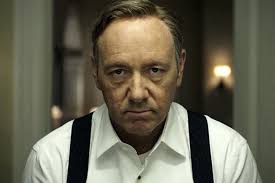
From revered icon to unperson. In next to no time
A curious business. Kevin Spacey had gone in the space of a few weeks from much-admired, much-loved international star to non-person following a series of sexual harassment complaints. So much of a non-person that the Scott film is having to be reshot with him out of it.

An insider’s view could have been intriguing.

Of course, she wasn’t a star, but an extra as she quickly explained to me. She showed me pictures of herself in police uniform or as a paramedic, or just as a member of a crowd in costumes of various periods between the nineteenth century and today (including some from previous Ridley Scott films).

She does stunts too, and that sounds even tougher than thought.

“You have to have six skills. Like riding, and not just ordinary riding, but jumping bareback which is hard without stirrups, or riding two horses and going from one to another; I do rock climbing too, and water stunts, but it’s all getting tough as I get older.”

She showed me a pay slip and that was certainly an eye-opener: in three days she’d earned little more than I do in a day. Not everyone in film is a millionaire, it seems.

“This will not make me rich,” she earnestly assured me.

Now if only the conversation had kept going down that road, I’d have felt my original evaluation was right. Unfortunately, that wasn’t things were going to turn out. She had other subjects she wanted to talk to me about.

First was the two days she’d just spent in Munich, at a spa. The saunas were wonderful, apparently, but I’ve been to German spas before so I wasn’t really learning very much. Apparently you can to the spa from the hotel where she stayed by cutting across a field, something she told me three times, though it left me less than wholly fascinated: I’d never been to the hotel, the field or the spa and don’t currently plan to visit them any time soon.

She then chose to give me the compelling news that she plans to fast for forty days. Momentarily I wondered whether she had a Jesus Christ compulsion, but it turns out she only does these fasts to flush her system of toxins. Sometimes she doesn’t manage the Christ-like forty days but stops after twenty.

I’ll spare you the details of what she eats over this period, where she buys the vegetables and the lemons for her lemon juice, how much they cost, and how hard it is to find the time to cook the damn stuff (especially when her husband is eating food that she finds far more appetising). I spare you those details, but she didn’t spare me.

From there it was but an easy step to the enthralling subject of her health.

When I was studying French, one of the pronunciation exercises told us that an Englishman asked “how do you do?” replies “how do you do?” A Frenchman, on the other hand, asked “how do you do?” starts to talk about his health.

Well, the stereotype isn’t wholly false. As a service to any non-native English speakers readers of this post, let me make it absolutely clear that there’s only one English answer to the question “how are you?” and that is “fine”. Even if the person asking is a visitor to your hospital bedside, and you’ve just been told by your doctor that there is no further treatment for your condition, so from now on you’re getting palliative care only for the last few weeks of your life, the answer is still “fine”.

Sadly, despite her twenty years in the country, my travelling companion had clearly not managed that step in cultural assimilation. She delivered her health woes to me in full and graphic detail. By the end, I was leaning so far out into the aisle that I couldn’t hear over the engine sound.

But as well as the English reluctance to talk about health, I suffer from the English inability to find a polite way of telling someone to put a sock in it. I’d slept badly the night before and was desperate just to read a little or even sleep, and here was this woman talking to me endlessly about her health (at least, I believe she was, though I could no longer tell). And instead of telling her to stop it, for God’s sake, I was just saying “yes”, “no” or “indeed” at random, without it apparently having any effect on stemming her flow of words.

I was reduced to just longing for the wheels to touch down. That gave me the opportunity to interrupt her and suggest that she check her texts for an answer from her agent. But that only opened another floodgate: I get all her troubles with technology, how phones never worked for her as she expected, “more than six buttons and I’m lost”.

Eventually, though, she got her texts. Sadly, she hadn’t had the call.

Sadly, I say and, strangely, sadly I mean. I might have seen her failure to secure the job as karma for turning a short flight into a taste of purgatory. Instead, I felt sorry for her.

On the other hand, I didn’t hang around to hear just how upset she was. By then, I really felt I’d given enough. I’ve seldom left a plane so fast.

Thursday, 23 April 2015

Things to watch, things not to watch: a tormented US cop, wily Soviets, wily Americans, bad Englishmen in Australia, a saintly Englishman in Cornwall

Nothing here to educate or edify, no gritty realism or insightful analysis: these are just series that entertain. Or, in at least one case, don’t.

Made specifically for Amazon and available to stream: Bosch. A lot of fun, if you like this genre, and it is entirely generic. The tormented middle-aged LAPD detective, hated by his superiors who are plotting against him. Above them are remoter superiors who plot and counterplot to further their careers, and are loyal to the eponymous Bosch only when it suits their plotting. He is, naturally, divorced with a clear implication that it was against his choice, and still is; he of course has a teenage daughter who’d like to see more of him. He’s incredibly attractive to significantly younger women (he’s in his forties), but can’t establish a lasting relationship with any of them. He is, of course, a maverick, frequently ignoring process and pushing regulations to their limits. From time to time he’s even in serious trouble as his enemies argue that he’s pushed beyond them.


The picture says it all
Bosch (Titus Welliver):  the tough man tough criminals do well to avoid
Throw into the mix a soulless serial killer who likes to taunt him down the phone, and you have a structure which you will, of course, entirely recognise. This particular instance of it is well acted and well directed, and can give you hours of innocent fun with the occasional jolt to keep you awake – if, as I said, you like the genre at all.

Also available on Amazon at the moment is The Americans. Naturally, as the name implies, the protagonists are absolutely not Americans. They are in fact Soviet spies, living as Americans, in the US. You’ll be amazed at how well the actors playing these parts speak English, or rather American; this actually is a little amazing for the male lead, who really isn’t American, but from a US point of view English, though in reality he’s Welsh.


The Russian spies in The Americans:
Matthew Rhys, who's Welsh, and Keri Russell who actually is American
The Russians who are openly Russian speak Russian, which is a great little touch of realism. It’s pretty much the only touch, however. The sleeper spies get away with murder (sometimes literally): people see their faces, they frequently engage in their nefarious activities in the open, even in daylight; one imagines that in reality they’d have been caught in about three weeks, instead of lasting for years (there’s a long backstory to the series). Still, there are some interesting characters, well acted, and gripping incidents. It’s also fun to watch a series where the bad guys are good guys – and the writing works well, making us sympathise with them. I did, however, keep wondering how long the series could last: the first two seasons are set at the start of the 80s, with the Soviet Union having less than a decade to survive. Will the spies be scrambling for the exit at the end of season 9, if there is a season 9?

Season 3 of House of Cards, on Netflix, has all the pace, the panache and the performance of the first two seasons. Plenty of wit and action as well, to keep us hooked and watching. Sadly, it doesn’t have anything like the same quality of story line. Manipulation of events by ruthless, amoral people was the guiding theme of the first two seasons, and what gave the series its character; that’s sadly played down in season 3. Indeed Claire Underwood, wife of the manipulator in chief and not far behind him in wiliness, seems to have been reinvented as a somewhat more moral character, which sadly makes her a lot less interesting.


Lars Mikkelsen, even more sinister as a Russian President than Putin
With Kevin Spacey, outstanding as ever
On the other hand, excellent acting by Lars Mikkelsen, Danish but convincing as a Russian at least to my ear, doing a wholly Putinesque performance as the Russian president, is almost enough on its own to justify watching the season.

I can’t say the same about the BBC series Banished, about the first white Australians – who, as Australians never tire of telling me, were selected by some of the best judges in England. The series is set in the first convict colony in New South Wales, and there’s plenty of good stuff about the setting and living conditions (rations are constantly being cut, and there are some curious consequences of having a community of 1000 men with 200 women). Still, the plot is painfully predictable and unimpressive, and leads to an ending which I won’t spoil, even though I could hardly do it more harm than it does itself. Pretty colours, though, and pretty people (yes, those English judges must have been good on beauty as well as crime), and the kind of thing you could watch while tired and having a few drinks: if you fall asleep, you’ll have no trouble catching up: what happened while you were out was exactly what you imagined was going to happen.


MyAnna Buring, Julian Rhind-Tutt and Russell Tovey in Banished
 Good acting but an indifferent script

Finally, also on the BBC, we have Poldark. And here we can kiss gritty realism entirely goodbye – and it doesn’t matter. This is pure fairy tale, pure escapism. Right from the start. Poldark himself has just come back to his native Cornwall from fighting, under British colours, in the American War of Independence – and comments that he felt he’d been on the wrong side. Yeah, right. An English landowner (impoverished, maybe, but a gentleman nonetheless, in the late eighteenth century when being a gentleman really meant belonging to an elite), who sympathises with a democratic cause – at a time when the word “democrat” was a term of abuse?

This man is a saint. So lie back, suspend your disbelief, and enjoy a series with about as much connection to reality as Walt Disney’s Snow White. Taken in that way, it has great entertainment value and won’t disappoint. But only if taken that way…


The smouldering Aidan Turner, complete with fetching war scar
In an unchallenging but amusing fairy tale Poldark