Showing posts with label Munich. Show all posts

Saturday, 23 December 2023

It’s all in the timing

It must have been sixty years ago that I started to learn French. That was at a weirdly English school, even though it was in Rome. Its Englishness was above all in its spirit and in the teachers it recruited

Our teacher was English and one of the few things I remember of her teaching, was when she told us earnestly that we had to learn to distinguish between the French words ‘ay’ and ‘ay’ (that’s the same sound as the ‘ai’ in ‘pain’ and would have been deeply painful to anyone who knew more French than I did).

She meant the words ‘et’ and ‘est’ and neither is pronounced ‘ay’.

The only other thing I remember from those classes was the tale of a sign seen outside a French teashop early in the twentieth century. That was a time when the custom of tea drinking was being adopted from the Britain where, French people then and, indeed, in many cases now, see it as a long and deep-rooted tradition.

As a quick digression, that’s a misleading belief.

Back in 1652, in that strange period when England was a republic and Puritans were a lot too powerful, the first coffee shops opened. They served a drink that we would probably regard as an undrinkable sludge today. But people back then liked it, especially for the buzz it gave them. The Puritans, who abhorred alcohol though they never actually banned it, were happy to see people going for this alternative, which contained no alcohol and didn’t leave them drunk.

Coffee houses proliferated over the next few decades. They became favoured meeting places, with many developing a specific character of their own. Some focused on people in business – Lloyds of London, the insurance operation, was founded in a coffee house which gave it its name (it was Lloyds Coffee House). Others were political, with supporters of different factions gathering in different establishments. Others might cater to artists or writers or journalists, and so on.

This was before tea had become a national beverage. Though it wasn’t long before. Just eight years later, after the restoration of the monarchy under Charles II, his Portuguese wife, Catherine of Braganza, who’d developed a taste for this infusion of leaves from the far east, began to drink tea in England.

The fashion spread rapidly, in the upper circles of English society, where ladies would serve each other this delicate drink when they met in the afternoon. So note two things about that: it was a drink taken at home, not in an establishment outside like a coffeehouse. That made it a drink fit for women, or at least ladies, who would not have liked visiting a coffee house, with its male-dominated, rowdy atmosphere. And it was a drink people preferred to take in the afternoon.

As the price fell, so the custom of drinking tea extended into ever broader circles of society, ceasing to be exclusive to the very wealthiest (or ‘best’ as they liked to think of themselves, and still do). Gradually England, and later Britain, became the temple to tea drinking that it’s reputed to be today. That’s even though it was a coffee-drinking nation earlier and, to this day, drinks more coffee than tea.

Now there are many times of day when a Brit might drink tea. With breakfast. During the morning. In the afternoon. With the evening meal which, by continental standards, Britain tends to take early (at around 6:00) and is often called ‘tea’. Classically, though, just as in the time of the restoration, tea is a drink for the afternoon, at about 4:00.

‘Four o’clock tea’ therefore became something of an institution.

And the sign outside the French teashop?

My class learned that it read ‘Ici on sert le four o’clock à cinq heures’ – here we serve the ‘four o’clock’ at five o’clock.

We all chortled.

I was reminded of all that when I saw an old flapping notice on a board in Valencia, where we live.

The municipal authorities had decided that there was some benefit in reproducing, in the city, the Oktoberfest made famous by the German city of Munich, in Bavaria. You’ve probably seen pictures of buxom German women in traditional dress carrying handfuls of those massive stone beer tankards the Germans call ‘Steine’ (which means ‘stones’). Clearly, Valencia had concluded that having their own Oktoberfest would be both fun and, probably, a money spinner, both of them attractive characteristics. So they’d organised one.

What I was looking at was a publicity poster for it.

Advertising Valencia’s Oktoberfest
It read:

IMPORTANT

The official Valencia OKTOBERFEST 

will start on 15 September.


An October festival in September? Yep. Just as much fun as the four o’clock served at five.


Thursday, 16 November 2017

Entertainment and purgatory

She could have been such an interesting travelling companion.

When I first saw her, sitting by the window across and empty seat between us, on a flight back to England from Munich, she was frenetically taking selfies of herself. She lowered the window blind, she turned one way then another, she seemed far from satisfied but she was in a hurry to text the photo away before the flight attendants told us to switch phones to airplane mode.

She’d spotted that I was interested.

“It’s a film role,” she told me in a distinctly East European accent, “I need to get a selfie to my agent.”

Was I sitting a seat away from a star? I didn’t recognise her.

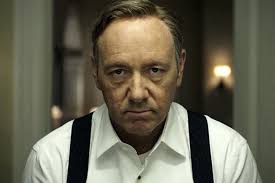
“It’s the Ridley Scott film about Getty. Because of Kevin Spacey. They’re filming scenes with a new actor.” “Yes,” I said, “Christopher Plummer.”

From revered icon to unperson. In next to no time
A curious business. Kevin Spacey had gone in the space of a few weeks from much-admired, much-loved international star to non-person following a series of sexual harassment complaints. So much of a non-person that the Scott film is having to be reshot with him out of it.

An insider’s view could have been intriguing.

Of course, she wasn’t a star, but an extra as she quickly explained to me. She showed me pictures of herself in police uniform or as a paramedic, or just as a member of a crowd in costumes of various periods between the nineteenth century and today (including some from previous Ridley Scott films).

She does stunts too, and that sounds even tougher than thought.

“You have to have six skills. Like riding, and not just ordinary riding, but jumping bareback which is hard without stirrups, or riding two horses and going from one to another; I do rock climbing too, and water stunts, but it’s all getting tough as I get older.”

She showed me a pay slip and that was certainly an eye-opener: in three days she’d earned little more than I do in a day. Not everyone in film is a millionaire, it seems.

“This will not make me rich,” she earnestly assured me.

Now if only the conversation had kept going down that road, I’d have felt my original evaluation was right. Unfortunately, that wasn’t things were going to turn out. She had other subjects she wanted to talk to me about.

First was the two days she’d just spent in Munich, at a spa. The saunas were wonderful, apparently, but I’ve been to German spas before so I wasn’t really learning very much. Apparently you can to the spa from the hotel where she stayed by cutting across a field, something she told me three times, though it left me less than wholly fascinated: I’d never been to the hotel, the field or the spa and don’t currently plan to visit them any time soon.

She then chose to give me the compelling news that she plans to fast for forty days. Momentarily I wondered whether she had a Jesus Christ compulsion, but it turns out she only does these fasts to flush her system of toxins. Sometimes she doesn’t manage the Christ-like forty days but stops after twenty.

I’ll spare you the details of what she eats over this period, where she buys the vegetables and the lemons for her lemon juice, how much they cost, and how hard it is to find the time to cook the damn stuff (especially when her husband is eating food that she finds far more appetising). I spare you those details, but she didn’t spare me.

From there it was but an easy step to the enthralling subject of her health.

When I was studying French, one of the pronunciation exercises told us that an Englishman asked “how do you do?” replies “how do you do?” A Frenchman, on the other hand, asked “how do you do?” starts to talk about his health.

Well, the stereotype isn’t wholly false. As a service to any non-native English speakers readers of this post, let me make it absolutely clear that there’s only one English answer to the question “how are you?” and that is “fine”. Even if the person asking is a visitor to your hospital bedside, and you’ve just been told by your doctor that there is no further treatment for your condition, so from now on you’re getting palliative care only for the last few weeks of your life, the answer is still “fine”.

Sadly, despite her twenty years in the country, my travelling companion had clearly not managed that step in cultural assimilation. She delivered her health woes to me in full and graphic detail. By the end, I was leaning so far out into the aisle that I couldn’t hear over the engine sound.

But as well as the English reluctance to talk about health, I suffer from the English inability to find a polite way of telling someone to put a sock in it. I’d slept badly the night before and was desperate just to read a little or even sleep, and here was this woman talking to me endlessly about her health (at least, I believe she was, though I could no longer tell). And instead of telling her to stop it, for God’s sake, I was just saying “yes”, “no” or “indeed” at random, without it apparently having any effect on stemming her flow of words.

I was reduced to just longing for the wheels to touch down. That gave me the opportunity to interrupt her and suggest that she check her texts for an answer from her agent. But that only opened another floodgate: I get all her troubles with technology, how phones never worked for her as she expected, “more than six buttons and I’m lost”.

Eventually, though, she got her texts. Sadly, she hadn’t had the call.

Sadly, I say and, strangely, sadly I mean. I might have seen her failure to secure the job as karma for turning a short flight into a taste of purgatory. Instead, I felt sorry for her.

On the other hand, I didn’t hang around to hear just how upset she was. By then, I really felt I’d given enough. I’ve seldom left a plane so fast.

Monday, 25 July 2016

Outrages all around. And outrageous lack of thought in response

When it comes to making the world safer, the complete – but unsurprising – failure of Dubya and Bush has now been dramatically demonstrated. These days, it seems barely a day goes by without some new outrage, generally linked with the vile genie the invasion of Iraq let out of the bottle, the terrorist so-called Islamic State.

When it comes to size and spectacular impact, the French seem to be suffering the most, but just for now, at least, it’s the Germans who seem to be at the wrong end of a long, grinding, agonising repetition.

Another day, another outrage
Not, of course, that all those attacks are actually terrorism. It was almost with relief that I learned that a machete attack in Reutlingen was a ‘crime of passion’ and not terrorist-related. It seems awful to feel relief over what was, after all, a murder, but I suppose it’s a bit like the Northern Ireland police at the time of the troubles. They had the notion ‘Ordinary Decent Crime’: with so many crimes literally atrocious, it must have been comforting from time to time to come across a common-or-garden, civil crime unrelated to the sectarian conflict.

As it happens, it wasn’t only the machete attack that was unconnected to ISIS. That was also the case of Friday’s shootings in Munich, when 18-year old David Sonboly killed nine people.

Apart from the horror of the event itself, it was also interesting to see the reactions to it. A great many people, not least the British Foreign Secretary and semi-professional bungler, Boris Johnson, assumed immediately that it must have been an act of terrorism. Boris began pontificating about the need to tackle terrorism at its roots in the middle east, as well as in the many countries it affected, which at least had the merit of being true – it just wasn’t relevant. He would have discovered that for himself had he waited until he’d had a little more information before sounding off.

Boris is a wonderful illustration of the truth that no one can be quite as stupid as an intelligent person. He has the brains to work out an astute message on terrorism, just not the self-control to wait until he finds out whether terrorism played any part in the act he’s commenting on.

It was in any case interesting to see who else jumped the gun and started running their mouths off about terrorism, with a mere skip to immigrants as the causes of terrorism, before they knew what had actually happened. “Oh, Mrs Merkel, is it time for you to have second thoughts about letting all those people in last year?” they chanted, only too happy to be able to give their xenophobia free rein.

Let’s set to one side the fact that Merkel let in a million desperately wretched people. That a handful of them turn out to be pretty rotten is unfortunate but hardly shocking. Are we really to turn our backs on over 999,990 of them because of what the rest may do?

Let’s instead concentrate on David Sonboly himself. Of the nine he killed, seven were migrants: three Turks, three Kosovans and one from Greece. It seems his victims were disproportionately immigrants, while he was German born.

Yet he was of immigrant stock: his parents were Iranian refugees. The son of immigrants rounding on immigrants isn’t that unusual, with one wave of immigration resenting the next, which it sees as destabilising its own situation, the way of life it has established with the native population. We’ve had some celebrated examples of this kind of behaviour in Britain. Leading Conservative politicians Michael Howard and Michael Portillo both backed measures to restrict asylum rights, even though the former was the son of a Jewish refugee from Nazism and the latter the son of a Republican refugee from Franco’s Fascist coup in Spain.

The people who used the Munich shooting to decry immigration were, it seems, lining up with the perpetrator against his victims. They didn’t mean to, of course, but it’s curious to see where you end up when you talk first and think later.

Either way, the incident was an outrage and a tragedy. Though it wasn’t itself linked to terrorism, it underlines a greater familiarity with violence in our societies which terrorism has probably fanned. We’re in for difficult times over the next few years or even decades.

Another case of reaping the bitter fruit of acting without thought or sufficient information, just as Dubya and Blair did. We’ll be consuming the toxic harvest of the Iraq invasion for a long time yet. The worst of is that the ill-judged reactions to Friday’s events, whether Boris’s or those of simple social media users, show that we’re still a long way from putting that kind of lazy, ill-informed and frankly bigoted thinking behind us.