Wednesday, 30 January 2013

Kaleidscope landscapes and a fishy canine meal

After my memorable sixtieth birthday on Saturday, marked with a Volcanic grill, it was my son Michael’s turn to celebrate his thirtieth yesterday.

We went to a place that rejoiced in the name of ‘El Golfo’, here on the spectacular island of Lanazarote. 

El Golfo makes up by its striking appearance for its lack of originality in naming (it lies on a bit of a bay which could I suppose, if viewed in the right light and through narrowed eyelids, pass for a gulf). The guidebooks directed us to the nearby lagoon, and I suppose lagoons aren’t that common, so it made sense to make a bit of a feature of this one. As it happened, it wasn’t half as impressive as what was on its landward side (a sandstone cliff that glowed increasingly golden as the sun set) or on its seaward side (a strip of black sand on which blue sea was crashing in white foam).

Green lagoon and golden cliffs near El Golfo

Since the lagoon water was green and the sky was turning pink, we were plunged into a kaleidoscope of colours that sounds garish to describe but was much more harmonious when we were in it.
Black sand between the lagoon just visible to the right and the sea.
With my shadow to show it was sunset
Just rubbing in the point about the sunset

Once the sun had set, we headed off to one of the thirty or so fish restaurants which seemed to make up the bulk of El Golfo village. There we were presented with our choice of fish, including one that was livid red with a mouthful of teeth.

‘Dog fish’, the waiter told us, and pointed to some vicious looking incisors to make the point. It turned out that its bark was a lot worse than our bite, and the poor creature disappeared inside us rapidly and to the pleasure of all present, bar the vegetarians (who had to make do with peppers and mushrooms and such like).

A good evening which none of us will forget in a hurry.

It was also the occasion, and this may come as a surprise to anyone reading this, for me to discover that my phone includes a function to take panoramic pictures. Magic, isn’t it? And it’s only taken me eighteen months to find out.


P.S. After the dogfish, two of us shared a local dessert known as ‘Bien me sabe’. I think the name means something like knows me well and whoever invented the dish had certainly read me like a book. Both of us, actually. We raced to the bottom of the bowl and then wished there’d been more. Outstanding.

Monday, 28 January 2013

Let's get out of the EU just like we got away from the US

To be chief of staff to Tony Blair is a bit like being keeper of the curious compounds to the Borgias, so I’m not always inclined to regard Jonathan Powell with relaxed confidence. Nevertheless, he spent a while in diplomacy – another of those jobs not always marked by its qualities of straightforwardness and frank speaking – so he probably knows a bit about how one state ought to handle their relationship with others.


Powell: probably an authority but, hey, a Blairite. Lock up the spoons.

So it was interesting to read Powell’s paper in Monday’s Guardian about David Cameron’s long-awaited speech on Britain’s relationship with the European Union. As he argues, the speech was designed to win Cameron an immediate boost in short-term popularity, and it seems to have worked: the latest polls show him 3 or 4 points closer to the Labour opposition than he was before.

However, as Powell says, Cameron’s made any such gain at the cost of launching a five-year campaign over whether Britain stays in the EU or not.

Cameron has said he will only campaign to stay in the EU if he is first able to renegotiate the terms of Britain’s membership. Until he pulls off that fairly improbable feat, he’ll presumably have to hold his peace; and if he fails, as seems likely, what will he do? He claims to be a convinced Europhile: would he have to argue against his conviction?

In the meantime, the Eurosceptics will be under no restraint to silence their increasingly virulent attacks on British membership. On the contrary, they’ll take encouragement from Cameron’s having declared open season on the EU.

So our membership of the EU is at risk. The Eurosceptic current in the population is delighted. They see the millions it costs us to be members but somehow miss the hundreds of millions in additional trade it provides us; they see the way it forces us to let Johnny Foreigner in but don’t see that new arrivals are less inclined to claim benefits than native Brits and do jobs we can’t persuade anyone else to take on; they see that the Union imposes legal restrictions on us but don’t see that the same provisions guarantee us rights, including the opportunity to live and work in any of 26 other countries.

Now there’s nothing new about this kind of unenlightened thinking. Most peoples, but the Brits more than many, love to focus so much on the shortest of short terms that they lose track of the long-term advantage they’re giving up. Funnily enough, I’ve just been reading some more about one of the more obtuse instances of Britain behaving that way in the past.

Back in the eighteenth century, Britain fought a bunch of wars against those perpetual party-poopers from across the Channel, the French. Given the opposition, the Brits naturally won, but it cost a bit.

‘Blimey,’ they said, ‘who can we get to pay for this?’

So they took a look across the Atlantic and saw those enterprising colonists making money out in America. ‘I know,’ they said, ‘we’ll tax them.’

Sadly, the Colonists didn’t see things quite the same way. ‘Raise your own bloody money,’ they said, ‘we’re taking our ball away and won’t play any more.’

I read recently about John Adams of Massachusetts and Ben Franklin of Pennsylvania heading a delegation to visit the Lords Howe, one brother an Admiral, the other a General, in New York. Classic, isn’t it, that Britain was represented by two sprigs of the nobility, old Etonians, occupying their top positions thanks to their birth, because their talent certainly wouldn’t have got them there?

John Adams was worried about the likely behaviour of the Howes, but was astonished and delighted by the smooth courtesy and polished charm the two gentlemen displayed over dinner. Again, perfect isn’t it? Their descendants combine urbanity and incompetence in just the same measure.


Admiral Howe: not a lot of cop militarily, apparently
But he doesn't look a bundle of laughs either, to be honest

The discussions led nowhere and within days the Howes were in action against the colonists, winning crushing victories. However, each time they whipped the dastardly Yanks, the Howes went back to their charming dinners for another month or so, while their opponents slipped away and regrouped ready to attack again when the opportunity presented. And isn’t that appropriate too? Cameron wins his little skirmishes and then relaxes on his laurels while the war slips away from him.

Now Cameron 
isn’t an eighteenth-century general. Or even an admiral. And the EU isn’t a set of British possessions. But the North American colonies turned into the most powerful and prosperous nation on earth, and Britain’s short-term approach ensured that it would be no part of that. All for the sake of a little money they needed right then, and didn’t get anyway, and for want of a strategy properly elaborated and consistently applied, they turned their back on pretty cracking opportunity, the best they probably ever had.

Today, Cameron is looking at the possibility of working more closely with one of the world
’s biggest economic blocs, one likely to grow still more powerful in the future. He has deliberately adopted an approach that will marginalise Britain from it. He’s done that for the sake of an uncertain short-term gain. 

That feels like exactly the kind of respect for tradition that we appreciate in Britain.

‘That men do not learn very much from the lessons of history is the most important of all the lessons of history’ said Aldous Huxley. He was British. He was well placed to know.

Saturday, 26 January 2013

Want to remember your big six-oh? Celebrate in a desert

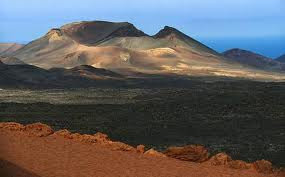
There are times when you just have to do something memorable, and there’s nothing much more memorable than plunging into a desertic, volcanic landscape, desolate though not barren, as life clings on to the surface of an apparent wilderness.

Especially memorable if you’re going there for lunch.

Timanfaya national park: just the place for a memorable lunch

One of my sons summed it up. ‘It’s really lunar, isn’t it?’ Unfortunately he then confused me by adding, ‘It looks martian.’ Still, I think I got the message.

Yes, I won’t forget my sixtieth birthday in a hurry. It’ll be like remembering where I was when I heard that JFK had died, though as it happens I don’t think I actually do remember where I was. Still, you get the message.

The national park of Timanfaya (pronounced to rhyme with ‘I’m on fire’, as long as you stretch out ‘fire’ in a bit of a southern drawl) is on Lanzarote, the island a whole bunch of us are visiting in the Canaries at the moment.

On the highest point of the highest peak of the park, stands a restaurant where you can get volcano-grilled barbecue. No burgers as it happens, but hey, why would I want a burger? I always think of them as belonging to Calais in Northern France and coming in a six-pack.

Rodin's Burghers of Calais. In Calais. Of course
Magnificent but hardly appetising.
So instead we had sardines or chicken, steak or Argentinian sausage, according to taste. All excellent, though I couldn’t help feeling that bringing sausages all the way from Argentina was perhaps taking a demand for the esoteric in gastronomy a little too far.

The grill sits above a vent down into the heart of the volcano. It generates quite enough heat to singe your meat more than adequately. I’m not sure whether it’d be hot enough to destroy a ring of power and bring down the Dark Tower, but as it happened no-one had one on them to try the experiment.

I guess rings of power aren’t that easy to come across. Presumably, they all hang around waiting for one ring to rule them all, one ring to find, one ring to bring them all and in the darkness bind them. And it was nothing like dark enough today.

That didn
’t stop it being a great and memorable experience. As was dinner last night, overlooking the port at Playa Blanca (the ‘white beach’ turned out to be a short strip of perfectly ordinary sand laid down artificially – honestly, people will say anything if they think it’ll bring tourists). The food was outstanding and the evening provided just as memorable a celebration for the birthday of one of my sons; on Tuesday we’ll go and celebrate the birthday of another; the third made the error of being born in the summer, so he’ll just have to tag along and drink toasts to the the rest of us, but he seems to be doing that with gusto so I imagine he doesn’t see it as a hardship.

Then, the birthdays over, I suppose we’ll just have to find some other way of entertaining ourselves for the rest of the week on this charming little island. Not that I expect that’ll prove to be too much of a hardship either.

Thursday, 24 January 2013

Canaries: not just for the birds

Odd to be out here in the Canaries. No complaints, mind: we’ve leapt in a few hours from harsh, though exhilarating winter to gentle spring. Balmy weather, not weather it’s barmy to be out in.

In any case, I could hardly object to our destination, seeing as I chose it. Even so, I was a little ambivalent about the place, if only for the name. I mean canaries sing in prisons, don’t they, bringing retribution down on themselves and suffering on their friends? They get stuck in cages on the end of long poles pushed by miners into pockets of gas, to die themselves instead of their masters.

Note to self: avoid any underground sightseeing, however picturesque the caves are said to be.

‘Canaries’ is also the affectionate term used for Norwich City Football Club, for those fond types who are fond of them. Since I count some good friends among them, I
ll say no more on the subject, especially since I don’t believe in mocking the afflicted. 

Chirpy little birds. OK, yeah, right

Finally, the birds themselves. Terribly cheerful chirpy things. Brightly coloured. Much cultivated by little girls with pigtails and embroidered dresses.

Turns out the real place is rugged, mountainous and sea-girt. What a relief.

Lanzarote: a lot more impressive than those little birds
Or even Norwich City FC

I also felt relief when it came to my driven need to change my watch to local time, long before the plane lands. On this occasion making the change took no time at all: the Canaries are smart enough to stick on the same time as Britain. 

Lanzarote also apparently has a barbecue restaurant inside a volcano. I have to see this before I believe it, but I’m told they grill the meat over a vent down to molten lava. Sounds like an interesting new twist to the story of Frodo and the Cracks of Doom in the Lord of the Rings. Guidebooks warn against visiting too often because the sulphur ingested is a health hazard. It makes the experience sound irresistibly attractive, don’t you agree?

Getting here was quite an experience too. We flew on an airline called ‘Monarch’, hardly a congenial to my political predilections. Perhaps appropriate when travelling from the domain of one royal sovereign to another, but a short burst of republicanism would have been refreshing.

At the airport, they stuck labels on our bags marked ‘fit to fly’. Well, I like to think I’m still reasonably but fit, but enough to fly? There’s this whole thing about weight and strength and surface area and all that; it’s against to me.

Then we hit the shopping and what I like to think of as the bottle bank. We were making our selections in some delight over the special offers when the kind of besuited person I persist in thinking of as ‘older’, which probably means he’s the same age as me, came up to tell us to put the bottles back on the shelves. I was about to wax indignant at his officiousness when he pointed out ‘if you’re going to Lanzarote, you can buy duty free.’

Now that vaguely rang a bell for me. Some special arrangement still affected duty for the Canaries (those birds again! See how they constantly attract unfair treatment?) I’d forgotten all about it but it was great to find out about it again: not only were the prices even cheaper but the bottles were bigger. And, irresistible temptation of them all, there was no limit on the number we could take.

We struggled out of the shop bearing bags of duty-free acutely painful to carry, causing one of our party to rechristen them ‘heavy duty.’ Anyway, it means that it no longer matters whether the weather stays warm or turns cold, the lubrication available to us will guarantee delirium through it all.

I just hope I’ll still be able to get a more accurate view of just what those Canaries are really like. And enjoy some sulphurous Crack-of-Doom-burgers.

Tuesday, 22 January 2013

When doing nothing achieves so much more

It isn’t always what politicians do that marks them out as special, it’s what they don’t do.

Take the case of Britain, for instance, where our revered government – well, government – does or says very little that redounds to its credit or anyone else’s benefit. I long for them to do nothing, because that’s when do least harm.

In the past, others have chalked up positive achievements by the things they didn’t do. It’s always struck me, for instance, that Churchill’s greatest contribution to Western civilisation came in a negative sentence of just four words: ‘We shall never surrender.’ At the time, the possibility of surrender to Nazi Germany was being actively canvassed at the highest levels, most notably by the Foreign Secretary Lord Halifax. Churchill’s determination to close that avenue strengthened the will of Britain as a whole to keep up the fight.


Did the right thing by not doing the wrong one

Now Britain didn’t win the Second World War: that’s an achievement for which a larger share of the credit must go to the US and the lion’s share to the Soviet Union, with its 20 million dead. But it would have been far harder to rid the world of Nazism had Britain not kept the war in the west going long enough for the US to join and help take the pressure off the Soviets.

Curiously, that refusal to surrender echoes the attitude of another remarkable leader over a century and a half earlier, although in his case he wasn’t strengthening but opposing Britain (despite being British himself).

George Washington doesn’t enjoy a particularly illustrious reputation as a soldier. Certainly, he displayed an extraordinary degree of personal courage: he was famous for his coolness under fire, happy to ride among his men in combat, despite being strikingly tall and therefore a tempting target. Nor did he shirk many fights, tending rather to get stuck in even when the odds or the conditions were decidedly against him. The result is that he fought a lot of splendid battles but didn’t win many.

What he did, on the other hand, is refuse to lie down and admit himself beaten. After each defeat he would simply withdraw and regroup, ready to fight again. Eventually, worn down by that appallingly unsporting behaviour, made all the worse by a little help from the French, the British decided they’d had enough, and rather than miss yet another London season, did the gentlemanly thing and surrendered, since he clearly never would.

So what he didn’t do was far more significant than what he did.

But the really key thing he didn’t do came later in his life. Massively popular, in a new nation containing a large current of opinion that would willingly have made him King, he reached the end of his second administration and, instead of standing again for a third term he would certainly have won, he stood down.

Now that really was remarkable. He was a military man, after all. The mere fact that he might not have been particularly effective in war was neither here nor there: armies often achieve their most striking, though not necessarily most glorious, successes against their own people – just ask the Pakistanis or the Burmese.

Knew when to hang on – and when not to
He could have clung to power as, in his time, happened everywhere else around the world, but he chose to give it up. Nothing in his political life became him like the leaving it.

David Cameron: are you listening?

Saturday, 19 January 2013

Winter: season of ambiguities

One of the worst libels against the British is that, though snow is far from infrequent in this country, we’re always caught unprepared by it. There’s simply no truth in this vile slander.

I mean, it’s true that however much warning forecasters give, the transport services always fall apart as soon as the first flakes drift down. But that doesn’t mean we’re unprepared. On the contrary, every single year we
re completely ready for things to work out exactly as they always do: the snow starts and immediately things snarl up on roadways, railways and runways.

So what do we do? Well many of us try to avoid using the roads at all. A friend tells me that she and her husband have simply left their car under its blanket of snow. 


As for those who can’t avoid driving, at least they have the satisfaction of being able to engage in that wonderful pastime of moaning about their fate. Another friend told a pitiful story of spending an hour and a half driving to work, an hour and a half at work and two and a half hours drawing back. I wasn’t sure, however, whether he was complaining about the traffic or about the unusual experience of having to devote five and hours to work.

Personally, I’ve been enjoying the snow. I had a meeting with a client yesterday and went by train. It’s great to join in the general atmosphere of shared adversity, as everyone stands around wondering whether a train is going to show up or not. That’s the way I imagine the war years, with the solidarity that comes of facing collective hardship, and it was great to experience it without even facing the danger of a German bomb.

It was a pleasure as well to head to a meeting in snow shoes and casual clothes, and see that my client had done the same. Working without a suit? What a liberation.

Overall, the whole was quite a pleasurable experience. Even the travel was fine. The great linguist Saussure brilliantly illustrated the problem of ambiguity with an example based on trains from his home city of Geneva: the 8:00 a.m. train is unambiguously the 8:00 a.m. even if it leaves at 8:05, even if it leaves at 8:15, even if it leaves at 8:25; but if it leaves after 8:30, the departure time of the following train, we get ambiguity. Which train is it?

Well, yesterday the local railways were wonderfully, gloriously ambiguous. As in the 13:48 arriving at 14:40. So – was it still the 13:48 hopelessly delayed or the 14:12 running pretty late or the 14:32 running barely late at all?

And then I realised. It didn’t matter. I wanted a train and if it showed up not long after I arrived at the station, what on earth did I have to complain about? Why should I care which train it was? The ambiguity was neither here nor there.

Considering how much time I spend most days trying to find the word that says exactly what I mean, it was a glorious liberation to be able to forget all that and just go with the flow of ambiguity. And I still got home at a sensible time.
See? There's fun to be had in winter too. I can assure you I’m completely ready for it. Who said we British were unprepared?

Luton winter fun in People's Park
If youre in the middle of winter too - have a great one.

Thursday, 17 January 2013

An apparent disappearance reveals a salutary truth about public services

Apparent disappearance is a lovely expression, isn’t it? It embodies a paradox and, to quote Gilbert and Sullivan, I have a pretty taste for paradox. 

Still, apparent disappearance wasn’t so funny the other night when it was my mother who had apparently disappeared. There are those, after all, who’d say that to lose even one parent looks like carelessness. You’ll understand that it was particularly worrying since she’d had a fall the previous day and, as I think I can reveal without being unduly indiscreet, my mother isn’t a spring chicken. What made things worse was that I live nowhere near her and nor does my brother.

She hadn’t really disappeared, of course. In fact, she’d made every effort to get in touch and tell us where she was, but she’d been given a ‘dodgy phone’ and the message hadn’t got through.

So what does one do in those circumstances?

Well, I rang the police. And that’s the point at which my experience of the evening suddenly took a huge turn for the better.

The young policeman was polite and friendly, and quickly took down my mother’s details and my own. It turned out that a colleague of his had also got involved in the case, because before he’d even finished checking information with me, she was able to tell him that my mother had indeed been taken to hospital.

He gave me the hospital’s phone numbers; reception transferred me rapidly to the emergency admissions unit and, after no more rings than one might expect in a busy area, a member of staff answered and told me that they were expecting my mother shortly, but that for the moment she was still in the Emergency Department completing a series of scans and other tests.

Half an hour later I rang again and spoke to her. She was clearly not at all disheartened and the tests had shown up nothing worrying – she had been in pain but it seemed it was only a matter of some severe bruising. And her account of the evening was similar to mine: ‘the paramedics and the staff here have been so helpful, so friendly, so kind.’

In other words, both she and I had received exactly the kind of service we could hope for. And at no point had she been asked to produce a credit card: the much-maligned NHS had treated her superbly and efficiently and, true to its fundamental principles, at no charge.

I was, of course, delighted to have tracked down my mother and found her in no worse health than might have been expected, and indeed in far less bad condition than we might have feared. Nonetheless, I’m still troubled. Now it’s over the fact that so many people, large numbers of whom really should know better, aren’t apparently as outraged as I am at the way the British government is interfering the hell out of the public services.

Of course there are many examples of appalling behaviour by policeman, even of downright corruption. Of course there are many examples of lamentable performance by hospitals, with patients treated badly or even cruelly, to the point that some have died unnecessarily. But these events are shocking precisely because they’re rare. Overall, the police and the NHS perform superbly, as I found by personal experience when tracking down my mother.


And whats all this stuff about efficiency savings? I couldn’t have asked for more efficient service. If only David Cameron and his colleagues could say the same about their own work, as they constantly paint themselves into corners and have to reverse their policy decisions.

It was a shame that I had my highly encouraging experience of the police and the NHS on the same day I learned about government plans to make a massive reduction in the starting pay of policemen and women. Meanwhile, a series of half-baked reforms are still reducing pay in the NHS, demoralising the staff and making changes which have no sense except in so far as they let  in ministers’ friends from the private sector to take over services.


The NHS, the police: much more impressive than government
So why not get off their backs, Cameron?

Just how long are we going to put up with this undermining of services that we need so much and which are being provided so well?