Showing posts with label Ageing. Show all posts

Monday, 12 February 2024

Rising early: the pain and the joy

How sad, I used to feel, that old people woke up so early. What a shame, I used to tell myself, that they couldn’t sleep in as I did, till 9:00. Or 10:00. Or even 11:00.

These days, as I move further into my eighth decade, I’m having to come to terms with the idea that being that old isn’t something happening only to other people, but that I’m one of them myself. Just like those old people I once felt so sorry for, I also find it increasingly difficult to sleep late. If I wake up and it isn’t yet 5:00, I try to fall asleep again. If it’s approaching 6:00, it could go either way, but I generally get up. At 7:00, well, these days that’s beginning to get into lie-in country.

There is, in any case, now a new motivation to get up when I wake. Two motivations, one might say. Each has a name: Luci and Toffee. They used to sleep on our bed, but it’s extraordinary how much space a pair of toy poodles can take up. And how little opportunity they can leave to us to get any rest. We finally decided, a few weeks ago, that this had become much too much of a good thing. These days, they get banished downstairs, a harsh decree we reinforce by closing the stair gate installed primarily as a safety measure for the grandkids, now adapted to serve as an escape-proof fence for the dogs. Against the dogs, they’d no doubt correct me if they could.

So when I come down in the early hours, these days I’m greeted by two whimpering poodles bursting with enthusiasm to overwhelm me with welcoming affection.

Despite being retired, I still find that my time just fills up with things to do. Some of them are, of course, simply leisure activities. For instance, we recently went for a walk in the hills with a group of friends. The plan was to hike 14km and end up with a paella. In the end, having spent too long enjoying coffee and cakes before we even set out, the hike became a bit of a stroll and, though the paella plan was unaffected (an amazingly good one by the way, in the Valencian hill village of Serra), we only walked six kilometres, indulging more in conversation than in serious exercise. Even so, that took most of the day. The changes in altitude, the conversation in a language I still haven’t fully mastered, the consumption of a large meal, all left me worn out by the time we got home.

When I woke early the next morning, therefore, I didn’t plunge straight into work. And I really mean work: keeping up my English history podcast (wittily entitled A History of England), now at over 180 episodes, has proven quite a task. I find myself having to read book after book, because for every authority I consult, I always feel the need to consult another, to try to cancel out bias in either and get to something like knowledge underneath. Writing the episodes is no small task either, above all the (self-imposed) obligation to keep them short. Remember Blaise Pascal who once apologised for writing a long letter, because he didn’t have time to write a short one.

Recording the episodes isn’t a brief job either. What with editing, correcting, correcting the corrections, the production of fifteen minutes’ worth of material can take several hours.

On top of that, there is of course this blog, though I write fewer posts these days. Then there are the other projects, including a third novel and booklets to accompany the podcast. To say nothing of the various jobs that keep cropping up, around the house, around the car, around administrative authorities.

So the other day, I decided I was going to have a quiet moment with the dogs. With a coffee in front of me, Toffee on my lap and Luci by my side, I put aside for the moment further study of suffragists, Home Rule campaigners and their Ulster volunteer enemies, or the steady, accelerating descent to the First World War. Instead, I chose to relax into the day by chuckling my way through the last few chapters of Lessons in Chemistry.

Between my slippered feet and the collar of my dressing gown:
Luci (left) and Toffee making my (early) morning speial
Do you know the book? As you’ve no doubt spotted, I like to think of myself as a bit of a writer. Not a successful one, I’ll admit at once. But one who enjoys churning out the stuff. And one who knows enough about writing to bow his head in humble admiration when he comes across someone with real mastery of the art. And in writing this, amazingly her first novel, Bonnie Garmus has provided an object lesson in how to do it well. It’s full of life, dynamism, humour, but also occasionally grim tragedy, with an extraordinary set of messages on how one should live and how one should treat others, between women and men, between adults and children, even between humans and dogs. 

The TV series differs from the book in many respects, but not at all in its ability to entertain and intrigue. It’s as well worth watching as the novel is worth reading, and the novel is well worth reading. 

It may be a tad early, 6:30 in the morning. But earliness is the curse of age. Though, with a coffee in your hand, two dogs pressed up against you, and a good book to enjoy, it can turn it into something more like a blessing.


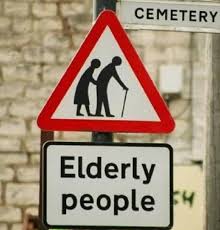
Tuesday, 4 October 2016

Ageing: a crisis for healthcare. Or an opportunity for integrated care?

It’s obvious, isn’t it? The wealthy nations face a crisis due to their ageing populations. The problem’s particularly acute for healthcare.

It’s so obvious that even I have said it in the past. But it isn’t entirely true. The error needs correcting, if only because ageing isn’t a curse but a measure of unprecedented success. At the beginning of the last century, life expectancy in the US was just over 48 years. Today, it is nearly 79. In Britain over the same period, it has grown from 45 to 81. How’s that a disaster?

After all, it’s not as though the picture is the same everywhere. In Syria, life expectancy is 64.5 years. In Sierra Leone it's just 50 years, little better than the US over a century ago.

Where there have been gains, the extra years include an increasing proportion in good health. That’s according to a study by the British healthcare think tank, the King’s Fund. It suggests the trend is likely to continue, with our ageing population adding further years of healthy life.


More years of healthy life? Why’s that a problem?
Not so much a healthcare crisis as a cause for celebration, surely. 

That being said, the trend does raise new challenges for healthcare. They need to be addressed. That means a change in approach.

As the King’s Fund points out, what we are seeing is an increase in the specific kind of health problem characteristic of old age. There are more long-term conditions such as diabetes, some lasting for life, and more patients suffering from several disease conditions at the same time.

Why is that such a challenge to the health services? Because historically healthcare has been built around specialisation. Hospitals are organised into departments dealing with neurology or rheumatology or cardiology. But today they’re having to deal with patients who may have suffered a stroke exacerbated by a chronic heart problem, who are also struggling with the pain of rheumatoid arthritis.

How does a specialist of just one of these conditions approach such a patient?

These issues also raise the question I’ve been addressing throughout this series: in what setting should a patient be treated?

The King’s Fund tells us:

…we must strive wherever possible to ‘shift the curve’ from high-cost, reactive and bed-based care to care that is preventive, proactive and based closer to people’s homes, focusing as much on wellness as on responding to illness. When asked what they value in terms of wellbeing and quality of life, older people report that health and care services when they become ill or dependent are only part of the story. Many other things matter: the ability to remain at home in clean, warm, affordable accommodation; to remain socially engaged; to continue with activities that give their life meaning; to contribute to their family or community; to feel safe and to maintain independence, choice, control, personal appearance and dignity; to be free from discrimination; and to feel they are not a ‘burden’ to their own families and that they can continue their own role as caregivers.

Admission to hospital may be vital in certain circumstances but, as well as being the most expensive way to deliver care, it corresponds to only a tiny part of the aspirations older people expressed to the King’s Fund team. They propose reform based on nine points:
  1. helping people maintain their independence, to live at home in good health, for as long as possible;
  2. helping people to live as well as possible with simple or stable long-term conditions if they develop them
  3. helping people deal with complex or multiple health problems, including dementia and frailty
  4. in cases of real crisis, delivering rapid help close to home
  5. when it becomes necessary to provide hospital care, making sure it’s good and delivered humanely
  6. planning discharge from hospital on admission or before, ensuring patients leave with sufficient support and avoid the risk of readmission
  7. providing good rehabilitation and re-ablement services so patients quickly return to the best possible level of health and independence
  8. providing high-quality long-term nursing and residential care for those who need them
  9. ensuring that services supporting patient choice and control, with all the care and support required, are available towards the end of life
The tenth point is that all the others require integrated healthcare, bringing together medical, nursing and social care, in hospitals, family practices and community settings. An integrated approach sees a patient as a whole, not as the vehicle of a single medical condition, or even several. It accentuates quality of life and does everything to maximise choice and independence. Such care would certainly be the best imaginable.  What may seem paradoxical, but isn’t, is that is also likely to be the least expensive. That’s because it minimises healthcare demand and shifts as much as it can to less costly settings, in particular away from the acute hospital.

This approach will have benefits far beyond care for elderly patients. As the King’s Fund argues:

The balance of evidence is clear that integration can improve people’s experience and outcomes of care, and deliver greater efficiencies… It is important to recognise that achieving improvements for older people will also positively affect care for the rest of the population. More effective urgent care and post-acute rehabilitation and re-ablement services are important for people of all ages, while reducing inappropriate care and shortening acute lengths of stay for older people could release resources to meet other needs.

Avoiding the avoidable and coordinating care more effectively will deliver better care. Far from costing more, that may free up resources. So the ageing of the population may not be so much a crisis, as an opportunity.

Sunday, 17 April 2016

Time, the devourer of all things. Easy to say, more difficult to experience

Life is full of rites of passage, isn’t it?

I remember clearly the first time a bank showed eagerness to lend me money, rather than eagerness for me to pay it some back. The birth of my first child, marking with absolute finality my departure from the younger generation (it didn’t happen until I was thirty, so I did OK). The first time a policeman called me “sir”, marking my transition from likely suspect to citizen to protect (I have the good fortune of being what we call “white”, or I would in all likelihood still be waiting for that transition).

Why, I even remember the moment on a bus in Kyoto, Japan, when a woman walked half the length of the vehicle to point me at the seat she’d just vacated before arriving at her stop, having identified me clearly and, I suspect, accurately, as the oldest of the standing passengers and therefore the most entitled to take over her place. Even more amazing, the seat was still vacant when I’d walked half the length of the bus back to it – in London someone, probably someone much younger, would long since have occupied it.

So today I had another of those important experiences. As I went to climb onto a train, a young (well, younger) man offered to lift my case into the carriage.

As it happens, I’d packed for only two nights away so my case weighed, as the French so prettily put it, three times nothing. On the other hand, had it weighed as much as it does when I’m away for a week or more, I like to think I’d still have managed to lift it onto the train.

Time’s catching up with us all
Even if, like me, you think you’re keeping it at bay
Now, don’t get me wrong. I appreciate the offer of help, which at least reveals better attitudes in society than many of us might have come to expect these days. In much the same way as I appreciate being offered a seat on a bus or being treated with courtesy by the cops.

But it worries me that there are those out there who already regard me as so obviously decrepit. I was out playing badminton this morning, and acquitted myself reasonably well. The notion that I can’t lift a case doesn’t really fit with the self-image I like to cultivate.

However, no self-image is proof to the ravages of the years. Time, said the Latin poet, is the devourer of all things. It devours me as it devours everyone. The only way not to grow old is to die young. That was never a pretty prospect, and I’ve left it too late already anyway.

I suppose I should be grateful that today’s reminder of all those truths was delivered to me in such a gentle, and kindly, way.

Sunday, 7 April 2013

Drugs: hard to say no when they’re free

I went out on my regular, three-monthly run to buy drugs yesterday.

It wasn’t as exciting as it sounds. Those weren’t the drugs you buy on a street corner from a man in a black BMW but the kind you get from a perfectly ordinary pharmacist.

This particular drug dispenser had a sign up declaring him to be the ‘responsible pharmacist’. I was half tempted to ask to see the irresponsible pharmacist instead,if only to see what kind of drugs might be on offer, but decided not to: I’ve reached the age where I’m beginning to realise that such comments don’t make me sound endearingly humorous, just irritatingly condescending. 

Not so responsible pharmacists
The age I’ve reached. Funnily enough, that was precisely the point that preoccupied the responsible pharmacist. 

‘Do you pay for your own prescriptions?’ the assistant had asked me. It’s the form of words they always use, though I’ve never understood why. It only makes me want to ask ‘Why? Who else’s do you want me to cover?’ though, again, I usually think better of actually voicing them.

‘Yes,’ I said yesterday, as I always have.

But the responsible pharmacist intervened at once.

‘You don’t pay for your own prescriptions,’ he assured me. I was about to inform him with some indignation that I always had when he went on, ‘you’re sixty.’

Blimey, as we like to see in the East End of London. Got me bang to rights there.

‘Why, yes,’ I said, ‘I’ve had a birthday since last time I was in.’

How could I have forgotten? We went to Lanzarote specifically to celebrate it. But I hadn’t realised that it meant that I could, from now on, get my daily fix for free. Wonderful.

‘There are benefits you see, sir,’ went on the pharmacist.

That ‘sir’ hurt more than ‘you’re sixty’: a statement of fact is just that and therefore neutral but a deferential title conjures up a wealth of connotations about condescending kindness to the decrepit. But I’d only just come off a badminton court, feeling a lot fitter than I did thirty years ago when I still smoked. No-one venerates me, to my knowledge (though if anyone feels like starting now, please feel free: I shan’t be offended). Despite all that, here I was, aged and venerable. It felt weird.

Still, I went out clutching my free packet. I’m not so old as to start looking gift horses in the mouth, after all.

I suppose it’s unlikely, though, that those guys in the black BMWs on the street corners operate the same kind of system.

Tuesday, 22 May 2012

As we all get older, do we have the doctors we need?

Not sure whether I have to declare an interest here: I’m writing about age and I am, after all, growing older.

On the other hand, so’s anyone who reads this. What’s more, that’s not just true of us as individuals but also of the societies we inhabit, at least if we have the good fortune to live in one of the wealthier nations. For instance, in Britain between 1901 and 2008, life expectancy grew by 32 years for men and 33 for women. Perhaps even more striking is the finding that life expectancy at 70 is 17 years for men and 19 for women.

Why do I know all this? Because I’ve been reading some articles by David Oliver. He’s the National Clinical Director for Older People’s Services in the English Department of Health and he takes positions on questions of ageing that are both refreshing and challenging.

For instance, he points out that ‘the constant public dialogue of population ageing as being a ‘timebomb’, ‘tsunami’, ‘burden’ or ‘crisis’ is unhelpful scaremongering which colours our attitudes to older people.’ Instead, we should be taking satisfaction from our success in extending life, and realise that it is because of that achievement that we have more older people around: in 1901, 5% of the population was over 65, in 2008, 19%.

There are of course challenges associated with this change, and Oliver delights in throwing down a few himself. Particularly to his own profession. At a conference attended by young or training doctors, he asked:

‘Who in the room wants to spend much of their career looking after people who can’t be cured of their long term conditions or disability, older people, including the ‘oldest old’, the vulnerable, the dependent, the demented and the dying?’

Strong words and one can imagine not many would hold up their hands. But to those who didn’t he had a stark message:

‘You need to get into paediatrics, maternity, a lab-based speciality or under 65 mental health/disability services.’ Or leave the profession. Or leave the country.

Healthcare is changing. We still have a specialty called ‘Care of the Elderly’ but you don’t have to be in it to be treating old, in some cases very old, people. 60% of hospital admissions in England are for patients aged 65 or over, 70% of the bed days are consumed by them. You may be in General Medicine, Rheumatology or Gastroenterology, but sheer demographics are increasingly making your case mix look like a Geriatrician’s.

But Oliver isn’t just saying, ‘that’s the way it is, live with it.’

He’s saying, ‘that’s the way it is, celebrate it.’

Which is good news for all of us when you come to think of it. After all, we’re none of us getting any younger.


Well may he smile: it's not all bad news

Thursday, 26 April 2012

The Sixties were roaring. But when exactly?

The conference speaker, no doubt wanting to get going on an informal, personal note, started his presentation by telling us that he’d been brought up ‘in the roaring 1960s of the last century.’

Problem was I took nothing in from that point onwards. It’s the kind of sentence that gets me musing.

First, I wondered idly whether any century other than the last could be said to have had any ‘1960s’. 


Probably not, I decided. On balance.

Next the reference to the last century set me thinking. The conference was about ageing, so had the speaker been brought up in the sixties of some earlier century, not just the contents of his paper but the mere fact that he was giving it would have been exceptionally interesting.

But then I naturally realised that though amusing, this again was idle speculation. No-one addressing a conference today could possibly owe his upbringing to the sixties of any century before the last.

Unless, the thought flashed into my mind, it was a conference of spiritualists. And one of the participants had performed the appropriate rituals and summoned a presence in the approved way.

‘Brought up in the sixties of the sixteenth century,’ the chairman would announce, ‘our next speaker is going to talk about Elizabeth I
s attitude towards ageing, basing himself on his numerous conversations with her on the topic.’

And as the incantations started a figure in a ruff would slowly begin to take form behind the speaker’s lectern.

I checked out the conference. As far as I could tell, there were no white sheets or clanking chains, no one who appeared transparent or even diaphanous. With disappointment, I had to resign myself to the evidence: there would be no 150-year old speakers at this meeting.

No-one wandering around the place with his head under his arm. Though maybe one or two with their heads up a different part of their anatomy.


Not likely to appear at a conference on ageing near you any time soon

Thursday, 19 April 2012

Healthcare: the kids are as bad as oldies

I was intrigued by an article I read recently by Denis Piveteau, a member of the French equivalent of the Supreme Court (the Conseil d’Etat) and also chair of the Commission into the future of health insurance in France.

We all know that one of the great issues of our time is the ageing population and the impact it has on health services. We all know that because it keeps being said. In the same collection as Piveteau’s paper, David Oliver from the Department of Health in England pointed out that ‘people over 65 account for 60 per cent of admissions, 70 per cent of bed days, 80 per cent of emergency readmissions or deaths in hospital and nearly 90 per cent of ‘delayed transfers of care’.’

But Piveteau recommends that we distrust simplistic soundbites. It isn’t just the old who consume healthcare services. He tells us that in France, at least, ‘people aged over 75 represent about a fifth of the total expenditure on healthcare of the population, or roughly the same as is consumed by people under 30, and those who are over 85 represent about the same as those who are under 10. And yet no one would ever think of claiming that people under 30 or under 10 are responsible for the deficit in health insurance in France’.

Now it’s true that the proportion of the population under 30 or under 10 isn’t growing, while the proportion over 75 or 85 certainly is. The ageing population is going to be a much bigger factor in determining the future of healthcare over the next few years than the younger age groups.

Even so, it’s great to have a little context, a little perspective. Expenditure on the very old is certainly high, but so is expenditure on the very young. We don’t resent the latter; it might not be a bad thing to be more tolerant of the former.

And that is the balanced view on an impartial observer of the human scene. Who, you may be surprised to learn, will be 60 next birthday.


You think we're the problem? Take a look at the kids.
And we don't make as much noise.

Monday, 5 December 2011

Losing your shirt

Mankind loves its metaphors.

If the Euro collapses, economies will fall like dominoes. Our economies are in the hands of financial institutions playing in the last chance saloon. The leading figures in finance are heartless incompetents incapable of raising their eyes above the shortest possible term and the satisfaction of their own greed. 

Sorry, that last bit wasn’t a metaphor, merely a statement of fact, but you get the picture.

It strikes me that even quite trivial matters can be made to stand as metaphors for much more fundamental ideas. I find, for instance, that my progress through life can be traced by a humble article of clothing. It may not have the same ring as Shakespeares original words, but I might say ‘all the world’s a stage, and one man in his time wears many shirts.’

As a child, my shirts were chosen by my parents which, I suppose, meant by my mother. Little stripy T-shirts, for example, all the more comfortable for their familiarity. 

Then I went to a conventional English school with smart white shirts and ties. For reasons that are now obscure to me, I used to bite the cuffs which must have limited the smartness, but no-one ever complained.

As a young man I chose my own shirts but I was lousy at it, so I took refuge in the principle that I would never compromise so far with bourgeois society as to wear clothes that complied with its demands for conformity. I wore ghastly worn out things that didn’t coordinate with the rest of my clothes. Fortunately, the only people I was keen to impress were young women and they seemed able to cope with the idea that it was what was inside the shirt that mattered more than the outside.

I never learned the trick the son of a friend of mine later perfected, of popping down to his local charity shop and buying a string of shirts at a pound each, then wearing them until they really couldn’t go any further without washing, at which point he’d give them to the same shop and pick up some replacements. A pound apiece, he felt, was a reasonable price for laundered shirts.

Then I started work. That principle of non-conformity had to go. I realised that I could after all compromise so far as to wear a suit, a ‘smart’ shirt, even a tie. I who had sworn I would never be a businessman, and therefore certainly never look like one, quietly slipped into the part with no sense of committing perjury.

Of course, I was a British businessman, so I dressed with exactly the casual elegance and eye-catching charm for which British businessmen have won a worldwide reputation.

And then time moved on again. A friend of mine pointed out to me how amused he was, at Parent-Teacher meetings, to see the men in casual trousers and office shirts – as though they had only had the time for a minimal change of clothes before heading out again, or at least wanted to give the impression that they were that busy. That was a sufficient spur to get me to change my shirt as well as my trousers when I got home in the evenings.

As for the ties – these days I only wear one to certain meetings and I put it on in the car park outside, taking it off the moment I’m back behind the wheel, before driving away.

So where does that take me? The Bard assigned seven parts to his view of man – the baby (‘mewling and puking in the nurse’s arms’ ’ what a way with words), the schoolboy, the lover, the soldier, the justice, the slippered pantaloon, and finally second childishness. And I’ve listed five shirts in my life – the child’s, the schoolboy’s, the young man’s, the businessman’s, the father’s.

The other day I discovered I’d reached my sixth. I got home and decided to slip into a shirt less formal, of thicker and warmer cloth. But when I reached for it, hanging in our bedroom, a room we never heat, I noticed it felt horribly cold. I decided that I was now at a stage in life when I could indulge yet another desire for creature comfort and hung the shirt on a radiator in another room for a few minutes.

Just how completely I had reached the next stage of life became clear when a little later I decided to put the shirt on. Back in the bedroom, I was shocked to discover that it was no longer there.

‘But I’m sure I had it just then,’ I said to myself. ‘Danielle must have tidied it away’ (terrible how much easier it is to blame one’s partner than to accept responsibility for one’s own idiosyncrasies, isn't it?) (OK, OK, inanities not idiosyncrasies). 

It took me a while before memory returned. By then the shirt was beautifully warm. But it certainly brought home to me how clearly my use of shirts mirrored my ageing.

The experience also rather suggested that I might be closer than I’d like to the seventh and final shirt. Which would presumably be some kind of bib.


Totally unrelated postscript


You can say what you like about Luton, but when it comes to the Christmas spirit, we know what it takes.


The Christmas spirit takes off in Luton
Not so much when it comes to taste, decorum or understatement. But revelry  for that we defer to none.