Showing posts with label Kharkiv. Show all posts

Sunday, 9 March 2014

Simply comparing a political opponent to Hitler is a terribly cheap ploy. It’s generally horribly unfair, not to say misleading. However, the reason we dislike such comparisons is that when we think of Hitler, we think of extermination camps, the Holocaust, the millions of murdered civilians guilty of no crime.

But there’s much more to Hitler than his murderous behaviour. There are other aspects of his time in power with which comparisons are well worth making. Especially when they can teach us lessons about today.
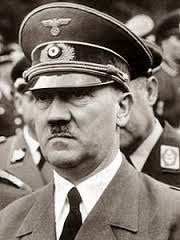

Not just a mass-murderer.
He had plenty of other faults
In 1938, a party close in sympathy to the German Nazis, was campaigning actively for the rights of the German minority in Czechoslovakia for redress of their alleged grievances against the majority. Hitler took up their cause. Leaders of the other Great Powers of Europe, Neville Chamberlain in Britain and Edouard Daladier in France, consulted with Hitler (though not with the Czechs...) and agreed to allow him to occupy the German-speaking areas, the so-called Sudetenland.

That agreement, signed on 30 September 1938, was to guarantee ‘peace in our time’. Hitler wanted the Sudetenland but no other part of Czechoslovakia, he assured the other statesmen. Granted his wish to occupy just those parts of the country, he would leave the rest alone and Europe need not fear war.

On 16 March 1939, German forces occupied the rest of Czechoslovakia. Britain and France took no action. 


Less than six months later, the German army rolled over the border into Poland. Though bound to defend Poland by Treaty, it took two more days of heart-searching and indecision, before Britain and France at last declared war on Germany, and the European theatre of World War II got fully under way.

Now roll forward three-quarters of a century. 


Vladimir Putin feels himself honour bound to come to the defence of his compatriots, the Russian-speakers of Ukraine. ‘Self-defence’ forces, that look extraordinarily like Russian troops without their insignia, have seized control of Crimea. Optimists may believe that Russia can be persuaded to hand the region back to Ukraine; realists, and that includes the main governments of the West, know that there’s no prospect of that happening. It was, after all, a traditionally Russian area, and there’s overwhelming local support for a return to the motherland, undoing a unilateral decision of Nikita Kruschev sixty years ago.

Will Putin stop there? Maybe. And if he does, we can no doubt learn to live with that. Perhaps Ukraine, too, can lick its wounds and come to terms with its loss.

This is where the comparison with Hitler becomes illuminating. Making concessions to Hitler meant feeding his appetite. Handing him territory only made him push his luck further and try to get still more.

There are Russian speakers in Eastern Ukraine too, including its second biggest city, Kharkiv, and the great industrial centre at Donetsk. Will Putin feel the same obligation to ‘defend’ them as he has ‘defended’ Russian speakers in Crimea? And Hitler ‘defended’ the German speakers in Czechoslovakia?

There’s also another lesson. When we did stand up to Hitler, it cost us a bloody war – the bloodiest the world has seen. War with Russia today, however, would probably put the war against Hitler into the shade. It might, indeed, threaten the very existence of humanity.

The fact that no one seems keen on the idea of military intervention against Putin strikes me as thoroughly welcome. On the other hand, appeasement doesn’t work either, if we can learn anything from the experience of Hitler.

But between war and appeasement there are surely a great many other possibilities. What is much less edifying about the behaviour of Western governments today, is the rapidity with which they seem to be ruling out any kind of economic action, even though such measure might actually get Putin’s attention: imagine if he and his oligarch friends found themselves hurting in their wallets.

Instead, the message from Western capitals seems to be that we’re prepared to do whatever it takes, as long as it doesn’t cost us anything.

The only worry? If we’re not prepared to pay any cost today, the cost we may face later might be far higher.

That’s another lesson to learn from our experiences with Hitler.


Putin may not be a mass murderer
but he still needs to be stopped

Sunday, 2 March 2014

The powers that blunder and their victims in Ukraine

It’s agonising to watch the suffering of Ukraine today. And I feel it all the more strongly because of the work I was doing only fifteen months ago, with a group of Ukrainians who impressed me as much for their competence as colleagues, as for their warmth as friends.

At the time I worked for an American company whose founder and his seriously ill son, had undergone the pain of finding a way through the maze of the healthcare world. He emerged appalled at how little information is available about hospitals.

He decided to launch a software system to tackle the problem, and assigned the work of building one of the first modules to two Ukrainian students at Berkeley, near San Francisco. They amazed him by turning it around in a few day. He gave them a second much bigger task, and again they’d completed it in astonishingly quick time. There was more to them, he decided, than met the eye.

“You’re not doing this alone, are you?” he asked.

“No,” they admitted, “we’re getting help from a bunch of friends back home.”

“Well, why don’t you form yourselves into a company and I’ll give you an exclusive contract to develop the system for me?”

By the time I joined the American company, the arrangement had been working well for seven or eight years, and a pretty remarkable system had emerged from their collaboration. They were two separate companies, but they worked as though they were one. The people I met when I travelled out there didn
’t behave as though they were in a partner company, but like colleagues. Skilled and dedicated colleagues. I was proud to work with them.

Where in Ukraine was this happening? That’s a question one can’t answer without making a political statement. It’s like that city in Northern Ireland: call it Londonderry, and you sound like a Unionist who regards it as part of the United Kingdom; call it Derry, and you sound like a Nationalist who feels the place is Irish.

I knew next to nothing about Ukraine at the time, and had barely heard of the city, which I called “Kharkov”. That’s a Russian name, and arguably it makes sense to use it, the population being overwhelmingly Russian (it’s only twenty miles from the border).

On the other hand, it is in Ukraine, and many of my colleagues used the Ukrainian name “Kharkiv”, which was probably more politically correct. I didn’t meet any Russian speakers from there that objected to the name, and so made an effort to use it too.

Kharkov/Kharkiv illustrates the problem of that whole region. Russian speakers belong to the same community as the people half an hour’s drive away, the other side of the international border. Many of my colleagues had close family in nearby Russia.

The problem is particularly acute in one area of Ukraine that most Britons have actually heard of: the Crimean peninsula. British and French troops fought Russians there in the mid-nineteenth century. In 1854, at the battle of Balaclava, the British plumbed the depths of military incompetence at the same time as they scaled the heights of glory (glorious incompetence being one of the great characteristics of armies in combat). Tennyson summed it up for us:

“Forward, the Light Brigade!” 

Was there a man dismay'd? 
Not tho' the soldier knew 
Someone had blunder'd: 
Theirs not to make reply, 
Theirs not to reason why, 
Theirs but to do and die: 
Into the valley of Death 
Rode the six hundred.

A British blunder,
where the Russians are blundering around today
The Brigade captured the Russian guns, couldn’t hold them, and had to retreat to their starting point. Of the 600 who started out, just 195 were still unhurt and on horseback at the end. 

“C’est magnifique,” French Marshal Pierre Bosquet observed, “mais ce n’est pas la guerre.”

In truth, it wasn’t magnificent, it was carnage, and it was very much what war’s about.

That was in October 1854. A century later, in 1954, Crimea was the subject of another historical blunder. In a fifteen-minute interlude in a meeting of the leadership of the Soviet Communist Party, its General Secretary Nikita Kruschev told his colleagues that Crimea was being given to Ukraine.

He liked Urkaine, where he’d spent some time, and his wife was Ukrainian. At the time it probably didn’t seem to make a lot of difference: no one imagined the Soviet Union was going to unravel, so transferring a territory from one administrative unit wholly dominated by Moscow to another, was an empty gesture.

But then the Soviet Union fell apart, Ukraine became a sovereign state, and found itself in possession of Crimea. The Russians hastily agreed a lease to allow their Black Sea fleet to keep using the port at Sevastopol, but otherwise they were out.

Although not really. Ukraine remained heavily dependent on Russia, particularly for energy, as Russia showed by turning off gas supplies when it felt the need to exert some pressure. And it was glad to be able to work through a friendly President, in the form of Viktor Yanukovych.

But now Yanukovych has gone, to be replaced by people far less under Moscow’s thumb, far more inclined to look westward. We’ve seen the results: explicit military threats from Russia, and open army action in the Crimea, where “self-defence” groups, looking suspiciously like Russian forces without identifying insignia, have seized key locations.

It
’s deeply depressing.

But I’m particularly distressed for my former colleagues. Because just as the international political atmosphere around them deteriorates, the international commercial world has turned toxic for them too.

It was announced on Friday that the Ukrainian arm of the operation I worked with is suing the American company for $30 million. Why’s that? Because the Americans, under entirely new management, have unilaterally decided not to extend the contract after it expired on 28 February. After ten years outstanding work, my friends in Kharkov/Kharkiv now have to go the Californian courts to try to protect their position.

I don’t know whether those friends in Kharkiv/Kharkov will still be Ukrainian in a few months, or will have been made Russians by force of arms. I don’t know whether they would welcome such a change or resent it. Equally, I don’t know whether they’ll still be delivering services to their old American partners or whether they’ll be struggling to find new sources of work.

What I do know is that in both instances they have been the victims of international forces beyond their control.

All I can do is wish them well. These are tough times. I hope you and your compatriots emerge from them quickly, and unscathed. 


Unlike the Light Brigade.