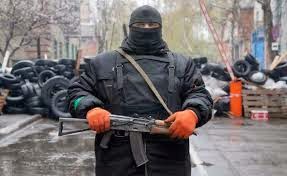
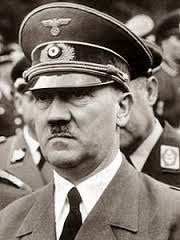
Showing posts with label Ukraine. Show all posts

Friday, 19 April 2019

Cockup not conspiracy. Comedians not clowns

One of the problems with conspiracy theories is that they require a belief in human ingenuity that is way beyond me. Not just ingenuity but also discretion. The latter is an even rarer quality.

The belief that the moon landings were faked, still firmly held by certain people, would have required the active participation of some 400,000 people (as calculated by James Longuski). It seems inconceivable to me that anyone could have maintained that huge a conspiracy, all working to a single end for a twelve-year period. But still more unbelievable is the notion that not one of those people would ever have told the story to anyone else.

Surely some journalist out there would have been able to offer a handful of them sufficient inducement to spill the beans?

What I have far less difficulty crediting is the opposing cockup theory of history. Call me a cynic if you want, but I find it inherently plausible that most of the things that go wrong around us are down to sheer incompetence rather than to ingenious scheming. Human stupidity, it seems to me, is fully capable of explaining most human-made catastrophes.

Take the difficulties the Labour Party is currently facing over anti-Semitism. Now I’m absolutely convinced that there are some vicious anti-Semites in Labour who ought to be kicked out. But the failure of the leadership to act isn’t, I suspect, down to their sinister complicity with the small numbers of real anti-Semites, but simply down to their ineptitude.

Why am I so convinced of that notion?

Well, take a look at the tweet the British Labour leadership sent out – and then had to delete minutes later – to wish Jews a happy Passover. It’s clearly intended to be cheerful, friendly and encouraging. An olive branch, if I can use a Christian image, towards the Jewish community.
Labour leader trying to mend fences with the Jewish Community
and cocking it up...

Alas, one of the festive little icons is a loaf of bread. As rather a lot of Jews immediately tweeted back, the whole point of Passover is that Jews don’t eat bread over the feast. Instead they eat an unleavened equivalent, matzos.

To be fair, I wouldn’t have spotted the error myself, despite my own Jewish heritage. I don’t keep Passover any more than I celebrate Easter, the Christian equivalent. But I don’t run the Labour Party. And I’d like to think that the Labour leadership has the Jewish contacts to ask about this kind of tweet before it sends it out, and the gumption to check with them.

Well, clearly not. Which suggests that their weakness on Jewish issues probably isn’t down to racism, but merely to incompetence. Which is a relief, since it would be appalling to have a racist leadership. Though, frankly, an incompetent one is only marginally preferable.

Similarly, I have no difficulty believing that no evidence exists that Trump actively colluded with Russia during the 2016 election. I think such collusion would require a greater level of skill – Machiavellian skill, certainly, but skill anyway – than I’ve seen him demonstrate at any time before or since. The man who could repeatedly proclaim his enthusiasm for Wikileaks during the campaign, and even call on the organisation to release more of Hillary Clinton’s emails, and now claims he knows nothing about it, is simply too flaky to see a conspiracy through.

That he might have been the beneficiary of one I find far less difficult to believe. That people conducted one and kept him deliberately out of the loop is certainly plausible. But that he conducted one? No chance.
Trump: cockup par excellence. But in the White House anyway
No. Trump’s an exemplary cockup artist, not a fiendishly clever conspirator. Again, however, as with Labour leadership incompetence, that’s not a hugely preferable alternative. After all, he’s in the White House anyway, however he got there.

All this puts me in mind of what’s happening in the Ukraine. It looks as though a comedian, known for playing the role of President on TV, may be about to be elected President for real. A genuine comedian in charge.

Volodymyr Zelenskiy, Ukrainian comedian playing President
and now on the brink of being elected
A change, I suppose, from the clowns at the top of the US government or the British Labour Party. Though, once more, it’s not clear that it’s much to be preferred.

Tuesday, 17 May 2016

Vladimir Put in his place by Eurovision

So let me get this right.

The Eurovision song contest, one of the frothiest and least significant of competitions around the world, has actually got the Russians riled? Even though everyone knows the result is politically fiddled, with the Russians among the main manipulators? Are they perhaps upset because the Ukrainians outmanoeuvred them?

It seems the issue is that the winning Ukrainian song was about the deportation of the Tatars from Crimea in 1944. Crimea was part of Ukraine until two years ago, when the Russians moved in with armed force. Invited, they naturally assured the world, by locals, but then, how many invaders claim to be invited by the invaded?

That difficult moment back in 2014 has left what I suppose one can only call bad blood between Ukraine and Russia. So one can imagine that getting up Russian noses might well have been a pretty significant motivation for Ukrainians to sing that particular song.

As it happens, however, at the time to which the song refers, Crimea wasn’t part of Ukraine at all. It was Russian territory, as it had been for a long time. Russian claims to the Crimea are, to be honest, quite difficult to deny; it’s the use of saboteurs and tanks to enforce them that’s harder to swallow.

What’s more, back then, in 1944, Russia wasn’t even under the control of the present allegedly democratic regime. The Soviet Union was at the summit of its power, still led by its iconic dictator, Stalin. His regime in Russia, alongside Hitler’s in Germany, had been one of the two great totalitarian powers in Europe for a dozen years, and World War II, then raging, had been largely caused by their antagonism.

Tatars loaded into cattle trucks for their deportation
Ah, so reminiscent of scenes from Germany at the same time...


In driving the Tatars out of Crimea, Stalin was merely engaging in yet another act of totalitarian brutality. Totalitarianism flows from a sense of belonging to a movement powered by some force far greater than mere men: history itself for the Soviet Union, the destiny of a people for Nazi Germany, but it can equally be some religious or other faith in different places at different times.

If you represent the force of history, you can’t be doing wrong. So treating an entire ethnic group like the Tatars as disposable is perfectly justifiable, and driving them out made perfect sense to Stalin, whatever their suffering and their losses. This particular act of ethnic cleansing affected 230,000 people, of whom probably about 100,000 died.

Most of us these days take a dim view of such behaviour. It’s not generally regarded as compatible with the highest standards of democratic values. And the present Russian leadership likes to claim it wholly conforms to values of that kind.

So here’s the question: why on earth would they be offended by a song that denounces a regime under which Russia too suffered abominably for several decades? After all, Stalin wreaked more killing on the Soviet Union than Hitler did on Germany, partly no doubt because he had longer.

Unless, of course, there’s real hankering to get back to that kind of regime again. Might Putin be not quite so committed to democratic principle as he likes to maintain? Does he perhaps long nostalgically for a state in which he was, after all, a leading functionary of its most repressive institution, the KGB?

Ah, perish the unworthy thought.

Wednesday, 17 December 2014

Beware the Russian bear, especially when he's wounded

For the first time for over twenty years, I was woken from a dream which I had several times as a teenager or a young man. A dream of planes, large and somehow cumbersome, moving apparently slowly across the sky as they seem to do in films, though we all know they travel at speeds almost unimaginable on earth. The fly towards me and I know they’re about to drop nuclear weapons.

In the dream, cowering around the corner of a wall from the blast, I don’t hear the noise but see the blinding light, again as shown in countless films.

Russian bombers: the stuff of dreams
Now I attach no significance to dreams. All this one represents is preoccupations that have resurfaced in my life, in all our lives, and which had receded for quarter of a century. Because Russia has moved firmly back into the “watch this space” category: it’s going broke, it’s shown no hesitation about getting aggressive with other nations, and it’s nuclear-armed.

Yesterday the rouble lost half its value against the dollar. The Russian government took emergency measure after emergency measure against the failure of its currency, but couldn’t stop it, even when interest rates went up to 17% (you’d think somebody would want to invest for that return, but no one believes the fall has stopped – so they don’t invest and the fall continues).

Part of the problem is that the oil price is on the way down (curious that energy prices in Western countries haven’t yet started falling as dramatically – curious, but not at all surprising). And Russia remains as dependent on raw material as any third world country, specifically that raw material, oil.

The Russian government has done a great job of making a small number of people extremely wealthy, but has done little or nothing for most of the people.

Nothing like Britain, you see.

Strangely, Russian voters don’t seem able to grasp that they’ve put in power people who are going to fleece them, so they keep voting for them.

Again, not at all like Britain.

The second factor is making the situation a great deal worse: Western sanctions. Now, I can see a good argument for saying that Crimea ought to be part of Russia: it always was, and was handed over to Ukraine by Kruschev, in a clumsy act of arbitrary rule. On the other hand, I can see no good argument for saying that the problem should have been resolved by force of arms.

Nor can I see any good argument for infiltrating troops and arming lawless militias in other parts of Eastern Ukraine, but Russia keeps doing it. As a result, they’re under an increasing burden of sanctions, which are making a desperate financial position still worse.

But will this undermine Russian resolve to keep on stirring things up for Ukraine, and for the West?

t’s far more likely to have exactly the opposite effect. Voters already committed to Putin to the point of fanaticism, will in all probability back him still more strongly. And they’ll want to lash out against their perceived enemies more brutally, if only to make themselves feel less bad about themselves.

They’ll justify their position with words like “pride” and “honour”. We’ll probably hear expressions such as “it’s better to die on your feet than live on your knees.”

A man to inspire confidence. And reassurance about peace
That’s always struck me as a particularly short-sighted view. Die on your feet, and you don’t stay on your feet. Live on your knees and there’s a chance you might be able to get up again in a while. No one has ever stood up from being dead, except allegedly one man in Jerusalem a while back, and I’m not wholly convinced by the evidence I’ve been shown.

The sensible position would be for Russians to say “it’s bloody cold around here in the winter, and food prices are shocking already. Let’s come to an accommodation with the West and even with Ukraine, and live to fight another day.”

They won’t. There’ll be stiff backs and stiffer upper lips all over the place. Stiff necks too. And there’ll be a powerful surge of support for getting their retaliation in first.

Why would they stop with Ukraine, seen as a surrogate for the West, when they have the missiles to get at the West itself?

Because, and don’t you forget it, Russian’s nuclear-armed. Well nuclear-armed.

Sweet dreams, everyone.

Friday, 4 July 2014

Happy Independence Day. For some at least

Independence: everyone seems to be talking about it these days.

That’s a reflection that feels particularly apt today, the fourth of July, anniversary of the day the American colonists declared their separation from the Mother Country. My country, as it happens. Not that I blame them, as I think you
ll understand from what I say below.

Jefferson,
with his draft Declaration of Independence


Today, the Iraqi Kurds have decided to go looking for independence, presumably so they can stop being Iraqi Kurds and become Kurdish Kurds. The troubles in Ukraine are being fomented by people who want independence of the Eastern areas of the country (though possibly only to move swiftly on to absorption into that fine nation of regional and human rights, Russia).

And, of course, in Britain the Scots – some of them at least – are looking for their independence from, basically, England. It’s true that technically they’re seeking independence from the United Kingdom, but I doubt they have much of a quarrel with Wales or Northern Ireland.

In passing, I loved it that David Cameron, our less than inspired (or inspiring) Prime Minister, announced in Scotland today that it would break his heart if the Scots voted for independence. As if that would put anyone off voting in favour. I suspect his statement will, if anything, boost the Yes vote.

Getting away from England is a desire with a long history to it. The Welsh were driven into the union by military force; if the northern part of Ireland is still within the United Kingdom, that’s only because the English colonised it with good solid Protestants, ironically from Scotland, who owed their position in the province to the London government and could therefore be counted on to remain loyal to it. Why, even the Yanks, when they decided to break free were much more concerned with England and above all London, its capital, than with Scotland or Wales.

Nor is it only the Scots who want to get away from us. It’s my suspicion that the rest of the EU is beginning to find its patience running thin. Why, leading figures in Poland were recently secretly taped describing David Cameron as stupid, a sentiment I suspect might well be repeated in the corridors of power of other Continental nations, even though their leaders aren’t stupid enough to be taped expressing it.

It’s amusing to think that this tendency to look askance at England may be a response to the antics of the so-called United Kingdom Independence Party, vile enough in itself, but more baleful in its effects when the intellectually challenged Cameron and his Conservative Party decide the best way to beat UKIP is to ape its posturing.

“You want independence from us?” a lot of European leaders may be beginning to say, “well, go then. Sorry to lose you but maybe it’s time to cut our losses.”

A bit like a quarrelling couple who decide that the kids might actually suffer less if they divorced than if they stayed together: a painful decision, but probably less damaging in the long run.

So, on US Independence Day, I invite my compatriots to ponder a moment on the question of independence. Specifically, why so many people want to be independent of us. Could it be something we’ve done rather than something wrong with them?

Once we’ve answered that question, we might take a look at the Camerons and the UKIPs of our world and at how heavily they weigh in our national discourse. If we could marginalise them a little, might we not find we had more friends abroad? And perhaps a great deal less pain at home?

Sunday, 20 April 2014

Ukraine: a moment of truth at Easter. On Hitler's birthday

Easter Sunday. For Christians at least, a good day, pretty much the best. 

On the other hand, this year it also happens to be Hitler’s birthday, which is not quite such a cause for celebration.

And both are relevant. The Ukrainian government – if ‘government’ isn’t too strong a word for a body whose writ is so little followed – has declared an Easter truce in its fight with pro-Russian rebels in the East of the country. This may be a generous and open-hearted gesture, or it may reflect a lack of confidence in its own forces, even to the point of not being sure that any armour it sends against rebels won’t be immediately taken over and turned back the other way.

As happened last time.

As for Hitler’s birthday, well I’ve already commented on the similarities between Putin’s behaviour and Hitler’s. In fact, more than once. I fully accept that not everyone agrees with me: I’ve had it pointed out to me that Putin’s behaviour in Crimea is no different from Thatcher’s over the Falklands.

That strikes me as a false analogy. The Falklands – the Malvinas – ought certainly to be Argentinian and will, I’m sure, be handed over some day. The objection back in 1982 was that President Galtieri sent armed forces to seize them. British possession of the Falklands may well be wrong, but Galtieri’s actions was illegal.

Such breaches of international law damage us all. Not just in the Falklands but anywhere they occur, most notably in Iraq: the West, far from being innocent, is the most frequent and flagrant perpetrator. That, however, doesn’t justify Putin who also has form in these matters: even before Ukraine, he used military force in Moldova and Georgia.

So how about the parallels between him and Hitler?

The most striking similarity is escalation.

Hitler’s first (illegal) military action was to reoccupy the Rhineland. Well, it was German territory, after all. You could argue that the Versailles Treaty, in stipulating that the Rhineland had to be left demilitarised, was unjustly limiting Germany’s legitimate rights.

Then came the annexation of Austria. Well, Austria having lost its Hungarian and Slavic populations, was a massively German nation and there was certainly huge enthusiasm for union with Germany.

Next it was the turn of Czechoslovakia. It had large pockets of German population who, rightly or wrongly, claimed their rights were being trampled on by the Czech authorities. They appealed to Germany to assist them, an entirely disingenuous appeal since they were already heavily dependent on the Nazi regime. That was the crisis that led to the Munich Agreement, in which Chamberlain for Britain and Daladier for France thought they had guaranteed “peace in our time” by agreeing to the dismemberment of Czechoslovakia, through Hitler’s annexation of the areas of majority German population.

The following spring, Hitler had occupied the rest of Czechoslovakia.

That autumn, he invaded Poland and Europe found itself sucked into the Second World War.

Now history doesn’t repeat exactly. The steps are different. But Putin is ramping things up just as Hitler did.

First it was Crimea. Well, a bit like Austria and the Germans, the population is mostly Russian-speaking and closer to Russia than to Ukraine. In fact, it only became Ukrainian through a high-handed act of Kruschev’s in 1954.

Now it’s the Russian-speaking populations of the Eastern Ukraine. Well, rather like the Sudeten Germans in Czechoslovakia, they feel aggrieved about being regarded as Ukrainians (at least, quite a lot of them do). Perhaps they feel that Russia is their mother country. And, again rather like the Sudetens, it looks as though they’re getting a lot of foreign encouragement (some of it in the form of armaments and possibly even troops without insignia) for their rebellion.

Comforting that we can count on him as a champion of freedom
Yesterday, despite the truce, there was fighting in the port of Mariupol, which left three people dead. The Russian authorities have expressed outrage. Well, I believe any citizen of the world should see this kind of killing over political matters as outrageous, but Russia clearly feels that it has a specific interest in these incidents because one side of the conflict is Russian-speaking. Which is rather like the United States feeling it has a right to speak for British citizens in trouble with the law, merely on the grounds that they speak the same language (well, pretty much the same language).

What’s next? That’s not difficult to imagine. If Eastern Ukraine is allowed to secede and join the Russian Federation, like Crimea, will Putin next annex the area of Moldova, immediately to the West of Ukraine, where he has already stationed troops in an ostensibly independent nation? From Moldova, he threatens Ukraine’s third city and most important remaining port after the loss of Crimea, Odessa.

None of this is identically analogous to Hitler’s actions, but it’s the same kind of salami-slice approach to foreign policy with the aim of gradually extending its territory. The end result would be a Ukraine so emasculated that it would barely be viable as an independent nation, leaving it liable to absorption wholesale into the Russian Federation. Rather like the rump of Czechoslovakia was taken over by the Reich.

What’s Putin’s objective in doing all this? Again, he’s made no secret of his nostalgia for the Soviet Union. It seems difficult to deny that he’s working to reconstitute it.

It wasn’t much fun last time the world was dominated by a United States glaring at a Soviet Union each in its forest of nuclear weapons. And it wasn’t fun for rather a lot of Europe. No wonder the Baltic States and Poland are concerned – they can see where this may be heading.

It doesn’t have to go there. On Thursday, Russia, Ukraine, the US and the EU met and agreed a way out of the crisis. It involved rebels giving up their occupation of public buildings, in return for an amnesty for protesters who have not committed capital offences. Clearly, it depends above all on Russia reining in its supporters in Eastern Ukraine, and them agreeing to go along with the arrangement.

Will it stick? If it does, something remarkable will have happened. Russia, on the road to aggrandisement by military means, will have drawn a line and said “no, we go no further down this road.” Putin will have pulled back from policies that seem set to push the world back towards a state of affairs that was ugly then and could be a lot uglier now.

He will have diverged fundamentally from the route that Hitler took. We might look back to this 125th anniversary of Hitler’s birth and congratulate Putin on his extraordinarily judicious behaviour.

But three died in Mariupol yesterday. And the pro-Russian protesters aren’t vacating government buildings. The omens aren’t good.

Still, it’s Easter Sunday and I mustn
’t spoil it. Have a good one, whether you believe in it or not. At least enjoy the chocolate.

Happy Easter

Wednesday, 9 April 2014

Russia, Ukraine, Germany, Czechoslovakia: an exciting historico-geographical-political quiz. With a lot riding on it.

A first! A quiz for my readers! Is that thrilling, or what?

Below are two extracts from major British dailies. One is from yesterday’s Independent, the other from the Guardian of 30 July 1938. I’ve disguised both to make it a little less obvious what circumstances each article is talking about.

One of them is an account of the way the Russians of 2014 or the Germans of 1938 are preparing to use military force to come to the aid of their “compatriots”, i.e. speakers of the same language, across the border in Czechoslovakia – or do I mean Ukraine? 


Yep, that’s how gripping this gets...

The other extract quotes a speech from a nationalist leader, of the ethnic Russians of Eastern Ukraine in 2014, or possibly of the Sudeten Germans in Czechoslovakia in 1938.

Moving against Ukrainian troops still nominally in control, 
Russian troops deploy in Crimea
with strong civilian support
And here’s question 1: which is the 1938 piece, which the one from 2014?

Extract 1

And yet, the latest protests in [the Sudetenland/Eastern Ukraine] show far more organisation and determination compared with those of just a few weeks ago. They sing the same verses from the hymn sheet in [the main cities]; they call for a [referendum/plebiscite] and a plea for [Russian/German] “peacekeepers” to defend them. This strikes a chord with the repeated demands from [Berlin/Moscow] that [Ukraine/Czechoslovakia] should give a voice to the [regions/minorities] and adopt a federal structure and pledges that ethnic [Germans/Russians] will not be abandoned: the [Kiev/Prague] government does not need reminding that [President Putin/Chancellor Hitler] [has been authorised] to deploy troops not just for [Austria/Crimea], but [Ukraine/Czechoslovakia].

Extract 2

“On behalf of the largest group of [German/Russian] people ... outside [Russia/Germany], also in the name of all other [Russians/Germans] living abroad, I declare that we are all inseparable parts of the great [German race/Russian nation]. Efforts to make national boundaries and spiritual boundaries between members of one people have collapsed.

“[Germans/Russians] living abroad render unto the nation what is the nation’s, and to the people what is the people’s. As true [Russians/Germans] we are accustomed to fulfil the duties we have shouldered. So we take seriously our duties towards the country to which we belong, but as members of different nations we remain members of the [German/Russian] people.”


German troops move into the Sudetenland in Czechoslovakia
with strong civilian support
Question 2, on the other hand, is “does it matter which text is which? aren’t they pretty much interchangeable?

Which leads to Question 3
given that the 1938 problems led to Hitler occupying the Sudeten areas of Czechoslovakia in one of the major steps towards World War 2, isn’t it time we got a little more worked up about what’s happening in Ukraine?”

Tuesday, 18 March 2014

Crimea: flashpoint towards another war?

I’ve been taken to task by a friend for not backing the obvious will of the people in Crimea, for reintegration with mother Russia. That will was expressed in the referendum held there on Sunday 16 March. The result, we’re told, was a 97% vote in favour of leaving Ukraine and joining the Russian Federation.

It seems likely to me that there really is a majority in favour of joining Russia in Crimea, which is 58% ethnically Russian. And I’m in favour of determining this kind of question by the will of the people: if it looks as though a majority of the Scots, for instance, want independence from the United Kingdom, I’d be strongly in favour of their being able to leave, though personally, as an Englishman, I’d dread their going: we’d be stuck with Tory governments for years or possibly decades.

In addition, Kruschev’s cavalier decision in 1954 to hand the region to Ukraine, without logic or reason and certainly without consulting the population, was high-handed and ill-advised. It makes sense to correct that abusive action now.

However, only a year ago, polls showed just 41% of Crimean voters favouring reintegration. And 24% of the population is Ukrainian, while 12% are Tatars, descendants of the original inhabitants, known to be strongly opposed to joining Russia. It seems highly unlikely that many of those groups voted ‘Yes’ on Sunday.

Indeed, even among the Russians, it seems unlikely that the proportion in favour of leaving Ukraine has grown quite so much in just a year, despite local misgivings when the Kiev government of Viktor Yanukovych, ethnically Russian strongman, elected legally though behaving abusively, was brought down.

So the chances that the vote really was 97% in favour strikes me as utterly unbelievable. Especially as no observers were allowed to supervise the voting or the counts. And as we all know, it isn’t the votes that count, it’s who counts the votes.

Besides that, with the Russian Navy still using the peninsula as its Black Sea headquarters, and with its soldiers in the streets – pretending to be local self-defence militias – it’s not clear to me that the referendum in any way represented an exercise in democracy. More of a simulation of democracy under the barrels of a gun. Indeed, the only concession to democracy seems to have been the Kremlin’s willingness to allow that 3% voted against; in Soviet days, majorities generally exceeded 99%.

Guardian picture of Russian forces on Ukrainian territory:
'democratic' muscle for the 16 March referendum
If that’s progress, it only shows how far today’s Russia still has to go.

Even more sadly, however, Putin’s behaviour doesn’t just recall the excesses of the Soviet Union. It recalls an earlier and even more disastrous spell in our recent history. As does the weakness of the Western response to Russia’s behaviour.

In 1936, long before Germany had rearmed, Hitler sent troops into the Rhineland, demilitarised by Treaty since the end of the First World War. The democracies protested but took no action.

In the spring of 1938, he annexed Austria to the Reich. The democracies protested but took no action.

In the autumn of 1938, he occupied the German-speaking areas of Czechoslovakia. The democracies had protested, but instead of taking action, had agreed to allow him to take over those areas. The agreement was the now infamous ‘peace in our time’ document.

In the spring of 1939, Hitler occupied the rest of Czechoslovakia. The democracies protested even more loudly but again did nothing else.

Finally, in September 1939, he invaded Poland and the democracies at last reacted. This was the start of the bloodiest conflict in history, the Second World War (well, the European bit: it had been raging in the Far East for several years already).

The question remains, would that have been avoided had France and Britain, even maybe the United States, reacted powerfully to the occupation of the Rhineland?

Putin has in effect annexed Crimea. Now he’s talking about the calls of ethnic Russians in Eastern Ukraine for reunification with the motherland, just as Hitler had justified his actions in Czechoslovakia in the name of the rights of the Sudeten German-speakers.

We’ve probably left it too late to do anything about Crimea. But if we do nothing about Eastern Ukraine, will we just slip further down the same slippery slope that took us to war in the thirties? And might a more powerful response stop that? Say, economic sanctions that bite, even if they cause us pain too, perhaps even the stationing of token troops in Ukraine, so that it’s clear that an invasion would bring Russia into conflict with far more than merely the Ukrainian army?

After all, surely we’ve learned from the Second World War, that the pain that awaits us at the bottom of slippery slopes may sadly be a lot worse than taking effective action now.

Sunday, 9 March 2014

Simply comparing a political opponent to Hitler is a terribly cheap ploy. It’s generally horribly unfair, not to say misleading. However, the reason we dislike such comparisons is that when we think of Hitler, we think of extermination camps, the Holocaust, the millions of murdered civilians guilty of no crime.

But there’s much more to Hitler than his murderous behaviour. There are other aspects of his time in power with which comparisons are well worth making. Especially when they can teach us lessons about today.


Not just a mass-murderer.
He had plenty of other faults
In 1938, a party close in sympathy to the German Nazis, was campaigning actively for the rights of the German minority in Czechoslovakia for redress of their alleged grievances against the majority. Hitler took up their cause. Leaders of the other Great Powers of Europe, Neville Chamberlain in Britain and Edouard Daladier in France, consulted with Hitler (though not with the Czechs...) and agreed to allow him to occupy the German-speaking areas, the so-called Sudetenland.

That agreement, signed on 30 September 1938, was to guarantee ‘peace in our time’. Hitler wanted the Sudetenland but no other part of Czechoslovakia, he assured the other statesmen. Granted his wish to occupy just those parts of the country, he would leave the rest alone and Europe need not fear war.

On 16 March 1939, German forces occupied the rest of Czechoslovakia. Britain and France took no action. 


Less than six months later, the German army rolled over the border into Poland. Though bound to defend Poland by Treaty, it took two more days of heart-searching and indecision, before Britain and France at last declared war on Germany, and the European theatre of World War II got fully under way.

Now roll forward three-quarters of a century. 


Vladimir Putin feels himself honour bound to come to the defence of his compatriots, the Russian-speakers of Ukraine. ‘Self-defence’ forces, that look extraordinarily like Russian troops without their insignia, have seized control of Crimea. Optimists may believe that Russia can be persuaded to hand the region back to Ukraine; realists, and that includes the main governments of the West, know that there’s no prospect of that happening. It was, after all, a traditionally Russian area, and there’s overwhelming local support for a return to the motherland, undoing a unilateral decision of Nikita Kruschev sixty years ago.

Will Putin stop there? Maybe. And if he does, we can no doubt learn to live with that. Perhaps Ukraine, too, can lick its wounds and come to terms with its loss.

This is where the comparison with Hitler becomes illuminating. Making concessions to Hitler meant feeding his appetite. Handing him territory only made him push his luck further and try to get still more.

There are Russian speakers in Eastern Ukraine too, including its second biggest city, Kharkiv, and the great industrial centre at Donetsk. Will Putin feel the same obligation to ‘defend’ them as he has ‘defended’ Russian speakers in Crimea? And Hitler ‘defended’ the German speakers in Czechoslovakia?

There’s also another lesson. When we did stand up to Hitler, it cost us a bloody war – the bloodiest the world has seen. War with Russia today, however, would probably put the war against Hitler into the shade. It might, indeed, threaten the very existence of humanity.

The fact that no one seems keen on the idea of military intervention against Putin strikes me as thoroughly welcome. On the other hand, appeasement doesn’t work either, if we can learn anything from the experience of Hitler.

But between war and appeasement there are surely a great many other possibilities. What is much less edifying about the behaviour of Western governments today, is the rapidity with which they seem to be ruling out any kind of economic action, even though such measure might actually get Putin’s attention: imagine if he and his oligarch friends found themselves hurting in their wallets.

Instead, the message from Western capitals seems to be that we’re prepared to do whatever it takes, as long as it doesn’t cost us anything.

The only worry? If we’re not prepared to pay any cost today, the cost we may face later might be far higher.

That’s another lesson to learn from our experiences with Hitler.


Putin may not be a mass murderer
but he still needs to be stopped

Sunday, 2 March 2014

The powers that blunder and their victims in Ukraine

It’s agonising to watch the suffering of Ukraine today. And I feel it all the more strongly because of the work I was doing only fifteen months ago, with a group of Ukrainians who impressed me as much for their competence as colleagues, as for their warmth as friends.

At the time I worked for an American company whose founder and his seriously ill son, had undergone the pain of finding a way through the maze of the healthcare world. He emerged appalled at how little information is available about hospitals.

He decided to launch a software system to tackle the problem, and assigned the work of building one of the first modules to two Ukrainian students at Berkeley, near San Francisco. They amazed him by turning it around in a few day. He gave them a second much bigger task, and again they’d completed it in astonishingly quick time. There was more to them, he decided, than met the eye.

“You’re not doing this alone, are you?” he asked.

“No,” they admitted, “we’re getting help from a bunch of friends back home.”

“Well, why don’t you form yourselves into a company and I’ll give you an exclusive contract to develop the system for me?”

By the time I joined the American company, the arrangement had been working well for seven or eight years, and a pretty remarkable system had emerged from their collaboration. They were two separate companies, but they worked as though they were one. The people I met when I travelled out there didn
’t behave as though they were in a partner company, but like colleagues. Skilled and dedicated colleagues. I was proud to work with them.

Where in Ukraine was this happening? That’s a question one can’t answer without making a political statement. It’s like that city in Northern Ireland: call it Londonderry, and you sound like a Unionist who regards it as part of the United Kingdom; call it Derry, and you sound like a Nationalist who feels the place is Irish.

I knew next to nothing about Ukraine at the time, and had barely heard of the city, which I called “Kharkov”. That’s a Russian name, and arguably it makes sense to use it, the population being overwhelmingly Russian (it’s only twenty miles from the border).

On the other hand, it is in Ukraine, and many of my colleagues used the Ukrainian name “Kharkiv”, which was probably more politically correct. I didn’t meet any Russian speakers from there that objected to the name, and so made an effort to use it too.

Kharkov/Kharkiv illustrates the problem of that whole region. Russian speakers belong to the same community as the people half an hour’s drive away, the other side of the international border. Many of my colleagues had close family in nearby Russia.

The problem is particularly acute in one area of Ukraine that most Britons have actually heard of: the Crimean peninsula. British and French troops fought Russians there in the mid-nineteenth century. In 1854, at the battle of Balaclava, the British plumbed the depths of military incompetence at the same time as they scaled the heights of glory (glorious incompetence being one of the great characteristics of armies in combat). Tennyson summed it up for us:

“Forward, the Light Brigade!” 

Was there a man dismay'd? 
Not tho' the soldier knew 
Someone had blunder'd: 
Theirs not to make reply, 
Theirs not to reason why, 
Theirs but to do and die: 
Into the valley of Death 
Rode the six hundred.

A British blunder,
where the Russians are blundering around today
The Brigade captured the Russian guns, couldn’t hold them, and had to retreat to their starting point. Of the 600 who started out, just 195 were still unhurt and on horseback at the end. 

“C’est magnifique,” French Marshal Pierre Bosquet observed, “mais ce n’est pas la guerre.”

In truth, it wasn’t magnificent, it was carnage, and it was very much what war’s about.

That was in October 1854. A century later, in 1954, Crimea was the subject of another historical blunder. In a fifteen-minute interlude in a meeting of the leadership of the Soviet Communist Party, its General Secretary Nikita Kruschev told his colleagues that Crimea was being given to Ukraine.

He liked Urkaine, where he’d spent some time, and his wife was Ukrainian. At the time it probably didn’t seem to make a lot of difference: no one imagined the Soviet Union was going to unravel, so transferring a territory from one administrative unit wholly dominated by Moscow to another, was an empty gesture.

But then the Soviet Union fell apart, Ukraine became a sovereign state, and found itself in possession of Crimea. The Russians hastily agreed a lease to allow their Black Sea fleet to keep using the port at Sevastopol, but otherwise they were out.

Although not really. Ukraine remained heavily dependent on Russia, particularly for energy, as Russia showed by turning off gas supplies when it felt the need to exert some pressure. And it was glad to be able to work through a friendly President, in the form of Viktor Yanukovych.

But now Yanukovych has gone, to be replaced by people far less under Moscow’s thumb, far more inclined to look westward. We’ve seen the results: explicit military threats from Russia, and open army action in the Crimea, where “self-defence” groups, looking suspiciously like Russian forces without identifying insignia, have seized key locations.

It
’s deeply depressing.

But I’m particularly distressed for my former colleagues. Because just as the international political atmosphere around them deteriorates, the international commercial world has turned toxic for them too.

It was announced on Friday that the Ukrainian arm of the operation I worked with is suing the American company for $30 million. Why’s that? Because the Americans, under entirely new management, have unilaterally decided not to extend the contract after it expired on 28 February. After ten years outstanding work, my friends in Kharkov/Kharkiv now have to go the Californian courts to try to protect their position.

I don’t know whether those friends in Kharkiv/Kharkov will still be Ukrainian in a few months, or will have been made Russians by force of arms. I don’t know whether they would welcome such a change or resent it. Equally, I don’t know whether they’ll still be delivering services to their old American partners or whether they’ll be struggling to find new sources of work.

What I do know is that in both instances they have been the victims of international forces beyond their control.

All I can do is wish them well. These are tough times. I hope you and your compatriots emerge from them quickly, and unscathed. 


Unlike the Light Brigade.

Thursday, 23 June 2011

Putting words in their place

In these posts, I return with regularity, some might say monotonous regularity, to the theme of words. It’s a subject that constantly attracts my attention, because I feel that communication through words is a key element of what it means to be human.

So it was an edifying to find myself in one of those situations this week when they are completely unnecessary.

It was during my stay in Kharkov. It often happens to me when I’m travelling that I feel an overwhelming desire to eat some fruit. I’d put it down to a sharpened need for vitamins while I’m away from home, except that exactly the same thing happens at home too.

In a country where you don’t speak the language – I have perhaps 20 words of Russian, the main language in Kharkov (even though it’s a Ukrainian city) – buying fruit isn’t as simple as it sounds. This isn’t like Western Europe: maybe after the European Cup brings thousands of foreigners to Kharkov next year there’ll be a bigger incentive to learn the lingua franca of football and of tourism generally, but for the moment English isn’t much spoken in the streets, cafés or shops.

My first problem was to find a shop that sold fruit. I tried a couple of shops, including one marke

‘Producty’, an interesting name in itself – common, I’m told, in the Russian-speaking world, presumably to distinguish those shops from others that sell non-products. At least it means that if ever I want a non-product, I’ll know not to go to one of them.

My particular ‘Producty’ shop didn’t sell fruit.

I was beginning to get a little desperate, to be honest, when I suddenly saw just what I needed, in the form of a non-verbal announcement of the availability of fruit for sale: a shop front plastered with pictures of fruit and, indeed, vegetables.

No words but no uncertainty
There was a delightfully friendly and helpful middle-aged woman behind the counter. She kept up a steady flow of words throughout the ten minutes I was there, not one of which I understood. But the tone was unmistakeable and it was obvious she was being kind and obliging, so why would I complain?

I took things off shelves and handed them to her – a few bananas (she was kind enough to split three of a bigger bunch for me) – some peaches, some cherries. At one point, she waved a plastic bag at me and I was able to place on of my few Russian words, pozhalusta (please). The one-sided conversation (not entirely one-sided: I did a lot of smiling) continued, and then she looked at me slightly more intensely and pronounced a stream of more pointed syllables in my direction.

‘Aha,’ I thought, ‘the price.’

I smiled again and shook my head. She turned to a calculator, typed in the numbers and showed me the result. I gave her a note and she gave me my change. I collected my bag and placed another of my previous stock of words – ‘spasibo’ (thanks) to which she replied ‘pozhalusta’ – the courteous Russian response to ‘thanks’ is ‘please’.

The shopkeeper had made a little money, I had my fruit. The whole transaction had taken place in an atmosphere of goodwill and politeness. But apart from ‘please’ and ‘thank you’, there had been absolutely no verbal communication.

Words really aren’t all they’re cracked up to be. Not all I tend to crack them up to be. In fact, there are occasions when they’re completely superfluous.

A chastening experience which will no doubt be good for my soul.

Tuesday, 21 June 2011

Friendly city where Lenin still leads in little things

There are things that are obvious when I come to think about them, but I only come to think about them when I actually experience them.

For instance, in my mind Asia is the East and Europe is the West. For the most part that’s true. But there are bits of Europe quite a long way East of bits of Asia – most of Turkey, say, and even a sliver of Syria and Lebanon – and I’m in one of them right now.

Kharkov is the usual English name for this place, which is revealing since it’s the Russian name for a city called Kharkiv in Ukrainian, and though it's right up against the border with Russia, the city’s in Ukraine.

Note that I wrote ‘Ukraine’ not ‘the Ukraine’. I’m told that it’s now viewed as faintly offensive to use the definite article with names of countries like Sudan or Ukraine. Odd, given that the last such country I visited, the Gambia, is terribly keen on its article, insisting that it always be used.
In Europe but east of bits of Asia
It’s a bit like the pronoun ‘she’. In England you can still be ticked off for referring to someone present as ‘she’. Now I’m sure none of us like being talked about extensively in the third person when we’re actually there, but only in English do we regard using the feminine form as particularly reprehensible. Or is it only the English?

Of course, the Japanese don’t like pronouns at all. Someone wanting to ask me directly whether I wanted tea would say ‘Does David San want tea?’ My inclination would be to say ‘you’d better ask him’ but they’d be unlikely to appreciate the joke and would simply reply ‘I just have.’

Anyway, what of Kharkov? I’ve just been out running along tree lined boulevards and through parks beginning to fill with warm June sun, so I approve. Whether I would have felt the same if I had been here in January, when the temperature was down to -20, is difficult to say.

Why was I out running? Because I've been met by some of the kindest and friendliest people you could hope to have welcome you to a new city. And they’ve taken me to some remarkable restaurants. I’ve run about as far as I can manage but I’m still left with the feeling that I could have gone twice as far without making much of a dent in the effects of their hospitality.

Photographer photographed, in the courtyard of a Jewish Institute.
It also contained the first fine restaurant I enjoyed.
The most curious aspect of the run was the statue dominating one of the squares I crossed: none other than Vladimir Ilyich Ulyanov, better known as Lenin, not a stone’s throw from a boulevard full of shops offering 30% – even in one case 70% – sales discounts on luxury goods and designer clothes. A salutary reminder that contradictions from the still recent past have yet to be resolved in the former territories of the Soviet Union.

Lenin shows the way to relief in Kharkov
Lenin as always bestrides the scene, showing the way forward. Or at least, if you follow the direction of his right hand, the way to the toilets in the park.

He always wanted to be the champion of the masses. It may be appropriate that he continues to serve the convenience of the public by guiding them towards the nearest public conveniences.