Showing posts with label Adolf Hitler. Show all posts

Thursday, 21 May 2015

A desolate anniversary. But perhaps one from which we can take some spirit.

21 May. If you’re British, French or Belgian, it’s a good moment to surprise, consternation, disarray and loss.

Not many years before this day 75 years ago, two of the victors of World War One, Britain and France, had been dictating terms to their humiliated foe, Germany. Now, in 1940, French and British armies with some remnants of Belgian units, were facing an abyss of utter disaster.

The Western Front in the Second World War hadn’t followed the pattern of the First. After eight months of sporadic but limited fighting, Germany had launched an offensive into France. One of the best tank commanders ever, Heinz Guderian, made sure they didn’t get trapped into trench warfare again by leading a long, powerful, and rapid attack to cut off a large group of his enemy. French and British reeled in front of him, in disorganised retreat towards the coast.

It took just eleven days to leave some 400,000 Allied soldiers with their backs to the English Channel, pinned down by 800,000 Germans. The British Commander, Lord Gort, decided that there was no way of breaking out, and started planning an evacuation – without telling his French allies.

Of the Channel ports that could have been used, Boulogne fell to the Germans and Calais was surrounded. In any case, the best to use was Dunkirk, with a good harbour and the longest beach in Europe. Churchill ordered full-scale evacuation to begin on 26 May.

British troops being evacuated from Dunkirk
Two key players now step onto the stage. One was Guderian’s immediate superior, Gerd von Runstedt, who, afraid of a counter-attack and the marshy nature of the terrain, issued the so-called “halt order”, confirmed by Hitler. This overruled Guderian and obliged him to stand still for three days when he might have wiped out the British and French forces as fighting units.

To this day, no one understands the reasons for the order, but it was a turning point: had the British Expeditionary Force, the army that had been sent to France, been destroyed, Britain might have been unable to fight on.

The second key figure is less well-known than he deserves. Admiral Bertram Ramsay had retired from the Royal Navy in 1938, possibly over the lack of preparations for the coming war. However, when fighting broke out, Churchill talked him back. He took command of Dover-based operations, so he was in charge of the Dunkirk evacuation.
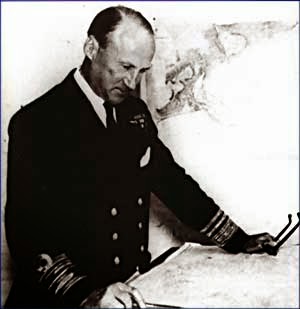
Bertram Ramsay: logistical genius
The experience turned him into an expert in the logistics of major amphibious operations. He handled the landings in North Africa, Operation Torch, the landings in Sicily, Operation Husky, and finally, his crowning achievement, the landings in Normandy on D-Day in 1944, where he had overall command of the Allied naval forces.

This was a time before computers, and all orders had to be typed by hand. There were 5000 sets of orders for D-Day, and it’s a tribute to Ramsay’s organisational ability that the operation went so smoothly (the only hitches were those inflicted by the Germans): ships picked up the right troops, equipment or supplies, and delivered them to the right place as expected.

Back at Dunkirk, he organised the long convoys of ships, naval and civilian, big or small, that travelled across the Channel to pick up the soldiers, from the harbour or the beaches. The little ships have become legendary: they were often privately owned boats that travelled across and ferried soldiers out to the larger naval vessels to travel back across the Channel. 311 out of 693 British boats were little ships, and 170 out of the 226 lost in total.

Little ships at Dunkirk
In the end, 338,000 soldiers were brought to England. Not all the French were left behind: 100,000 were evacuated. They, however, were for the most past then shipped back to France to continue the defence of their country, generally only meaning that they were killed or captured a little later than they would otherwise have been.

The British forces evacuated formed the core of a renewed army that could continue the war, to its final victory. Their return therefore left the country breathing a sigh of relief, though Churchill made it clear there was no cause for celebration: “we must be very careful not to assign to this deliverance the attributes of a victory. Wars are not won by evacuations.”

And let’s not forget another group of Frenchmen: 35,000 stayed on fighting, as a rearguard, allowing the evacuation to continue until 4 June. Many were killed, the rest captured. Their sacrifice made the rescue of British forces possible. As did the brilliance of Admiral Ramsay. And the ineptitude of Runstedt and Hitler. Of such strange mixtures of heroism, ingenuity and incompetence are narrow escapes made.

The experience also gave us what we have come to know in Britain as the Dunkirk spirit, a refusal to accept defeat, a willingness to pull something out of the fire whatever the odds, in order to fight again another day.

It’s particularly important for us in the Labour Party as we contemplate the wreck of our hopes in the face of the debacle the Conservatives handed us two weeks ago. Oh, well. Those lads at Dunkirk on 21 May 1940 faced a prospect even bleaker than ours. And in the end their side that came out on top…

Sunday, 20 April 2014

Ukraine: a moment of truth at Easter. On Hitler's birthday

Easter Sunday. For Christians at least, a good day, pretty much the best. 

On the other hand, this year it also happens to be Hitler’s birthday, which is not quite such a cause for celebration.

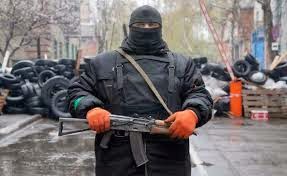
And both are relevant. The Ukrainian government – if ‘government’ isn’t too strong a word for a body whose writ is so little followed – has declared an Easter truce in its fight with pro-Russian rebels in the East of the country. This may be a generous and open-hearted gesture, or it may reflect a lack of confidence in its own forces, even to the point of not being sure that any armour it sends against rebels won’t be immediately taken over and turned back the other way.

As happened last time.

As for Hitler’s birthday, well I’ve already commented on the similarities between Putin’s behaviour and Hitler’s. In fact, more than once. I fully accept that not everyone agrees with me: I’ve had it pointed out to me that Putin’s behaviour in Crimea is no different from Thatcher’s over the Falklands.

That strikes me as a false analogy. The Falklands – the Malvinas – ought certainly to be Argentinian and will, I’m sure, be handed over some day. The objection back in 1982 was that President Galtieri sent armed forces to seize them. British possession of the Falklands may well be wrong, but Galtieri’s actions was illegal.

Such breaches of international law damage us all. Not just in the Falklands but anywhere they occur, most notably in Iraq: the West, far from being innocent, is the most frequent and flagrant perpetrator. That, however, doesn’t justify Putin who also has form in these matters: even before Ukraine, he used military force in Moldova and Georgia.

So how about the parallels between him and Hitler?

The most striking similarity is escalation.

Hitler’s first (illegal) military action was to reoccupy the Rhineland. Well, it was German territory, after all. You could argue that the Versailles Treaty, in stipulating that the Rhineland had to be left demilitarised, was unjustly limiting Germany’s legitimate rights.

Then came the annexation of Austria. Well, Austria having lost its Hungarian and Slavic populations, was a massively German nation and there was certainly huge enthusiasm for union with Germany.

Next it was the turn of Czechoslovakia. It had large pockets of German population who, rightly or wrongly, claimed their rights were being trampled on by the Czech authorities. They appealed to Germany to assist them, an entirely disingenuous appeal since they were already heavily dependent on the Nazi regime. That was the crisis that led to the Munich Agreement, in which Chamberlain for Britain and Daladier for France thought they had guaranteed “peace in our time” by agreeing to the dismemberment of Czechoslovakia, through Hitler’s annexation of the areas of majority German population.

The following spring, Hitler had occupied the rest of Czechoslovakia.

That autumn, he invaded Poland and Europe found itself sucked into the Second World War.

Now history doesn’t repeat exactly. The steps are different. But Putin is ramping things up just as Hitler did.

First it was Crimea. Well, a bit like Austria and the Germans, the population is mostly Russian-speaking and closer to Russia than to Ukraine. In fact, it only became Ukrainian through a high-handed act of Kruschev’s in 1954.

Now it’s the Russian-speaking populations of the Eastern Ukraine. Well, rather like the Sudeten Germans in Czechoslovakia, they feel aggrieved about being regarded as Ukrainians (at least, quite a lot of them do). Perhaps they feel that Russia is their mother country. And, again rather like the Sudetens, it looks as though they’re getting a lot of foreign encouragement (some of it in the form of armaments and possibly even troops without insignia) for their rebellion.

Comforting that we can count on him as a champion of freedom
Yesterday, despite the truce, there was fighting in the port of Mariupol, which left three people dead. The Russian authorities have expressed outrage. Well, I believe any citizen of the world should see this kind of killing over political matters as outrageous, but Russia clearly feels that it has a specific interest in these incidents because one side of the conflict is Russian-speaking. Which is rather like the United States feeling it has a right to speak for British citizens in trouble with the law, merely on the grounds that they speak the same language (well, pretty much the same language).

What’s next? That’s not difficult to imagine. If Eastern Ukraine is allowed to secede and join the Russian Federation, like Crimea, will Putin next annex the area of Moldova, immediately to the West of Ukraine, where he has already stationed troops in an ostensibly independent nation? From Moldova, he threatens Ukraine’s third city and most important remaining port after the loss of Crimea, Odessa.

None of this is identically analogous to Hitler’s actions, but it’s the same kind of salami-slice approach to foreign policy with the aim of gradually extending its territory. The end result would be a Ukraine so emasculated that it would barely be viable as an independent nation, leaving it liable to absorption wholesale into the Russian Federation. Rather like the rump of Czechoslovakia was taken over by the Reich.

What’s Putin’s objective in doing all this? Again, he’s made no secret of his nostalgia for the Soviet Union. It seems difficult to deny that he’s working to reconstitute it.

It wasn’t much fun last time the world was dominated by a United States glaring at a Soviet Union each in its forest of nuclear weapons. And it wasn’t fun for rather a lot of Europe. No wonder the Baltic States and Poland are concerned – they can see where this may be heading.

It doesn’t have to go there. On Thursday, Russia, Ukraine, the US and the EU met and agreed a way out of the crisis. It involved rebels giving up their occupation of public buildings, in return for an amnesty for protesters who have not committed capital offences. Clearly, it depends above all on Russia reining in its supporters in Eastern Ukraine, and them agreeing to go along with the arrangement.

Will it stick? If it does, something remarkable will have happened. Russia, on the road to aggrandisement by military means, will have drawn a line and said “no, we go no further down this road.” Putin will have pulled back from policies that seem set to push the world back towards a state of affairs that was ugly then and could be a lot uglier now.

He will have diverged fundamentally from the route that Hitler took. We might look back to this 125th anniversary of Hitler’s birth and congratulate Putin on his extraordinarily judicious behaviour.

But three died in Mariupol yesterday. And the pro-Russian protesters aren’t vacating government buildings. The omens aren’t good.

Still, it’s Easter Sunday and I mustn
’t spoil it. Have a good one, whether you believe in it or not. At least enjoy the chocolate.

Happy Easter

Wednesday, 9 April 2014

Russia, Ukraine, Germany, Czechoslovakia: an exciting historico-geographical-political quiz. With a lot riding on it.

A first! A quiz for my readers! Is that thrilling, or what?

Below are two extracts from major British dailies. One is from yesterday’s Independent, the other from the Guardian of 30 July 1938. I’ve disguised both to make it a little less obvious what circumstances each article is talking about.

One of them is an account of the way the Russians of 2014 or the Germans of 1938 are preparing to use military force to come to the aid of their “compatriots”, i.e. speakers of the same language, across the border in Czechoslovakia – or do I mean Ukraine? 


Yep, that’s how gripping this gets...

The other extract quotes a speech from a nationalist leader, of the ethnic Russians of Eastern Ukraine in 2014, or possibly of the Sudeten Germans in Czechoslovakia in 1938.

Moving against Ukrainian troops still nominally in control, 
Russian troops deploy in Crimea
with strong civilian support
And here’s question 1: which is the 1938 piece, which the one from 2014?

Extract 1

And yet, the latest protests in [the Sudetenland/Eastern Ukraine] show far more organisation and determination compared with those of just a few weeks ago. They sing the same verses from the hymn sheet in [the main cities]; they call for a [referendum/plebiscite] and a plea for [Russian/German] “peacekeepers” to defend them. This strikes a chord with the repeated demands from [Berlin/Moscow] that [Ukraine/Czechoslovakia] should give a voice to the [regions/minorities] and adopt a federal structure and pledges that ethnic [Germans/Russians] will not be abandoned: the [Kiev/Prague] government does not need reminding that [President Putin/Chancellor Hitler] [has been authorised] to deploy troops not just for [Austria/Crimea], but [Ukraine/Czechoslovakia].

Extract 2

“On behalf of the largest group of [German/Russian] people ... outside [Russia/Germany], also in the name of all other [Russians/Germans] living abroad, I declare that we are all inseparable parts of the great [German race/Russian nation]. Efforts to make national boundaries and spiritual boundaries between members of one people have collapsed.

“[Germans/Russians] living abroad render unto the nation what is the nation’s, and to the people what is the people’s. As true [Russians/Germans] we are accustomed to fulfil the duties we have shouldered. So we take seriously our duties towards the country to which we belong, but as members of different nations we remain members of the [German/Russian] people.”


German troops move into the Sudetenland in Czechoslovakia
with strong civilian support
Question 2, on the other hand, is “does it matter which text is which? aren’t they pretty much interchangeable?”

Which leads to Question 3: 
”given that the 1938 problems led to Hitler occupying the Sudeten areas of Czechoslovakia in one of the major steps towards World War 2, isn’t it time we got a little more worked up about what’s happening in Ukraine?”

Sunday, 9 March 2014

Simply comparing a political opponent to Hitler is a terribly cheap ploy. It’s generally horribly unfair, not to say misleading. However, the reason we dislike such comparisons is that when we think of Hitler, we think of extermination camps, the Holocaust, the millions of murdered civilians guilty of no crime.

But there’s much more to Hitler than his murderous behaviour. There are other aspects of his time in power with which comparisons are well worth making. Especially when they can teach us lessons about today.


Not just a mass-murderer.
He had plenty of other faults
In 1938, a party close in sympathy to the German Nazis, was campaigning actively for the rights of the German minority in Czechoslovakia for redress of their alleged grievances against the majority. Hitler took up their cause. Leaders of the other Great Powers of Europe, Neville Chamberlain in Britain and Edouard Daladier in France, consulted with Hitler (though not with the Czechs...) and agreed to allow him to occupy the German-speaking areas, the so-called Sudetenland.

That agreement, signed on 30 September 1938, was to guarantee ‘peace in our time’. Hitler wanted the Sudetenland but no other part of Czechoslovakia, he assured the other statesmen. Granted his wish to occupy just those parts of the country, he would leave the rest alone and Europe need not fear war.

On 16 March 1939, German forces occupied the rest of Czechoslovakia. Britain and France took no action. 


Less than six months later, the German army rolled over the border into Poland. Though bound to defend Poland by Treaty, it took two more days of heart-searching and indecision, before Britain and France at last declared war on Germany, and the European theatre of World War II got fully under way.

Now roll forward three-quarters of a century. 


Vladimir Putin feels himself honour bound to come to the defence of his compatriots, the Russian-speakers of Ukraine. ‘Self-defence’ forces, that look extraordinarily like Russian troops without their insignia, have seized control of Crimea. Optimists may believe that Russia can be persuaded to hand the region back to Ukraine; realists, and that includes the main governments of the West, know that there’s no prospect of that happening. It was, after all, a traditionally Russian area, and there’s overwhelming local support for a return to the motherland, undoing a unilateral decision of Nikita Kruschev sixty years ago.

Will Putin stop there? Maybe. And if he does, we can no doubt learn to live with that. Perhaps Ukraine, too, can lick its wounds and come to terms with its loss.

This is where the comparison with Hitler becomes illuminating. Making concessions to Hitler meant feeding his appetite. Handing him territory only made him push his luck further and try to get still more.

There are Russian speakers in Eastern Ukraine too, including its second biggest city, Kharkiv, and the great industrial centre at Donetsk. Will Putin feel the same obligation to ‘defend’ them as he has ‘defended’ Russian speakers in Crimea? And Hitler ‘defended’ the German speakers in Czechoslovakia?

There’s also another lesson. When we did stand up to Hitler, it cost us a bloody war – the bloodiest the world has seen. War with Russia today, however, would probably put the war against Hitler into the shade. It might, indeed, threaten the very existence of humanity.

The fact that no one seems keen on the idea of military intervention against Putin strikes me as thoroughly welcome. On the other hand, appeasement doesn’t work either, if we can learn anything from the experience of Hitler.

But between war and appeasement there are surely a great many other possibilities. What is much less edifying about the behaviour of Western governments today, is the rapidity with which they seem to be ruling out any kind of economic action, even though such measure might actually get Putin’s attention: imagine if he and his oligarch friends found themselves hurting in their wallets.

Instead, the message from Western capitals seems to be that we’re prepared to do whatever it takes, as long as it doesn’t cost us anything.

The only worry? If we’re not prepared to pay any cost today, the cost we may face later might be far higher.

That’s another lesson to learn from our experiences with Hitler.


Putin may not be a mass murderer
but he still needs to be stopped

Friday, 4 October 2013

Fascism: how does one resist it?

Did you ever see the Costas Gavras classic film, Z?

When it comes to building tension, few films have equalled it. I particularly liked the use of the rat-a-tat-tat of an IBM golfball typewriter as part of the soundtrack: it provides a percussion accompaniment to much of the work of the Examining Magistrate investigating the violent death of a left-wing politician.

Its effect is particularly powerful when it suddenly stops: the magistrate, having previously always corrected anyone who had referred to the death as a ‘murder’ and insisted that they call it an ‘incident’, had in dictating a report used the work ‘murder’ himself. There is a sudden, deathly silence and then the voice of the typist: ‘don’t you mean ‘incident’?’

But by then it was clear that it wasn’t an incident, that the man had been murdered. And that takes us into the final chilling sequence of the film, as the army’s tanks move in and a military government is formed; those who investigated and exposed a crime find they are now the criminals and facing persecution; even witnesses disappear in quick and mysterious succession.

The setting of the film? Thinly disguised Greece as the 
‘Colonels’ seized power, back in 1967. I was fourteen at the time and beginning to take an interest in politcs. At that age, whatever I discovered seemed immutable, good for all time. A few years later, I felt nothing but sorrow for a fellow student and friend of mine, a Greek who, it seemed to us both, would be condemned to live with that oppressive and vicious regime for a long time to come.

Keeping Z's veil transparent: 'any resemblance to real events,
to people living or dead, is no coincidence. It is DELIBERATE.'
In the end that didn’t happen. The Colonels fell in 1974 and democracy was restored. Like the change in regime in Spain a year later, it seemed like a new spring in the non-Soviet part of Europe; soon we began to feel that these new democracies were here to stay, and it was hard to imagine them ever drifting back towards Fascism.

Today, for Greece at least, there’s less grounds for that casual optimism. A nakedly neo-Nazi movement, Golden Dawn, took 7% in the polls last year and won its first seats in the Greek parliament.

I say ‘nakedly’ but the reality is that they deny their Nazi roots. These movements always do. But their symbols, their beliefs and most tellingly their behaviour (they organise gangs to use violence against immigrants or minorities), all mark them as belonging to that same deplorable tradition.

Golden Dawn: who could possibly mistake them for Nazis?
Most worryingly, it emerged recently some of their thugs were being given training by elements in the security forces. That really awoke memories of Z: Costas Gavras underlined the ugly nexus between the violent right wing and the military-police establishment.

Now though Golden Dawn have perhaps overreached themselves. A left-leaning singer has been murdered, and a Golden Dawn member has admitted responsibility. The reaction of the authorities has been astonishing for its swiftness and effectiveness. Leading members of Golden Dawn, including MPs, have been arrested and charged with serious offences.

It’s a fascinating, if frightening, moment to watch. The great paradox of democracies up against totalitarian violence is to know how far they can go: if they go beyond the rule of law, they may be more effective, but aren’t they themselves then undermining the very democracy they wish to uphold?

But the Greek government has decided that it has to act. And so far it has acted within the law anyway, so one has to wish it well in its aspiration to crush a viper before it strikes.

That’s what makes the spectacle fascinating. What makes it frightening is another historical parallel. In 1923, Hitler launched his ill-fated ‘Beer Hall Putsch’ in Munich. This attempted uprising was crushed in two days. Hitler was tried and imprisoned – but not deported to his native Austria, as he might have been, since he wasn’t a German citizen.

Instead he was held in comfortable conditions in a castle where he wrote Mein Kampf. He was released after eight months; nine years later, he was Chancellor of Germany.

So the question now is, how will the Golden Dawn’s defendants be treated? Will they be convicted of serious or minor offences, will they face sentences that take them off the political scene?

There’s a lot riding on that. What a shame if another 14 year old has to sit through a successor film to Z in a few years time, and feel the same sense of frustration and anger so many of us felt back in 1967
. Or the same sorrow for the fate of Greece.

Even for another outstanding film, that would be too high a price to pay.

Sunday, 5 August 2012

The indolence of Hitler. And some other politicians too

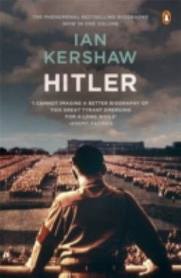
Do you know Ian Kershaw’s biography of Hitler? I can’t sing its praises loudly enough.

Gripping, insightful and
full of lessons for our own times too.
It is full of insight on the more obvious aspects of the dictator’s personality: the active cruelty, its underlying bigotry, principally but not exclusively against the Jews, and the fanaticism with which it was driven through; but also the passive cruelty of indifference, that allowed him to send millions of soldiers to their deaths without a word of grief for them or of compassion for their families.

However, these aren’t the aspects that interest me here.

Kershaw also paints a startling picture of Hitler’s idleness, right up to the first years of the war. The dictator would rise from bed late in the morning and go for his bath. He would emerge around noon and hold meetings until about 2:00 when he would have a much delayed lunch, to the despair of the kitchen staff.

In the afternoon he would hold another couple of meetings around tea. Exhausted by these exertions, he would then take a rest. Dinner was at 8:00 followed by films, music or conversation, mostly in the form of endlessly repeated monologues on whatever subject he cared to choose. He would get to bed at about 2:00 a.m.

This dilatory schedule didn’t stop his regime achieving some of its most striking successes: the annexation of Austria and later of Czechoslovakia; then, once war proper had started, victories in Poland and in the Balkans.

However, he was laying the seeds of the disaster to come. Paradoxically, though he kept adding to his personal power, he lacked the energy to provide much direction. Instead, his most senior leaders set policy through their turf wars, with each vying for personal advancement by attempting to do the things Hitler wished for, but hadn’t stated.

Kershaw calls this thinking ‘working towards the Führer’ and it was an appallingly inefficient way to run a government. By contrast, at the height of the war, Churchill could leave Britain for relatively long periods abroad, safe in the knowledge that the government he left behind would continue to operate along legal lines and implement agreed policy.

Churchill could have that confidence even though he left the government in the hands of the leader of the main opposition party, Labour
’s Clement Attlee, the man who would oust him from office at the first post-war election. If any tribute were needed to the superior effectiveness of democracy over dictatorship, this must surely be it.

Meanwhile, back in Germany, things started to change when Hitler went to war with the Soviet Union. Initial spectacular success soon fell apart as it became obvious to all but the most convinced Hitlerites that Germany was now in a battle with a massively more redoubtable power than it had ever previously faced. And as the war started to turn tough, so his behaviour started to change.

His old idleness began to disappear. He became an insomniac. During the day, he would pore over maps and orders and hold frequent long discussions with his generals. As he lost faith in them, he took increasing control himself. To deliver victory, he preferred to draw on his experience as a corporal in the First World War and his belief in the capacity of his will to achieve anything to which he set his mind, rather than the experience and training of his senior officers.

From being a layabout, he became a workaholic.

And how effective was it? A useful indication is given by the reaction in Britain to the proposal by Special Operations Executive, a young and violent wartime addition to the secret services, to assassinate Hitler.

‘On no account,’ replied the others, ‘there’s no possible replacement for him at the head of the German armed forces who we’d be happier to see in the position.’

The time of Hitler’s indolence sowed the seeds of his regime’s destruction. The time of his workaholism ensured and accelerated its collapse.

Interesting, isn’t it? Idleness in lousy politicians is bad news. But that’s as nothing to when they really 
get going.

In my view this is as true in a democracy as it is in a dictatorship.

George W. Bush may have been the laziest man to become President of the United States: briefing papers had to be summarised and even then they had to be read aloud to him; he would take extraordinary amounts of leave – up to twelve weeks a year – and rarely worked as much as six hours a day. Even then he managed to drag not just his own nation but several others into long, bloody and so far fruitless wars.

Can you imagine how disastrous things might have been if he’d stayed around long enough to become a workaholic?

In Britain today we have a Prime Minister whose reputation is for a relaxed approach much like Dubya’s. Rather than think a policy through, David Cameron prefers to come up with some half-baked proposal which he withdraws when it’s pointed out how unlikely it is to work.

It’s hard to feel much respect for him. Again, though, let’s be careful what we wish for. Imagine if he started actually working: how much more damage could he do? 


Probably safer, as with Dubya, to make sure he’s gone well before he emerges from the indolent stage.

Friday, 11 November 2011

Lest we forget


Today was the eleventh day of the eleventh month and, by happy chance, of the eleventh year of the present century.

At eleven o’clock this morning, Britain held a two-minute silence in memory of the dead of the First World War. And the Second World War. And all the other wars we seem to keep on fighting with monotonous consistency, generating ever more dead. Even though the number of dead we suffer tends to be incomparably lower than the number we inflict, particularly among civilians, every single one of them is a sad blow that deserves to be marked.

So 11 November is not a cheerful moment in this country. The French have a holiday; we have two minutes silence.

Many people like to tell me about the timing of the First World War Armistice. Their voice becomes incantatory and their eyes open wide, as they intone with mystic solemnity ‘the eleventh hour of the eleventh day of the eleventh month’, with awestruck resonance.

Now I like to think I’m as sensitive to symbols as the next man, but this particular instance leaves me uncomfortable. To explain why, let me just mention four names: George Edwin Ellison, Augustin Trébuchon, George Lawrence Price and Henry Gunther.

George Edwin Allison fought at the Battle of Mons, one of the first engagements of the war, in 1914. He was killed at 9:30 in the morning of Armistice day, an hour and a half before the fighting stopped, the last British death.

Augustin Trébuchon was the last French soldier killed, at 10:45. He was on his way to tell his comrades that soup would be served immediately after the cease fire – talk about dying for a hot meal.

George Lawrence Price was the last Canadian and last Commonwealth soldier killed. He was hit by a sniper’s bullet at 10:57 and died at 10:58.

The last allied soldier killed, an American, was Henry Gunther; he’s recognised as the last soldier to die in action in the war, when he was charging a position held by Germans who knew the armistice was going to start – sixty seconds later – and were trying to tell the Americans to stop.

In all, nearly 3000 men were killed between the moment the armistice was agreed and the moment it came into effect. It may just be me, but that sounds like a high price for a symbol.

Perhaps it isn’t inappropriate that we mark the anniversary with solemnity rather than good cheer.


Wreaths of poppies, the symbol of World War One,
at the Cenotaph in London

Postscript. This feels like a good place to tell a First World War story.

Adolf Hitler served for the whole of the war. He didn’t have what you might call a glittering career, never making it beyond the rank of corporal – he was considered for promotion but his superiors decided that he didn’t have leadership qualities, which is amusing: the German word ‘Führer’ means leader.

Though he didn’t move far up the ranks, Hitler did win a couple of iron crosses, one second class, the other first. He was a despatch runner. The action that won him the second and superior decoration took place at a moment when communications to a front line unit were completely down. A lieutenant told Hitler and one of his colleagues that if they could get a message through, he would personally ensure that they both won the Iron Cross first class. Both got through, both got back.

That was an action that certainly took courage, but the lieutenant’s superiors felt that it wasn’t perhaps the kind of conspicuous gallantry for which a top decoration should be awarded. Hitler must have shared that scepticism: in later life, the story told was that he’d won it by personally capturing fifteen French soldiers – that certainly sounds more glorious than simply running from point A to point B, even under fire.

But the lieutenant was a man of his word and argued for a month to ensure both men got the decorations he had promised them.

Now that’s not a bad story, I hope you’ll agree.

What turns it into an outstanding one is that this honourable man, who took such trouble to ensure that Hitler was awarded his highest honour, was a Lieutenant Hugo Gutmann.

A Jew.