Showing posts with label The Wirral. Show all posts

Thursday, 27 December 2018

Hospitals: the burning question

There was a time – back in the early 1990s – when I used to make frequent visits to Arrowe Park Hospital in the Wirral. 

That’s the peninsula opposite Liverpool.
Arrowe Park Hospital
Scene of many a visit of mine back in the early 1990s
The company I worked for back then had supplied the hospital with a remarkable system to support healthcare staff. To this day, it remains the most powerful Hospital Information Support System or HISS, as we called them then, that I’ve ever come across. Healthcare staff could quickly, reliably and accurately, enter requests for tests or treatments, record test results or the delivery of treatment, or simply consult a patient’s record. It was a great system, and I would take pride showing groups around the hospital to see it in use. Many of the groups came from abroad.

Often, the then Chief Executive, Frank Burns, would meet the group and give a brief, and usually witty, talk. In one remark has always stuck with me, he told a group:

“The problem that keeps me awake at night isn’t a patient falling off an operating table. It isn’t a patient receiving the wrong blood in a transfusion. It’s car parking.”

It’s not hard to see why. There’s only so much car parking space. So who gets priority? Staff without whom no patient would be treated? Patients without whom there’d be no point having the staff? Visitors to patients without whom they’d recover so much more slowly?

And, at a time when hospital budgets are under terrible pressure, do you charge or do you not? And if you do, how much do you charge?

That last point reminds me of another hospital that I’ve visited quite a few times, the Royal Free in Hampstead, north London. I’ve mostly been there for work, but also for personal reasons: it’s where my grandmother died, for instance.

On one work visit, I was shocked by the charge being made for the car park. I couldn’t resist mentioning it to one of the people I saw in the hospital. I didn’t mention it until after we’d dealt with the business, of course; it seemed imprudent to raise the matter until I’d got to know him well enough to be sure he wouldn’t take it badly. Which, as it happens, he didn’t.

“Ah,” he said, “the costs are exactly the same as on Hampstead High Street.”

The High Street is only a few minutes’ walk away.

“The used to be much cheaper,” he went on, “but people kept parking here and then heading up to the High Street to do their shopping. We had to introduce the charge to stop them doing that.”

It’s not that simple a question, you see, hospital car parking charges. There needs to be some way to make sure that limited parking spaces aren’t being abused for purposes other than visiting the hospital or going in to work.

Obviously, a system could be put in place to allow people to pay less, or nothing at all, if they’re patients or visitors to patients. But that costs money and takes staff time. And neither of those are in abundant supply in the British NHS today.

All that becomes particularly relevant today because hospital parking charges are the latest scandal to hit the news. And it seems dead easy: there should be no charge in England as is already the case in Wales and in most of Scotland.

But, as the Royal Free proves, that’s not that simple. After all, we really don’t want to offer Hampstead shoppers an inexpensive parking opportunity so they can do their shopping more cheaply. After all, with some of the most expensive properties in London, Hampstead isn’t a district for the poor or underprivileged.
The Royal Free Hospital
Too close to Hampstead High Street to provide free parking
No wonder Frank Burns was kept awake by hospital car parking. Rather than any of the other issues you’d expect to be troubling a busy Chief Executive.

Monday, 18 December 2017

Winter: season of contrasts. Some of them traditional

One of the few advantages of the short days in winter is that it’s not that hard to see both sunrise and sunset.

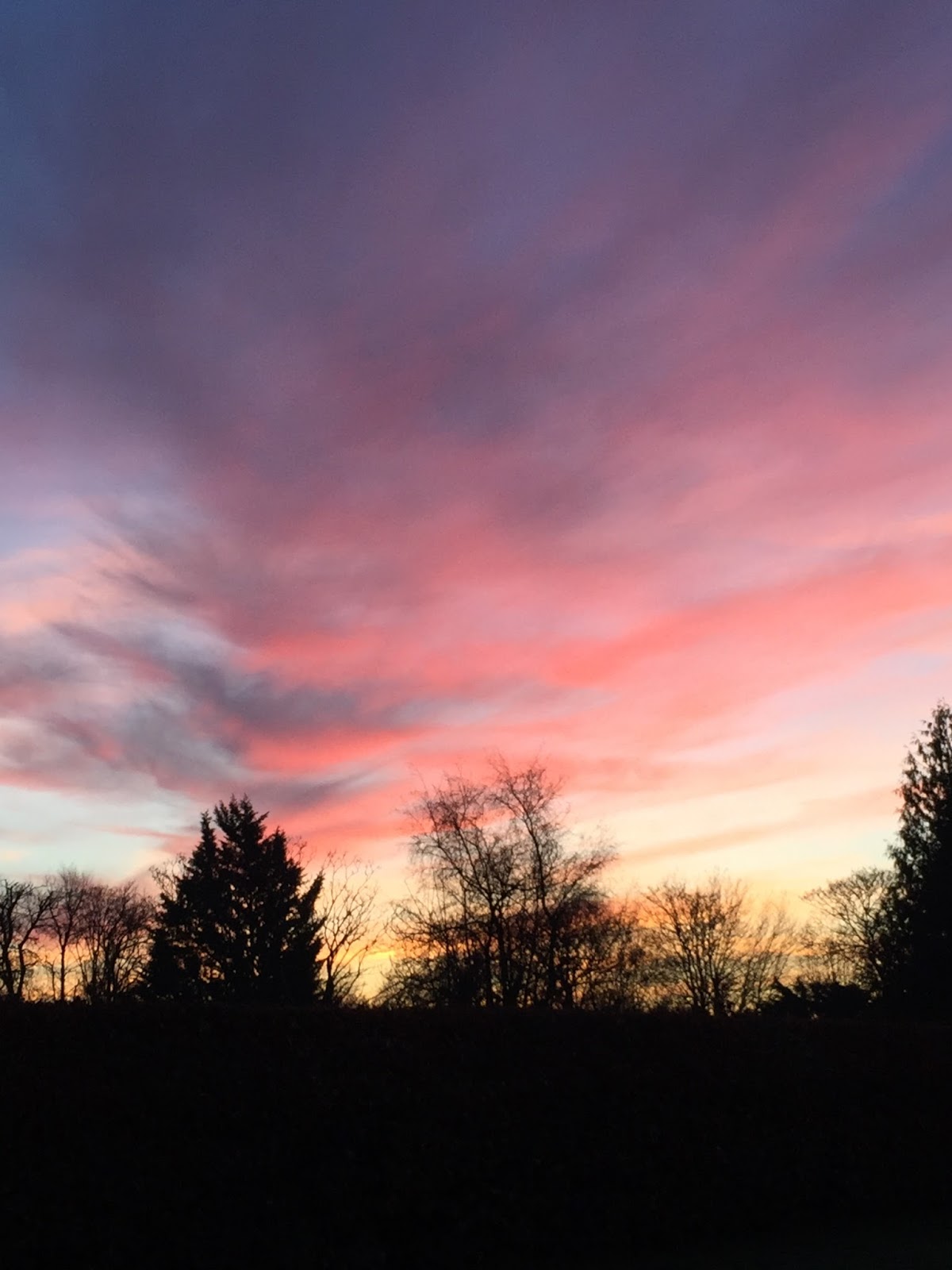
Sunsets are often breathtaking, even in winter.


Winter sunset in Wardown Park, Luton
But sunrise too can be extraordinary.


The sun rises over winter trees in People's Park, Luton
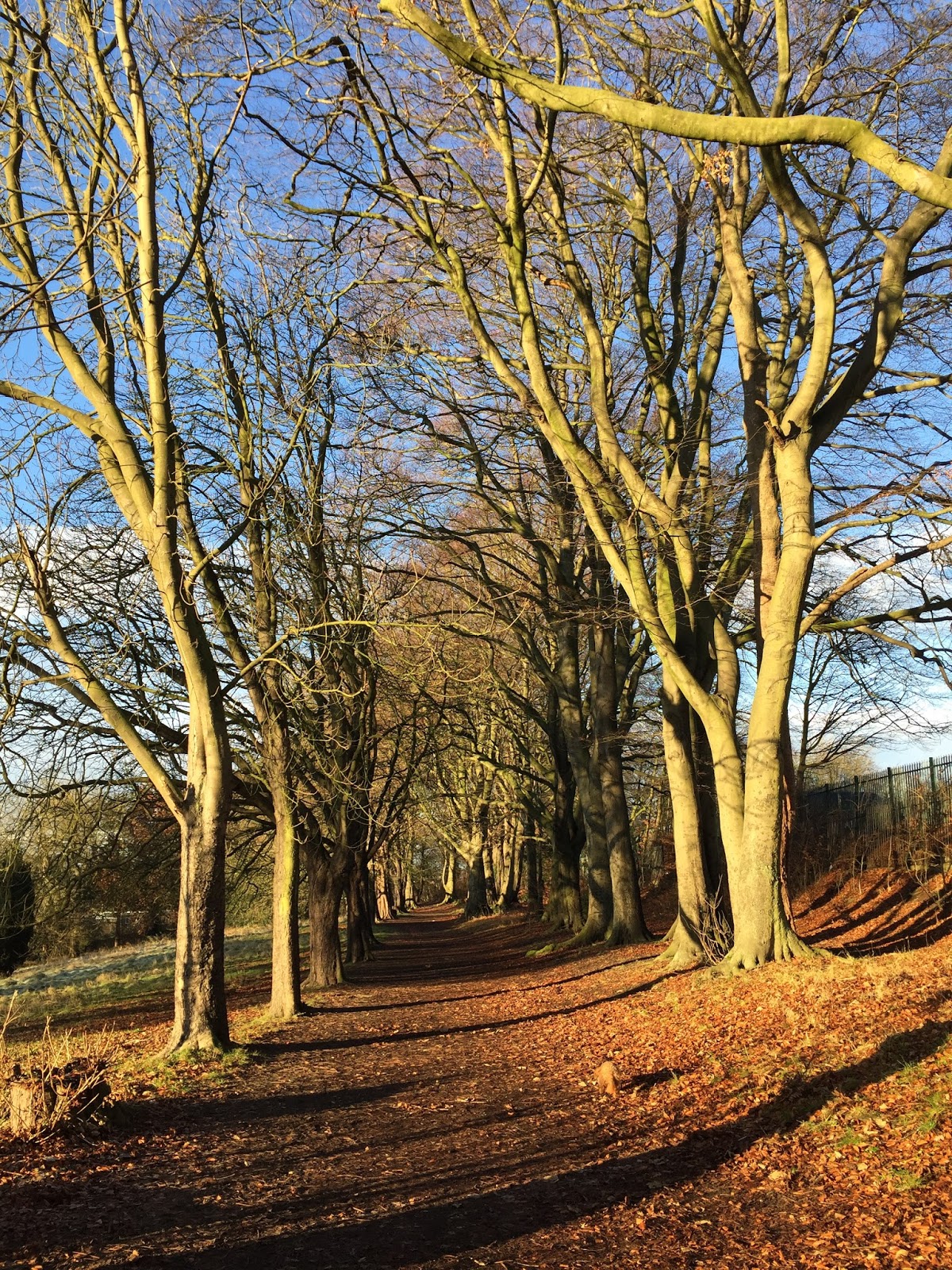
Indeed, bare trees in low winter sunlight in the middle of the day can be starkly striking.


Low but strong winter sun in People's Park
The contrasts that mark winter aren’t limited, though, to the physical world but affect human society too. Take, for instance, the tale of King Wenceslas, sung so often at this time of year in allegedly Christian nations. It seems he was quite comfortable enough to be able to stand at a window, of his castle one assumes, and look out even though the frost was cruel (or cru-el).

Doing so, he was able to spot someone from altogether the other end of the social spectrum: a poor man struggling through the cold to collect some winter fuel (fu-el).

Wenceslas was well enough off to be able to spare a few of the pleasures of life. So he could require his page to bring him flesh and bring him wine, and even a few pine logs hither, so they could go and see the poor man dine, when they bore them thither (or thi-ith-ther).

Now we like to maintain our traditions. And so we’ve preserved that one, at least in part.

I read today about a charity in the Wirral, in North West England, which makes up packages to give to poor people at this season. It’s common, when making Christmas presents to give out luxuries – electronic games, perhaps, or toys guaranteed to hold the attention of even the most spoiled child for minutes and minutes. But the group in the Wirral makes up hampers that include toilet rolls, toothpaste and sanitary towels, as well as toys.

These are not gifts designed only to enhance pleasure but to relieve want. Four years ago, this organisation handed out 70; this year they are handing out 3000. In the world’s fifth biggest economy in the world.

It seems the poor seeking winter fuel are still with us.

Another story made it clear to me that we still have the successors of King Wenceslas with us. Take the case of Jeff Fairburn. He’s the chief executive of a housing company called Persimmon. He’s done a fantastic job building the company’s profitability of the company, even if admittedly he had help from a government that poured in subsidies to companies like his to encourage the building of houses that the relatively wealthy can rent to the poor.

With that generous gesture by us all – let’s at least admire our Christian charity in helping out of pockets such fine companies as Persimmon – Mr Fairburn has been able to take a bonus worth £110m.

Now that may sound like a lot. But Britain’s biggest hospital, Bart’s in London, has a deficit of nearly £140m. Mr Fairburn’s bonus wouldn’t even cover all of it.

We have the poor. We have the wealthy. All we’d need to complete the tradition is to see the Wenceslas figure set out across the snow to help.

Ah, unfortunately, that’s where things break down. Mr Fairburn won’t be contributing to help Bart’s, for instance. I mean, he needs that money. He has a lifestyle to maintain, and it’s unaffected by the fact that people are lying on hospital trolleys for want of hospital beds or being denied treatment.

King Wenceslas we have still, it seems, but the latter day isn’t all that Good.

Still, at least we can enjoy the wonderful sights winter provides. As long as we’re not too ill to go wandering around our parks and streets. Or too busy trying to find a little food for our family – to say nothing of luxuries such as toilet rolls, toothpaste or sanitary towels.