Showing posts with label Cameron. Show all posts

Wednesday, 13 September 2017

Reminders of the shame of austerity Britain

Often, it’s the little things that mark you…

There is, near where we live in Luton, a rather attractive open space known as Stopsley Common. In the middle are wide open spaces, including three cricket fields and a dozen or more football pitches, as well as areas simply left open for walking. Around the edge are hills and wooded areas crossed by well-maintained paths.

Luci and Toffee enjoying Stopsley Common
It’s a place frequented by cricketers, footballers, dog walkers, joggers or just people out for a quiet stroll. It is an invaluable resource to be enjoyed by all, a reminder that community matters too, and not just the capacity of small numbers of individuals to makes themselves rich.

Sadly, however, it’s also an area much favoured by joy-riding bikers, the kind that like to race their motorbikes or quads, without registration plates, across the grass, churning it up and endangering lives including their own – the obligation to wear helmets is one of many they ignore.

Many of these people seem to be what one might call sedentary travellers. In other words, they belong to that community of people we think of as travellers, in the sense that they wander around the country in caravans (often, it has to be said, drawn by large BMWs or Mercedes) and only stop for short periods in any one place.

However, a group seems to have set up permanent home in Stopsley. Occasionally, they alert their more peripatetic brethren of the fact that a gate has been left open, or blocks of cement designed to prevent access to certain places, are more mobile than their designers imagined, and we discover a few days later that a favourite place has been invaded once more.

I use the word “invaded” advisedly. When these travellers move into a place, they don’t simply inhabit it for a few days before moving on, which I would strongly favour tolerating. Although they use highly sophisticated caravans, they seem not to like the toilets most of them contain, or perhaps they don’t like dealing with the waste. So they tend to use the area around where they park as an open toilet, making it generally less attractive as a place to wander in.

At least that involves substances which are biodegradable. Far more unpleasant still is one of the ways they have chosen to earn a living. They contract with unscrupulous builders to collect waste from construction sites, which they then dump, at no doubt highly competitive prices, anywhere they choose – including those same places, that others value for their beauty and their amenities. Our Council is starved of cash, so it can take many weeks before these materials are cleared away.


No way through
Dumped construction site waste blocking a path on Stopsley Common
”But,” you will no doubt exclaim, “such behaviour is surely illegal!” And it is. But the law can only be enforced if there are people to enforce it. I’ve already said that the Council is strapped for cash; so is our police force. It has the resources to chase major crime, to track down murder or terrorism. But what merely lessens quality of life or inconveniences the public, is beyond their resources. So no action is taken over the dangerous quad bikes or the dumping of rubble in a public park.

In 2010, David Cameron assured the British electorate that “… we have a moral obligation to stop running up bills that will have to be paid by future generations.”

He won the election that year and he and his successor, Theresa May, have had the opportunity to honour that moral obligation. The result? National debt has grown from a trillion pounds to approaching two trillion.

What has been the result of their austerity programme? Nurses are 14% worse off than they would otherwise have been. It seems that the poorest people in society are to lose on average a further £50 a week of income by 2020 or around £2500 a year. To put that in context, median income in Britain is around £25,000 a year. By definition, half the population is below that level; the forthcoming cuts will disproportionately hit such people.

Belatedly, the government has realised that its approach is failing. It has decided to start moving away from its pay cap for public servants. As usual, however, it is doing so in too mean a way – police are to have an increase of 2% instead of 1%, in other words a rise that is  paltry as opposed to derisory – and as divisively as possible: most public sector workers, including nurses, will have to suffer at least another year of the 1% limit.

Austerity has caused pain, but there has been no gain on the debt front. On the contrary, things have got worse. And life has been impoverished in myriad ways.

For me, it’s the spoiling of Stopsley Common. That is a fitting tribute to seven and a half years of Conservative austerity rule. But I don’t deny it’s only the monument: the real thing is the terrible suffering being inflicted on people already poor enough.Still, at least the state of many part of Stopsley Common reminds me of the sheer ghastliness of Tory rule each time I take the dogs out there.

Reminders are what the British electorate apparently most needs.

Sunday, 29 May 2016

Brexit backers: careful what you wish for

This week’s Observer publishes the results of a survey of economists, 88% of whom agreed that leaving the EU would damage the UK economy. 

The newspaper rightly points to the surprising degree of consensus among experts who usually thrive on tearing each other apart. Their agreement is encouraging, though I wish I could free myself of the suspicion that getting things right is as uncommon among economists as is agreement.

What I found more interesting was the views of the small minority of economists who believe Brexit would benefit Britain. One of the leading members of this band is Professor Patrick Minford of Cardiff University, a solid supporter of the kind of economics favoured by the most fervid of free market ideologues. Here’s what he has to say about the damage being done to the UK economy by the EU, and I make no apology for quoting him at some length:

Manufacturing is a declining industry in the West: it is uncompetitive for obvious reasons, because we have emerging markets like China that undercut it so massively. What is left is in specialised, high-tech and niche areas. In our economy we have largely let market forces take effect, with generally favourable results for employment and growth; as a result we have let manufacturing go where it was essentially uneconomic. That has not happened to the same extent on the continent. As a result we find there a great deal of protectionist pressure. The EU is accordingly a customs union: for raising tariffs externally on manufactured imports, so that prices are kept up inside the European Union for manufactures. In addition to tariffs the European Union protects manufacturing through quotas in certain areas like textiles, but mainly through informal agreements (as in cars) and anti-dumping measures. Anti-dumping operates both through explicit duties and more generally through the threat of levying them, which results in importers raising their prices instead.

Let’s be absolutely clear. What he’s saying is that the EU holds Britain back because it takes action to protect people, specifically wage earners, against the effect of an unbridled free market. The EU tries to take action against, for instance, dumping of cheap products in Europe by nations such as China.

Chinese steel production: crucifying European competitors
You might think, for instance, of steel. Chinese steel is produced to lower quality standards than European. Chinese workers’ incomes are held even lower than our own. Many feel that the EU ought to protect our workers against the dumping of a sub-standard product, made cheap by brutally restraint on wages. 

Not it seems David Cameron and George Osborne, who blocked such moves. 

Nor, clearly, Patrick Minford who feels that this is a matter of letting “market forces takes effect, with generally favourable results for employment and growth.” That’s a view that will be received with interest by the steel workers in Wales and England who recently learned that their jobs were going. “Favourable results for employment”? Meanwhile, growth in Britain remains anaemic. When are we likely to see the “favourable results … on growth” from preventing the EU taking action against unfair competition?

We need to get this right. Going with the views of Patrick Minford and voting for Brexit means ensuring that the dreams of Conservatives are realised: the free market is allowed to trample unhampered over the rights of workers. Or rather, a market that isn’t even truly free: it’s being blithely manipulated by economies like the Chinese who don’t have the slightest concern for British or other European workers.

The EU tries to prevent that; the Minfords, the Camerons and the Osbornes work to block it. Pulling us out leaves us completely at the mercy of these characters. As it leaves us at the mercy of powerful trading blocs utterly uninterested in protecting British rights.

Is that really what we want?

Above all, is that what Brexiteers in the British Labour Party, aligned with the Minfords of this world, really want? They claim to speak for workers’ rights. Minford shows they’re acting to undermine them.

Saturday, 12 March 2016

Uneasy lies the head that wields a vote

It’s been fun to be out here in the US and see a bit of the Presidential race up close, even if briefly and only in a thoroughly unscientific and anecdotal way.

Most of the people I’ve met over the last week have, I believe, been Republicans. They’re coy to admit it, but that’s how I read some of their comments and their body language. Perhaps their coyness too.

Most strikingly, they’re stumped.

How can they help decide who should win their party’s nomination? Cruz, the candidate placed second to Trump, is far too right wing, it seems.

“What,” I asked, “is Cruz to the right of Trump?”

“Way to the right,” I was told, “because he really is of the far right. Trump’s just erratic. You have no idea what his position is on anything until he takes it.”

“And not even then,” I was tempted to add.

It’s tough. Since Kasich and Rubio aren’t going anywhere, the choice seems to be between Cruz and Trump. Which is a choice between the unbearable and the unconscionable – and it doesn’t much matter which you consider to be which.

So most of the Republicans I met seem increasingly resigned to voting, against their conscience and their inclinations, for Hillary Clinton in November’s general election. No one is inspired by her. No one particularly trusts her. But given the likely choice of candidate on the Republican side of the fence, most of the people I met are resigned to having to vote Democrat and, specifically, for Hillary. And to do so only because their own party is going to put up a candidate it would be horrific to see in the White House.

Which creates an even deeper dilemma if Bernie Sanders pulls off the unlikely feat of beating Clinton to the nomination. He seems to be generally viewed as more honest and more likeable but, as I have been so frequently told, “this country isn’t ready for a socialist president.”

Preferable but unelectable? Believe me, we’re familiar with that dilemma in Britain.


Trump, Clinton, Cruz, Sanders
Decision time. And it’s a tough choice...
Equally, we British have often had to vote with a clothes peg on our noses, as we choose candidates we dislike only to avoid something much worse.

In France, too. I was there back in 2002, when the Centre-Left presidential candidate Lionel Jospin ran such a lacklustre campaign that he was knocked out in the first round, leaving only Conservative Jacques Chirac to face off to the far-right Jean-Marie Le Pen in the second. That was certainly clothes peg time, and Le Pen was trounced by more than four to one.

Funnily enough, Le Pen is one of the foreign politicians to have endorsed Trump, as is Vladimir Putin. There’s a French saying, “tell me who you hang out with and I’ll tell you who you are.” Putin and Le Pen: appropriate company, one can’t help feeling, for the authoritarian Trump.

As it happens, there are also plenty of foreign leaders lining up against Trump. Unsurprisingly, the Mexican president and two of his predecessors have denounced him, but then Trump is proposing a wall to keep Mexicans out and, to add injury to insult, wants to charge them for it. But the Canadian Prime Minister Justin Trudeau has spoken out, as has the German Vice Chacellor Sigma Gabriel, and even British PM David Cameron.

That’s unusual: the convention is that politicians say nothing that could be interpreted as an attempt to intervene in another country’s elections. But if he’s anything, Trump’s unconventional. Even so, voices in the US are being raised against foreign interference. For instance, although she’s not a Trump fan, Republican and foreign policy analyst at the American Enterprise Institute, Danielle Pletka, pointed out:

It’s none of their bloody business. This is our election, not theirs.


Well, up to a point. When you’re talking about the wealthiest nation and most powerful military power on Earth, choosing a leader with at least a modicum of rationality is a matter that affects us all.

On the other hand, seeing how much Americans who actually have a vote are struggling with the decision, perhaps it’s no bad thing we don’t have to. Or would it be any kind of struggle at all for voters outside the US?

Wednesday, 2 December 2015

Politicians indulging in an act of faith. To launch more war

I believe it because it is absurd. Credo quia absurdum.

Not many people of faith would accept that as summing up their approach. But it strikes me as the most powerful statement of what faith really is. After all, it takes no faith to accept things that we know, or can deduce from observation. We don’t believe that the sun rises in the East, we know it, if only because we know that’s how the East is defined.

Faith is for what isn’t explicable in natural terms. A virgin birth. The execution of son of the God. His resurrection three days later. These are, in naturalistic terms, impossible, so those who accept them, accept them on faith.

That strikes me as a legitimate way to behave – on matters of faith. But when it comes to politics, we should demand something else. Political decisions should be based on firm evidence, and only on evidence. Which is why it’s so sad that faith plays such a role in determining policy.

Nowhere is that clearer than in decisions concerning war. In particular, that’s the case of the British government’s demand for airstrikes against ISIS in Syria. David Cameron constantly tells us how hard it is to make a decision for war; in reality, nothing is easier. Taking on Al Qaida after 9/11 was an immensely difficult task; invading Afghanistan and Iraq a couple of years later was simple. The easy action, satisfying the demand to do something, and do it now.

But did those missions achieve anything? There was no sensible exit strategy from either country.

We’re gradually pulling out Afghanistan. But it now looks as though the Taliban, our foes there, are poised to sweep back into power. It will leave the country in much the same position as when we invaded – but after having been suffered another decade and a half of vicious fighting.

The West has withdrawn, more or less, from Iraq, but what did we leave behind? A nation run by a dysfunctional, sectarian government heavily manipulated by Iran, with its Kurdish region autonomous to the point of near-independence, and large tracts now occupied and run by the very terrorist organisation that we’re now having to fight – ISIS. So our intervention has left Iraq, which previously hosted no terrorist threat against us, is now the base for the worst we face.

So here we are again, planning further military action in the Middle East. And again we have no exit strategy. We have no picture of where the action will take us. We have no idea of what the consequences are. But Cameron calls on us to back him. On faith.

Worse still, there’s no evidence whatever that the action will even be effective. The Americans have been bombing ISIS in Syria for a year, but that didn’t stop the organisation running its attacks in Paris. It doesn’t look as though the bombing has really been able to degrade ISIS, its declared aim, significantly. Indeed, we even know that many missions – three-quarters of the strikes being run by Britain in Iraq, for instance – are returning without even having fired their weapons. The obvious targets have already been taken out, and ISIS has become considerably smarter at not offering new ones – for instance, they don’t travel around the country in large masses that can be easily hit.

It’s hard to see how adding ten British planes to this campaign will make any useful difference.

Indeed, the only real gains there have been, have occurred when Kurdish ground forces in Iraq followed up on airstrikes and took back territory from ISIS. Most notably that was achieved in Sinjar, where the Yazidi people were persecuted by the terrorist organisation.

Again, Cameron has asked us to have confidence in his statement that there are ground forces in Syria which can follow up our air campaign. 70,000 of them, he argues. But but there are not 70,000 such fighters in a single coherent group. Far from it. Split among 110 factions, most of them are scattered all round the edges of Syria with very few of them even in contact with ISIS.
Russia's already taking part in the airstrikes
Not in a particularly helpful way...


Curiously, it is those so-called moderate fighters that have been taking the brunt of the bombing of one of the nations in action over Syria – Russia. So we’re bombing ISIS and our Russian partners are busily bombing the people we’re counting on to follow up our strikes.

In any case, it’s hard for Cameron to ask for our confidence. Two years ago he was calling for our support to bomb not ISIS, but its enemy President Assad of Syria. And yet he spoke with exactly the same conviction then as he is today. Within just two years he’s had to change his mind about which side to bomb? It leaves me short of confidence in his judgement.

Conclusion? There’s nothing but confusion on all these matters in government. There is no evidence to support what parliament is being called on to support. The position is, quite simply, absurd.

Which is why it takes faith to support it. Not, of course, anything like a Christian faith founded on a desire for peace, but something much bloodier. For which, God help us all.

PS The brilliant wit HL Mencken once wrote “Tertullian is credited with the motto ‘Credo quia absurdum’ – ‘I believe because it is impossible’. Needless to say, he began life as a lawyer.” Well, a lot of politicians started as lawyers. I’m not sure whether that’s significant, but it feels as though it ought to be.

Sunday, 22 December 2013

The things we do to Africa...

We used to rape the continent, for gold and slaves, and we still keep kicking Africa around like a football. We dump our worst products on it. We charge it more in loan interest than we give in aid. And every now and then we send in troops to various bits, usually from the former colonial power, to make sure the locals know they’re not really in charge.

Why, we even use it from time to time as a source of photo ops for our failing politicians. Did you see David Cameron, at the Mandela funeral, trying to get in on the Danish PM’s selfie with Barack Obama? The man’s shameless.

Is that Cameron trying to muscle in on Helle Thorning Schmidt's 
selfie with an actual world leader?
Now it’s emerged that ‘Boris Bikes’ are beginning to turn up in the Gambia. For the uninitiated, ‘Boris Bikes’ are bicycles available for hire in various places in London, which can be ridden to other places and dropped off again. They’re called ‘Boris Bikes’ in honour of the modest and self-effacing Mayor of London, Boris Johnson.

You get what honour you can, I suppose.

It seems they’re now being stolen in large numbers and shipped off to the Gambia where they’re being spotted in villages. Perhaps we should be grateful that Britain is at last making a little restitution for all the exploitation of the past, even if only unofficially and as a result of criminal action.


Photo from the Daily Telegraph of a Boris bike in the Gambia
My only regret is that they’ve only taken Boris’s bikes, and not Boris himself. Still, the Gambia is run by an unhinged egomaniac convinced he’s God’s gift to mankind, so they really don't have a need for Boris, unlike his bikes.

Someone who does seem to be invading Africa in the near future is former Barclays Bank Chief Executive, Bob Diamond. You may remember that he had to leave Barclays under a bit of a shadow: the bank had just been caught fiddling the rates at which banks lend money to each other.

Diamond provided a striking demonstration of the principle by which senior executives only receive their astronomical remuneration because they take responsibility for what happens in the organisations they lead. On his watch, the bank lost about half its share value, and he claimed not to have known anything about the rate rigging. So he suffered the penalty of giving up some £20 million of bonus, meaning he left with only about £3 million. Practically destitute.

And now he’s back. He and a mate have launched a new company, Atlas Mara Co-Nvest, which is designed to go looking for exciting new prospects in Africa.

Aaah. Doesn't Bob Diamond look like an amiable rogue?
But I'm not sure of the amiability
Things don’t look promising. I mean, the company’s an investment vehicle and they can’t even spell ‘invest’. And it’s likely to focus on Financial Services, the field in which Diamond has won such a reputation. Or do I mean notoriety?

We blessed Africa with the trans-Atlantic slave trade, constant colonial wars, borders that don’t correspond to ethnicity, a white regime in South Africa that gave the world apartheid. 

And now we’re sending them Bob Diamond. Haven’t they suffered enough?

Saturday, 14 September 2013

The UN looks askance at a 'Christian' country

When even the United Nations, that accommodating organisation, starts to wonder about the inhumanity of Britain’s behaviour towards its own people, you might think it was time to get worried.

Raquel Rolnik: speaking with the authority of the UN
about the seamier side of the UK
Not, it appears, if you are a member of David Cameron’s government. It has reacted with fury to the suggestion by UN special rapporteur on housing, Raquel Rolnik, that the government’s ‘bedroom tax’ might be an abuse of human rights. One cause of the government’s anger is the use of the expression ‘bedroom tax’: it prefers ‘spare room subsidy.’ 

It applies to people who are living in accommodation funded by benefit. If they are deemed to have a room more than they need, they are now being ordered to leave the accommodation they are in or accept a cut in their benefit. At a time when there is a dearth of single-bedroom accommodation, very few can move.

So instead they have to see their benefit cut, and therefore either reduce their expenditure on luxury items such as food, or incur rent arrears which will eventually gets them evicted and made homeless.

It’s no wonder the government has reacted so harshly to criticism from such an authoritative source. Deep in what passes for its heart even it must know that, among many callous policies it has inflicted, this is one of the cruellest.

In a Twitter argument on the subject, a supporter of the government retorted to me ‘she [Rolnik] made up crap and blabbed on about Human rights while ignoring the rights of taxpayers.’ I don’t believe that many could honestly believe that a few pounds a year of extra tax can be weighed against the suffering that imposed homelessness will cause among people already poor, many of them disabled.

This should be particularly true in a country of which the Prime Minister David Cameron himself said ‘we are a Christian country and we should not be afraid to say so.’ The debate has been lively down the ages about just what makes a Christian, but to throw the poor onto the street to save the wealthy small change, would probably be regarded by most as not fitting fully into the gospel of love.

Curiously, one of the great debates about the nature of Christianity took place with a Jewish scholar of whom, to my shame, I knew nothing until recently. A leading rabbi from Barcelona, Moses Nahmanides, known as Ramban, took part in a public ‘disputation’ in which the central question was whether the Christians were right to believe that the Messiah had already arrived, in the form of Jesus, or whether the event was still to come, as claimed by the Jews.

'Ramban', Moses Nahmanides, honoured in Israel today
He came up with what surely must be the killer argument. 

The arrival of the Messiah was to usher in a time of peace and prosperity. And, well, frankly, there hadn’t been much sign of any such thing since the birth of Christ. Indeed, Nahmanides argued, it was the Christians themselves who seemed the most bloodthirsty of all the peoples.

He said all this in 1263. We hadn’t yet had the great persecutions, not just of Jews but of fellow-Christians, in the middles ages and renaissance. We hadn’t seen the great battles over enslavement of African peoples, and the great, bitter, cruel civil war to which it led in the United States. We hadn’t seen the monumental butcheries of two World Wars and the horror of the holocaust.

In all these terrible events, Christians have often played a central role, as perpetrators and often as victims.

Why, even at a reduced level today, around the world, who seems to be the first to reach for the gun or the bomb? Isn’t that just what the most recent debate about Syria has been about? Nahmanides would surely have recognised the bloodthirstiness, the unwillingness to practice self-restraint of so-called Christians today, so little different from what happened in his day.

He would also have recognised Rolnik’s case. She has spoken out for the weak and suffering; the mighty have replied with contempt and bitterness. She spoke against the driving of vulnerable people from shelter; Nahmanides paid for his courage and the strength of his arguments by being driven away from home and family and having to run to Jerusalem and the protection, ironically, of the then Muslim rulers of the holy land to live out his last few years.

Britain ‘basically Christian’? Well, perhaps Cameron and his friends are indeed what Christians have all too often been, and still are. What Rolnik has shown is that they are very far from what Christian doctrines of love might have taught them to be.

Wednesday, 7 November 2012

Lenin, Obama, Cameron

Curious confluence of celebrations today.

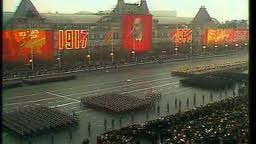
It’s the seventh of November and so, naturally, the anniversary of the October revolution that brought the Communist Party under Lenin to power in what was then Russia and soon became the Soviet Union.

October revolution parade. A bit too military for my taste
There is, of course, a perfectly prosaic explanation for why the revolution apparently took place in the wrong month, but it’s far too tedious to go into the details of differences between the Julian and Gregorian calendars. Much more amusing just to say that the October Revolution took place in November. And, since that’s one of the few amusing aspects of that event, we should cling on to any lighter side it may have. 

Besides, it probably symbolises rather well the way so little in the Soviet Union matched its claims or the hopes many had of it. Hopes, I might add, that many of us maintained long after any rational basis for them had gone, crushed under disappointment and brutality.

This particular seventh of November has a historical significance all of its own, though. Today, after all, the US electorate re-elected as president a so-called black man (half black, half white, so why should he be particularly black? But please don’t answer that question: it was entirely rhetorical). Getting Obama elected once was extraordinary, but giving him a second term, and against a white man of huge wealth, is almost its equal.

Four more years!
Now of course it’s up to him. Obama needs to let himself be Obama. He seems to have the compassion and the commitment to justice to do the job the US so desperately needs. Now he has to find the boldness to make those qualities stick, despite a hostile House of Representatives.

What an example that would set, even back here in Britain. It would do no harm to our would-be reformers to see what can be achieved with brains and courage.


Particularly since their time may not be that far away: because today’s also a watershed moment in Britain. We’re half-way through this parliament, half-way through the legal term of the Cameron government. 

I suppose this sets up another of those glass half-empty type tests: do you belong to the ‘parliament already half gone’ or the ‘parliament only half way through’ school of thought?

For my part, the milestone has a similar emotional effect as the 21st of December. That’s the point in the year when light has been cut back as far as it will go. From then on, the days start to get longer again, and I can genuinely feel that we’re on the way to spring.

Well, it’s the same on 7 November this year, knowing the election is scheduled for 7 May 2015. From now on, there are fewer days left to this government than we’ve endured already.


Don't worry, Dave: we can show you the way out
Now that and Obama’s re-election really gives me something to celebrate this October Revolution day.