Showing posts with label Christianity. Show all posts

Monday, 25 December 2017

Season's greetings. From somewhere else

Merry Christmas to you all! Christians, non-believers, believers of any faith or none – enjoy the Christmas break!

This is the time of year when I remember the wonderful experience my wife and I had in the predominantly ‘Indian’ part of Luton, the town where we live: one 24 December, we saw a queue that seemed to be made up of both Muslims and Hindus outside a (halal) butcher and Danielle, who talks to anyone, asked what the they were waiting for.

“Turkeys,” they replied, “naturally. People all around us are celebrating. Why wouldn’t you expect us to celebrate too?”

That’s the spirit in which I wish you a merry Christmas.

We’ve certainly been having a great time. For the first time, as far as I can remember – and I’ve had 64 Christmases – we went somewhere we could enjoy it on a beach. And that’s precisely what we did today, wandering along a glorious strip of golden sand as the Atlantic beat the shore next to us – and our feet: we didn’t swim but we certainly walked through the surf. What’s more, on the way back we were treated to sunset too, a most satisfactory way to wrap up Christmas Day.


A fine way to end Christmas Day
This was on Cofete Beach, on Fuerteventura in the Canaries. The name itself was part of the pleasure: it reminded us of one least harmful of Donald Trump's blunders, his tweet which read precisely “Despite the constant negative press covfefe.” 

Alternatively, it sounds like a waiter offering a choice of hot drinks: “Coffee? Tea?”

Either way, the name's fun and the place is better.

Now I know that my friends from the Antipodes – or friends who spent time down there – have all had the experience of Christmas on a beach. But to us it was new and delightful.

We had the meal, as befits a Catholic country, yesterday: the tendency is to celebrate Christmas Eve rather than the day itself. We didn’t have turkey but that wasn’t as new to us as the setting: we haven’t had that particularly dull meat for a great many years. Instead, we drove to restaurant (selected from Trip Advisor, of course) in the heart of Fuerteventura's main nature reserve.

There, surrounded by desert scrubland, bathed in sunlight and warmth, we had a leisurely meal of local specialties, cooked in olive oil and flavoured delicately with herbs. I hate to sound so unpatriotic, but we really didn’t miss the turkey at all.


Substitute for turkey. And much to be preferred
But it isn’t just the sun, the sea and the flavours that make me pleased to be here. I’m also glad to get away from the depressing atmosphere of Brexit Britain for a few days. In particular, and I feel embarrassed to use such a clichéd, indeed Dickensian, term in connection with Christmas, but it’s wonderful to be away from the humbug of its being a Christian festival in a Christian country.

Britain is far from a Christian country in religious practice, with barely one in twenty of the population regularly attending a church service. Nor, and this is far more important, is it a Christian country in its values: just in the last week we’ve read of a young man dying of cold in a Birmingham street and the children of the poor having a far higher likelihood of being hospitalised for conditions which shouldn’t require hospitalisation at all, such as asthma.

Children of the poor. Those who we should be protecting above all others. Children!

Most recently, there’s been the news that landlords are beginning to evict people on benefits, as a result of the introduction of the new system of Universal credit, which is leading to many failing to keep up their rent payments. Homelessness will rise. As though there weren’t far more than enough already.

Until we address those issues, until in fact we wean ourselves from belief in austerity, I don’t see how Britain can claim to uphold anything resembling Christian values. Christmas is just an excuse for binge drinking, binge eating and binge spending. Its Christian content has long since been lost and a secular celebration seemed more appropriate, or at least more honest.

So it’s good to be away from that pretence without foundation. Though sun, lovely beaches and delicious food help too. We’ve enjoyed our Christmas.

And it’s in that spirit too that I wish you as much fun this season as we’ve been enjoying.

Monday, 18 December 2017

Winter: season of contrasts. Some of them traditional

One of the few advantages of the short days in winter is that it’s not that hard to see both sunrise and sunset.

Sunsets are often breathtaking, even in winter.


Winter sunset in Wardown Park, Luton
But sunrise too can be extraordinary.


The sun rises over winter trees in People's Park, Luton
Indeed, bare trees in low winter sunlight in the middle of the day can be starkly striking.


Low but strong winter sun in People's Park
The contrasts that mark winter aren’t limited, though, to the physical world but affect human society too. Take, for instance, the tale of King Wenceslas, sung so often at this time of year in allegedly Christian nations. It seems he was quite comfortable enough to be able to stand at a window, of his castle one assumes, and look out even though the frost was cruel (or cru-el).

Doing so, he was able to spot someone from altogether the other end of the social spectrum: a poor man struggling through the cold to collect some winter fuel (fu-el).

Wenceslas was well enough off to be able to spare a few of the pleasures of life. So he could require his page to bring him flesh and bring him wine, and even a few pine logs hither, so they could go and see the poor man dine, when they bore them thither (or thi-ith-ther).

Now we like to maintain our traditions. And so we’ve preserved that one, at least in part.

I read today about a charity in the Wirral, in North West England, which makes up packages to give to poor people at this season. It’s common, when making Christmas presents to give out luxuries – electronic games, perhaps, or toys guaranteed to hold the attention of even the most spoiled child for minutes and minutes. But the group in the Wirral makes up hampers that include toilet rolls, toothpaste and sanitary towels, as well as toys.

These are not gifts designed only to enhance pleasure but to relieve want. Four years ago, this organisation handed out 70; this year they are handing out 3000. In the world’s fifth biggest economy in the world.

It seems the poor seeking winter fuel are still with us.

Another story made it clear to me that we still have the successors of King Wenceslas with us. Take the case of Jeff Fairburn. He’s the chief executive of a housing company called Persimmon. He’s done a fantastic job building the company’s profitability of the company, even if admittedly he had help from a government that poured in subsidies to companies like his to encourage the building of houses that the relatively wealthy can rent to the poor.

With that generous gesture by us all – let’s at least admire our Christian charity in helping out of pockets such fine companies as Persimmon – Mr Fairburn has been able to take a bonus worth £110m.

Now that may sound like a lot. But Britain’s biggest hospital, Bart’s in London, has a deficit of nearly £140m. Mr Fairburn’s bonus wouldn’t even cover all of it.

We have the poor. We have the wealthy. All we’d need to complete the tradition is to see the Wenceslas figure set out across the snow to help.

Ah, unfortunately, that’s where things break down. Mr Fairburn won’t be contributing to help Bart’s, for instance. I mean, he needs that money. He has a lifestyle to maintain, and it’s unaffected by the fact that people are lying on hospital trolleys for want of hospital beds or being denied treatment.

King Wenceslas we have still, it seems, but the latter day isn’t all that Good.

Still, at least we can enjoy the wonderful sights winter provides. As long as we’re not too ill to go wandering around our parks and streets. Or too busy trying to find a little food for our family – to say nothing of luxuries such as toilet rolls, toothpaste or sanitary towels.

Tuesday, 28 November 2017

The faith that moves mountains. But not apparently nations

The head of the Catholic Church visits a country which has a majority of Buddhists, representatives of a religion that is a byword for peacefulness and tolerance, but who are busily exterminating members of another of the world’s great faiths, Islam. The Pope carefully avoids naming the victims as Rohingya, because that might further inflame those gentle Buddhists and turn their attentions to Christians as well.
The Pope in Myanmar: don’t mention the Rohingya
Those Rohingya are members of a religion that believes that to save a single life is tantamount to saving the entire human race. And yet members of that religion, Islam – admittedly a tiny minority of it – seem to have convinced themselves that it is holy work to kill large numbers of people in its name.

The behaviour of that minority has inflamed many in the West into passionate Islamophobia. Some of those justify their hatred on the grounds that they are Christians, or belong at any rate to countries that are Christian in their roots. This is a curious notion, in many cases.

In Britain, for example, only around one in twenty people regularly attends a church service of any Christian denomination. But then, maybe they’re thinking of the underlying values rather than actual Church practice. Principles such as

Let him offer his cheek to one who would strike him

or

It is easier for a camel to go through the eye of a needle than for someone who is rich to enter the kingdom of God

or

Let the little children come to me, and do not hinder them, for the kingdom of God belongs to such as these

The first of those is a little hard to reconcile with Britain’s long love-affair with weapons, a little reduced these days but only because austerity is enforcing cuts even on the military.

The second is just as hard to reconcile with the other side of the austerity coin, which has been to enrich the wealthiest members of society still further, making it, I assume, harder than ever for them to get into the kingdom of heaven.

As for the third, that commitment to children is proclaimed by most Brits, but rather subverted by the discovery that the country has one of the worst rates of stillbirth in Western Europe. Why? Here are the words of Gill Walton, Chief Executive of the Royal College of Midwives:

We’ve got a real concern about staffing levels… we really need more staff and more capacity in order to safely care for mums and babies.

Austerity hammers children too, it seems. As we find in the recent reports that two-thirds of English children referred for mental healthcare remain untreated. And it’s not just children: refuges for women escaping domestic violence are being forced to close through lack of funding, hospital Emergency Departments are being increasingly staffed by unqualified doctors, and the hospitals themselves are, in greater numbers than ever before, facing bankruptcy without more finance.

It seems that our Christian values aren’t strong enough to insist on the support the vulnerable. Instead we prefer to elect and re-elect a government committed to serving the wealthiest by imposing these cuts on services that would otherwise protect the poor. Perhaps our supposed Christianity has nothing to do with the teachings of Christ, and merely provides a justification for our dislike of the other, the foreigner, the person from outside our community.

Faith without compassion. Whether in Myanmar, in ISIS or, sadly, in Britain.

Thursday, 23 November 2017

Black Friday and our sad mindset this side of the Atlantic

Black Friday is upon us.

It’s particularly remarkable on this side of the Atlantic. The Friday is black in the US because people are recovering from the excess of the Thanksgiving celebration the day before, or just need their morale boosted in the down that follows the high of a feast. Though behind that worthy goal lurks also the rather baser desire to make a lot of money by a day of sales in the shops.

In England, we don’t have the feast. We just have the Black Friday. The depression, in other words, without the celebration that led to it. But it’s still a wonderful commercial opportunity. Or at least shopkeepers hope so.

The problem arose because of the increasing disappointment of Christmas. This is the second most important feast of the Christian year. Believers worship the birth of Christ in December just as at Easter they celebrate the redemption of man through his agonising death followed by the miracle of his resurrection. Birth at Christmas, the even more glorious rebirth at Easter. .

Clearly, celebrating the birth of the Prince of Peace is a time for quiet reflection on the nature of God’s relationship to Man, the sacrifice of his incarnation and later death in pain for us all, and so forth. Where “so forth” covers over-indulgence in food and, above all, drink as well as the commercial miracle of a splurge of spending in the shops. Why, a great many retailers depend on Christmas for the bulk, if not the entirety, of their profits for the year.

Such are the benefits of a profound immersion in the spirit of Christian charity and restraint. An excellent arrangement. Serving God and Mammon, otherwise known as win-win.

Although it’s not that wonderful any more.

Britain has seen earnings falling for a decade already. There’s no sign of that ending any time soon, particularly following Brexit. Eventually, inevitably, loss of earnings power had to have an impact on spending patterns. Christmas just isn’t what it once was. Shops can’t count on it any more.

The answer was to find a way of incentivising expenditure at another time of year. And why not just a few weeks before? Adopting Black Friday seemed the obvious solution.

But we took it over without Thanksgiving. Meaning we have the depression not the celebration. The hangover without the party. 

What’s more, we don’t seem to be satisfied with just a single day of it, which after all is what the word ‘Friday’ would seem to imply. Oh, no. Ocado, which kindly delivers us our groceries, has gone for a long weekend of Black Friday. 

Ocado:
Black Friday from the 23rd to the 27th
And Debenham’s, the great department store, has gone for a whole week.

Black Friday week at Debenham's
This all seemed terribly British. After all, we are a nation steeped in the Protestant tradition. That teaches us that we are all, or nearly all, damned whatever we do, and life is a vale of tears. So when we take on a tradition from the US, why not take on the bleak and dismal bit, leaving out the part that might actually lift our mood?

But it’s not just British. I was in Italy over the last few days, and I noticed that even that great bastion of Catholicism has caught the Black Friday bug. Indeed, they too, perhaps out of increasing desperation over sales falling there as they are here, are wildly extending the understanding of ‘Friday’. In Turin, they’re going for a Black weekend.

Black Weekend in Turin
Maybe it’s a European phenomenon, not just a British one. Are we so short of confidence in our ability to emulate transatlantic flair and dynamism that we punish ourselves by taking on their harsher customs, and use them to try to dig ourselves out of our economic difficulties? Seems a bit of an indictment.

A sad thought. One to while away a Black Friday. As an alternative to spending the day in the shops.

Saturday, 9 April 2016

Faith can move mountains – or hearts. Or it can kill shopkeepers...

I’ve met many people who are improved by their religious faith. Somehow, the teachings of their beliefs improve their naturally good qualities.

Sadly, however, the exact opposite can also apply. There are many for whom belief, and in particular the belief that all their basest instincts are endorsed by a supreme power, only emphasises their worst characteristics. Indeed, they treat it as authorisation to act on them.

Asad Shah, who was murdered on Good Friday, was a Glasgow shopkeeper viewed with great affection by the community he served. He regarded himself as a Muslim but liked to keep lines of communication open to other faiths – not long before he died he used Facebook to post the message “Good Friday and a very Happy Easter, especially to my beloved Christian nation.”

A community grieving for Asad Shah's death
Their slogan? “This is not who we are”
He also liked to distribute personalised Christmas cards to his customers. That reminded me of my Jewish grandmother who used to exchange Christmas cards, each and every year, with her neighbour, for decades. The fact that one of them was Jewish changed absolutely nothing in a small gesture that was intended to communicate goodwill and bring a little happiness. To both of them.

The general form in murder cases is for the presumed perpetrator to deny everything, plead not guilty and struggle to get off the hook. In this case, however, the defendant, Tanveer Ahmed, has taken the unusual step of issuing a statement, in his own words, through his lawyer:

This all happened for one reason and no other issues and no other intentions.

Asad Shah disrespected the messenger of Islam the Prophet Muhammad peace be upon him. Mr Shah claimed to be a Prophet.

When 1,400 years ago the Prophet of Islam Muhammad peace be upon him has clearly said that “I am the final messenger of Allah there is no more prophets or messengers from God Allah after me.

“I am leaving you the final Quran. There is no changes. It is the final book of Allah and this is the final completion of Islam.”


Just to make a trivial point in passing, this communication makes me hope he isn’t the product of a British school system. Because if he is, it’s no testimonial to his teachers’ ability to teach him English.

The chilling part is the reference to Shah disrespecting the Prophet Muhammad. No wonder he had to die. Ahmed at the end of his statement tells us, “If I had not done this others would and there would have been more killing and violence in the world,” which is a glorious notion: he killed a man, by stabbing and beating him, in order to reduce the killing and violence in the world. That has all the rationality of NATO powers going to war to preserve international peace.

Mr Ahmed’s hatred was directed at the man who disrespected Islam, while claiming to be a Muslim. We hate no one as much as a traitor, do we? The man who turned his coat is far worse than the man who was always an open, avowed enemy.

To make things still graver, Shah belonged to a sect, the Ahmadiyya, whose members are not even allowed to refer to themselves as Muslims under the law of Pakistan. A man who persisted in calling himself a Muslim, though he belonged to a group deemed beyond the Pale by one of the world’s great Muslim Nations? No wonder he had to die. 

Especially if he disrespected Muhammad.

Treason, when it occurs in a religious context, has its own term: apostasy. And religious authorities who, down the ages, have never been reluctant to resort to fairly hideous forms of punishment, reserve the worst for the apostate. Catholics and Protestants burned each other with particular glee precisely because each side saw the other as traitors from inside the same Church, who had turned against it. Why, there was plenty of persecution even of Protestants by other Protestants.

Similarly, Stalin, despite having taken supreme power in what was then the Soviet Union, couldn’t rest until Trotsky had been murdered. Trotsky, reduced to a rootless exile, travelling from country to country until he found some kind of asylum in Mexico, thousands of miles from Russia and Stalin. Yet even there, Stalin could not bear to let him live, and sent in Ramón Mercader to see him off with an ice axe.

He contrived the murder in August 1940, the same month in which he signed the Nazi-Soviet pact. Stalin could shake the hand of Hitler, but couldn’t bear the thought that he was sharing the world with his old comrade from the St Petersburg barricades of 1917.

Just like Tanveer Ahmed, who couldn’t bear the idea that Asad Shah was drawing breath at the same time as he was.

Most of us take limited action against those we feel have betrayed us. A friendship ends. A professional relationship dies. Maybe a marriage leads to divorce. Generally, we stop short of violence. A long way short.

But when there’s a belief at stake? If what you’re doing is the will of God? Or, as in Stalin’s case – and Hitler’s – obeying the dictates of history? Why, what possible limits should you put on a righteous anger in the name of an unlimited cause?

As assuredly as Mercader wielded his ice axe, or the two sides of the Reformation wielded their bonfires, Tanveer Ahmed wielded his knife in the name of something they all saw as greater than themselves. Most often, against victims as hapless as Asad Shah. 

No wonder he had to die.

I know many people who have been helped to lead blameless, even praiseworthy lives by their beliefs. Unfortunately, however, belief can also have the opposite effect. Instead of intensifying the better instincts of man it can justify the worst – and sadly Asad Shah and his community have paid the price.

Saturday, 5 March 2016

Islamophobia and the unintended power of prayer

It’s always good to replace doubt by certainty.

I’m not sure whether anyone still believes that the basis of Islamophobia isn’t racism, rather than merely religious bigotry. Some perhaps cling on to that illusion. So an incident at Luton airport the other day is at least helpful in dispelling any such uncertainty.

Laolu Opebiyi is a British citizen living in North London. He’s also a committed Christian. I repeat: Christian, not Muslim. He belongs to a group called ISI Men. I repeat: ISI, not ISIS. ISI stands for Iron sharpens iron and is a reference to the Bible: “Iron sharpeneth iron; so a man sharpeneth the countenance of his friend” (Proverbs 27:17).

Unfortunately, sitting on a plane at Luton he used his phone to text members of his group to suggest a conference call prayer, and received a most unwelcome lesson of the effectiveness of prayer, in a wholly unintended way.

The passenger in the seat next to him was reading the text over his shoulder.

“What do you mean by prayer?” he asked.

The neighbour was soon asking to be let off the plane as he felt unwell. And a little later, Opebiyi was taken off it himself by armed police, who questioned him about his beliefs and demanded the password to his phone so they could check just what he’d been texting. They asked him to confirm that he was not only Christian, but had never considered converting to another religion.

The police quickly cleared Opebiyi of the damaging charge of religious belief with intent to be a Muslim, and said he could travel on. Then the pilot intervened, refusing to carry him. So he had to catch the next flight. Seven other passengers who’d left the earlier flight to avoid him realised that he was going to be on the one they were taking instead, and there was another bit of a scene.

Eventually, he got to his destination. But when he returned, his passport was refused by the e-passport reader and border staff questioned him again. As he told the Guardian:

Someone felt I was a terrorist because they saw the word ‘prayer’ on my phone and now I stand in uncertainty about my freedom of movement in and out of the United Kingdom.

I have nothing but sympathy for his view that:

Even if I was a Muslim, it was pretty unfair the way I was treated. I don’t think anyone irrespective of their religion should be treated in such a way. If we keep on giving in to this kind of bigotry and irrational fear I dare say that the terrorists will have achieved their aim.

An excellent point. The triumph of terrorism doesn’t lie in a bullet or a bomb. It happens in our minds and hearts.

Finally, here are some test questions for you.

What colour do you think Mr Opebiyi’s skin is?

Laolu Opebiyi: victim of Islamophobia.
Without even being Muslim
Do you still think that Islamophobia is all about the finer points of conflicting religious doctrines?

Aren’t we good in the West at illustrating our unshakeable commitment to the principles of democracy and human rights?

Thursday, 24 December 2015

A Christmas message to a "Christian" Britain. Seriously, Cameron?

David Cameron has shared his wisdom with us in his Christmas message to the UK. It seems that, here in Britain, we’re about to “celebrate the birth of God’s only son, Jesus Christ – the Prince of Peace. As a Christian country, we must remember what his birth represents: peace, mercy, goodwill and, above all, hope.”

Aaah. It’s touching isn’t it?

According to children’s charity Barnardo’s, 3.7 million British children now live in poverty. Infant mortality is 10% higher in poor families than among the rest of the population, and children under three in those families are two and a half times as likely to have a chronic disease. These children also tend to underperform at school, so the chances are that their children too will be brought up in poverty.

Not a lot of hope there. Not much goodwill towards them, either. And, with growth forecasts for the UK revised downwards, hope is shrinking fast too.


The spirit of Christmas Present.
As long as you don't actually need a present.
Just a month before Christmas, Cameron appeared in the House of Commons pleading for authority to take military action against the ISIS death cult in Syria. Meanwhile, in Afghanistan, where NATO is trying to withdraw to leave Afghans running their own affairs, six US soldiers died recently in an insurgent bombing, while British forces are being sent back into action in Helmand Province. They will be helping an apparently desperate struggle to save Sangin city, with no guarantee of a successful outcome.

So not much peace or mercy there. In fact, I’d rather hoped at the end of 2014, that this year might be Britain’s first without war since 1914; well, that didn’t happen. So this “peaceful” country has racked up something of a record: not a single year’s peace in 102.

Cameron has no difficulty mouthing sentimental platitudes about the country he leads, though they have nothing to do with the reality of the nation on his watch.

But then that’s obvious from his other words. He’s once again described Britain as a Christian nation. Clearly, this supposed Christianity has nothing to do with Christian values – as we’ve seen, there’s not much compassion for the poor, nor much desire for peace. But then there isn’t much evidence of Christianity in religious practice either: we heard only days ago that Anglicans are planning to close down certain churches since congregations have fallen to single figures in many cases. Overall, it seems that only about one in ten of the population attends a Christian church service on a regular basis.

That doesn’t stop many Brits describing themselves as Christian. In the latest census, 59% of people in Britain and Wales described themselves as Christian, and 54% in Scotland. The British Social Attitudes survey came up with a lower, and probably more reliable figure, of 46% Christians, against 48% describing themselves as irreligious.

Still, even that figure seems to overstate significantly the level of Christian commitment, compared to actual religious practice. Which maybe explains Cameron’s message: he joins the tradition of many of his compatriots, to be long on words and short on practice.

Cameron’s talk of peace, mercy, goodwill and hope is welcome. But given what he’s actually doing, it strikes me that getting much of any of them has to start with getting rid of him.

Now, that would be real note of hope to celebrate in this holiday season.

Monday, 19 October 2015

The bishops denounced the government that fawned on China that bought the companies that cripple the people...

There’s something wonderful about news stories that tumble in on top of each other, reinforcing each other and occasionally producing some delicious ironies.

So we recently had 84 Anglican bishops denouncing the “increasingly inadequate” British government response to the current refugee crisis. As well as being a welcome reminder that, however widely they may be shared, the xenophobic views currently in vogue are deeply immoral, the Bishops’ message also further undermines repeated claims by Tory Ministers to endorse Christian values.

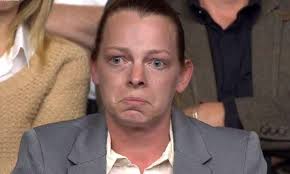
That came within days of some remarkable TV, when Michelle Dorrell, attending the recording of the BBC programme Question Time, launched a forceful attack on Tory Minister Amber Rudd.

I voted for Conservatives originally, cos I thought you were going to be the better chance for me and my children. You're about to cut tax credits after promising you wouldn’t. I work bloody hard for my money, to provide for my children to give them everything they've got - and you're going to take it away from me and them. I can hardly afford the rent I've got to pay, I can hardly afford the bills I've got to do, and you're going to take more from me. 

Shame on you!


Michelle Dorrell: denounced the betrayal by the Tories she trusted
It was a powerful denunciation of a betrayal Labour predicted before the General Election. What a sad indictment it is that the Tories were able to dupe people like Dorrell, saddling us with Conservative government for at least another four and a half years. Dorrell, it seems, has learned the lesson and decided to vote Labour next time; to those who haven’t, I’d merely pick up her closing words “Shame on you”, and repeat the old American saying: fool me once, shame on you, fool me twice, shame on me.

On top of that, we have the edifying sight of Conservative Ministers – first George Osborne visiting China, now David Cameron with China’s leaders here in Britain – fawning on the Chinese. It seems the Conservatives want to hitch the British economy to China’s, so that it can draw all the benefits from such an advantageous relationship. Cameron is famously lazy; perhaps he hasn’t got round to the reading the recent briefing papers warning him that China’s economy’s slowing down.

The obsequiousness towards China has an ironic quality. The Tories are deeply opposed to state ownership of industry – or at least, they are if the state is British, which is a little odd, since they tend to be on the nationalistic end of politics. They’re apparently more than happy to invite the Chinese state to take positions in some key industries in Britain, notably in the second high speed railway line and more questionably still, in the nuclear power industry.

They seem happy with French state industries, too, buying into the British economy.

It appears that it’s only the British state the Tories distrust which, considering they run it, may say a lot about them.

One part of the state they’re running particularly badly right now is the National Health Service. It’s facing a financial crisis of historic proportions. The latest horror story is that neonatal intensive care units are unable to provide adequate staff cover any more. Terribly vulnerable infants – babies, mind – are at risk of death thanks to government policies.

A lot of the deference to China flows through the Foreign Office. So it was instructive to read of the cleaners there who wrote directly to the Minister – Foreign Secretary Philip Hammond – to complain about the lamentable wages they’re paid.

The cleaners aren’t employed by the Foreign Office but by a subcontractor, Interserve. Hammond passed the letter on to them. The cleaners now face disciplinary action and several of them, including their spokesperson, redundancy.

Michelle Dorrell got it wrong when she voted Tory. Perhaps it’s time for a lot of people to wonder whether they got it right when they go along with Tory Trade Union bashing. It seems that if you need any kind of help, you need someone powerful in your corner: the Labour Party or a Union.

Because while they may fawn on foreigners with a lot of money, the Tories certainly don’t have the time or the inclination to look after the less fortunate at home.

Even though they like to call themselves Christians…

Friday, 4 September 2015

A quick lesson in Christianity to its eager protectors

With 3.8 million people displaced from Syria by war, terror and despair, Slovakia has generously decided to accept 200 refugees. But, it specifies, only Christians.

It’s an interesting notion. You make a gesture of purely symbolic charity but, in the same breath, demand adherence to Christianity. I’m no Christian, but I’m friends with a great many, and I believe they would none of them recognise the principles of their faith in that behaviour.

Behind the restriction to Christians lies something else, which is the desire to repel Muslims, seen as invading hordes. That was made more explicit by the estimable and hard right Prime Minister of Hungary, Viktor Orbán. Incidentally, this is a man worth watching if ever you wonder what a government led by Britain’s own far-right Nigel Farage would be like, since Orbán’s party is the Hungarian equivalent of UKIP. He has, for instance, enlightened us on the nature of tolerance for minority communities, in this case homosexuals:

Tolerance ... does not mean that we would apply the same rules for people whose life style is different from our own.

He has now announced that Hungary, in trying to block refugees from entering in the first place, and rounding up and interning those already there, is protecting “Christian Europe” from Muslims.


Don’t see migrants. Or even refugees. Just people
Hungary spent a couple of centuries, from the sixteenth to the eighteenth, within the Turkish Ottoman Empire. I was amazed on visits to Hungary to find how little trace remains of the Turkish presence: in a church that had once been a mosque, I was pointed to a niche which might once have been a Mihrab, the structure that tells Muslims the direction of Mecca; in the provincial town of Eger I saw (and indeed climbed) a minaret, which is all that remains of the mosque there.

No, Hungary has turned its back on its Muslim past, unlike Spain where it is treasured and indeed claimed, on sometimes dubious grounds, by large numbers of people (but woe betide any Muslim who tries to worship inside the great mosque of Cordoba, now a Christian place of worship: the security guards will pounce and escort the believer out). 

Clearly, Slovakia and Hungary regard Islamophobia as legitimate, laudable even.

Further West, we try to hide our own anti-Islamic feelings, but they’re certainly running strong, however partially hidden they may be. But what is even more striking is the extent to which our leaders seem to share the Christian notions of their counterparts in Central Europe. So our reaction to migrants trying to reach Britain from Calais is not to identify the genuine refugees and let them in, but to put razor wire to keep everyone out. David Cameron has so far allowed 216 Syrians into Britain under a scheme to take refugees from that country; he now intends to increase the number to several thousand (where I suspect “several” is a relatively small number).

In other words, faced with fellow human beings in trouble, Orbán’s “Christian” Europe, or large parts of it at least, react with rejection and meanness.

David Cameron claims that Britain is a basically Christian country. So let me remind him of the parable of the Good Samaritan. The background to the story is that someone has correctly told Jesus that the key law is to love your neighbour as yourself. When he goes on to ask who his neighbour is, Christ answers (in the words of the New International version of the Bible, less poetic but more comprehensible than the King James version):

A man was going down from Jerusalem to Jericho, when he was attacked by robbers. They stripped him of his clothes, beat him and went away, leaving him half dead. A priest happened to be going down the same road, and when he saw the man, he passed by on the other side. So too, a Levite, when he came to the place and saw him, passed by on the other side. But a Samaritan, as he traveled, came where the man was; and when he saw him, he took pity on him. He went to him and bandaged his wounds, pouring on oil and wine. Then he put the man on his own donkey, brought him to an inn and took care of him. The next day he took out two denarii and gave them to the innkeeper. ‘Look after him,’ he said, ‘and when I return, I will reimburse you for any extra expense you may have.’

Who was the neighbour? “The one who had mercy on him.”

The Samaritan was not of the same Community as the injured man, but he helped anyway. As though, say, we looked at Syrian refugees and saw people, not Muslims, not Syrians, not migrants. And because they were people, we helped them. Even if they were gay.

That would be behaving as Christians. That kind of Christianity would be worth protecting. But don’t count on the Orbáns or the Camerons to step forward to do it.

Thursday, 31 October 2013

Christian truth and importance

On a visit to Cambridge, I had a flier pressed into my hand by a campaigner for a Christian evangelical organisation. 

It announced a series of lectures on the legacy of the novelist and outstanding Christian writer, C.S. Lewis, whose words it proudly quoted:

‘Christianity, if false, is of no importance, and if true of infinite importance. The only thing it cannot be is moderately important.’

This is a striking illustration of the notion that a statement needs only to be made sententiously to carry weight. If it is attributed to a man of recognised authority, its significance and profundity seem proved beyond challenge. But it equally demonstrates that however brilliant and authoritative you may be, you’re not proof against fallacy, especially a fallacy that seems to reinforce your preferred position.

C. S. Lewis:
proof that not even brilliance is a guarantee against fallacy
In this case, Lewis is indulging in an excluded middle. There are, after all, other possibilities than the two alternatives he presents. Just for the sake of argument, consider one of them.

What if Christianity happened to be false but was still followed by 3.3 billion people around the world? That’s the number who regard themselves as Christian and they would be, if the religion is false, victims of a major illusion. Now that may not make Christianity infinitely important, but the sheer number of believers in an error would mean we couldn’t regard it as unimportant either.

Perhaps we might toy with the idea that its importance lay somewhere between the two extremes Lewis offers us.

Might we in fact not think that, in these circumstances, Christianity was moderately important?

Whatever Mr Lewis might have to say on the matter. 

Saturday, 14 September 2013

The UN looks askance at a 'Christian' country

When even the United Nations, that accommodating organisation, starts to wonder about the inhumanity of Britain’s behaviour towards its own people, you might think it was time to get worried.

Raquel Rolnik: speaking with the authority of the UN
about the seamier side of the UK
Not, it appears, if you are a member of David Cameron’s government. It has reacted with fury to the suggestion by UN special rapporteur on housing, Raquel Rolnik, that the government’s ‘bedroom tax’ might be an abuse of human rights. One cause of the government’s anger is the use of the expression ‘bedroom tax’: it prefers ‘spare room subsidy.’ 

It applies to people who are living in accommodation funded by benefit. If they are deemed to have a room more than they need, they are now being ordered to leave the accommodation they are in or accept a cut in their benefit. At a time when there is a dearth of single-bedroom accommodation, very few can move.

So instead they have to see their benefit cut, and therefore either reduce their expenditure on luxury items such as food, or incur rent arrears which will eventually gets them evicted and made homeless.

It’s no wonder the government has reacted so harshly to criticism from such an authoritative source. Deep in what passes for its heart even it must know that, among many callous policies it has inflicted, this is one of the cruellest.

In a Twitter argument on the subject, a supporter of the government retorted to me ‘she [Rolnik] made up crap and blabbed on about Human rights while ignoring the rights of taxpayers.’ I don’t believe that many could honestly believe that a few pounds a year of extra tax can be weighed against the suffering that imposed homelessness will cause among people already poor, many of them disabled.

This should be particularly true in a country of which the Prime Minister David Cameron himself said ‘we are a Christian country and we should not be afraid to say so.’ The debate has been lively down the ages about just what makes a Christian, but to throw the poor onto the street to save the wealthy small change, would probably be regarded by most as not fitting fully into the gospel of love.

Curiously, one of the great debates about the nature of Christianity took place with a Jewish scholar of whom, to my shame, I knew nothing until recently. A leading rabbi from Barcelona, Moses Nahmanides, known as Ramban, took part in a public ‘disputation’ in which the central question was whether the Christians were right to believe that the Messiah had already arrived, in the form of Jesus, or whether the event was still to come, as claimed by the Jews.

'Ramban', Moses Nahmanides, honoured in Israel today
He came up with what surely must be the killer argument. 

The arrival of the Messiah was to usher in a time of peace and prosperity. And, well, frankly, there hadn’t been much sign of any such thing since the birth of Christ. Indeed, Nahmanides argued, it was the Christians themselves who seemed the most bloodthirsty of all the peoples.

He said all this in 1263. We hadn’t yet had the great persecutions, not just of Jews but of fellow-Christians, in the middles ages and renaissance. We hadn’t seen the great battles over enslavement of African peoples, and the great, bitter, cruel civil war to which it led in the United States. We hadn’t seen the monumental butcheries of two World Wars and the horror of the holocaust.

In all these terrible events, Christians have often played a central role, as perpetrators and often as victims.

Why, even at a reduced level today, around the world, who seems to be the first to reach for the gun or the bomb? Isn’t that just what the most recent debate about Syria has been about? Nahmanides would surely have recognised the bloodthirstiness, the unwillingness to practice self-restraint of so-called Christians today, so little different from what happened in his day.

He would also have recognised Rolnik’s case. She has spoken out for the weak and suffering; the mighty have replied with contempt and bitterness. She spoke against the driving of vulnerable people from shelter; Nahmanides paid for his courage and the strength of his arguments by being driven away from home and family and having to run to Jerusalem and the protection, ironically, of the then Muslim rulers of the holy land to live out his last few years.

Britain ‘basically Christian’? Well, perhaps Cameron and his friends are indeed what Christians have all too often been, and still are. What Rolnik has shown is that they are very far from what Christian doctrines of love might have taught them to be.

Wednesday, 12 December 2012

Gay Marriage: Christians show their love

Isn’t it fascinating that there’s such fierce opposition to the legalisation of gay marriage?

The Bishop of Leicester tells us that the move is leading to divisions between politicians ‘and the vast majority of practising religious people’ in this country.


Tim Stevens, Bishop of Leicester
Spoke out for the offended majority of believers

That was quite interesting because there’s been a lot of talk this week about the findings from the latest census, held last year. It showed, for instance, that those who regard themselves as ‘Christian’ are now down to 59% of the population of England and Wales. 

The second biggest group, dwarfing all the minority religions combined, is those who classify themselves as non-believers: they’re now up to 25%.

But those who call themselves Christian are by no means all particularly assiduous in their practice. Other studies show that only about 15% of the people attend church regularly – and that doesn’t mean weekly, just once a month or more.

My suspicion is that ‘the vast majority of practising religious people’, for whom the Bishop of Leicester chose to speak, would come to around 10% of the population. And gay people probably represent around 6%. So we
’re faced with two substantial though hardly huge minorities, one of whom we have to offend to please the other. What a dilemma. 

Except that it isn’t, really. After all, no-one’s trying to force the Bishop of Leicester to contract a gay marriage. Apart from anything else, he’s been in a straight one for nearly forty years and it would be a bit unfair to his wife. This whole business really isn’t about foisting anything on people who don’t want it – most of us can stick to straight marriage, just as we did before – it’s about allowing it for people who do.

Christianity is based on the fundamental principle that God is Love. If someone wants to do something which affects no-one else, how could Christians, under the injunction to love their neighbours, possibly refuse them the right? Why, if they did that, you might think they’d want to impose their beliefs on people who don’t share them.

Surely Christian believers would never behave that way, would they?


Tuesday, 31 July 2012

How the NHS showed up my Olympic fickleness

It seems I have to confess to a certain fickleness. Or perhaps even double standards. Not hypocrisy, though, nothing that strong.

For weeks I’ve had barely a good word to say for the Olympics. I loathed the hype. I loathed the celebration of corporate values. I loathed the way the rest of us trying to use London were being pushed around.

So my position was clear. Perhaps I’d watch a bit of the occasional event, if it seemed interesting, but otherwise I was going to maintain my position of superior detachment.

And then came the opening ceremony. Obviously I wasn’t going to watch that. It would be far beneath me. 

‘Shall we watch the opening ceremony?’ said Danielle.

‘Why, yes, of course,’ I heard myself answering. With no connection between cynical brain and emotional mouth.

And from then on the emotion just grew. That section in the middle? The NHS bit? I had a lump in my throat. Nurses and patients taking part. Some of them had spent 150 hours in rehearsals. And it was a tribute to the NHS itself and the icon for it all was Great Ormond Street Hospital, Britain’s premier hospital for children. 

The NHS at the Olympics
How could I possibly avoid the emotion? Because we love our NHS over here. We love the idea that whoever we are, whatever our status, however much money we have or how little, if we get sick the NHS is there. Sure, other systems can deliver healthcare that’s even more effective, even more technological, even more expensive. But we know, with all its defects, we can count on the NHS to look after us.

No wonder Conservative MP Aidan Burley denounced it on Twitter as ‘leftie multicultural crap’, only to be denounced himself, by his own party leader David Cameron, as ‘idiotic’. Which is amusing considering that few of us would view the top of the party as much more intellectually gifted than the bottom.

Burley’s denunciation is completely characteristic, though as always amazing. The Right likes to think of itself as the repository of Christian values, but what could possibly better express the values of the Good Samaritan than an organisation that helps people when they need it without any question as to their means?

By then, of course, I was completely hooked. I watched rest long after Danielle had gone to bed. Since then I’ve seen a lot more of the games themselves than I intended.

My only excuse is that this is typically English behaviour. We like to strike an air of disdain, but the reality is that we’re as sentimental as the best of them – or perhaps the worst of them – and the detachment is really only a defence.

But it does look like terrible inconsistency. Not hypocrisy. But perhaps a little fickleness.

‘Well, I insist on a blog post. Come clean. Admit it to the world,’ said Danielle the next day.

So this is it. My confession. Have I atoned sufficiently?

Sunday, 29 July 2012

On Twitter as everywhere else: try to see the lighter side...

What a relief that Paul Chambers’ conviction for sending a ‘menacing electronic communication’ on twitter has been overturned.

If the first casualty of war (or terrorist threat) is the truth, then the second is the sense of humour. Chambers wanted to visit his girlfriend, but when he turned up at Robin Hood airport (hard to believe that
’s a real place and not a joke itself) he found it shut. He sent out a tweet saying that he’d blow the place up if it didn’t reopen, and the next thing he knew he was a convicted criminal. 

Though not any more, I’m glad to say. 

Nearly thirty years ago, one of my sons, then 12, became so frustrated at how he’d played, or more precisely failed to play, a point in a squash game that he hammered his racket against the floor.

‘If you’ve broken that, I’ll break you,’ I growled. Menacingly. 

One glance at his expression told me had. But I didn’t. Instead I collapsed in laughter, astonished that he’d had the strength to break a racket that easily. We found another and finished our game. 

But what if someone like the people who convicted Chambers had been listening? Can you imagine the interviews with social workers, with psychiatrists, with the police? It would have been a clear case of child abuse. Or at the very least menace of child abuse. 

Chambers’ tweet may not have been particularly funny, but surely it was of the same order as my outburst. A cry of exasperation, above all not to be taken seriously. 

It’s part of the difficulty of learning to cope with the internet. We are still in the pioneering stage of the technology. Christianity, for instance, has been around the best part of 2000 years (though it sometimes feels a lot longer) and even it took three centuries to become truly established, as a state religion.

I often think about that. The day Constantine turned all those bishops and priests into representatives of the Roman Empire and gave them a nice state apparatus to play with. At last they had the tools to serve an all-loving God properly. They could send real soldiers round to the houses of people who called themselves Christian but thought, say, that God the father might be greater than Christ the son, and they could burn them on real bonfires. It must have felt like a coming of age.

Incidentally, my behaviour on the squash court shows I’d have been on a bonfire: I evidently think the father is superior to the son. 

The internet by contrast has only had fifty years. No wonder it's still feeling its way. And Twitter’s even more recent.

Still feeling it's way, still feeling my way

Twitter is where people who’ve never met can converse in messages 140 characters long. It’s fun, because writing anything moderately meaningful and grammatical in 140 characters is one heck of a challenge.

As you exchange messages you get to know some people better. But it’s still limited. After all, a real physical meeting might start something like this:

‘It’s a real pleasure to to get to know you, I’ve heard such a lot about you already.’

‘Oh, most of it’s true. I really am just the kind of person my detractors say I am.’

‘Yes, I can see that. Someone who thinks self-deprecation will diminish the impact of character flaws.’

Now even that has consumed enough for two tweets, and there’s another 58 minutes left of the interview (I didn’t get the job, by the way).

What this means is that while you can begin to know and like some people on Twitter, the reality is that with most, your acquaintance will be slight to non-existent.

A few days ago I made a casual reference to the parties who compose the present British government as the ‘ConDems’. It’s a term used with glee but no affection by detractors, built by conflating the names of the coalition partners, the Conservatives and the Liberal Democrats or 
‘Lib Dems’. 

The way it sounds gives it good strong negative connotations, so it works well as a term of abuse. To me that makes it a good play on words, and since I like words far more than I like these politicians, I enjoy using it.

Imagine my shock, then, when a Twitter follower told me that using the word ConDem is an ‘immediate unfollow offence’. The implication seemed to be that the brutality with which he was divorcing me would deliver a salutary shock, teaching me to mend my ways. And yet I barely know the guy from Adam, except that I vaguely remember that his name might actually be Adam.

Out of courtesy I explained my position but that only seemed to goad him to further paroxysms of righteous irritation, so I wished him well and returned his favour of unfollowing me by unfollowing him.

It feels to me that something is still missing from Twitter and its devotees (among whom I count myself). A form of etiquette? A set of conventions or protocols? Or is it perhaps simply an ability to lighten up a little?

A lesson to be learned by 
Paul Chambers’ prosecutors in their reaction to Twitter. But also, I would suggest, by some of the users of Twitter themselves.

Monday, 23 July 2012

Donne punning

I've always loved the Tom Lehrer line, ‘it’s a sobering thought that when Mozart was my age, he had been dead for two years’. 

It was just as chastening for me to discover this morning that I’m the age John Donne was when he died. I’ve thought it through, and on balance he probably achieved more in his 59 years than I have in mine.

Not, of course, that I would in general compare myself to Donne. After all, I don’t have the slightest pretension to be thought of as a poet: whatever I write, and whatever it’s worth, it’s strictly prose not verse.

But in one respect I’m like him: I love the simple pun. My readers can attest that I take great pleasure in puns, perhaps rather more than they do. But Donne was a master where I’m a mere dabbler.

John Donne: master of the pun
Donne was a love poet and he lived his life with the intensity that informs his poems. A promising career in diplomacy beckoned when he fell in love with Anne More, niece of his then patron. Ann and John married with neither her uncle’s blessing nor, more seriously, her father’s.

Though Donne would recover his father-in-law’s goodwill eight years later, his unauthorised marriage killed his career hopes, prompting his punning remark, ‘John Donne, Ann Donne, Undone’.

He continued writing love poetry, including the magical To his mistress going to bed, with the glorious couplet:

License my roaming hands and let them go
Before, behind, between, above, below.

It’s interesting, and not a little attractive, that the ‘mistress’ of his title was his wife.

Following Ann’s death, unsurprisingly after childbirth – when it came to eroticism within marriage they set the bar high, and had twelve children in sixteen years – Donne focused increasingly on divine themes. He wrote often of his sense of sin, and of his hope of winning God’s mercy coupled with his fear of missing it.

You don’t have to be a Christian yourself to be moved by this writing, for instance in the three verses of A Hymn to God the Father. The middle verse goes:

Wilt Thou forgive that sin which I have won
Others to sin, and made my sin their door?
Wilt Thou forgive that sin which I did shun
A year or two, but wallowed in a score?
When Thou hast done, Thou hast not done,
For I have more.

It’s better to listen to the words than to read them, because then you can't tell whether they’re saying ‘when thou hast done’ or ‘when thou hast Donne’.


And is he saying ‘have more’ or ‘have More’? It was his overwhelming love for Ann More that opened his way to great love though, he would doubtless have argued, also distracted him from its divine form.

The last verse is:

I have a sin of fear, that when I have spun
My last thread, I shall perish on the shore;
But swear by Thyself, that at my death Thy Son
Shall shine as he shines now, and heretofore;
And having done that, Thou hast done;
I fear no more.

He appeals to God to give him the light of Christ, his son, who is also his shining sun. If God will do that, then he will have Donne, and the achievement of Donne's hope will banish fear. And is that not also a fear of More? Of the object of an earthly love which might have prevented him achieving the divine love he longed for?

Now that’s the way that I’d like to pun. Sadly, though, I'm not convinced that even another 59 years on Earth could teach me how.