Showing posts with label Lenin. Show all posts

Monday, 3 February 2020

Travelling with a storyteller on a night train from revolution

If I remember, I had to run for the train. Miss it and I’d be travelling through the night, or waiting until the following day. This train would get me there after midnight, but at least well before breakfast time.

I was heading for Hull, in Yorkshire, from London. If I was late, it was probably because this was the time, forty years ago, when I was heavily involved in activism for the far left, and I’d been busy forwarding the revolution. A revolution which, in case you hadn’t noticed, didn’t happen despite my efforts. I was convinced it would, but in a top-down Cult, you can convince yourself of anything.

It was a time when I read quite a few books of Lenin’s. I remember almost nothing about them, just that they were stiflingly boring but had sonorous titles.
Far from difficult to put down
And eminently forgettable
One title I liked was The Proletarian Revolution and the Renegade Kautsky. Few people today have any idea who Mr Kautsky was, and fewer would feel it worth spending thirty seconds on Wikipedia to find out. But Lenin wrote ponderously against him, itself a characteristic of the hard Left: it spends far more time denouncing its ‘renegades’ and ‘traitors’ than its enemies.

When it comes to wiping those backsliders out, I reckon a cruel but effective method would have been to start reading them Lenin’s works. They’d be begging for the firing squad in no time at all. Or at least for a pen to sign any confession put in front of them.

Another title that sticks in my memory is Left Wing Communism, an Infantile Disorder. I remember not a word of the contents, but the title remains relevant today: there is something infantile about the far Left, to which I then belonged. But, like St Paul, when I became a man, I put away childish things. Then, however, I saw things as through a mirror darkly, and felt sure, as do so many today who should know far better, that wishing for change yourself was enough to make it happen.

I was on my way to Hull to see a fellow wishful-thinker of the Left. However, since she was also my girlfriend at the time, I don’t think the activity for which we were getting together was exclusively the advancing of socialism. Which was another reason, I suspect, why I was anxious to get there before tonight had become irretrievably tomorrow morning.

In my hurry, I’d taken no reading material with me. Not even Materialism and Empiriocriticism, which wouldn’t have been the best way of passing the time on the journey (what on earth does the title mean, anyway?), but might have been better than just looking out of the window. Fortunately, a fellow passenger in my compartment took pity on me.

“I’ve just bought two books. You can read this one, if you like.”
Practically impossible to put down
and far more memorable than Lenin
It was Nevil Shute’s The Chequerboard. I’d never read any Shute before. I’d probably never even heard of him. But within minutes, I’d fallen for the story and simply couldn’t put it down. In fact, handing the book to the generous passenger when he left the train, was a painful experience. It took me a while – well, I had a revolution to organise and more Lenin to read – but within a few months I found the time to pop into a bookshop and buy a copy of the book, to finish it.

The thing about Shute is that whatever you think of his writing, he was an extraordinary storyteller. And in The Chequerboard he gives that skill plenty of scope: as well as the protagonist’s own story, the framework for the novel, we get the stories of the three men he sets out to track down. They’re finely constructed, compelling tales, a pleasure to read at any time, especially in a train running through the featureless landscape of night-time England.

The kindness of the stranger in my compartment is a memory I treasure. So is my pleasure in reading Shute. I’ve consumed a great many of his novels since then, and re-read several of them many times, though none so much as The Chequerboard.

My daughter-in-law Sheena, knows how much I like the book. She also knows that I’m working to improve my Spanish. So, when she saw a copy of Tablero de Damas, the 1951 Spanish translation, she snapped it up for me.
Found for me by Sheena in Madrid
where she lives with my son and new granddaughter
As she says, there’s something to be said for reading a book you already know, in a language you’re trying to learn: you don’t have to struggle to understand the story and can concentrate on the words. Since they’ve been written by a native Spanish speaker, I’m sure they’re good enough to help me with the language.

Although what gives reading the book additional spice is seeing how awful the translation is: librero (bookseller), for instance, for ‘bookmaker’ (someone who takes bets, for instance on horse races), of ‘cutting corns’ (removing calluses of dead skin) rendered as selling agricultural products.

But that just makes re-reading the book all the more fun. As does the memory of the strange times, and the kind circumstances, in which I read it for the first time. Especially as it was so much more entertaining than my usual reading.

Thank you, Sheena. Thank you, Spanish translator. Thank you, stranger on a train.

And thank you, of course, Nevil Shute.

Tuesday, 7 November 2017

Centenary of a revolution. Or coup d'état

November the seventh. The centenary of the October Revolution.

Yes, yes, I know. October. On 7 November because the Russians were a bit late switching from the Julian to the Gregorian calendar.

Lenin addressing a revolutionary crowd
When I first became interested in that portentous event, it had not long before celebrated its fiftieth anniversary. At the time, I accepted its description as a “revolution” and also believed that it had represented the seizure of power by a whole class, the working class of Russia, laying the groundwork for the introduction of socialism. Things had gone astray since but there was still hope that the course could be corrected and the promise of 1917 realised.

Nearly half a century on, I’ve had time to review my early impressions, correct some fairly crucial errors of perception, and fundamentally revise my opinion.

First of all, it was no revolution. That implies a fundamental change in society; in reality, Russia went from an autocracy oppressively run by a self-serving hereditary elite, to an autocracy oppressively run by a self-serving self-selecting elite.

Secondly, it was no revolution. This was not an uprising of the working class against oppression. Lenin never commanded a majority of the working class, but he had a wonderful theory to get around that problem: he proposed that though it was the revolutionary class, not everyone in it was as revolutionary as all the others. Instead, in his world view, there was a vanguard of the proletariat that understood the true working of history (which was to put Lenin and his pals in power) and would lead the rest of the working class to understand that truth. Finding a majority among the vanguard was easy, since the vanguard was by definition made up of those enlightened elements who’d realised that the Bolsheviks and Lenin were the best friends they’d ever had. That kind of sleight of hand is still popular, in groups of left and right alike, when they lack majority support outside their own narrow confines.

Thirdly, it was no revolution. Lacking mass support, what Lenin found was a God-given, or in his outlook, historically-inevitable opportunity in the chaotic conditions created by the government of Alexander Kerensky. With a small armed group and in the face of the impotence of the authorities to block him, he seized power in what he called a revolution but anyone else would call a coup d’état.

There was far more continuity than change across the dividing line Lenin and the Bolsheviks drew in 1917. Change came later, but it was one of degree, not of kind: the Bolshevik autocracy descended into bloodier oppression than ever previously seen in the long and blood course of Russian history. As many as 60 million Russians may have been put to death under the regime that followed Lenin’s, when Stalin mounted his own coup against the leaders of the first. Lenin died too soon to see it, which may have been fortunate: he might well have ended his life in gaol had he survived: he would have meant a constant embarrassment to Stalin, a reminder that he didnt lead the uprising.

For if the October “revolution” was led by Lenin and his pals, it didn’t only include pals of his. Stalin, whose name meant man of steel, was a friend of no one but Jughashvili (his real name). It’s likely that his regime killed more people than the Nazis though, to be fair, it did have considerably longer.

Among his victims were leaders of the “revolution” that put him in power.

Bolshevik leaders
Indluded are Rykov, Radek, Zinoviev, Kamenev and Trotsky,
all put to death by Stalin – who’s nowhere to be seen
Not, then, an event to be celebrated with unmitigated cheer. I shall, I’m sure, raise a glass tonight, since I shall be with colleagues. But it’ll be to their health and mine, not to mark the centenary.

Of the October coup d’état.

Thursday, 7 November 2013

October revolution: good to commemorate, not to celebate

Today’s the 96th anniversary of the October Revolution, as you might expect since it’s the seventh of November. 

It’s a measure of just how deep ran the refusal of Tsarist Russia to reform, that nearly two centuries even after conservative Britain, it had failed to align its calendar with the Gregorian version used by the rest of the world. It therefore regarded the day of the revolution as the 25th of October. 


Since the word ‘Tsar’ is derived from ‘Caesar’, I suppose it might seem appropriate that they stuck with the Julian calendar, called after the Julius who made the word ‘Caesar’ synonymous with imperial power.

The revolution was fought on a slogan of ‘bread, land and peace.’ In the middle of the First World War which Russia was well on the way to losing, and losing big, these were three things that the regime couldn’t provide. Lenin, always quick with the ingenious, even devious, stratagem felt this made the slogan revolutionary: if the regime couldn’t meet a demand agitating the whole people, they would bring it down.

The reasoning sounds plausible, except that for the next eighty years the new regime wasn’t particularly good at delivering bread or land, and didn’t manage peace all that well either. On the contrary, what it chiefly accomplished was to wipe out a great many more people than even Nazi Germany (but then, to be fair, the Soviet Union did have seven times longer) and to create a wonderfully privileged über-class, the ‘Nomenklatura’ of named senior Communist Party executives who enjoyed lives of luxury while the rest of the population queued for basic commodities.


Vladimir Lenin.
Inspiring, perhaps, but what did he actually deliver?
To picture what the Nomenklatura was like, just think of leaders of the similarly named Communist Party in China, or bankers and Fortune 500 executives in the West.

So the October Revolution led to no sunlit uplands or the achievement of any ideals. On the contrary, it degenerated into brutality and sordid corruption.

The result was that the end of regime was greeted with a new burst of joy when it followed the fall of the Berlin wall in 1989. Once again, optimism abounded amid worldwide celebration.

Russia seldom seems to be out the news these days. Run with an iron fist by Vladimir Putin, it attracts a lot of attention. For instance, for the kind of friends it likes to pick, such as President of Assad in Syria, a key Russian ally even when he gasses his own people.

Meanwhile, we follow with appalled fascination the tale of the Bolshoi ballet dancer, in court accused of throwing acid into the director’s face. That’s hardly the kind of ethereal beauty once tends to associate with that particular art form.

Elsewhere in the Moscow court system, nearly eighteen months after the street protests against Vladimir Putin’s contentious re-election as president, some of the rank and file – not the leaders – have at last been brought to trial. Long periods in remand, small hope of fair treatment, and the targeting of ordinary protesters is a sharp way of making clear that getting involved in any kind of protest against the regime is bad for your health in today’s Russia.

Meanwhile Nadezhda Tolokonnikova, the Pussy Riot singer condemned to hard labour for having offended right-thinking Putinites and the Orthodox faithful by a protest inside a Moscow church, has disappeared from sight and is now believed to be on her way to a prison even more remote from family and friends and above all far from any media attention. Four time zones and 2000 miles from Moscow, deep in Siberia, her treatment feels like nothing so much as the kind of exile the Tsars liked to inflict on anyone with the temerity to oppose their rule.

Nadezhda Tolokonnikova
Victim of the latest Vladimir, Putin's reincarnation of the Tsars
Ninety-six years after the Russian Revolution and twenty-four from the fall of the Berlin Wall, it seems that progress has been limited and glowing expectations dashed. A chastening thought as we remember those stirring events in Petrograd all those years ago. They’re worth a brief commemoration, but not, I think, a glass raised in celebration. 

After all, Russia continues to present an image that is always fascinating, occasionally even entertaining, but noble or edifying? Not so much.

Wednesday, 7 November 2012

Lenin, Obama, Cameron

Curious confluence of celebrations today.

It’s the seventh of November and so, naturally, the anniversary of the October revolution that brought the Communist Party under Lenin to power in what was then Russia and soon became the Soviet Union.

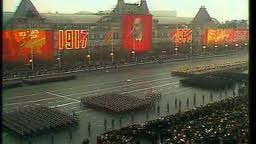
October revolution parade. A bit too military for my taste
There is, of course, a perfectly prosaic explanation for why the revolution apparently took place in the wrong month, but it’s far too tedious to go into the details of differences between the Julian and Gregorian calendars. Much more amusing just to say that the October Revolution took place in November. And, since that’s one of the few amusing aspects of that event, we should cling on to any lighter side it may have. 

Besides, it probably symbolises rather well the way so little in the Soviet Union matched its claims or the hopes many had of it. Hopes, I might add, that many of us maintained long after any rational basis for them had gone, crushed under disappointment and brutality.

This particular seventh of November has a historical significance all of its own, though. Today, after all, the US electorate re-elected as president a so-called black man (half black, half white, so why should he be particularly black? But please don’t answer that question: it was entirely rhetorical). Getting Obama elected once was extraordinary, but giving him a second term, and against a white man of huge wealth, is almost its equal.

Four more years!
Now of course it’s up to him. Obama needs to let himself be Obama. He seems to have the compassion and the commitment to justice to do the job the US so desperately needs. Now he has to find the boldness to make those qualities stick, despite a hostile House of Representatives.

What an example that would set, even back here in Britain. It would do no harm to our would-be reformers to see what can be achieved with brains and courage.


Particularly since their time may not be that far away: because today’s also a watershed moment in Britain. We’re half-way through this parliament, half-way through the legal term of the Cameron government. 

I suppose this sets up another of those glass half-empty type tests: do you belong to the ‘parliament already half gone’ or the ‘parliament only half way through’ school of thought?

For my part, the milestone has a similar emotional effect as the 21st of December. That’s the point in the year when light has been cut back as far as it will go. From then on, the days start to get longer again, and I can genuinely feel that we’re on the way to spring.

Well, it’s the same on 7 November this year, knowing the election is scheduled for 7 May 2015. From now on, there are fewer days left to this government than we’ve endured already.


Don't worry, Dave: we can show you the way out
Now that and Obama’s re-election really gives me something to celebrate this October Revolution day.

Tuesday, 21 June 2011

Friendly city where Lenin still leads in little things

There are things that are obvious when I come to think about them, but I only come to think about them when I actually experience them.

For instance, in my mind Asia is the East and Europe is the West. For the most part that’s true. But there are bits of Europe quite a long way East of bits of Asia – most of Turkey, say, and even a sliver of Syria and Lebanon – and I’m in one of them right now.

Kharkov is the usual English name for this place, which is revealing since it’s the Russian name for a city called Kharkiv in Ukrainian, and though it's right up against the border with Russia, the city’s in Ukraine.

Note that I wrote ‘Ukraine’ not ‘the Ukraine’. I’m told that it’s now viewed as faintly offensive to use the definite article with names of countries like Sudan or Ukraine. Odd, given that the last such country I visited, the Gambia, is terribly keen on its article, insisting that it always be used.
In Europe but east of bits of Asia
It’s a bit like the pronoun ‘she’. In England you can still be ticked off for referring to someone present as ‘she’. Now I’m sure none of us like being talked about extensively in the third person when we’re actually there, but only in English do we regard using the feminine form as particularly reprehensible. Or is it only the English?

Of course, the Japanese don’t like pronouns at all. Someone wanting to ask me directly whether I wanted tea would say ‘Does David San want tea?’ My inclination would be to say ‘you’d better ask him’ but they’d be unlikely to appreciate the joke and would simply reply ‘I just have.’

Anyway, what of Kharkov? I’ve just been out running along tree lined boulevards and through parks beginning to fill with warm June sun, so I approve. Whether I would have felt the same if I had been here in January, when the temperature was down to -20, is difficult to say.

Why was I out running? Because I've been met by some of the kindest and friendliest people you could hope to have welcome you to a new city. And they’ve taken me to some remarkable restaurants. I’ve run about as far as I can manage but I’m still left with the feeling that I could have gone twice as far without making much of a dent in the effects of their hospitality.

Photographer photographed, in the courtyard of a Jewish Institute.
It also contained the first fine restaurant I enjoyed.
The most curious aspect of the run was the statue dominating one of the squares I crossed: none other than Vladimir Ilyich Ulyanov, better known as Lenin, not a stone’s throw from a boulevard full of shops offering 30% – even in one case 70% – sales discounts on luxury goods and designer clothes. A salutary reminder that contradictions from the still recent past have yet to be resolved in the former territories of the Soviet Union.

Lenin shows the way to relief in Kharkov
Lenin as always bestrides the scene, showing the way forward. Or at least, if you follow the direction of his right hand, the way to the toilets in the park.

He always wanted to be the champion of the masses. It may be appropriate that he continues to serve the convenience of the public by guiding them towards the nearest public conveniences.