Showing posts with label Ian Kershaw. Show all posts

Saturday, 12 January 2019

Personality cults: toxin of our times

One of the benefits of having dogs is that you have to go for walks. It may be cold and wet, or oppressively hot, but the dogs always know that what you really need is another walk.

And they’re right.

Now, and I hesitate to write these words, in case they read them, but even with the company of two charming dogs, I find those walks not entirely exciting. So I take earphones, and an audible book downloaded to my phone. That passes the time satisfactorily, while Luci and Toffee hunt around smelling any patch of ground that seems potentially interesting, or playing with small dogs and running away from large ones.
Luci with Toffee behind her.
Great fun but walks need a little more...
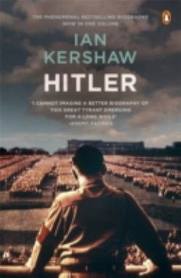
Currently, I’m listening to a book I previously read, Ian Kershaw’s biography Hitler. I seem to be getting more from it this way than from reading it. Perhaps it’s the intimacy of a voice speaking directly into my ear. But what perhaps 
makes the book more vivid to me now is that it feels so much more topical. 

Whether on the first or second time through, the picture that emerges is of a Hitler who was not unintelligent, but hopelessly limited. Perhaps one could describe him as selectively stupid.

For instance, he warned the Jews before the war that if they dragged Germany into another world war, they would pay the price, through the annihilation of Jewry. 

He then invaded Poland, and found himself at war with France and Britain.

Two years later, with Britain still undefeated, he invaded the Soviet Union, convinced the German army could strike a knockout blow in a matter of months, leading to a complete collapse of the Soviets. So now he was in a major European war.

A few months later, Hitler’s ally Imperial Japan attacked the United States and he declared war too.

So now he was in a world war.

The Jews had absolutely nothing to do with any of those steps. Indeed, they had been increasingly victimised as each military adventure got under way. Even so, this was the point at which Hitler, claiming that the Jews had indeed dragged the nation into this terrible conflict, decided that his warning was about to be verified, and Nazi Germany launched its programme of Jewish extermination.

As Kershaw points out, there’s little doubt that Hitler believed what he was saying, however contrary it was to any real evidence. That’s what I mean by blinkered. It’s also what I mean by selective stupidity. It allowed him to delude himself into adopting a series of views with no basis in reality.

It wasn’t, however, the only form of stupidity at play. Or the only form of delusion. Much more widespread was the poisonous beliefs that formed the bedrock of Hitler’s power: the personality cult that developed around him and which meant that any statement he made had to be true, simply because he’d made it.

Hitler was a self-deluded limited man, and profoundly dishonest, but he came to be thought of in Germany as incapable of error.

No attitude is more dangerous. Because if a man is infallible, to question him isn’t merely an error, it’s a lie. To disseminate such a lie is nothing short of treason.

If such questioning is by someone powerful, say the newspapers, then the treason is particularly deadly. The damage is done not to the revered personality – he is above such damage – but to the people who may read or listen to the lies. To protect them, not the leader, it’s necessary to shut down the purveyors of these distortions. Indeed, it may even be necessary to punish the people who produce them.

This is a crucial step to take. Because democracy itself is based on suspicion of its leaders. We elect people to power, but then we surround them with institutions designed to monitor them and question their actions. We never give way to unqualified faith in leaders but expect them to be, like any human, fallible and therefore likely to have to be replaced at some stage.

Personality cults represent an opposed point of view and, consequently, tend to lead to authoritarianism.

Now in long-established and deeply-rooted democracies, such as the United States or Britain, there are mechanisms in place which may be able to prevent that decline into autocratic rule. It may be possible to remove the personalities at the centre of a cult from power before they can consolidate their hold. The great question of our time is whether they are strong enough. Because, and this is why Kershaw is so topical, personality cults are back with a vengeance.

Donald Trump in the US is the head of a personality cult, that sees him as infallibly right, a view he shares. So anyone who questions him is not merely incorrect, but an enemy. Again, the media, or the mainstream media to use today’s dismissive term, are the among the most dangerous. 

Trump would not, I think, launch a Holocaust as Hitler did. However, I’m convinced that he would have no hesitation in locking up opponents if he could. He’d be sure he would be serving the people by doing so.

It’s no accident that the cry of ‘lock her up’ rings out at his rallies.
Not so different as one might think
as both lead personality cults
We have a similar problem in Britain. The Labour Party has been invested by a personality cult. Jeremy Corbyn is seen by his supporters as incapable of error. I’ve been told that I need to show ‘faith’ in the leader, the most dangerous attitude towards leaders. I’ve been told that he is being ‘savvy’ when he refuses to back either side of the Brexit debate, though that merely strikes me as dishonest. And I see in him the same self-deluding tendency to believe that he cannot err: he’s a man of the left so that all his positions are left wing, even when he is pandering to hard right Brexiters whose support he feels he needs, to win office.

As with Trump’s followers, Corbyns also loathe the mainstream media.

Corbyn is no Hitler, of course. However, he necessarily embodies the same tendencies towards authoritarianism that mark all personality cults. Equally, by their unqualified faith, his supporters encourage and reinforce that trend.

Forget the man. Forget his policies. It’s the qualities of a cult themselves that are toxic and need to be resisted.

I’m indebted to Kershaw for reminding me of that vital lesson. And to my dogs, of course, for obliging me to listen to him again.

Sunday, 5 August 2012

The indolence of Hitler. And some other politicians too

Do you know Ian Kershaw’s biography of Hitler? I can’t sing its praises loudly enough.

Gripping, insightful and
full of lessons for our own times too.
It is full of insight on the more obvious aspects of the dictator’s personality: the active cruelty, its underlying bigotry, principally but not exclusively against the Jews, and the fanaticism with which it was driven through; but also the passive cruelty of indifference, that allowed him to send millions of soldiers to their deaths without a word of grief for them or of compassion for their families.

However, these aren’t the aspects that interest me here.

Kershaw also paints a startling picture of Hitler’s idleness, right up to the first years of the war. The dictator would rise from bed late in the morning and go for his bath. He would emerge around noon and hold meetings until about 2:00 when he would have a much delayed lunch, to the despair of the kitchen staff.

In the afternoon he would hold another couple of meetings around tea. Exhausted by these exertions, he would then take a rest. Dinner was at 8:00 followed by films, music or conversation, mostly in the form of endlessly repeated monologues on whatever subject he cared to choose. He would get to bed at about 2:00 a.m.

This dilatory schedule didn’t stop his regime achieving some of its most striking successes: the annexation of Austria and later of Czechoslovakia; then, once war proper had started, victories in Poland and in the Balkans.

However, he was laying the seeds of the disaster to come. Paradoxically, though he kept adding to his personal power, he lacked the energy to provide much direction. Instead, his most senior leaders set policy through their turf wars, with each vying for personal advancement by attempting to do the things Hitler wished for, but hadn’t stated.

Kershaw calls this thinking ‘working towards the Führer’ and it was an appallingly inefficient way to run a government. By contrast, at the height of the war, Churchill could leave Britain for relatively long periods abroad, safe in the knowledge that the government he left behind would continue to operate along legal lines and implement agreed policy.

Churchill could have that confidence even though he left the government in the hands of the leader of the main opposition party, Labour
’s Clement Attlee, the man who would oust him from office at the first post-war election. If any tribute were needed to the superior effectiveness of democracy over dictatorship, this must surely be it.

Meanwhile, back in Germany, things started to change when Hitler went to war with the Soviet Union. Initial spectacular success soon fell apart as it became obvious to all but the most convinced Hitlerites that Germany was now in a battle with a massively more redoubtable power than it had ever previously faced. And as the war started to turn tough, so his behaviour started to change.

His old idleness began to disappear. He became an insomniac. During the day, he would pore over maps and orders and hold frequent long discussions with his generals. As he lost faith in them, he took increasing control himself. To deliver victory, he preferred to draw on his experience as a corporal in the First World War and his belief in the capacity of his will to achieve anything to which he set his mind, rather than the experience and training of his senior officers.

From being a layabout, he became a workaholic.

And how effective was it? A useful indication is given by the reaction in Britain to the proposal by Special Operations Executive, a young and violent wartime addition to the secret services, to assassinate Hitler.

‘On no account,’ replied the others, ‘there’s no possible replacement for him at the head of the German armed forces who we’d be happier to see in the position.’

The time of Hitler’s indolence sowed the seeds of his regime’s destruction. The time of his workaholism ensured and accelerated its collapse.

Interesting, isn’t it? Idleness in lousy politicians is bad news. But that’s as nothing to when they really 
get going.

In my view this is as true in a democracy as it is in a dictatorship.

George W. Bush may have been the laziest man to become President of the United States: briefing papers had to be summarised and even then they had to be read aloud to him; he would take extraordinary amounts of leave – up to twelve weeks a year – and rarely worked as much as six hours a day. Even then he managed to drag not just his own nation but several others into long, bloody and so far fruitless wars.

Can you imagine how disastrous things might have been if he’d stayed around long enough to become a workaholic?

In Britain today we have a Prime Minister whose reputation is for a relaxed approach much like Dubya’s. Rather than think a policy through, David Cameron prefers to come up with some half-baked proposal which he withdraws when it’s pointed out how unlikely it is to work.

It’s hard to feel much respect for him. Again, though, let’s be careful what we wish for. Imagine if he started actually working: how much more damage could he do? 


Probably safer, as with Dubya, to make sure he’s gone well before he emerges from the indolent stage.