Showing posts with label Plaid Cymru. Show all posts

Thursday, 23 January 2020

Thinking of choosing the hard left? You'll end up with the hard right

According to a leftie who keeps on at me on Twitter, the problem for Labour is that the 2019 election merely represents a continuation of its decline over many years now, with the 2015 result an anomalous blip in that downward trend.
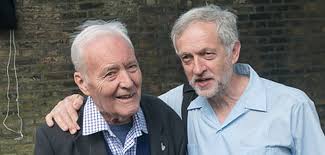
Tony Benn and Jeremy Corbyn: architects of Labour misfortunes
That stance got me interested in taking a longer-term view of British politics. So I looked at percentages of the popular vote in eleven elections over the forty years between 1979 and 2019. Clearly, the relative strengths of the two main parties, Labour and the Conservatives, would be of interest. It struck me, though, that it might also be useful to set them in the context of the overall landscape of parties of the broad right (the Conservatives, but also the hard right parties of today or their earlier embodiments, Brexit Party, UKIP, the British National Party) or of the broad left (Labour, the LibDems and their earlier forms, the Alliance or Liberals, the Greens or Ecology Party, the SNP and Plaid Cymru).
How the left (broadly) performs against the right
compared with Labour alone
What emerges is a curious picture. The ‘left’, in this broad definition (orange line), consistently outperformed the ‘right’ (black line) except in 2015. That surge for the right was principally down to UKIP’s 12.6%; the Conservative result was still an anaemic 36.8%.

With either proportional representation or some arrangement between the constituents of the ‘left’, the ‘right’ would have had a majority of the popular vote for only two years out of the last forty.

Now popular votes don’t necessarily translate into Parliamentary majorities. But if big enough, they can deliver victory, and the ‘left’ tends to be significantly ahead of the ‘right’ most of the time. That suggests that if Labour, the SNP, the Liberal Democrats and the Greens could have pulled together, the Tories would have been out of power for most of the last 40 years, instead of in power for 27 of them.

Interestingly, Labour alone (red line) only outpolled the combined right for three elections – unsurprisingly, the three when Blair was leader and in government. The leftie on Twitter, and others of his ilk there or on FaceBook, are also constantly assuring me that Blair was the lowest of the low and worthy of nothing but contempt. However, if we’re interested in keeping the Tories out of power, it’s worth remembering that he was the only leader in four decades able to ensure that Labour could do that on its own.

For the rest of the time, it would have had to work in partnership with others to oust the Tories. That’s clear from the second graph comparing Labour’s performance (red line) directly with the Tories’ (blue line). Again, only under Blair did Labour outperform the Tories. Otherwise, we’re consistently behind.
Labour performance alone against the Conservatives
Interestingly, the worst results are not under Corbyn. The worst of all, naturally, is 1983. Then Labour was led by Michael Foot, although Tony Benn, the deputy leader, was the main architect of our overwhelming defeat.

Since then, our lowest percentages of the popular vote came in 2010 and 2015. The Tories, however, were down then too, winning by small margins. Looking instead at the gap between Labour and the Tories, the worst elections of all were 1983 and 2019, Benn’s and Corbyn’s. Indeed, it is Corbyn’s greatest achievement to have gifted the Tories their second-highest vote share in that forty-year period. The only higher result was Maggie Thatcher’s first win in 1979.

The significance is that her victory was the first in a series. Johnson’s was the fourth in a row for the Tories, and the first time since the nineteenth century that any party has increased its Parliamentary representation in a fourth election victory.

Corbynists always said that Jeremy would do something remarkable. He has. Although I’m not sure this is what they meant.

This takes us to the nub of the problem for the hard left. One told me recently that whatever we learned from the 2019 election, we should not on any account ‘abandon the programme’. For Corbynites, no compromise is possible on Corbynist policies. That makes any hope of collaboration with other parties impossible. And that, as the last eleven elections demonstrate, means that the right would continue to outperform us.

Above all, with the kind of programme championed by Corbynites now or Bennites in 1983, we ensure not just a Tory win, but a colossal one. Why does this happen? Because Bennites and Corbynites want Labour to mirror their views, not those of the electorate. And the electorate has no time for their policies.

In the current leadership election, we need to choose a leader who reverses that. We need a leader who listens to the voters and goes to them with a programme that they can endorse, even though that means compromise, even giving up on some cherished policies. That way we can win back Labour voters. And if, in addition, we can compromise enough to attract other parties to our banner, why, we could kick the Tories out for a generation.

The alternative is to choose Bennite or Corbynite orthodoxy.

And we know what that gets us: the likes of Maggie or Boris.

Friday, 3 April 2015

As we stifle in consensus over austerity, is the SNP the only hope for an alternative?

The great debate wasn’t that great. If it was even a debate.

Four men, David Cameron for the Tories, our current Prime Minister, Nick Clegg, his deputy for the Liberal Democrats, Ed Miliband, leader of the opposition for Labour, and Nigel Farage of UKIP, well for himself, and anyone who prefers bigoted belief over reason and evidence, faced off to three women, Leanne Wood for Plaid Cymru, Natalie Bennett for the Greens and Nicola Sturgeon for the Scottish National Party.

This was the single Prime Ministerial debate before the UK General Election on 7 May, televised last night. With seven contenders, no debate was really possible. Each candidate responded to a series of questions, and occasionally candidates cut across or challenged each other, but it was all a bit stilted.


The seven contenders in the Party Leaders' debate
So we learned little from the event. Except perhaps that the Celtic Fringe has a lot to teach England.

Leanne Wood persisted throughout in addressing Wales and Welsh voters. She seemed to have little to say to any other part of the United Kingdom, which seriously reduced the national impact of what she had to say. Even so, she did at least speak out against austerity, and for both the European Union and immigration, pointing out that leaving the former would do great damage, while threats to limit the latter were already harming her country.

That’s Wales, by the way, not Britain.

Nicola Sturgeon, on the other hand, was far more impressive. I’m sure that I’m far from the only Englishman who felt envious of the Scots, after listening to her. Why don’t we have someone so bravely and clearly articulating a message of the moderate left?

And I stress that word ‘moderate’. Many, and I include myself, have referred to Sturgeon as ‘radical’. But in reality she is not proposing anything revolutionary, or even particularly reforming: there’s no programme for mass nationalisation of industry here, or even of serious redistribution of wealth. Indeed, in many ways her programme is one for a conservative left wing: to maintain and protect the National Health Service, to keep access to tertiary education free. Even the most dramatic of the SNP’s positions is a demand for non-action, not for action: not to build the successor to the Trident nuclear deterrent.

This is a programme well to the right of the Attlee Labour government’s of 1945, which set up the NHS, along with the apparatus of the welfare state. It’s to the right of the programme of the Wilson Labour government of the 1960s, with its talk of storming the commanding heights of the economy. It’s telling that today the limited programme of the SNP seems to be the most daring on offer.

Amongst the representatives of the whole of Britain on show, only Natalie Bennett spoke for a similar anti-austerity view. A little dull, and representing a small minority of the electorate, she was never going to set this election alight.

Alongside her, we had Nigel Farage, beginning to sound far more wooden than he has in the past, certainly not the firebrand he once was and who won such massive support last year. To him, every question could only be solved by cutting immigration and leaving the EU – or was that leaving the EU in order to cut immigration?

And then we had Cameron proposing more and intensifying austerity, in the mistaken belief that all that matters is reducing national debt and eliminating the government deficit.

Against him, Miliband is at least speaking for the NHS, improving education and – at last – unequivocally denouncing the abomination of zero-hour contracts. This is the exploitative mechanism in which a worker is tied to an employee, but can’t count on any guaranteed level of work or earnings. That Miliband attacked it is welcome; but that he still seems committed to more austerity, if a lighter variety than Cameron’s, is dismal.

So it takes Nicola Sturgeon to speak out for the Centre-Left. The moderate Left, as I said. A little fresh air in the stifling atmosphere of the austerity consensus.

It’s sad that it should be so. But I suppose we can take some comfort that there is one voice, at least, clearly articulating arguments that badly need to be heard.