Showing posts with label Labour. Show all posts

Friday, 5 July 2024

What a relief it was to have it confirmed by an exit poll last night that Labour, led by Keir Starmer, was on its way to a massive win over the Conservatives in the election of 4 July. 

The BBC projecting of the exit poll for the Labour landslide
July the fourth. Celebrated in the US as Independence Day. In Britain it was the occasion that the electorate marked its independence of a Conservative government that had nothing more to give. Another moment to celebrate.

I may have overstated when I said that it had nothing more to give. With most governments, including ones we don’t like, we can usually point to one or two achievements and have to admit, even if between gritted teeth, ‘well, it’s true, at least they did that.’ I can think of nothing, in all honesty, which fourteen years of Conservative rule have left in a better state than when they came to office.

That’s even on their own terms. The Tories were obsessed with public debt when they came to power, but they leave it higher now than back then. They were also obsessed with immigration, ignoring the overwhelming evidence that many sectors of the economy need immigrants – healthcare, agriculture, catering for instance – just to keep turning over. But even they admit that illegal immigration is out of control.

The health service is in crisis. Schools are crumbling, literally, with ceilings falling in due to dud cement. The Tories presided over the terrible self-inflicted wound of Brexit. The party of law and order has seen prisons releasing inmates early because they can’t handle the numbers. The police force hasn’t the resources for its task. And the nation’s rivers and the sea off its beaches are flooded with untreated sewage.

As you can imagine, that’s why it’s a relief to see that government go.

But in 1997, when Tony Blair came to power, I reacted with joy, not just with relief. That’s because, whatever his faults, he was a man that inspired. And indeed his government, despite its many errors, the most appalling of which was the Iraq War, did much to be proud of: huge improvements in the health service, freedom of information, devolution to the constituent nations of the United Kingdom, the Good Friday Agreement over Northern Ireland, and much more. 

In 1997, we could sense all that promise and, boy, it felt good to be alive.

But Blair’s government was elected by 13.5 million people. They represented 43% of the votes cast. Britain uses a first-past-the-post system, by which it only takes one more vote than any other candidate, without necessarily having a majority of the votes cast, to win election in a parliamentary constituency. That’s why a government can win a landslide majority in the House of Commons on a minority of the votes, as Blair did in 1997. 

Taking 43% is actually quite respectable.

The 2024 election also gave Labour a landslide majority in the Commons, but this time it took only 9.7 million votes, 3.8 million fewer than won by Blair in 1997. And that represented only 33.8% of the votes cast, not a great deal more than one vote in three. Putting it another way, there were very nearly two votes against Labour for every vote for it.

What makes those figures particularly stark is that at the previous election, in 2019, Labour had its worst result since 1935. It took just 202 seats in the Commons, under half its haul this time. And yet it took 32.1% of the votes cast – so though it has more than doubled its total of seats, Labour only added 1.7% to its percentage of the popular vote.

That’s the difference between the catastrophic defeat last time and the historic landslide victory at this election (Starmer will have more Labour MPs behind him than Blair did).

What this means is that what has taken Starmer to Downing Street isn’t a huge wave of support. It’s a tsunami of dissatisfaction, even bitterness, directed against the Tories. A well-deserved tsunami. But it leaves Starmer with a massive task to win positive support for Labour. He has to do it quickly. His majority of over 170 looks unassailable, enough to carry him through to victory at the next general election too. However, if you look at the percentages of votes cast, you can see that it’s a lot more fragile than that, with a couple of percentage points marking the difference between massive victory and crushing defeat.

After all, looked what happened between 2019 and this year. Back then, it was the Tories who won a landslide. This year, they’ve lost 250 seats and emerged with the lowest number of MPs in their history. That’s how quickly and how massively things can switch around.

Starmer understands all that. In his first speech as Prime Minister, he explained:

our country has voted decisively for change, for national renewal and a return of politics to public service. When the gap between the sacrifices made by people and the service they receive from politicians grows this big it leads to a weariness in the heart of a nation, a draining away of the hope, the spirit, the belief in a better future. But we need to move forward together. Now, this wound, this lack of trust, can only be healed by actions, not words. I know that. But we can make a start today, with the simple acknowledgement that public service is a privilege and that your government should treat every single person in this country with respect. If you voted Labour yesterday, we will carry the responsibility of your trust as we rebuild our country. But whether you voted Labour or not – in fact, especially if you did not – I say to you directly my government will serve you. 

He knows he needs to rebuild trust and he can only do that by serving the electorate, especially the two-thirds of electors who voted against him. I wish him well with that task. It’s a big one, and Britain needs him to succeed in it.

Before I leave, I have to mention the man he defeated, the outgoing Prime Minister, Rishi Sunak. When he announced his resignation, he said:

Whilst he has been my political opponent, Sir Keir Starmer will shortly become our Prime Minister. In this job, his successes will be all our successes. And I wish him and his family well. Whatever our disagreements in this campaign, he is a decent, public-spirited man who I respect.

It’s refreshing to hear a politician talking about an adversary as someone he can respect. One of the worst aspects of politics today – especially in such campaigns as Trump’s in the US – is the apparent belief that it’s not enough to defeat the other side, you have to eliminate them.

Adapting a phrase from Macbeth, I can say of Sunak that nothing in his time in office became him like the leaving of it. 

Wednesday, 15 April 2020

'Official Secrets' and getting the perspective right on Blair

“I think we were lied into an illegal war,” says Katharine Gun, excellently played by Keira Knightley in a film well worth watching, Official Secrets.

Back in 2003, Gun was working at Britain’s communications spying centre, GCHQ, when she was included in the distribution of an email from the States, asking for blackmail material against a number of UN Security Council delegates, to push them into backing a resolution authorising war on Iraq.
Keira Knightley as Katharine Gun about to take a life-altering step
Sadly, it didn’t stop the war
Gun, appalled that the resources of GCHQ were being used merely to provide cover for the UK and US governments, leaked the email. To keep the spoiler small, let me just say that the film includes a particularly telling exchange about her role.

“You work for the British government,” she’s told.

“No, not really,” she replies.

“No?”

“Governments change,” she explains. “I work for the British people. I gather intelligence so that the government can protect the British people. I do not gather intelligence so that the government can lie to the British people.”

The film was an excellent way of spending a lockdown hour or two. It also brought back memories. Not particularly cheerful memories, accompanied as they were by a sense of disappointment and even betrayal.
Huge demos against the invasion, in London and around the world
Also couldn’t stop the war
Huge numbers, up to a million, had demonstrated in London against the war. Dubya Bush, US President, and Tony Blair, UK Prime Minister, had flopped from one unconvincing source of authority for war to another. They claimed Iraqi dictator Saddam Hussein had weapons of mass destruction, but weapons inspectors on the ground had found none. Blair went for a United Nations resolution because British legal opinion said he needed one. When he couldn’t get that authorisation, he asked his Attorney General to provide a different opinion, which he duly did.

Dubya had clearly decided to go to war in Iraq however weak the justification, and Tony Blair had decided to go along with him, with or without authority.

They went in, toppled a deeply unsavoury dictator, but at huge cost: as well as six-figure casualties in the fighting, the war spurred the emergence of ISIS, leading in time to its blood-chilling dictatorship and many more years of war to break it.

No Iraqi weapons of mass destruction were ever found. And, when the legal advice offered to the government was finally published, it confirmed all our suspicions: the Attorney General had warned that invasion would be illegal and potentially lay Ministers open to prosecution as war criminals, unless a covering resolution was obtained from the UN. He only changed that view when it became clear the resolution had failed.

Nothing people could say or do would change anything. Not the hundreds of thousands of demonstrators. Not Katharine Gun laying her job and liberty on the line. Not even the law would restrict its behaviour: it was going to war even if the action was illegal.

It was all deeply depressing.

That’s why I find it ironic now to be labelled a ‘Blairite’, as I have been by many on the far Left of the Labour Party. Far from an enthusiast for Blair, I felt betrayed by his behaviour over Iraq. And there were other issues on which I felt his government behaved reprehensibly. The Private Finance Initiative (PFI) has left public sector bodies, in particular hospitals, still struggling today. Blair even repudiated one of his best initiatives, the Freedom of Information Act, when he realised it could be used to force him to reveal information he would rather hide.

No, I was never a Blairite. And today, the committed supporters of Blair are few indeed. But the difference, in assessing Blair, between those of us who refuse the label ‘Blairite’ but don’t belong to the hard Left, is that we’re not prepared to write off his governments’ achievements as though they never happened.

Among others, they include the major assault on child poverty. The minimum wage. The Human Rights Act. Devolution of powers to the nations of the UK. Freedom of Information. The Good Friday Agreement. Huge investment in the health service.

The latter is particularly topical, given that the health service is today struggling so pitifully to cope with Coronavirus. Had the investment started by Blair continued, instead of being reversed in the name of austerity, how much better-placed would the NHS have been to cope with the present pandemic?

Lives have been lost due to austerity. Thousands of lives. That’s worth bearing in mind when we assess the Blair legacy.

Without being a Blairite, I’m in no doubt that the governments he led were infinitely to be preferred to the one we have now. And, in arguing for a return to a Labour government, that’s something we need to proclaim loudly. Things would have been better without the last ten years of Tory government.

What’s more, he achieved far more than those who followed him as leader, and who lost power to the Tories or failed to win it back. He achieved far more than Gordon Brown, Ed Miliband or Jeremy Corbyn. Whether their policies were good or bad, they were unable to enact any of them.

You can only do any good at all if you get into power. Which Blair powerfully demonstrated. And you don’t have to be a Blairite to understand that. 

I reject that label. But I also refuse to belittle the good he did among the harm.

Oh, and by the way, if you’re looking for a good way to spend a lockdown evening, you could do a lot worse than watch Official Secrets.

Saturday, 4 April 2020

Keir Starmer's challenge

Just twenty minutes before the results of the election for a new Labour leader were announced, I was still on tenterhooks. The signs had all been hopeful, but I’ve been disappointed by election results too often before. It was conceivable that the Party membership might have decided that the best person to replace Jeremy Corbyn as leader would be another Corbynist.

After two general election defeats under Corbynist leadership, it seemed insane to try our luck at a third. But was a presumption of sanity justifiable?

I’m glad to say that ultimately it was. Despite my anxiety, the new leader was Keir Starmer, elected on the first ballot with 56.2% of the vote. A comprehensive victory and a solid mandate.
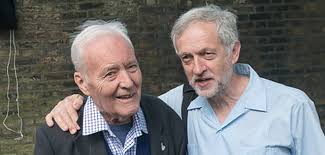
Keir Starmer (right)
with Jeremy Corbyn, whom he replaces as Labour leader
Starmer is a former of Director of Public Prosecutions, leading all public criminal prosecutions in England and Wales, a role he played with great effectiveness.

Before that he had been a defence barrister, notably defending the McLibel case, where McDonald’s threw all its weight as a major international corporation, into persecuting two individuals who had protested against them.

He was elected to Parliament in 2015. That meant being caught up at once in the string of crises that started with Jeremy Corbyn’s election as leader, followed by the 2016 referendum that led to Brexit, general election defeats in 2017 and, crushingly, in 2019, and finally the Coronavirus pandemic. If Starmer had been hoping for a quiet life, he must have been badly disappointed.

He served in Corbyn’s team for three years, even though he’s no Corbynist. That’s a key quality: without being a member, he’s established that he can work with a wing of the party which, though reduced to a minority now, still holds massive sway amongst the membership.

Corbynists were keen to drive non-Corbynist MPs out of Parliament. It’s deeply unpleasant and damaging to the party, forced to focus in on itself and riven by factionalism. That’s why, though there are understandable calls within the new Labour majority to retaliate in kind, they need to be resisted.

No purges has to be the watchword, and I think Starmer is well-placed to issue it.

That isn’t only for ethical reasons. A pure, homogeneous party is far too narrow. The insistence by Corbynism on its own version of socialism has driven many out of the party. Much more seriously, it has driven voters away. As Phil Wilson, a former Labour MP who lost his seat in the December 2019 debacle, puts it:

There was no need for Corbynistas to listen to them [voters]; they needed to listen to the Corbynistas. Corbynistas knew what was best.

We need to reach out to voters. That means that we need to reach out to those who walked away from the Corbynist Labour Party, without losing those who stuck with it because of Corbyn. We need to embrace all wings of the party.

In other words, we need to rebuild Labour as a broad church. That means including the Corbynists. Ironically, the very expression ‘broad church’ was treated as practically obscene in Corbynist circles.

This is a paradox. Starmer has to rebuild the Labour Party with the Corbynists but in spite of the Corbynism. Why? Because it’s the hard Left, most recently represented by Corbynism, that has ensured that Labour has held power in only thirteen of the last forty years.

In my lifetime, I’ve twice lived through an experience I would have hoped not to live through even once. That’s Labour falling under the control of the hard Left. It happened first in the early 1980s. In the 1983 election, Labour won fewer seats in parliament than in any other election since 1935.

Making the Party electable again took fourteen years. The bulk of that work was done by a leader from the soft Left of the Party, Neil Kinnock. He had the misfortune of losing two elections himself, but at each of them he increased the tally of Labour MPs. That prepared for Tony Blair’s victory in 1997.

In 2015, Labour did it again. We let the hard Left take control. And, lo and behold, the result is that we’ve once more been reduced to the lowest number of Parliamentary seats since 1935. Worse even than 1983: 202 seats compared to 209.

Keir Starmer, like Neil Kinnock, is a man of the soft Left. He’s indicated his willingness to unite the party, claiming he would neither trash the achievements of the Blair Labour government nor those of the Corbyn period.

He has pledged to work with the government to combat the Coronavirus pandemic, but to oppose it actively when it does too little, or the wrong thing, or the right thing too late.

He seems to have all the right attributes. He could indeed rebuild the Party. Whether he can do it in time for the next election remains to be seen – Corbynism has left us low indeed. But he might.

What he, and the Party generally, must do, however, is learn from this experience as, apparently, we didn’t learn from the experience of 1983.

It’s important to keep the hard Left on board. They must be free to act as a ginger group, they must be able to influence policy, they deserve respect and cordiality.

But the hard Left must never be allowed to take sole control of the party again.

Once was an error. Twice was ridiculous. Three times would be suicidal.

Saturday, 7 March 2020

Labouring to get to the concert

Some young people in a small country town heard of a concert in the rather bigger town next door. They decided to go on the following Friday and borrowed a camper for the purpose.

One of them announced that he would drive. Several were a bit concerned: he was a bit of a know-it-all and his ideas weren’t always good. In particular, he was known to get lost and they were afraid he might not get them there in time.

However, most of them felt he’d be fine and it was agreed he’d drive.

As they set out, he announced that he wasn’t going to take the usual main roads to get to the next town.

“There’s a small road after the next village not many people know about and it’ll take ten minutes off the trip.”

One of the people who’d been concerned about him driving was unenthusiastic about the suggestion.

“I know that road,” he said, “and it’s only made up for the first mile or so. After that it’s a mess, with huge potholes and mud everywhere.”

Several others shared his concerns, but most of them agreed with the driver and so they took the minor road.

As they’d been warned, the tarmac ran out after a few minutes and they were forced to drive round huge potholes and avoid patches of mud and loose gravel. Eventually, the inevitable happened and they ended up in a colossal hole, and there was an ominous cracking sound as the front of the camper went in. And there was no way of getting back out.

They had to wait several hours for a tow truck to arrive and get them to a garage. They missed the concert and also had to fork out for the significant cost not only of the tow but of the extensive repairs the camper needed.
The aftermath of a shortcut that went wrong
A few weeks later, another concert was announced, and the group decided to try again. This time, the previous driver agreed to let someone else drive. In fact, he even chose someone, a young girl, to take over the steering wheel from him.

Some of the others were sceptical.

“You won’t go down that minor road again, will you?”

“Oh, yes,” she said, smiling brightly, “it’s much the best way to go.”

“But look what happened last time!”

“That wasn’t because of the road we chose. It was because you guys dug an especially big pothole in the way. And because you wouldn’t give your full support to the route we’d suggested. But I know how to avoid the potholes, because I’m particularly gifted that way. And if you get behind me instead of trying to sabotaging me like you did the last driver, we’ll be fine.”

So what would they do?

Were they dumb enough to try again what had failed the last time?

Or would they learn from experience and demand that the driver chosen should be someone who could be trusted to take the main road?

After all, as one of them pointed out, it was better to take longer driving there but actually get to concert, than to take a shortcut and not get there at all.

Well, the camper, as you’ve guessed, is the Labour Party.

The first driver, with the shortcut, is Brother Jeremy. And his chosen successor is Rebecca Long-Bailey, who wants to have another go at doing just what he did last time. Which ended up in the pothole of the 12 December election, for which her supporters advance any excuse to avoid blaming the man at the wheel.

The sensible one suggesting that the longer but safer route is Keir Starmer.

So the question for us is the same as for the young people.

Are we dumb enough to learn nothing from experience and try again, with exactly the same attitudes that worked so badly last time?

We’ll find out on 4 April whether we’re that dumb or not.

Thursday, 27 February 2020

Preparing for the pandemic

A crisis! A crisis! It’s a time to rise to a challenge, to show your mettle, to confront and overcome whatever life throws at you.

Of course, the first thing is admitting that theres a crisis at all. I’ve always preferred what might be called the Jim Callaghan approach, after the Labour Prime Minister of Great Britain, who in 1979 is said – wrongly as it happens – to have declared, “Crisis? What Crisis?”

The nice thing about that kind of denial is that it allows you to show your mettle by returning to the sofa and having another glass of wine.

The problem with denial, unfortunately, is that while comfortable, it doesn’t actually solve any problems. Jim Callaghan discovered that to his cost a few months later when Maggie Thatcher gave him a drubbing in the 1979 General Election.

Danielle and I decided that it was time at last to treat the Coronavirus threat with a little respect. I have to admit that a part of me still says that it’s what an Italian Minister called an ‘infodemic’ rather than an epidemic. That’s a spreading pool of anxiety, if not panic, caused by the sheer volume of information, and mostly rather shrill information, swilling around all the conceivable media today.

Still. It’s certainly true that many communities are already facing the tedious inconvenience of quarantine. So it struck us that, while we can’t do much about the disease itself except cross our fingers and hope it doesn’t get us, we could at least take some steps towards preparing ourselves for isolation, just in case it happens to us too.

We are, therefore, beginning to build up some stocks. We’ve got quite a lot of water, though I do feel we ought to add some beer, preferably Corona, if only out of a sense of appropriateness. We’ve also bought a lot of flour, so Danielle can make bread, and a lot of pasta and rice, plus various tins, so we can cook some basic meals if the need arises.
Flour, rice, pasta, tins: our Coronavirus quarantine survival kit
It seems to me that we’ve probably assured our survival. Surviving isn’t quite the same as living, though, is it? I suppose I can still pop out to buy some more wine. Or I might just have to reconcile myself to the idea that the idea isn’t to have a good time, it’s just get through it.

We can live on pasta with tomato sauce, alternating with rice with tomato sauce, with a tin of something thrown in from time to time for variety. And bread for breakfast, since we have enormous stocks left of Danielle’s excellent marmalade, made just a few weeks ago.

Overall, I’m reasonably satisfied that we’ve made some adequate preparations.

It’s true, though, that we’ve only got enough for about three weeks. That may not seem long. On the other hand, on such a diet, I can’t help feeling that it might seem more than long enough.

Beyond three weeks, I’m not sure whether Coronavirus infection might not start to seem the lesser evil.

Monday, 17 February 2020

The Skwawkbox, or master class in writing fake news

“The TV News is lying to us. I get my information from Facebook, friends and social networks.”

An interesting comment. Many people in the England, the US or other nations might well share the sentiment. In this instance, it came from Spain.

It could also have come from the left as plausibly as the right. The BBC has been upset by the attacks on it from the left, just when its very existence is coming under threat from a right-wing government. We might soon see a great public broadcaster muzzled by the right while the left does nothing to defend it.

In this case, the speaker was from the right. He was a supporter of the far-right Spanish party, Vox. The left-leaning paper El País was interviewing him for a study of where Vox gets its support.

He prefers to get his news from Facebook, his friends and social networks. Which is another way of saying that what he wants isn’t information, it’s confirmation. He will find those groups and posts, or friends, who believe what he believes, and always strengthen rather than challenge his views.

That’s much more comfortable. It’s also how fake news spreads. That’s true whether the fake news is generated by a propaganda mouthpiece of the right, such as Guido Fawkes in the UK or the White House in the US, or the left, such as England’s Skwawkbox.
Purveyors of fake news
A rare photo of publicity-shy Skwawkbox founder Steve Walker (l)
Paul Staines of Guidow Fawkes (c) and the White House ranter
In answering a recent FaceBook comment of mine, a critic pointed me to a link to a Skwawkbox page which had the headline:

EXCL: NCC FORCED TO REJECT UP TO 90% OF ANTISEMITISM EVIDENCE AS UNFIT – MULTIPLE DEATHS FOLLOW EXPULSIONS

The claim, right at the start of the headline, to exclusivity is clearly a source of pride to the writer. To me, it just says, ‘no reputable journalist has picked up this story’. Clearly, the poster of the link was, however, entirely disinclined to wonder about the item’s reliability.

The story itself opens with:

A Manchester woman has died within days of her expulsion from the Labour Party under a new disciplinary system.

The woman, whose identity has been confirmed to the SKWAWKBOX, is understood to have died on Tuesday as a result of a brain haemorrhage that locals are linking to stress brought on by her summary expulsion under a new ‘fast track’ process in which the party’s National Executive Committee (NEC) is expelling members against whom antisemitism complaints have been made.


It seems the person who pointed me to this piece had confidence in it. But all it’s saying is that someone, unnamed to us though the Skwawkbox claims to know who she is, is said by some anonymous source and their equally unnamed friends, to have died within days of being expelled from the Labour Party.

Given the headline with its reference of the lack of validity of ‘90% of Antisemitism evidence’, the implication is that the evidence against this woman was weak.

However, we can check none of this. We don’t know the name of the woman. We don’t know the names of the people living locally who commented on her death. We don’t know what evidence was brought against her, let alone whether any proportion of it, or none at all, was deemed invalid.

In fact, we don’t know whether the 90% figure is accurate. Any more than we know whether evidence rejected by the disciplinary bodies of the Labour Party ought in fact to have been admitted.

The piece is written in such a way that it’s impossible to verify any of its allegations. It may be that I’m too cynical, but I believe that anyone who makes claims that can’t be verified, is afraid of any kind of questioning. That’s likely to be because they’re afraid the case will fall apart if it’s examined too closely.

The naivety of certain commentators, such as my critic, lies in the refusal to see this obvious truth.

As a result, I thought the best response was to write a piece of my own, applying exactly the same journalistic standards as the Skwawkbox.

A reliable source leads me to understand that the woman who died in Manchester soon after being expelled from the Labour Party, had faced multiple charges of antisemitism backed by overwhelming evidence.

While a proportion of the evidence submitted was found to be too circumstantial or too weak, more than enough was both conclusive and believable, in many cases confirmed by multiple, independent sources.

Her death soon after the expulsion was a tragic coincidence. 


The same source confirms that the woman had a serious and long-term circulatory condition which was both inoperable and likely to lead to life-threatening trauma if triggered by, say, an external shock. My source confirms that she had such a shock, unrelated to the expulsion, before suffering a massive and tragically fatal aneurysm.

My heartfelt sympathy goes to the woman’s loved ones in this terrible moment for them. However, it has to be stressed that her death, while tragic, was not associated with the disciplinary action Labour had taken against her. Her expulsion was inevitable, given the incontrovertible evidence that she made antisemitic statements, repeatedly, over a long period.

There is no place for anti-Semites in the Labour Party.


Now here’s your challenge: prove that any of what I’ve said is untrue.

Monday, 27 January 2020

How Italian sardines kept the left's wall solid

A triumph for the left it maybe wasn’t. But a colossal setback for the hard, populist right it certainly was. And that’s the next best thing.
Demonstration in Rome by the Sardines movement
Mobilising against Salvini and showing him the door in Emilia-Romagna
Matteo Salvini is the leader of the populist, right-wing Italian party, the League. Until last year, he was deputy Prime Minister in a coalition, but then he pushed his luck too far. He brought down the government in the hope of precipitating an election he looked set to win, but his coalition partners switched to working with Democratic Party (Partito Democratico, PD), roughly equivalent to British Labour, though substantially more centrist.

Salvini is on record committing that he would “defend the natural family founded on the union between a man and a woman”. He also declared that he was “sick of seeing immigrants in the hotels and Italians sleeping in cars”. Or again, “The problem with Islam is that it's a law, not a religion, and it's incompatible with our values, our rights, and our freedoms.

On Sunday, elections were held in Emilia-Romagna, the region around Bologna, in north-central Italy, a longtime bastion of the left. It is rather like the “red wall” on which Labour counted for decades in the North of England, and which suffered such heavy losses at the election in December: seats fell to the Tories that had been Labour since they were first created.

Curiously, the PD uses rather similar language. But it’s in a position to apply it in very different circumstances: after the results came in, they could declare that “the wall held”.

The governor of the region was re-elected, and with a small but absolute majority. Stefano Bonaccini took 51.4% of the vote, his nearest rival 43.6%.

Salvini had spent much of his time in recent months campaigning around Emilia-Romagna. He claimed he was about to ‘liberate’ the region. But after the elections, Bonaccini could reply that the region had already had its liberation, 75 years ago, at the end of the Second World War – since when, in one form or another, the left has been in unbroken power there.

To what does he owe his success?

To start with, the PD is no party of the hard left, and Bonaccini is certainly no Corbyn. He’s a moderate leftist who can attract voters from the centre, rather than frightening them into the arms of the right. That’s important when you’re trying to protect you wall from a determined onslaught by the hard right.

But something special came out of the campaign in Emilia-Romagna. It led to the emergence of the kind of mass, popular movement that Corbynism inspired. Known as the ‘sardines’, from their ability to fill public squares to capacity at their rallies, they generated a huge momentum for the left – or at least against the right – that had been the exclusive preserve of right-wing populism in the past.

That combination, a moderate leader who could draw votes from the centre, with a groundswell of popular support from below, proved unstoppable in Emilia-Romagna. Even more encouraging, in December the sardines brought together a rally of 100,000, in Rome, a long way from the region where the movement was born. It may begin to make itself felt at national level now.

It’s far too early to be thinking of victory over a vicious, far-right movement in Italy. The national government, where the PD is in an unstable coalition with the bizarre and declining 5-star movement, could fall and let Salvini in. But the result on Sunday does at least give a glimmer of hope that he can be kept out.

And there’s a lesson for other countries too. Combine electability in the leader with a dynamic, mass movement and you can get the far right on the run. That’s the elusive formula we need to find in the US, in the EU, in the UK.

In Britain, in particular, it means that we too have a historic chance. If we replace Corbyn by an electable leader of the Labour Party, and Keith Starmer, the front runner for the moment, seems to be just that; if that leader can then retain and sustain the movement that Corbynism built; then we too can in time drive out the hard-right government Corbyn let in last December.

The movement doesn’t have to chant “Oh, Keir Starmer”, like it used to chant “Oh, Jeremy Corbyn”. There was something repellent about that cultish behaviour. Instead, it just needs to be as effective as the Sardines have been in Italy.

And working for a leader who can command real electoral support

Thursday, 23 January 2020

Thinking of choosing the hard left? You'll end up with the hard right

According to a leftie who keeps on at me on Twitter, the problem for Labour is that the 2019 election merely represents a continuation of its decline over many years now, with the 2015 result an anomalous blip in that downward trend.
Tony Benn and Jeremy Corbyn: architects of Labour misfortunes
That stance got me interested in taking a longer-term view of British politics. So I looked at percentages of the popular vote in eleven elections over the forty years between 1979 and 2019. Clearly, the relative strengths of the two main parties, Labour and the Conservatives, would be of interest. It struck me, though, that it might also be useful to set them in the context of the overall landscape of parties of the broad right (the Conservatives, but also the hard right parties of today or their earlier embodiments, Brexit Party, UKIP, the British National Party) or of the broad left (Labour, the LibDems and their earlier forms, the Alliance or Liberals, the Greens or Ecology Party, the SNP and Plaid Cymru).
How the left (broadly) performs against the right
compared with Labour alone
What emerges is a curious picture. The ‘left’, in this broad definition (orange line), consistently outperformed the ‘right’ (black line) except in 2015. That surge for the right was principally down to UKIP’s 12.6%; the Conservative result was still an anaemic 36.8%.

With either proportional representation or some arrangement between the constituents of the ‘left’, the ‘right’ would have had a majority of the popular vote for only two years out of the last forty.

Now popular votes don’t necessarily translate into Parliamentary majorities. But if big enough, they can deliver victory, and the ‘left’ tends to be significantly ahead of the ‘right’ most of the time. That suggests that if Labour, the SNP, the Liberal Democrats and the Greens could have pulled together, the Tories would have been out of power for most of the last 40 years, instead of in power for 27 of them.

Interestingly, Labour alone (red line) only outpolled the combined right for three elections – unsurprisingly, the three when Blair was leader and in government. The leftie on Twitter, and others of his ilk there or on FaceBook, are also constantly assuring me that Blair was the lowest of the low and worthy of nothing but contempt. However, if we’re interested in keeping the Tories out of power, it’s worth remembering that he was the only leader in four decades able to ensure that Labour could do that on its own.

For the rest of the time, it would have had to work in partnership with others to oust the Tories. That’s clear from the second graph comparing Labour’s performance (red line) directly with the Tories’ (blue line). Again, only under Blair did Labour outperform the Tories. Otherwise, we’re consistently behind.
Labour performance alone against the Conservatives
Interestingly, the worst results are not under Corbyn. The worst of all, naturally, is 1983. Then Labour was led by Michael Foot, although Tony Benn, the deputy leader, was the main architect of our overwhelming defeat.

Since then, our lowest percentages of the popular vote came in 2010 and 2015. The Tories, however, were down then too, winning by small margins. Looking instead at the gap between Labour and the Tories, the worst elections of all were 1983 and 2019, Benn’s and Corbyn’s. Indeed, it is Corbyn’s greatest achievement to have gifted the Tories their second-highest vote share in that forty-year period. The only higher result was Maggie Thatcher’s first win in 1979.

The significance is that her victory was the first in a series. Johnson’s was the fourth in a row for the Tories, and the first time since the nineteenth century that any party has increased its Parliamentary representation in a fourth election victory.

Corbynists always said that Jeremy would do something remarkable. He has. Although I’m not sure this is what they meant.

This takes us to the nub of the problem for the hard left. One told me recently that whatever we learned from the 2019 election, we should not on any account ‘abandon the programme’. For Corbynites, no compromise is possible on Corbynist policies. That makes any hope of collaboration with other parties impossible. And that, as the last eleven elections demonstrate, means that the right would continue to outperform us.

Above all, with the kind of programme championed by Corbynites now or Bennites in 1983, we ensure not just a Tory win, but a colossal one. Why does this happen? Because Bennites and Corbynites want Labour to mirror their views, not those of the electorate. And the electorate has no time for their policies.

In the current leadership election, we need to choose a leader who reverses that. We need a leader who listens to the voters and goes to them with a programme that they can endorse, even though that means compromise, even giving up on some cherished policies. That way we can win back Labour voters. And if, in addition, we can compromise enough to attract other parties to our banner, why, we could kick the Tories out for a generation.

The alternative is to choose Bennite or Corbynite orthodoxy.

And we know what that gets us: the likes of Maggie or Boris.

Tuesday, 14 January 2020

The Rebecca trap

Momentum is a faction inside the British Labour Party, with its own officers and policy lines which it works to get the whole of Labour to adopt.

It has just issued a document to all its members, to ‘consult’ them on which candidates to back in the forthcoming elections for Labour leader and deputy leader. It did have a recommendation to make, so essentially the invitation was to make a completely free choice from among the available candidates, just so long as they choose Rebecca Long-Bailey for leader and Angela Rayner for deputy.
Rebecca Long-Bailey, the Corbyn continuity candidate for Labour leader
There was little surprise in Momentum’s ‘recommendations’, the euphemism we like to use for instructions. Long-Bailey is the continuity candidate, the one who can be most counted on to follow in the steps of the current leader, Jeremy Corbyn.

Momentum was essentially set up to back Corbyn as leader of Labour.

Just in case you haven’t been following British politics closely in recent months, Mr Corbyn is the man who took Labour to defeat in a general election in 2017, and to disastrous defeat in 2019. With the full support of Momentum and its members on both occasions. Support which shows no sign of flagging, it should be added, as they scrabble around finding others to blame for the loss.

One of the major scapegoats Momentum has identified is the Media. Mostly Tory, it’s true that the media generally gave him a torrid time. It has to be said that Corbyn fed the media plenty of ammunition to use against him. Probably the most serious was his failure to take a clear position on the question that has most troubled Britain for the last four years, Brexit. He has equivocated, trying to appeal to each side and losing the trust of both, as the election results showed.

This kind of behaviour has allowed the media outlets ill-disposed towards him to run story after story alleging that he was unprincipled, gutless and untrustworthy.

The last thing we need is a continuity candidate who continues that kind of performance. So it’s sad to discover that even before she became a candidate for the leadership, Rebecca Long-Bailey has been engaging in what, at best, we can only call a little embellishing of her track record. Embellishment it has proved frighteningly easy to trash.

In 2014, she claimed that she had “been working as a solicitor with the NHS in Manchester for 10 years” when she had only been qualified for just over six years.

In her leaflet for the 2015 election, she stated that, “I studied law and became a solicitor for the NHS to help defend our health service”. Now, the words don’t actually say that she was employed by the NHS, but don’t they seem to suggest that? And when she claimed to have been helping to “defend our health service”, doesn’t that sound as though she had been going into battle to keep our hospitals and doctors’ surgeries going and public?

The reality is that she was working for a legal firm in Manchester and did some commercial work for the NHS as client. She was drawing up documents for NHS contracts and NHS estates. A courtroom champion of our great national institution? That she wasn’t.

To some extent I don’t particularly care about her distortions. MPs are as capable of being petty and grasping as all the rest of us. In business, I’ve dealt with people who lied on their CVs. It’s reprehensible but not that unusual.

I suppose it’s rather harder to stomach from members of the Corbyn faction who are always claiming to be so much more honest than the rest of us. Frankly, though, the hypocrisy may be unattractive, but I can live with it too.

No, the real problem is that these falsifications were so easy to disprove. And the right-wing press is moving in already. The Sunday Times has already run an exposé. Imagine if Long-Bailey actually became leader. What a meal they’d make of her!

Besides, if she engages in such shallow and easily discovered deceptions now, what would she do as leader? Would she, like Corbyn, keep feeding the Tory press the material they want? Would she too forfeit any trust the electorate might feel towards her and go down to yet another massive loss, pointing to bad press as her excuse?

And what of Momentum? What are they up to?
  • Have they not yet had enough of backing losers?
  • Have they developed a taste for seeing Labour routed and the Tories running the show?
  • Have they decided they prefer having someone they can control in the top job than to win an election and have to deliver the socialist policies they’re happier just to talk about?
I don’t know the answers to any of these questions. All I can see is that they’re cheerfully trying to walk their followers into the Rebecca trap, eyes wide shut. And I just hope that there are enough Labour members with their feet on the ground to say, “no thanks, not that trap, not again”.

Saturday, 11 January 2020

The unrepentant Corbynite

There’s a story that US President Harry Truman had a sign on his desk, “the buck stops here”. It seems it isn’t entirely true. A friend gave him the sign and he put it up for a while, but later removed it. 

I don’t know whether getting rid of it was symbolic of anything.

The notion’s a good one, though. It says that ultimate responsibility for what an organisation does, in this case the US government, lies with the person at the top. They can claim credit for much that goes right but the counterpart is that they have to take the blame for most of what goes wrong.

Not so, it seems, within the Jeremy Corbyn faction of the Labour Party.

Corbyn facing his electoral debacle: getting ready to move into denial mode
You know those doomsday cults that regularly announce the ending of the world? They usually give a date for when it’s going to happen and even a time of day. Then it doesn’t happen (so far, at least) and they usually come up with some excuse for why it didn’t: another reading is possible of the relevant Biblical text, or maybe more than one date is possible and we’ve simply moved on from one of them to the next, or whatever.

Anything, at any rate, rather than admit they were talking cattle excrement.

What’s true of a religious cult is true, apparently, of this political one as well.

Corbynists have been assuring us for years that Corbyn was set for a win in the forthcoming general election, possibly even a big win, and the consequence would be a radical transformation of British society in a socialist direction. Those of us who were a little more sceptical were invited to go forth and multiply, and courteously described as red Tories or even – and I’m told by one of them that this is the most damning political insult available today – Blairites.

This is curious because, if the mission of the Labour Party is to speak for the voiceless in British society, to protect the interest of workers, of the unemployed, of the sick, the very young, the very old, the poorest and neediest, then Tony Blair actually did them some good. He did so by simple dint of actually getting into office, where he could lead a government that hugely improved the health service, for instance, and took a lot of children out of poverty.

Corbyn, on the other hand, by failing twice to win an election, has done no good for any of those people. Indeed, by gifting the Conservatives a victory in an election that was eminently winnable, positively helped to inflict more damage on them.

I say this, by the way, as a Labour Party member who did not back Blair to be leader and would certainly not back him now. I simply state facts: Blair achieved more for those Labour is intended to protect than Corbyn ever did or, now, ever will.

Still, facts apparently don’t need to stand in the way of a good argument. And Corbyn has assured us that he won the argument in the election campaign. Just not the election itself.

Make of that what you can.

Ah, well. There’s some satisfaction, I suppose, when things turn out as you expect. That’s true even if people live down to expectations rather than up to them.

I’ve listened to and read Corbynists for four years now. I’ve been told again and again that he’s hugely popular, as can be seen from the young people chanting “oh, Jeremy” at his rallies. I’ve seen carefully constructed arguments for optimism whose authors point to the numbers of young people, supposedly pro-Corbyn, registering to vote, while old people, often anti-Corbyn, leave the electoral register (for the cemetery); they point to the number of women who have seen their pension entitlement pushed back and can therefore be counted to rally to the Guru; they point to the popularity in the polls of individual policies proposed by Corbyn and ignore his massive unpopularity in those same polls.

Why, I’ve seen analyses even in the last few months, showing that all these factors point to an electoral win for Labour, even perhaps a landslide.

The fervour of Corbynists’ beliefs left me fully dreading their reaction to the long-predicted electoral debacle of 12 December. I sadly expected the worst of them: denial of any responsibility and a feverish pursuit of scapegoats to blame instead. 

Unfortunately, the unrepentant Corbynites have entirely lived down to my expectations of them. The buck, for them, certainly didnt stop with the man at the top. It might have been more decent of them to show a little humility now that their doomed project has failed so dismally. They might have admitted their errors, if only to ensure that they don’t repeat them. They might have stopped talking down to the rest of us, as though events had fully vindicated their baseless beliefs instead of refuting them so comprehensively.

It would have been more decent. But it isn’t going to happen.

Wednesday, 8 January 2020

A hard-won government in Spain can teach us a lot

It’s been a long haul, but Spain at last has a confirmed government again.

That matters to me particularly because we now live in Spain, land of our Brexit exile. Others, though, might also find much of relevance in the difficult road that got us here, littered as it was with obstacles, many of them self-inflicted.

Pedro Sánchez addresses the Cortes
Let’s start with the positives.

Spain has its first coalition government since the end of the Franco dictatorship and the restoration of democracy in 1978. That brings it into line with most countries in Europe, where government always requires negotiation between parties and compromise to reach an agreement that commands broad support. It’s not the case in Britain, of course, where Members of Parliament are still elected by simple majorities in individual constituencies. As a result, parties with minority support nationally can command a huge majority in Parliament. As is the case today.

I’m not sure that this leads to better government.

Pedro Sánchez, now the confirmed Prime Minister of Spain after holding the role in an acting capacity since last April, and leader of the centre-left Spanish Socialist Workers Party (PSOE), has agreed a joint programme for progressive government with Pablo Iglesias, of the anti-austerity, harder-left Unidas Podemos Party (UP). That has kept the right well away from power, even though the far-right Vox now has a major parliamentary presence.

You read that right. A joint programme for progressive government. And the hard right out of power.

How many, in Britain, the United States, Poland, Hungary, Turkey or Brazil would give their eye teeth to have such a government? And how many, particularly in Britain, the United States, Poland, Turkey or Brazil would like to see the far right well away from government?

So, now the negatives. 

The Spanish left nearly didn’t pull the trick off, and its worst enemy was itself. As in Britain and the United States especially.

That joint programme between PSOE and UP was something that could have been agreed months ago. Say, straight after the General Election in April, which left the PSOE as the biggest single party in the Spanish Parliament – the Cortes – with 123 seats, while UP had 42. PSOE was up significantly, while UP had lost seats, but at least between them, they had 165 MPs, just 11 short of the 176 needed for a majority in the 350-seat Cortes.

They couldn’t reach agreement. After six months of negotiation, new elections had to be called in November. Both parties lost seats, three in the case of the PSOE, though it was still the biggest party in Parliament, while UP lost seven. Now their task had become far harder, since they’re now 21 behind the magic number for a majority.

Far worse still was the surge in support for the quasi-fascist Vox, which shot up from 24 to 52 seats to become the third biggest parliamentary presence.

The PSOE-UP failure to compromise before the November election meant that when they finally did, the two parties of the left were working from a weaker position, and against a far more vigorous opposition. Note and learn, British Labourites or American Democrats: you risk it all when you decide to dig your heels in and refuse to budge on principle. Insisting on doing it all may leave you unable to do anything at all. The price of intransigence can be a Trump or Boris government.

Sánchez has at least avoided that fate, but by the tightest of margins. He couldn’t win his investiture on Sunday (yes, Spanish MPs can work on Sundays) when an absolute majority was required, in the first vote; on Tuesday however, with the bar lowered to requiring simply more Yes votes than Noes, he squeaked through, by just two votes with eighteen abstentions.

Those abstentions were won through hard negotiation. Sánchez had to make agreements with eight parties, covering 313 different commitments, to secure those abstaining votes. Not all those commitments are compatible with each other. Government, with so much to deliver to keep minor parties at least neutral, and up against such a powerful right, isn’t going to be easy.

This is particularly true in the specific circumstances of Spain. Some of the commitments Sánchez has had to make concern the status of Catalonia and its desire for independence. That’s something he can’t grant and retain his support in the rest of Spain; it’s going to be challenging to give the Catalans enough, short of independence, to keep Tuesday’s abstainers in line.

With a powerful and ferocious right-wing Opposition, he and Iglesias are going to have torrid time implementing their programme. It’s going to be enthralling to watch. I’m at least glad they have the opportunity to try – after the crushing defeat of the British left in December, being able to do as much as Sánchez can in Spain seems a distant dream.

There were some good moments in the investiture debate.

One of the most moving was the standing ovation offered to Aina Vidal, who turned up to vote despite undergoing aggressive treatment for cancer.
Aina Vidal stands to acknowledge the ovation for her presence
Another was Sánchez’s reference to one of the iconic figures of the Second Spanish Republic, the one overthrown by Franco. Manuel Azaña told his compatriots, “we are all children of the same sun and tributaries of the same river”.

In Britain and the US, I can’t help feeling that we’re all children of the same deeply disrupted climate system, and tributaries to the same traffic jams.

Maybe the Spanish example can help us towards a more encouraging future.