Showing posts with label UKIP. Show all posts

Thursday, 23 January 2020

Thinking of choosing the hard left? You'll end up with the hard right

According to a leftie who keeps on at me on Twitter, the problem for Labour is that the 2019 election merely represents a continuation of its decline over many years now, with the 2015 result an anomalous blip in that downward trend.
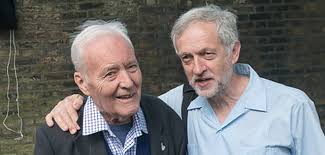
Tony Benn and Jeremy Corbyn: architects of Labour misfortunes
That stance got me interested in taking a longer-term view of British politics. So I looked at percentages of the popular vote in eleven elections over the forty years between 1979 and 2019. Clearly, the relative strengths of the two main parties, Labour and the Conservatives, would be of interest. It struck me, though, that it might also be useful to set them in the context of the overall landscape of parties of the broad right (the Conservatives, but also the hard right parties of today or their earlier embodiments, Brexit Party, UKIP, the British National Party) or of the broad left (Labour, the LibDems and their earlier forms, the Alliance or Liberals, the Greens or Ecology Party, the SNP and Plaid Cymru).
How the left (broadly) performs against the right
compared with Labour alone
What emerges is a curious picture. The ‘left’, in this broad definition (orange line), consistently outperformed the ‘right’ (black line) except in 2015. That surge for the right was principally down to UKIP’s 12.6%; the Conservative result was still an anaemic 36.8%.

With either proportional representation or some arrangement between the constituents of the ‘left’, the ‘right’ would have had a majority of the popular vote for only two years out of the last forty.

Now popular votes don’t necessarily translate into Parliamentary majorities. But if big enough, they can deliver victory, and the ‘left’ tends to be significantly ahead of the ‘right’ most of the time. That suggests that if Labour, the SNP, the Liberal Democrats and the Greens could have pulled together, the Tories would have been out of power for most of the last 40 years, instead of in power for 27 of them.

Interestingly, Labour alone (red line) only outpolled the combined right for three elections – unsurprisingly, the three when Blair was leader and in government. The leftie on Twitter, and others of his ilk there or on FaceBook, are also constantly assuring me that Blair was the lowest of the low and worthy of nothing but contempt. However, if we’re interested in keeping the Tories out of power, it’s worth remembering that he was the only leader in four decades able to ensure that Labour could do that on its own.

For the rest of the time, it would have had to work in partnership with others to oust the Tories. That’s clear from the second graph comparing Labour’s performance (red line) directly with the Tories’ (blue line). Again, only under Blair did Labour outperform the Tories. Otherwise, we’re consistently behind.
Labour performance alone against the Conservatives
Interestingly, the worst results are not under Corbyn. The worst of all, naturally, is 1983. Then Labour was led by Michael Foot, although Tony Benn, the deputy leader, was the main architect of our overwhelming defeat.

Since then, our lowest percentages of the popular vote came in 2010 and 2015. The Tories, however, were down then too, winning by small margins. Looking instead at the gap between Labour and the Tories, the worst elections of all were 1983 and 2019, Benn’s and Corbyn’s. Indeed, it is Corbyn’s greatest achievement to have gifted the Tories their second-highest vote share in that forty-year period. The only higher result was Maggie Thatcher’s first win in 1979.

The significance is that her victory was the first in a series. Johnson’s was the fourth in a row for the Tories, and the first time since the nineteenth century that any party has increased its Parliamentary representation in a fourth election victory.

Corbynists always said that Jeremy would do something remarkable. He has. Although I’m not sure this is what they meant.

This takes us to the nub of the problem for the hard left. One told me recently that whatever we learned from the 2019 election, we should not on any account ‘abandon the programme’. For Corbynites, no compromise is possible on Corbynist policies. That makes any hope of collaboration with other parties impossible. And that, as the last eleven elections demonstrate, means that the right would continue to outperform us.

Above all, with the kind of programme championed by Corbynites now or Bennites in 1983, we ensure not just a Tory win, but a colossal one. Why does this happen? Because Bennites and Corbynites want Labour to mirror their views, not those of the electorate. And the electorate has no time for their policies.

In the current leadership election, we need to choose a leader who reverses that. We need a leader who listens to the voters and goes to them with a programme that they can endorse, even though that means compromise, even giving up on some cherished policies. That way we can win back Labour voters. And if, in addition, we can compromise enough to attract other parties to our banner, why, we could kick the Tories out for a generation.

The alternative is to choose Bennite or Corbynite orthodoxy.

And we know what that gets us: the likes of Maggie or Boris.

Friday, 27 July 2018

Is Labour really anti-Semitic?

There was a time when to be a British Jew was virtually tantamount to being a Labour Party supporter.

That was the case of the Jewish side of my family. My mother was an active Labourite, working as a secretary to a Labour MP during the Second World War, and true to that loyalty right up to her death at 94 two weeks ago.

Like her, I’ve never voted for any other party, and remain a member to this day.

That makes it sad to see that a breach has opened up between Jews and the Labour Party today. A personal sadness for myself. But also ultimately for the Labour Party itself.

The current conflict focuses on Labour’s refusal to adopt in its entirety the definition of anti-Semitism adopted by the International Holocaust Remembrance Association (IHRA). Or rather, not to accept all the accompanying examples.
Three Jewish papers express their anger at Labour's stance
As it happens, the IHRA’s text is weakly drafted and open to multiple interpretations. Take this suggested example of anti-Semitism:

Denying the Jewish people their right to self-determination, e.g., by claiming that the existence of a State of Israel is a racist endeavour.

The Labour leadership objects to it because they see it as limiting the freedom to criticise the state of Israel. However, I see no basis for saying it prevents anyone saying that when the Israeli government reduces the rights of its Arab citizens. Nor does it prevent anyone arguing that by doing so, the Israeli government and many citizens are displaying racist attitudes. As they are.

Indeed, it does not even prevent anyone arguing, as I do, that setting up the state of Israel was an error. It has always struck me as way for Americans and Europeans to salve their consciences over Europe’s failure to learn to iive with its Jews. In effect, we said ‘we can’t learn to live with you, so go away and set up your own country, even at the cost of the people living there today.’

Today, though, it’s far too late. The state of Israel exists and is home to about 6.5m Jews. That’s a reality with which anyone trying to argue about Middle East politics simply has to come to terms.

What is it about that example that annoys the Labour leadership? What argument do they feel it limits their right to express? Do they want to protect the freedom to argue that the Jewish population of Israel has no right to self-determination?

Let’s see where that argument would lead in practice. If that population has no right to self-determination, Israel has no right to exist. If it has no right to exist, then it’s legitimate to use force to bring it to an end. And what would happen to the Jews in the region? We would be backing a policy of ethnic cleansing of Jews.

Is that a position anyone in Labour really wants to take? I can’t imagine a more clearly anti-Semitic stance.

It makes no difference that Israel, while asserting the Jewish right to self-determination denies it to the Palestinians. The bad behaviour of the Israeli government does not justify Labour backing the use of violence against Israel’s citizens.

Another IHRA example of anti-Semitism to which Labour leaders object reads:

Drawing comparisons of contemporary Israeli policy to that of the Nazis.

Again, what right are they trying to uphold? Comparisons with the Nazis are the most facile and futile of arguments. Unless a government has deliberately set out to exterminate an entire race, the comparison is false. Injustice, collective punishments or excessive force against civilians are shameful crimes that Israel has committed, but so have the US and Britain. Perhaps a parallel with them would make more sense than a comparison with the Nazis.

In any case, why would Labour pay a high political price just to allow some of its members to make so lazy and intellectually weak a case?

Because the price is high. Had Labour simply adopted the full IHRA definition and examples, it would have won itself some credit with the Jewish community. It would have undermined the opponents who are now making mileage from the accusations of anti-Semitism. Instead, they have handed their enemies a weapon they could hardly have hoped for in their wildest dreams.

There is, however, another explanation. I’m afraid things turn a bit ugly at this point.

It could be argued that this is all about too little. There are only around a quarter of a million Jews in Britain. Labour could win every single Jewish vote and fail to win an election, or it could lose every single one and still get in.

Besides, though I don’t have statistical evidence for it, my persona experience suggests that British Jews have moved to the right since my mother was young. Like many immigrant communities, they started out on the left while they were poor and oppressed. But as they became prosperous and assimilated, many drifted rightwards.

So maybe there aren’t many votes for Labour to win among the Jewish. How much do they matter to figures in the leadership who suspect them anyway, because of their sympathy for Israel?

The people who matter much more are those traditional Labour voters who, out of xenophobia and delusion that Brexit would benefit them, went over to the far right. That’s why we have the paradox of figures on the left sharing a platform with the hardest nationalists, notably veteran left winger Kate Hoey posing for photo opportunities with Nigel Farage, then leader of the crypto-fascist United Kingdom Independence Party.

After all, there are several million of those voters.

The calculus is easy to follow. On the other hand, many of us in Labour would like to see it being a little more principled than that.

A party that cosies up to the hard right but can’t will make no concessions to show some respect for Jews? That’s not the party my mother and her friends backed in the forties.

How I wish we could get that party back.

Saturday, 24 March 2018

Symbolising nothing

Every evening at 8:00, buglers assemble under Menin Gate in the Belgian town of Ypres to blow the Last Post.
Last Post at the Menin Gate. You can listen to it too, if you want
That’s the call sounded to mark the end of the day in the British Army. It’s also used at military funeral. Ypres, or Ieper in Dutch, is known as Wipers in English. The Menin Road was taken by tens of thousands of men marching out to the killing fields of the Ypres Salient in the First World War. The Menin Gate is covered by the names of some 54,000 who vanished but have no known grave.

The Last Post is a moving tribute to the memory of all those who died at that time. Symbols are like that: they move us because they conjure up sentiments we associate with significant moments, whether tragic or triumphant. Sometimes, though, the symbolism is all there is – there simply is no substance behind it.

In December of last year, the British government, which has achieved precious little in the Brexit negotiations so far, announced that the country would be reverting to blue passports. This was greeted by Nigel Farage, former leader of the ‘United Kingdom Independence Party’, UKIP, as a ‘happy Brexmas’ present. Because, of course, it would be a reversion to the former colour of the passport before we joined the European Union.
The old British passport.
A tradition denied by the EU. Or was it?
That sounds like an assertion of tradition, and a proud tradition, of Britain as an independent nation. Except that it quickly emerged that there had never been any obligation from the EU for Britain to switch passport colour to the present colour – there are other EU nations with blue passports. Even in Britain, the ‘iconic’ blue passport dates only from 1921.

In other words, as a tradition, it’s a pretty shallow one.

However, it mattered to Brexiters. Possibly because they’re struggling, as the reality approaches, to find anything much else positive to say about our departure from the Union. The symbolism seemed important.

But now we’ve discovered that the contract to produce the new passports has been won, in an open tender, by a Franco-Dutch company, Gemalto. It beat a British competitor, De La Rue. It did so because it could guarantee the same quality for £120 million less over the five years the contract is due to last.

Five years: that’s well into Brexit.

Now that's potent symbolism. What that’s saying is that the British taxpayer – and indeed consumer – can at times (I’d say often) get a better deal by shopping abroad. And that’s what Brexit’s really about: putting up protective walls around uncompetitive industries.

De La Rue is appealing the decision to award the contract against them. If it wins, that will say something powerful about what we’re trying to achieve with Brexit: it will mean that we are telling British citizens to pay more to protect inefficiency. Which is very much in line with what Brexit is promising generally: higher food prices, higher prices on a wide range of goods we currently import, higher prices to find workers in key industries for which the British apparently have no taste.

You may say, at least by taking such a step we protect British workers.

Well, no. Because workers are taxpayers too. As Brexit Britain finds itself financing more and more inefficiency of this kind, it will find that more and more workers are being forced more and more often to dip into their own pockets to protect such jobs. Inevitably, that can’t be sustained indefinitely.

The protection that was supposed to preserve jobs will be impossible to fund in the long run and unemployment will grow – as will poverty.

So what can one say about the precious blue passport? Adapting Shakespeare, I’d have to say it was a tale, told by an idiot, and symbolising nothing.

He wrote ‘signifying’. And he was talking about life. But, hey, this way it seems to work just as well for blue passports and Brexit generally.

Friday, 9 February 2018

Labour and Brexit: time to lead

If you watch a friend signing a document committing a large sum to an organisation that is scamming him, you do him no service by offering a better pen. Instead, if you want to help him, you'll try to talk him out of the mistake he's making. He may not like you for shattering his illusions but it is still the best favour you can do for him.

The British government has spent a long time trying to hide the results of its own analysis of the potential economic outcomes of the different options for Brexit: leaving the EU but staying in the Single Market and Customs Union, leaving but with a good trade deal in place, or leaving with no deal and having to revert to World Trade Organisation terms ("hard Brexit). However, the government has been forced to release the reports to Parliament. The broad lines have begun to leak.

Those of us who voted to remain within the EU will not be at all surprised to discover that there is no option that is economically beneficial to the UK. The harder the Brexit, the worse the impact. And the regions most affected will be the North of England and to a somewhat lesser extent, the West Midlands.

Brexit damage to the UK economy by region
From the Guardian
These, coincidentally, are the regions that voted most solidly for Brexit. They are also, the North of England above all and the West Midlands to a somewhat lesser extent, the heartlands of the Labour Party - my party.

It's easy to sympathise with Labour MPs, and indeed Labour Party members in those regions, who feel that opposing the Brexit views of so many constituents will undermine the party's position. It's particularly tough for the MPs, whose very jobs are at stake. So it's comprehensible that there should be calls to show understanding, even sympathy, for the anxiety about the EU expressed by so many in those regions.

This is often dressed up as an economic concern. EU immigrants are taking local jobs or putting excessive pressure on health, housing or education services. However, there is no evidence that any of this is happening and now there is evidence that Brexit would be no solution anyway - the government analysis shows that Brexit would wreak far worse damage on services and employment than immigrants ever could - if they did cause damage

There is no valid economic argument for Brexit.

Which leads to the darker, uncomfortable truth about a lot of these Leave voters. A truth we don't like to voice inside Labour. Their concern about immigrants may not be about economics at all but simply about immigration. 

What drives it is fear of the other, the foreigner - which is a translation of the original Greek that gives us the word xenophobia. It is the attitude summed up by Nigel Farage, leader of the UK Independence Party at the time of the Brexit referendum, when he spoke of his discomfort at finding himself in a railway carriage in which everyone around him was speaking a foreign language.

If "understanding" or "sympathy" means accommodating xenophobia, then Labour would be crossing a red line which lose it its soul.

Our supporters in the Brexit camp have swallowed a snake oil salesman's patter. They believed the now-discredited claims of the Brexiters that there would be a huge Brexit dividend that could be used to fund the NHS. They believed that many of their woes were caused by immigrants and leaving the EU would solve the problem. They believed it, and the latest leaks demonstrate again how mistaken they were.

Labour is the friend of these voters who are going to bear the brunt of the harm Brexit will do to Britain. It has a duty to speak truth to the Brexiters among them, explaining clearly how mistaken they were, not in a superior way, but just as one would attempt to prevent a friend signing away his money. We should be winning them round to what the evidence demonstrates: Brexit will solve none of their problems. And they need the chance to change their mind and exit from Brexit. Or at any rate, the chance to stay in the Customs Union, the least bad option of those on offer.

Instead the Labour leadership continues to sit on a fence. We're told the Brexit vote must be respected and no opportunity to revise that vote must be given. We hear claims, demonstrated to be entirely false by the example of Norway, that it isn't even possible to stay in the Single Market after leaving the EU. And we're told we have to go along with Leave sentiments, without interrogating ourselves as to whether those sentiments are simply based on economic misapprehension or on something far more toxic: downright xenophobia.

That doesn't feel like leadership. It feels like followership. And it's time Labour learned to lead once more.

Especially on the Brexit issue, the most urgent of our times, the one on which our friends most need our help.

Sunday, 14 January 2018

Brexit: hope born in an unexpected place

It feels as though a sea change may be under way in Britain. Just may be. And if it is, it’s not a moment too soon.

Nigel Farage:
not the obvious source of encouragement for the pro-EU side
Even Nigel Farage, former leader of the bizarrely named United Kingdom Independence Party – he’s a fan of Donald Trump and apparently keen on making the United Kingdom even more dependent on US whim than it already is – has now suggested that it may be necessary to hold a second Brexit referendum. Why, he’s gone so far as to suggest that Brexit might be defeated in a re-run vote:

I think the Leave side is in danger of not even making the argument. The Leave groups need to regather and regroup, because Remain is making all the arguments. After we won the referendum, we closed the doors and stopped making the argument.

What he hasn’t yet conceded is that, if the Leave side isn’t making much of an argument, it may be because it doesn’t have much of an argument to make. During the referendum campaign in 2016, both sides advanced wildly overstated claims, but Leave’s distortions (£350m a week released for the NHS, a world anxious to beat a path to Britain’s door to sign trade agreements…) won more votes than Remain’s.

Since then we’ve watched a hapless government, faced by an opposition still sitting on the fence, attempting to negotiate a good Brexit deal with the EU. That process quickly revealed that far from saving any money, Brexit was going to cost Britain a great deal. Equally, it’s becoming increasingly clear that there is no great appetite around the world to hurry up with trade deals favourable to Britain. The United States has specified that a trade deal would require Britain to drop its food standards and other regulations. In any case, deteriorating relations with Trump now make it look as though no trade deal of any kind. is likely to be finalised soon

Though the inept leaders of the Remain campaign overstated their case, the picture that is emerging looks a great deal closer to what they were forecasting than to the rose-tinted optimism of the Brexit side. That may lead to swinging enough voters away from Brexit to reverse the results of the June 2016 referendum. So one can understand Farage’s concerns.

Of course, there’s no guarantee that any of this will happen. Nobody in government is ready to call for a second referendum (actually, the third: the first referendum took place in 1975 and confirmed our membership of the EU; another would allow the electorate to reverse the sad effect of the second in 2016). The leader of the Labour Party, Jeremy Corbyn, has again stated that there is no call on his side for a further referendum either, and it is not Labour Party policy.

Even if there were another referendum, there is no guarantee that Remain would win this time. There is a core supporting departure from the EU which is fiercely attached to its views, and unresponsive to any argument. Remainers can only hope that the necessary 2% or more of voters may have switched to their side of the debate, in the light of real evidence. Given the chance, they might just block Brexit at the eleventh hour.

At most what we have are some straws in the wind. Some cause for hope that we might be able to prevent this toxic step. No guarantees of success, but maybe the beginnings of a change in the climate.

Odd that the glimmer of hope has been given some impetus by Nigel Farage. In general, I’d feel no more inclined to turn to him for encouragement than I would to Trump. But in the rather bleak and deeply confused conditions of today, I’ll take whatever comfort there is, wherever it comes from.

Wednesday, 14 June 2017

An election of all the losers

Who needs a “none of the above” option on a ballot paper? Certainly not the British electorate. It has found a way of delivering that verdict using just the classic old “pick one candidate” form.

The 8 June election was the one everyone lost.

The poor old Liberal Democrats won only a handful more seats, taking their total to 12. That’s far behind the glory days when after two generations of hard work, they peaked at 57 under Nick Clegg, becoming a real force in British politics. Unfortunately, Clegg took them into coalition with the Conservatives, securing himself a cabinet seat on which to park his bum, but turning his party into mini-Tories. Why would anyone vote for a Tory lookalike when they can choose the real thing instead? It’s going to take a long time yet to come back from the car crash the Lib Dems created for themselves under Clegg – who lost his own parliamentary seat on 8 June.

Then there was UKIP. This is the far-right United Kingdom Independence Party which used to be led by Nigel Farage. He made clear what “Independence” meant in his book: he spoke at the Republican Party congress in the US and disappeared up Donald Trump’s fundament at the earliest possible opportunity after the Donald took the White House. Farage is a perfect expression of the Brexit spirit: it removes us from dependence on all those shifty Europeans, instead making us completely subservient to the Trumpiverse.

In one of the better pieces of news from the election, UKIP saw its vote fall from 3,881,099 to 593,852. Essentially a wipeout, and it couldn’t happen to a more deserving bunch.

Then there was the Scottish National Party. It reached previously unimaginable heights of success in 2015, taking 56 out of the 59 seats in Scotland, reducing the Conservatives, Liberal Democrats and Labour to just one seat each. There was, inevitably, only one way for the SNP to go but the extent of its fall was impressive: a loss of 21 seats, leaving it still the largest party north of the border, but much chastened. That was the price of insisting on another independence referendum at a time when the electorate had become tired of the subject.

The fate of the Conservative Party was a joy to behold. Theresa May went for an unnecessary election to convert her small majority into a much larger one. “Strong and stable” was her mantra, repeated to the point of nausea; in the event, she lost her majority altogether, leading to her scrabbling to find a little provisional stability by a pact with Northern Ireland’s pious and bigoted Democratic Unionist Party. That means fumbling to form an enfeebled government within which her own position is substantially weaker.


Theresa May promised strength and stability
but ended up feeble and fumbling
And finally, there was Labour. Most people, and I was very much of that number, expected the leader Jeremy Corbyn to run a weak campaign and take the party to its worst result since 1935 or at least 1983. Well, we were all wrong. Corbyn found an inspiring dynamism that I didn’t expect him to produce and the party did far less badly than expected. It had a huge surge in its popular vote (but even the unhappy Tories achieved an increase, if a far smaller one). Disappointingly, the surge only delivered Labour 32 more seats, leaving it just four ahead of the number it took from the defeat of 2010. However, the 2010 score had one great advantage over that of 2015: it was close enough to a majority to make the victory at a future election a realistic prospect. We are, at least, back in that position again.

In many ways, Labour emerged strongest – or at any rate, least injured – from the election. There’s no denying that it was defeated, but it is on the way up where all its main rivals are on the way down. That’s encouraging but mustn’t lead to complacency. There’s still a mountain to climb: Labour needs twice the growth – 64 additional seats – to secure a parliamentary majority at the next election than it achieved at this one.

That’s going to need some brilliant, inspiring and effective opposition over the next few years. Perhaps not many years: minority governments tend not to last long. But for that time, long or short, we’re going to need to see Corbyn at his best, the dynamic figure who emerged from the election campaign, to consolidate the party’s position today and prepare to take the huge step remaining to get back into office.

In fact, it means winning the confidence of a far bigger tranche of the electorate. So, next time, unlike this one, voters don’t go for “none of the above”. And we don’t see another election of all the losers.

Tuesday, 25 April 2017

Left and right: opposite wings or the meeting point of a circle?

“Any delay in the ranks of the left exposes us, at the very least, to a further advance by the far right, which will further reduce the social and political strength of the left in the parliamentary elections.”

That was French Socialist Party politician Jean-Luc Mélenchon in 2002, the first time the far right National Front saw its candidate, Jean-Marie le Pen, win a place in a run-off election for President.

In 2017, no longer in the Socialist Party, Mélechon took a stance on the far left of French politics and came fourth in the first round of the Presidential election, with a respectable but insufficient 19.5% of the votes cast. Once again, the far right is through to the runoff – in this case represented by le Pen’s daughter, Marine. But, amazing to relate, Mr Mélenchon seems to have forgotten his wise words of 2002 about the damage of delay, preferring indeed to delay day after day instead of coming out in favour of the centrist candidate, Emmanuel Macron, front-runner in the first round and now the only candidate able to block “a further advance by the far right”.

Now, why might that be? Could it perhaps have something to do with the sense that rather a lot of Mélenchon’s voters might prefer to go with the hard right in the second round, than with the soft left? And that Mélenchon would rather go along with that than lose contact with a voter base he rather values?

Call me cynical if you like, but that’s what I think is going on. There is in the hard left a holier-than-thou attitude which claims that it’s more principled and honest than the rest of us, but it’s capable of being just as opportunistic and evasive as, say, a Blair or a Putin.

At a deeper level, there is also a deeper link between far left and far right. Both are far out. They like to reason in terms of simple, pure solutions to complex problems, which avoid any of the complexities and messiness of reality. Compromise? That only dilutes the purity of our principles. Instead you end up defending a maximalist policy which, on the left, can lead you to defend the rights of the poor so hard in Venezuela that you bankrupt the country and starve your people. On the right, it leads to taking Britain out of the EU to escape from international control, only to leave it entirely dependent on the whims of the United States (or, worse still, the Trumpiverse).

There is today a taste for the simple and uncompromising. And it leads to the far right and far left both exerting greater appeal than they usually do – and almost interchangeably. Which is why voters can switch from Mélenchon to the National Front without apparent inconsistency.

Nor is this an exclusively French phenomenon. Kate Hoey, left-wing Labour MP for Vauxhall, has an enviable reputation for standing up for the rights of her hard-pressed, poor constituents. And yet, seduced by her enthusiastic dislike of the European Union, she found herself working shoulder to shoulder with Nigel Farage, then leader of UKIP, the British equivalent of the French National Front. They may have come to their common position from opposite directions but ended up, like two halves of a circle, meeting at a single point.

Hoey with her buddy, and supposed inveterate opponent, Farage
In the pursuit of fantasist, simple solutions, people can find themselves with strange bedfellows, though they approach them from different directions. Britain, sadly, is going to be living with the consequences of those fantasies for decades to come, struggling to find a role outside the EU. In France, on the other hand, if the defeat of Mélenchon is followed and confirmed by the defeat of the National Front, that fate may well be dodged.

At least for now.

Friday, 24 February 2017

Corbyn notches up just the kind of achievement we expected of him

There isn’t generally anything much that’s epochal about a parliamentary by-election in Britain.

Each returns a single Member of Parliament out of 650, so it’s most unlikely to bring down a government or even have a significant impact on the balance of power between parties. However, they tend to attract a great deal of attention because they can be straws in the wind, indicators of the way politics is trending.

There were two in England yesterday, in Labour-held constituencies. In both cases they were caused by the resignation of the incumbents, to pursue other careers (one as director of a museum, the other as a PR executive in the nuclear industry). This may seem strange – giving up a political career – but you have to remember that most politicians would like to get into government. His supporters treat Jeremy Corbyn, the present Labour leader, with almost religious fervour, and hold fast to a faith (a form of belief not requiring support from evidence), that he will in time be elected prime minister. People whose career depends on that happening, however, take a rather more jaundiced view and it’s less surprising than one might think, that they seek advancement elsewhere.

First the good news. Labour held on to the constituency in Stoke, even if with a small reduction in its vote share. What makes the victory particularly important is that Labour stopped the bigoted, hard right party UKIP winning a seat from another party for the first time: currently UKIP has one MP, but only because he defected from the Tories and hung on to the seat at the last general election (the other defector was defeated). UKIP, which is the British equivalent of the populist authoritarian that propelled Trump to power, may be losing steam: as well as failing in Stoke, it moved backwards in the other by-election, in the Copeland constituency.

There voters delivered another lesson. Corbyn has always been presented as a great mould-breaker, overthrowing political conventions that stifle the electorate and prevent progress. And Copeland certainly is mould-breaking.

Corbyn points the way to a mould-breaking result
If not quite the kind of result his supporters promised us
The boring convention is that governing parties lose by-elections. This is particularly true in seats held by the opposition: the general rule is that the opposition party increases its vote and can point to the win as evidence of surging support, giving it hope of replacing the government at the next general election.

Well, Corbyn’s certainly broken with that tedious convention. Copeland saw the governing party, in this case the Conservatives, win a by-election in an opposition-held seat for the first time since1982. Even the 1982 by-election, in Mitcham and Morden, was special: it was provoked by a Labour MP who had defected to a newly-formed Social Democratic Party and decided to go back to his constituents to see if they would re-elect him under his new colours. It turns out they wouldn’t. As Labour ran against him, the centre-left vote was split and the Tories won.

In Copeland, Labour fought a well-organised campaign with a good candidate, without a defector from its own ranks standing against it, and still lost. It’s a remarkable achievement.

The 1982 loss was a harbinger of the massive defeat Labour would suffer in the 1983 general election. It was at that time led by Michael Foot, a remarkably likeable man, of breath-taking intellectual capacity and firm commitment to principle. Sadly, he wasn’t seen as a potential prime minister by many electors and they gave Labour the fewest seats it had won since the particularly disastrous election of 1935.

Corbyn isn’t quite a Michael Foot. He’s a nice old man who’s nursed a London seat for 30 years in more or less unbroken obscurity. He likes to present himself as principled like Foot, but many of us suspect that he’s not telling us his real views on key political issues such as Brexit. There has to be at least a suspicion that he can’t rival Foot’s honesty.

What he does have in common with Foot is that few electors see him as a potential prime minister (apart, of course, from his fervent supporters). Indeed, the Guardian reported that, as the defeated Labour candidate left the Copeland count, a passerby shouted “Sack Corbyn”. He’s by no means alone in feeling that way, suggesting that Corbyn is well on the way to doing at least as badly as Foot in 1983.

Labour had held Copeland since 1935. Labour’s now lost it on Corbyn’s watch

That may be mould-breaking. Or it may just be mouldy.

Saturday, 3 December 2016

A triumph for the LibDems. A defeat for the Tories. A warning for Labour

It’s always satisfying to see a Tory government being given a bloody nose. 

It’s even more satisfying when it’s a victory for those who don’t accept the Brexit verdict as irrevocable. 

And it’s best of all when it’s administered to an unpleasant individual of thoroughly toxic views.

All that happened this week.

Zac Goldsmith ran an unpleasant Tory campaign to be Mayor of London last year, calling on racist and Islamophobic notions to try – and, fortunately, fail – to beat Labour’s candidate, Sadiq Khan, whose name is probably enough to explain the racism and Islamophobia. Not to justify them, of course, but certainly to explain why an unprincipled candidate would resort to them. 

This year, he resigned from the Conservative Party and from Parliament to precipitate a by-election in his constituency of Richmond Park, where he ran as an independent against the government’s decision to build a new runway at nearby Heathrow airport.

The Liberal Democratic candidate, Sarah Olney, a strong supporter of continued membership of the EU, chose not to campaign on the airport but to focus on Brexit instead. To widespread surprise (including my own), she snatched the seat from Goldsmith, converting his majority of 23,000 votes into her own of nearly 1900.

An excellent result.


The defeated candidate (for local MP and London Mayor)
and the victorious LibDem
If I have a quibble it’s that we had to depend on the Liberal Democrats to win this victory. The main party in opposition to the Tories is my own, Labour. It should be the one challenging the government, and all the more so since the Liberal Democrats were in coalition with the Tories between 2010 and 2015. That was both a betrayal of principle and counter-productive: it reduced the party’s presence in Parliament from 62 to eight. The Richmond Park result may suggest that things are turning around for the LibDems (though one win doesn’t make a resurrection)but it certainly reflects a Labour failure.

Why do I say that?

If Sarah Olney’s win owed a great deal to the LibDems’ position against Brexit, undoubtedly the biggest question for the vast majority of voters, her party was able to make it their own because Labour’s silence on the subject has been deafening. 

Why is it so quiet? Silence is always hard to interpret, but occasionally it gets broken. John McDonnell, a close ally of the party’s leader Jeremy Corbyn, recently described Brexit as an “enormous opportunity”. This seemed to confirm a suspicion many of us felt that the Labour leadership wasn’t particularly comfortable with the party’s official policy of backing continued EU membership. 

Meanwhile, siren voices on the right of the Labour Party are calling on us to address anxieties over immigration in Labour’s traditional voter base. Again, this provokes suspicion, in this case that we are being urged to move rightwards, to counter the challenge presented by the extreme anti-EU and xenophobic United Kingdom Independence Party, UKIP. As another of Corbyn’s allies, Diane Abbott, recently pointed out – correctly – Labour can’t win by being UKIP-lite. If people want UKIP policies, they’ll vote UKIP. Labour doesn’t beat them by accommodating them, but by explaining that turning against foreigners won’t address any of the real problems affecting our supporters, which are poverty, insecurity and joblessness. Instead, we need to tackle the causes of economic decline – not least of which is the decision to leave the EU.

That’s hard to do if you’re not too sure about the EU yourself. Hence the silence.

The problem is that silence isn’t leadership and leadership is what voters are crying out for. Labour isn’t doing leadership right now. There was recently a Parliamentary vote, on a motion advanced by the Scottish National Party, to investigate Tony Blair’s role over the Iraq War and his possible misleading of Parliament at the time.

There are two positions one can legitimately take on the issue. 

The SNP’s would be that Blair behaved unconscionably and needs to be held to account by Parliament. 

The majority Labour position, with which I agree, isn’t simply one of “hands off our former leader” but rather argues that the problem was that Blair had far too much authority, allowing him to commit the country against its will. So it was an institutional issue, not a personal one, and it needs to be tackled at that level. That ties in, for instance, with the calls for Parliament and not just the present Prime Minister to have the final say over Brexit.

A third position is illegitimate. That’s to have nothing to say on the matter. It’s striking that all three of Corbyn, McDonnell and Abbott stayed away from Parliament at the time of the debate.

Silence, like over the EU.

Nature abhors a vacuum. Similarly, voters abhor silence. While it stays quiet and on the fence, refusing to lead, the group that technically controls the Labour leadership leaves the Party vulnerable to attack by those who flow in to fill the political vacuum – whether from UKIP or from the LibDems.

So the Richmond result isn’t just a victory for the LibDems. It isn’t just a black eye for the Tories. It’s also a serious wake-up call to Labour.

The leadership needs to make up its mind: start leading, on the issues that matter to the electorate, or see our support continue to erode. Otherwise – please just stand aside and let someone else take over. 

Someone who has something to say. 

Someone whos prepared to get out in front and lead.
-->

Tuesday, 22 November 2016

Our age of political dilettantism...

Ken Loach is a great film maker. I could perhaps have done without the hackneyed story line of The Wind that Shook the Barley, but The Navigators or Sweet Sixteen are masterpieces as is, in a different genre, The Angels’ Share.

So I have great admiration for him in film, the area where he does outstanding work.

A scene from Sweet Sixteen: film-making is what Loach does best
Sadly, however, he’s recently decided to speak out on politics. Here his performance strikes me as rather more underwhelming. In fact, it strikes me as a pity that he’s wandered into this field at all – forbearance might have suited him much better.

He was quoted in the Guardian saying, “The deselection of MPs is presented as a threat [but] it is not a job for life. Labour party members have the right to be represented by someone they choose.”

Labour Party members, and I speak as one myself, have no such right. We shouldn’t try to arrogate it to ourselves. Our right is to select a candidate. Our duty is to try to choose one who is the best placed to represent the interests of those most requiring protection in the system in which we live. In other words, we should select candidates who, if elected, will be particularly good at representing those the Labour Party is committed to serve.

That doesn’t necessarily mean representing their views, but their interests. But it doesn’t mean representing them – voters and, above all, the least privileged of voters – not the membership of the Labour Party.

To me, the lesson of Loach’s foray into Labour politics seems that it’s probably better not to let amateurs (like him or, indeed, like me) call the shots. Which makes it all the more frightening to contemplate the other great political amateur of the day. He, sadly, hasn’t just made some silly statements about politics, but has been elected to the most powerful political office in the world, the Presidency of the United States.

Elected, that is, not by winning a majority of voters – he received 1.7m votes fewer than his opponent Hillary Clinton – but by dint of winning a majority in the electoral college that ultimately chooses the president. That makes him president-elect but it doesn’t make him the choice of the people, even though he speaks as though he had the authority such a mandate would give him.

Another popular vote that he certainly didn’t win was that of the British electorate. In Britain, he has all the authority – unfortunately – that holding the world’s most powerful office confers. He holds no authority to speak for Britain. So it was amusing in a dry kind of way when Donald Trump told the British government that it ought to appoint Nigel Farage as British ambassador to the States.

It was no surprise that Trump should make that particular choice. Farage leads the United Kingdom Independence Party, UKIP, a thoroughly toxic organisation which uses xenophobia for a cover for what is actually downright racism. He is, in other words, a man very much after Trump’s heart.

What was more surprising was that Trump seemed to feel that his election, which will mean a huge change in personnel in Washington, would lead to a similar night of the long knives in London. Above all, he felt he had a say in the process.

In a long and not always salutary history – British behaviour towards the Americas left a lot to be desired, for instance, and there were far more deplorable incidents elsewhere – Britain has at least developed a reasonably sophisticated way of dealing with bumptious fools in diplomacy. liked pleased with the Prime Minister and Foreign Secretary's response to Trump’s suggestion for a new ambassador.

“There is no vacancy,” they said.

From opposite ends of the political spectrum, Loach and Trump illustrate the same point, that amateurs do best to keep out of politics.

Loach is a man of huge talent. He ought to focus on the area where he shines. Trump, of course, is talentless.

Perhaps he could just sink into deserved obscurity at the earliest opportunity?

Friday, 29 July 2016

Clinton: showing how to beat reaction

They do say that, in politics, you shouldn’t build a campaign on nostalgia for the past, but on promise for the future.

It was the problem faced by John Major, British Tory Prime Minister after Maggie Thatcher, when he launched his “Back to Basics” campaign. Going “back” is never appealing. And there’s nothing particularly inspiring about “basics” either.

As a slogan, it had none of the spark of Tony Blair’s “tough on crime, tough on the causes of crime.” The truth is that once he was in power, Blair concentrated on being tough on crime and much less determined in rooting out the causes, but as a slogan, it certainly had appeal, helping position him to take on the Tories and win.

Hillary: wrong on some things, right on many others, turning
into quite a campaigner. And hugely to be preferred to the alternative
That all came back to me when I saw Hillary Clinton’s acceptance speech at the Democratic National Convention. Because, faced with Donald Trump’s slogan, ‘Make America great again’, so easy as to be simplistic, she answered with words suggesting that America is great still.

We have the most dynamic and diverse people in the world.

We have the most tolerant and generous young people we've ever had.

We have the most powerful military, the most innovative entrepreneurs, the most enduring values, freedom and equality, justice and opportunity, we should be so proud that those words are associated with us.


Now, you can agree or disagree with the sentiment. You can’t question the impact. Trump is looking backwards, to a supposed time when America was great, just as Major hankered after days when, allegedly, we were back with basics. Clinton proclaims the greatness of America today. And because she believes in today, she can paint an appealing picture of tomorrow.

Democrats, we are the party of working people.

But we haven't done a good enough job showing we get what you're going through, and we're going to do something to help. So tonight I want to tell you how we will empower Americans to live better lives.

My primary mission as president will be to create more opportunity and more good jobs with rising wages right here in the United States.

From my first day in office to my last, especially in places that for too long have been left out and left behind, from our inner cities to our small towns, from Indian country to coal country from communities ravaged by addiction, to regions hollowed out by plant closures.

And here's what I believe. I believe America thrives when the middle class thrives. I believe our economy isn't working the way it should because our democracy isn't working the way it should.


Clinton’s not naïve though, or a newcomer to politics. While she wisely presented a positive, forward-looking programme, she also knew that it was no use being good and kind and decent in politics. To win supporters, you also have to beat the other guy. When that guy’s Trump, that’s all the more important than ever, but also a lot easier for the opportunities he gives you.

… don't believe anyone who says I alone can fix it.

Yes, those were actually Donald Trump's words in Cleveland. And they should set off alarm bells for all of us. Really? I alone can fix it? Isn't he forgetting troops on the front lines, police officers and firefighters who run toward danger, doctors and nurses who care for us, teachers who change lives, entrepreneurs who see possibilities in every problem, mothers who lost children to violence and are building a movement to keep other kids safe? He's forgetting every last one of us.

Americans don't say "I alone can fix it." We say "we'll fix it together!"


And I particularly liked:

He spoke for 70-odd minutes, and I do mean odd...

That got a furious Twitter reaction from Trump. Rather confirming something else Hillary said:

A man you can bait with a tweet is not a man we can trust with nuclear weapons!

She was feisty, she was positive, she was forward-looking. She’s well ahead in the polls. She may not say all the things you, or I, would like but she has a message worth listening to. And boy, she's preferable to the alternative by light years.

Let’s hope she’s stays in front, right through to polling day and beyond.

And for us, back here in Britain, let’s hope we too can find a campaigner as effective as she is.

Wednesday, 23 March 2016

Responding to the Brussels attacks: how to get it wrong

It’s Brussels this time. At least another 31 deaths and over 200 injured. Harrowing, dismal events, and the latest in a series of them.

The scene at Zaventem airport, Brussels, soon after the explosion
That’s bad enough, but then it gets worse. As usual, our own reaction will magnify the damage and give the terrorists a victory they’ve done nothing to merit.

The Belgian government, for instance, will go way over the top with security measures, making life much safer but far less convenient. People will have to leave earlier to get to work on time, earlier to catch a plane. So as well as the tragedy inflicted on the families immediately involved, the terrorists will leave a lasting mark on the economy of a major European capital, making it more difficult to run.

The British government has added to the mix by advising against travel to Brussels. I have no particular reason to go to Brussels at the moment, but fear of terrorism wouldn’t stop me: the place is going to be one of the safest on earth for the new few weeks or months. Just a pig to get around.

In any case, it would be nonsense to fear Brussels, since I commute into London. That city has to be facing a risk of terrorism at least as high as at any time since the IRA campaign of the eighties. But I still feel I’m much more likely to be involved in a traffic accident than caught up in a terrorist outrage; since I’m not going to stop crossing roads or driving a car, it makes no sense avoiding London.

Besides, refusing to be deflected denies the terrorists an easy win.

There are other, still more vital ways, of denying them. One of the most important is to resist the urge to bomb them out of existence. It was that kind of thinking that got us into our difficulties in the first place: an illegitimate, unnecessary war in Iraq spawned ISIS. The Syrian civil war has become a proxy for East-West clashes as well as tensions inside the Middle East, that are wreaking havoc in Libya and Yemen too. We’ve brutalised a great many young men, and not a few young women, and given them something to avenge.

Staffan de Mistura, UN Special Envoy on the Syria crisis, told the Guardian that, following the Brussels attacks:

The message we are drawing out is that we need to end the fires of war. We need to find a political solution in Syria to make sure we can all concentrate on what is the real danger, in the world and in Syria.

Take away the underlying conflict, and you take away its expression in other countries – in Turkey, which suffers more often than most, but also in Europe.

Going a step further, we also have to resist the temptation to blame the outrages on Islam or Molenbeek, the district of Brussels from which the attacks against both Brussels and Paris came. Donald Trump is naturally attacking immigration itself as the source of such terrorism, trying to blame entire populations for the work of a handful of people; in Britain, the far-right UKIP attacks open borders in Europe, ignoring the fact that Salah Abdeslam, who led on the logistics of the Paris attack, was stopped at the Hungarian-Austrian border in September 2015, but was allowed to drive on. The failure wasn’t due to the Schengen groups open borders but to lousy intelligence.

Stigmatising a European Muslim population of several million for the actions of a tiny minority simply creates more enemies for us; targeting Molenbeek would be just as counter-productive, since what makes the district generate aggression so easily is precisely that it’s so poorly assimilated. 30% are out of work. One in three of the population is foreign. Increasing its pain will do no one any good.

The IRA campaign in Northern Ireland was waged by a few hundred activists. Behind them, however, there were probably many thousands of passive supporters who provided the active members with information and shelter as necessary.

Eventually, once Westminster had woken up to a more intelligent approach to the province than military repression, huge sums were invested into Northern Ireland to revive the economy. A long campaign led to reasonably fair access to jobs, housing and education for Protestants and Catholics. The effect was to drain the swamp that gave the activists their support.

At the same time, intense and highly competent intelligence work enabled the security services to break up IRA groups and thwart attacks. After all, if the IRA had to depend on many thousands, it was impossible not to have leaks to the police, and good intelligence took advantage of them.

It’s clear, if only from the fact that Abdeslam escaped arrest in Molenbeek for several months, that there’s an extensive passive support network there too. Again, there must have been leaks. But were the security forces set up to take advantage of them? Belgium is, for instance, coming to terms with the fact that the police force has far too few Arabic speakers.

Whatever Trump may say, Molenbeek doesn’t demonstrate a failure of the Community, merely a failure of Community policing.

Will we be smart enough to apply the lessons of Northern Ireland elsewhere in Europe? To respond to the latest attacks not with increased repression but with investment and highly-competent intelligence work? To help all our sad little Molenbeeks, across the continent, out of their misery rather than drive them deeper into it?

Which boils down to one simple question: will we avoid giving the terrorists yet another undeserved victory?