Showing posts with label Railways. Show all posts

Tuesday, 5 February 2019

Glimpsing a different world

The great advantage of FaceTime is that you can see the person you’re talking to as well as being able to talk to them. On the other hand, the disadvantage of FaceTime is that if you don’t turn off the video link, the other person can see you too.

The other problem is that, if you can’t get your earphones to work on your laptop, the people in the train carriage around you will hear your entire conversation.

Well, its been a while since Ive given an account of an overheard conversation here. So I was glad to hear this one, if only so that I could regale you with it too.

Behind me in my carriage was a man – my apologies, a gentleman, though that term has nothing to do with gentleness and everything to do with class – with what I’d have to say was a perfect example of a plummy accent. That’s an accent that’s rich and round. Not rich as in food, but rich as in bank balance. Round not as in personally fat, but as in being born to live on the fat of the land. It was redolent of the best, by which I mean the most expensive, kind of public school – in Britain, the name we use for the more pricey private schools. 

In short, his voice dripped with the kind of confidence that comes of years of study – or at least attendance – at a school designed to train its pupils to the highest and most acute levels of belief in entitlement.

The FaceTime call came in to him at what would have been around 9:00 in the morning in the eastern United States, which was where it was made. The speaker was an American woman and she clearly had financial responsibility for a venture in which she and the gentleman had some kind of association.

“I’m afraid I didn’t realise,” she was saying, “that he would run up $50,000 in costs crossing the Atlantic in just six months. I hadn’t budgeted for that.”

Mumble, mumble, mumble came the reply. It seems he realised he could be heard.

“I understand,” she replied, a little louder, as though trying to beat down unfair criticism, “I’d budgeted that amount for a full year. Can a pilot really run through that sum in just six months?”

Clearly whatever he said next got under her skin a little.

“I know,” she said, “I realise I made a mistake. I realise it was my mistake. Thanks for helping by pointing it out. Thank you.”

Something in her tone suggested that the gratitude she was expressing wasn’t entirely sincere.

I missed the next few exchanges. Firstly, because I was trying to focus on my work a little. Secondly, because you’re not supposed to eavesdrop on strangers’ conversations, are you? And thirdly because, in any case, the train went through one of those super-rattly bits where I couldn’t have heard anything even if I’d tried.

But then suddenly the voices boomed out more loudly than ever. Hers at least.

“Well, Italy comes under my responsibility. Maybe I should go. Though the only place I really like there is Florence.”

Really? We’re writing off Arezzo? Milan? Turin? Rome? Venice, pearl of the Adriatic, for God’s sake?

“I could go there,” she went on,

“Ah,” the plummy one replied, now loud enough to hear him and as plummy as they make them, “if we forced you, you’d be prepared to go there, would you?”

It was rather a flat joke and it was delivered in a flat tone. It missed its mark entirely.

“What? What?” she asked.

He repeated his witticism, which seldom has a good effect even if it starts out supremely witty, and this one hadn’t.

‘Ah,” she said, “yes. I could stand Florence if it becomes absolutely necessary.”

But there was no laugh, no cheerful acknowledgement of humour.

I missed a few more sentences and when I picked up the conversation again, it began to appear that their association wasn’t merely a business one.

“I have to go to work,” she was saying, “I’m just a poor defence attorney having to appear for mere criminals.”

I couldn’t help feeling that the sarcasm was really beginning to ooze now.

“We’ve just got into Market Harborough,” said Plummy Voice. 

That was strictly true, as I quickly verified by looking out of the window, but it struck me as not entirely relevant to her comment. It seems she agreed.


Nothing remarkable about Market Harborough station
And yet Plummy Voice remarked on it
“Oh my God. That is so English. That’s you being English, isn’t it? It’s your way of saying that you don’t give a damn about me. That you don’t even like me.”

I didn’t catch his reply but it clearly wasn’t satisfactory.

“Well, you’re dull. I don’t like you either. I don’t like you at all. You’re dull. You’re very dull. No one likes you. You’ll end up alone.”

I’ve got to admit that he struck me as profoundly boring, but then I may not have been predisposed to like him from the moment I first heard his voice.

“I’ve got indigestion,” he answered, which struck me as a remark completely in the same category as “we’ve arrived in Market Harborough”.

“Well!” she cried, and I mean cried, as in shouted, “at least you’ve got that!”

What did she mean? That having indigestion made him marginally less dull? That it meant he had some company? You know, “you’re never alone with indigestion”?

But pretty soon she was being winsome.

“Before I go, you’ve got to say something nice to me. Something really nice.”

A pause.

“You don’t have to say it out loud.”

There was another slightly longer pause. And then she gave a little peal of laughter. Was it silvery? Was it dirty? Was it a cross between the two?

I couldn’t tell. So I was left trying to work out just what he’d said by way of farewell. Still, there are things I don’t need to be explicitly told. My imagination can supply plenty of possibilities.

As I expect can yours.

Thursday, 20 September 2018

They do these things better in the private sector

A new timetable was introduced for many of Britain’s railways back in May. And most of the system affected promptly fell apart. Trains were delayed, many were cancelled, and passengers who depended on the service were left stranded.

Now the Office and Road and Rail, the regulator for the railways in Britain, has published a report identifying the train companies primarily responsible for the disruption, but also blaming the Minister of Transport, Chris Grayling. He, however, has immediately declared himself blameless in the matter – Trumpism is becoming commonplace – since it was not for him to overrule the opinions of professionals.

Chris Grayling: 'trouble on the railways? Nothing to do with me, pal.'
He only heads the Ministry responsible
Railway professionals are, of course, the people that railway companies employ. If they’re employed by a public body, then they’re civil servants, and civil servants haven’t the faintest idea what they’re doing. They tend to be classics graduates from the older universities, and while Homer holds no secrets from them, running a railway is a closed book.

That’s true even if they’re actually the same people.

Why is this so?

Essentially, the private sector, because it’s oriented towards the making of profit, has to be driven by efficiency in a way that the public sector simply isn’t. That’s why things go so much better when they’re privatised than when they’re nationalised. Like, for instance, the railways in Britain.

To illustrate this point, I want to give a glowing example of how much more effective the private sector is, based on an experience of my own some years back.

This is a true story. I’ve made nothing up. All I’ve done is hide some of the details: I need to protect the guilty, and particularly to protect myself from vengeance which, in this case, would be harsh indeed.

My manager in this particular company was undoubtedly an expert in the field. We knew that – after all, we knew his background and we knew his qualifications. Trust me, they were outstanding.

As it happens, had we not known it, he would have told us pretty fast. In fact, he did tell us. He took the whole team, at least a dozen strong if I remember, for an awayday conference, but not just in the English countryside – we had to go abroad. There he pulled us together in a windowless room and regaled us with a detailed account of his talents.

‘I’m very good at what I do,’ he started off by telling us.

Well, how could anyone doubt it, once he’d made it so explicit?

For the next couple of days – yes, it was a an away-day-or-four – he ran us through a list of all the major orders he was about to take for our product. I don’t remember exactly how many there were, but there were certainly more than ten though probably under fifteen.

Some of them, to be quite honest, seemed a little dodgy. I mean, I couldn’t help feeling he was being a trifle optimistic. And, well, you know, you have to tell truth to power. So I mentioned that I had some reservations about a few of those prospects.

Sadly, I was already not very popular with my manager. A troublemaker was how he saw me. And that was before I’d had the gall to contradict him in front of his faithful followers. With that, the guillotine fell. It was only a matter of time before he and I parted ways.

When that happened, I’m not sure which of us was the more satisfied. I’ve never been terribly impressed by people who have to tell me how good they are at what they do – I’ve often felt, naively, that it ought to be obvious from the way they do it. As it happens, of all the ten or fifteen orders he was hoping to win, his count of success could be summed up by a nice round number. Not one had come in.

I’ve worked in the private sector for 35 years. I’ve had great experiences, with excellent managers and outstanding colleagues. I’ve also had some real nightmares.

The result? When I see things failing lamentably in the private sector, I’m not surprised. Just as I’m not surprised when things succeed gloriously. It’s all down to the people working on them, and there are people in the private sector who are very good at what they do, as there are people who only tell you they’re very good.

Just like the public sector, in fact.

Saturday, 1 September 2018

US Railways. Or Railroads. Oh, how are the mighty fallen

The United States didn’t invent the railways. That was Britain. It’s like football, where Brits invent something and then watch foreigners do it better.

The Americans don’t even call them railways, instead using the word railroads, but hey, they didn’t invent the things so why should they get the name right?

When Abraham Lincoln first emerged from crushing poverty, he made some money as a railroad lawyer, as did Clarence Darrow who later became one of the best defence lawyers ever. And major fortunes were made in the sector – one thinks of Cornelius Vanderbilt or EH Harriman, for instance.

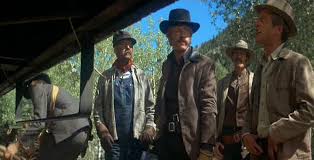
Actually, I have to say that when I think of EH Harriman, what comes to mind is the classic film Butch Cassidy and the Sundance Kid. Do you remember the pathetic figure of Woodcock, the train guard Butch calls on to open the door of the freight car carrying the money, so his gang can take it? Butch warns him that he could get blown up when they dynamite the car, and Woodcock explains:

… you gotta understand that Mr E H Harriman himself of the Union Pacific Railroad gimme this job and I never had such responsibility before and since he entrusted me to get the money through, I got to do my best, don’t you see?

Sundance and Butch trying to persuade Woodcock to open the door
rather than be blown up
It didn’t work out well for him. Or for the money. But fine for Butch and Sundance.

Today, that’s all gone. US trains, where there is a service at all, are infrequent, shabby and slow. As I discovered, or rediscovered, during the trip to Boston from which I’ve just returned.

It was when I travelled to the town of Framingham. That’s ‘Framing’ to rhyme with ‘naming’, not with ‘hamming’. I had some trouble explaining where I was going before I understood that one.

It was dark when I headed back. The station was deserted bar two or three sinister-looking young men, but I suppose that when you’re 65 any large young man looks a bit sinister at night. There was no cafĂ© or waiting room. Or staff.

Framingham Station in the gloom
with the painfully high footbridge in the background
There are two platforms (or tracks, as they say) at the station. When I arrived from Boston, I left the train at one of them, so I thought the train back might arrive at the other. But a metal sign suggested that trains from that platform only travelled away from Boston. And a similar sign on the other platform suggested it was for ‘Inbound’ trains. Which was odd, since I’d arrived at it from an outbound one.

They like those metal signs. There was another which said ‘stand back, train approaching’. Since it was a permanent sign, it didn’t seem to be particularly helpful. After all, I can testify that there were long periods when trains were anything but imminent. Unless that includes half an hour away.

There were also scrolling LED signs. They might have told me where the next train was heading and when it would arrive. Not at Framingham. There they just informed us that the car park charges had ‘changed’.

Don’t you love that euphemism for ‘gone up’?

Destinations? Times of trains? Possible delays? Nothing. Nada. Zilch.

The problem at Framingham is that the only way across the tracks was over a high bridge. I decided to position myself at the bottom of the stairs on the side I guessed the train might use, ready to tear up, over and down if I had to.

As it happens, the train did come in on the platform I chose, though I had to do some tearing all the same, because the train stopped a long way from the footbridge.

To give credit where it’s due, the train was bang on time. But that’s all the credit it deserved. The interior was unprepossessing. Minimalist. Barely utilitarian.

Boston suburban trains. Not the height of luxury
I sat across the aisle from a young woman sleeping stretched out over three seats. We trundled uneventfully through the Massachusetts night for several stops. But then the young woman woke up. She decided to listen to music on her phone. But, it seems, she either didn’t have, or didn’t want to use, earphones. And she liked her music loud.

I wouldn’t have liked her music if it had been soft. Loud it was painful.

But I was tired and didn’t feel like a confrontation. The train had several other carriages. Moving would be easy.

Or so I thought.

I had no sooner tried to enter another carriage than the guard called out, ‘Hey, sir!’

Isn’t it odd how disrespectful the word ‘sir’ can sound if you really want it to?

‘The other carriages are closed,’ she told me severely. Which was manifestly not physically true, since the doors were wide open. I suppose I have to admire her fine grasp of metaphor.

The result was that I spent the last few stops hearing, though I tried not to listen to, that objectionable young woman’s music.

Eventually we arrived into Boston, much to my relief. A little late despite being so punctual at Framingham. Not even in that respect was the service impressive.

Lincoln wouldn’t have been proud. Nor Clarence Darrow. And I don’t imagine even Woodcock would have found much to celebrate in that sad little descendant of the fine trains Butch Cassidy used to rob as he tried unavailingly to defend them.

Friday, 27 April 2018

End of the line

The thing about King’s Lynn is that it’s pretty. And picturesque. And on the sea.

The sea in question is the Wash, a square-sided bay into which four rivers pour, open on the fourth side to the North Sea. There are plenty of fine views and great walks. But swimming? Well, the North Sea certainly isn’t the Med.

King’s Lynn is also historic. Why, it even has a fine Hanseatic warehouse. That’s a warehouse that back in the high Middle Ages was used by the Hanseatic League, that association of North German trading cities that handled huge volumes of commerce across the Baltic and North seas.

Hanseatic Warehouse
Which is something of a clue to the nature of King’s Lynn. It’s really not that far from Hamburg, the city whose number plates proudly display the letters ‘HH’: Hansestadt Hamburg, the free Hanseatic city. Which means that King’s Lynn, while certainly in England, sometimes feel terribly close to Germany.

To put it another way, if I were asked to sum up that fine city in just one word, it would have to be ‘remote’. There’s one train an hour from London, and woe betide you if you get in the wrong half: it gets uncoupled at Cambridge, because King’s Lynn is perceived as only being worth half a train.

What a boneshaker of a ride it is too! Try to head for the toilet and you run a serious risk of being thrown to the ground at least three times in the length of half a carriage. As for using the toilet itself, while I won’t describe the risks for a man, let me just say that they are severe indeed.

When I was invited there the person I was seeing told me that it meant travelling to the end of the line, and boy did it feel that way. You reach buffers at the station, with a distinct sense that this is as far as England goes. Even though the whole town spreads out behind the station, there’s a feeling that actually there’s nothing more, just the sea, and then Germany.

King's Lynn: end of the line
Getting there turned into a bit of an adventure too. I buy my train tickets through a fine internet service called ‘thetrainline.com’. It makes sure that you have enough time to get between stations when you have to change trains. In my case, that meant allowing me 45 minutes to get from St Pancras to King’s Cross, which are about 300 metres apart.

Unfortunately, I always forget how generous the trainline’s margins are, so I do what it tells me and catch the trains it peremptorily tells me I have to take. That meant I didn’t just arrive on time for the King’s Lynn train but with about 40 minutes to spare. Fortunately, I didn’t have to wait for long before the train pulled in and we could climb aboard. I settled down and made myself comfortable.

That was fine until about five minutes before departure time. At which point a tinny voiced announced across the public address system that the fire alarm had failed its test, and therefore ‘this service is out of service’ – an interesting if paradoxical statement, since if it was out of service, it was surely no longer a service, making the announcement internally contradictory. But perhaps I was being too picky.

More to the point, I wanted to suggest that they put it back in service anyway, because I at least wasn’t planning on there being a fire between King’s Cross and King’s Lynn, so we could probably do without a fire alarm. I was also prepared to promise to leave the train if, against all probability, a fire did break out.

However, that didn’t work and the train was cancelled. That was a pain because with only one train an hour, that was likely to make me late. But a railway employee told me that we could catch the 10:14 instead of the 9:44, which slightly surprised me, since I didn’t think there was a 10:14. Call me a cynic, but I think railway staff sometimes just say these things to avoid a discussion.

But then, oh miracle, we heard another announcement, this time booming through the station. “The 9:44 to King’s Lynn will leave from platform 9 instead of platform 5”. Since it was 9:43 by then and platform 9 is three minutes’ walk from platform 5, the King’s Lynn passengers provided the station with a fine exhibition of firstly checking with each other that they’d heard correctly and then attempting to move to the new platform at high speed but without compromising their dignity.

All the way, assuring each other that the train wouldn’t leave without us, though we didn't entirely believe it.

Anyway, it did wait, and an hour and 37 minutes later, it reached the end of the line and King’s Lynn. Where it deposited me in time for a fine meeting with interesting people. So despite some stressful moments, in the end it was a successful trip.

Proving that King’s Lynn, as well as being remote, is pretty, picturesque and in addition, fun.

Monday, 4 April 2016

Privatise the railways? Nationalise the railways? Non, merci.

The most convenient airport for our recent holiday in France was Geneva. Which, it probably hasn’t escaped your notice, is actually in Switzerland.

However, the Swiss and French have come to an excellent arrangement, by which a part of the station in Geneva is made available to the French railways (the SNCF). So we bought our tickets on-line in England, and travelled out bearing the SNCF’s e-mail instructions about printing out our tickets at the machine in the station.

Only to discover that the station boasted no such machine.

“But it says here…,” we protested.

“Ah, yes,” we were told by a Swiss railway official, “but this is Switzerland. The SNCF doesn’t have one of those machines on Swiss territory.”

“So – what do we do?”

“You could go to the SNCF ticket office around the corner.”

“But it’s Saturday. That office isn’t open on a Saturday.”

“Ah,” said the lady, trying to look helpful. And then shook her head. “I shouldn’t like to be in your position,” she commiserated. Which, when it comes to helpfulness, fell rather short of the mark.

So we decided to get on the train anyway. I’ve had experience dealing with French ticket collectors in the past, and it’s always proved a great deal more satisfactory than dealing with machines. And, indeed, we saw two collectors on the platform, even before the train had left the station.

“No problem,” they told us, “get on the train and we’ll come and see you once we’re on our way.”

And one of them did. In fact, he sorted out our tickets in about two minutes, and then sat down to chat with us for a further twenty or so.

He had plenty to chat about.

“It was such a pleasure,” I told him, “to find a human being to sort out the problem with our tickets.”

“Well, yes. Enjoy it while you can. It’s not going to last.”

It seems that SNCF staff numbers have been falling for years. In 2003, there were 178,260 employees; by last year numbers were down to 149,500. The French newspaper Le Figaro claims another 1400 jobs are due to go this year.

The worst of it is that salary costs haven’t even fallen. Apparently, they went up by 1.289 billion euros between 2003 and 2013. Wage increases have contributed to the rise, but the other factor has been the decision to increase the proportion of managers – where there were 6.8 employees per manager in 2003, ten years on there were only 4.2.

“Too many managers,” our ticket collector complained, “we’re the most managed industry in France. And all they demand of us is – profits. Forget the service.”

He was pretty bitter. And I have to say, I was a little annoyed with managers who couldn’t manage to provide a ticket machine at Geneva, even though their own instructions told us to use one.

The message, as we sat on our slightly threadbare seats, or used the less than appealing toilets (still providing a hole onto the track…) seemed clear. Even the SNCF, the much-vaunted, nationalised French railway service, has fallen on hard times. Its service to passengers is declining and, more spectacularly still, it’s failing its staff. While it’s as obsessed with generating a profit as any private organisation might be.

Ticket Collector on a French regional train
Not quite the same service as the TGV. And the staff are under threat
Now I’m back in Britain, with our privatised services. So privatised that even after two companies failed on the East Coast service, and a nationalised organisation succeeded spectacularly, the government re-privatised the lines. It seems ideology demands private ownership, for Tories, just as it demands nationalisation for certain areas of the left.

Whereas to me, looking at what’s happening in France, I’d have to say it’s the great non-issue.

What matters is how you treat your customers. How you treat your staff. How you invest for the future. Whether it’s a privatised service or a public one is insignificant in comparison. Treat people decently and provide a good service and the rest doesn’t matter. Britain and France demonstrate that you can do just as badly on those truly important issues, whether you have a private or nationalised system.

Still, all that being said, the SNCF has the edge on the railways in Britain in one crucial area. I told our friendly ticket collector how much I pay for my season ticket into London. He whistled.

“That’s four times as much, per kilometre, as it would cost over here,” he told me, astonished.

Ah, yes. Now that is an area where Britain could try to compete a little more seriously with France. Fares closer to the French level? Why, yes please. That would do very nicely, thanks. In a privatised or nationalised service.

Thursday, 25 February 2016

Miss a machine, miss a train, but at all costs, get a seat

Not everything’s good about working in London, but quite a few things are.

It’s a great benefit that Luton, where I live, is on a direct railway line to the station at Farringdon, a pleasant stroll from my office. Pleasant in the sense that most of it is on elevated walkways that wind around the Barbican complex, containing the London theatre that is home to the Royal Shakespeare company. The walkways and the buildings they link are modern, with flat spaces at many levels leading down to fine extent of open water; in amongst the modernity, we also have the remnants of the old city walls and, standing proud if slightly isolated, the fine old church of St Giles, Cripplegate (yes, that’s a real name).

The commute has given me a bit of a fixation on train seats. I go to considerable length to ensure that I have a seat both on the way in to work and the way home. For instance, I catch a train in the morning nearly an hour later than I need to – which means getting up at an entirely dotty hour – to be sure to be able to sit down. On the way back, I try to leave soon after 4:30 or not until at least 6:15, again to be sure of a seat.

Although I have found another way of securing a seat on the way home. Instead of walking to Farringdon in well under a quarter of an hour, I walk nearly half an hour to Blackfriars station. Trains travelling northwards, my homeward direction, reach Blackfriars two stops before Farringdon. That makes it the stop where, in rush hour, the train fills up. Get there and I’ll get a seat.

There’s another benefit in walking so much further. Blackfriars station is built on a bridge. It's glorious, especially when approached from the south, so I even walk a little further across the Millennium Bridge, the footbridge built to mark the year 2000, which provides a breathtaking view of the Thames in both directions, of the Tate Modern gallery straight ahead, with St Paul’s cathedral soaring behind. That means I reach Blackfriars from the right end to get another great sight of the Thames further upriver, as well as the same view downstream.

The sun dying on the Thames, viewed from
the Millennium Bridge looking towards Blackfriars
Today, I left ahead of time. I’d been in early every day this week, and stayed late, so I thought it was time to indulge myself a little. It meant that, with the days lengthening, I caught the last of the light, and was able to enjoy the sunset on the cathedral and the river. I made it to Blackfriars station, continuing as always to enjoy the view through the station’s glass sides. The 16:52 drew into the station and I climbed on, immediately securing a seat.

I sat down and went to pull out my work laptop, ready to send a document to a colleague who’d asked for a copy. Only to discover that it wasn’t in my bag. A picture sprang into my mind: the laptop, on my desk, still clipped to its docking station. I hadn’t picked it up before I left.

It wouldn’t have mattered, except that I plan to work from home tomorrow. I needed the machine. I enjoyed my hard-won seat for two stops and then, my heart sinking, left the train at Farringdon, retracing the steps I’d taken in the morning.

Back in the office, I picked up the machine, to the kind but teasing merriment of my colleagues. By then it was getting on for 5:30. I knew Farringdon meant standing room only on the train. So I headed off to Blackfriars again.

The same sights, splendid as ever, in the later, fading light, presented themselves to my eyes. St Paul’s. The footbridge. The river with Tower Bridge downstream, its lights coming on. The Shard, lit at its monumental top. The river itself, again.

And yet, somehow, the experience had begun to pall a little. The extra walk once seemed a price worth paying for the view. But twice? It felt like too much of a good thing. My feet were paying too high a price for the pleasure of my eyes.

Still. At least I got a seat again. Though on the 17:52 instead of the 16:52. My inattention had cost me a full hour.

I just hope the lesson will sink in.

Wednesday, 27 January 2016

The bulldog spirit: is it a match for a disrupted train?

The British are at their best in adversity, we are constantly assured.

Or, at least, we assure ourselves.

That, we all reckon, was the Dunkirk spirit. When things are as bad as they can be, the dogged British character comes to the surface and sees us through: little boats depart from the Channel ports and bring the troops back from under the mouths of the German guns. Powerful stuff. Even though, as Churchill pointed out, “wars are not won by evacuations.” However well executed.

The doggedness was at its most truly admirable during the Blitz. London and other cities weathered the bombs. The population refused to be panicked or even cowed.

On a much smaller scale, within my own lifetime, Londoners just kept living their lives right through the IRA campaign of the 1980s. Incidentally, the memories of that time always leave me smiling when I hear Americans denouncing terrorism as the most heinous of crimes – the IRA was kept going with funds from the US, and there was plenty of self-righteous resistance from across the Atlantic whenever the British authorities tried to extradite a known terrorist.

Funny how being attacked yourself changes your viewpoint – it somehow relativises everything, even in a country that likes to despise moral relativism.

On a far smaller scale still, I had the opportunity to watch the British soul in adversity the other night when my train home was delayed two hours, on a forty-minute journey. The cause was a suicide on the line ahead.

First of all, it was curious to see how our attitudes – my own included – altered towards the suicide. At first, I felt bad about his death. What drove him to such despair? What a lamentable fate.

That was good for half an hour. The compassion started to wear thin after that, so by the time we reached the hour mark, nerves were being rubbed thin. None of us said it in so many words, but from our comments, more and more of us were beginning to harbour feelings along the lines of “inconsiderate bastard. Why didn’t he choose some other method? Or at least, top himself outside the rush hour?”

The ice had, by then, been broken between us. The reserve that keeps British train travellers firmly locked in their own concerns, focused on their phone or their tablet, had dissolved, and the conversation had become general. Ah, yes, I thought to myself, now we shall see that grand old thing, the British sense of humour, or at least British stoicism, sustaining us in our hour of need.

What a shambles, someone remarked.

“They’re all complete incompetents,” replied another. 

“Look at their Twitter feed!” added a third, pointing at his phone, “it reckons there may be delays on lines out of St Pancras. Might be? What a shower. Why dont they do something about it instead of making fatuous comments?

Right. So that was the shape of things. Patience growing a little threadbare.

I wasn’t quite sure what anyone felt the executives of Thameslink trains should have done. Foreseen the suicide and warned us before we caught the train? Cancelled all the trains? I could imagine how well that would have gone down. Perhaps they should have parked the inconsolable guy on a siding somewhere, and maybe offered to shoot him themselves, in a decent and humane manner, somewhere no services would have been disrupted?

We were in the foremost carriage. One passenger started shouting through the door to the driver’s compartment, demanding information about what was happening.

“Other trains keep shooting past us. Why didn’t you tell us this was going to happen and let us get another train?”

The driver came out and looked at him, completely nonplussed.

“I told you whatever I could, as soon as I got told myself. How could I have known it was going to be this bad?”

“It’s hopeless,” replied the passenger, apparently building up quite a head of anger, “you’ve told us nothing useful. You’ve just left us sitting here without information.”

“You want me to tell you each time I’m at a red light?”

Red light at night. No passenger's delight
But not a lot anyone can do about it
A few minutes later, when we stopped again in the middle of nowhere, he cranked up the public address system again.

“Ladies and gentlemen,” he announced helpfully, “we are stopped at a red signal. I don’t know how long we’ll be here.”

The passenger who’d been complaining cursed under his breath.

Another train went whizzing by on the track next to ours, making that wonderful and inspiring sound we all associate with railway travel at its best.

“Look, look!” cried several passengers, “it’s happening again. Other trains keep going past. Practically empty.”

I’m not quite sure what they wanted the driver to do. Flag the other train down? Hitch our train to it? Or just decide to ignore the red signal?

Eventually we got to my station and I left the train. I paused to wish the remaining passengers good luck. There were a few wry smiles, but mostly just groans.

Alas. Not quite so phlegmatic, these particular Brits, as their reputation suggests. Not quite so undaunted in adversity. Hardy the spirit of the Blitz.

How have the mighty fallen.

Saturday, 8 February 2014

With sufficient faith and a good enough cause, you can ride the ghost train

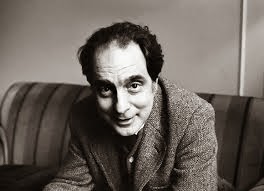
Italo Calvino describes a scene in which Charlemagne, Emperor of the Franks, is reviewing his knights, one by one. Each raises his visor when the King stops in front of him, then gives his name and a few details of his command or his past victories.

Until Charlemagne draws up in front of one knight whose armour is immaculate, without a scratch on it, nor a trace of dirt. But the visor remains shut despite the King’s greeting.

‘You, Paladin!’ insists Charlemagne, ‘why do you not show your face to your king?’

Clear and strong the voice emerges from inside the helmet. ‘Because I don’t exist, sire.’

‘Now there’s a thing!’ exclaims the Emperor. ‘Now we even have a knight in our ranks who doesn’t exist! And how do you serve if you’re not there?’

‘By the force of willpower and by faith in our holy cause!’

Italo Calvino who wrote The Nonexistent Knight
A genial and humorous approach to the deepest aspects of life
Now my cause, unlike the one for which Charlemagne led his men in The Nonexistent Knight may not have been holy: with my wife, I was joining my brother and my sister-out-law for a week’s skiing in the French Alps.

Not, not really all that sacred, I can hear you exclaiming.

Maybe not. But it was the first time my brother and I had been on holiday together for four decades. I mean, we
’d visited each other and all that, but we hadn’t travelled together to some other place since the early seventies. Even if it falls short of holiness, that surely makes our endeavour a good cause at least. One that deserves a little faith.

As our two parties converged on our destination, it became clear that their train would be stopping at Chambéry where we were waiting for a connection. So why not take the same train for the last leg?

It seemed a good idea until an official at Chambéry station told us there was no such train. I rang my brother again.

‘We’re on it,’ he assured me. ‘It stops at ChambĂ©ry at 15:03.’

We tried another official. Same answer. In fact, this one took me over to look at the printed timetable. He was right, there was no train to our destination at 15:03 or indeed at any time before the one we were waiting for, an hour and a half away.

‘Maybe you can only get on the train if you have a reservation,’ Danielle suggested.

So we went into the ticket office to try and buy reservations.

‘My computer doesn’t even show the train,’ the friendly woman behind the counter told us.

It was time for an act of faith.

We went and stood on the platform where we guessed the train would have pulled in if it had existed. And, a little late but nonetheless bearing all the tangible signs of reality, in time a train turned up. A high-speed train, the famous French TGV, no less. Carriage doors opened and at one of them appeared my brother, with a welcoming grin and wave to invite us aboard. He introduced us to a ticket collector as though she were an old friend.

It seems so solid, a TGV in the snow by night
And yet it may be a ghost train
‘This is my brother and sister-in-law, the ones I told you about. They can join the train, can’t they?’

‘Only if they have the willpower and the faith to make it exist against the denials of all around them. If they have will of great strength and a cause sufficiently good, they can defy natural laws and railway timetables. Then they may certainly join us.’

Actually, I think I made that last bit up. But what’s certain is that we travelled the last stage of our journey with my brother and sister-out-law. And as a result we arrived a good hour earlier than expected.

Quite sufficient justification to raise a glass to the spirit of Italo Calvino that evening.

Friday, 24 February 2012

Today's trains - part 2

After the harpist on the train to London today, I was expecting a far less interesting trip home. But to my delight I made a new encounter which, while less musical, was as enchanting as the earlier one.

Enlivening my commute home
Yes. Opposite me was a Pomeranian pup. And judging by the conversation the owner was having with her travelling companion, I think an Arab Pomeranian to boot. 

A curious concept, that, of an Arab Pomeranian, but surely an entirely fitting one in our globalised communities today.

Harping on about the railways

It's easy to criticise the railways in Britain, and many feel free to vent their bile with gusto, and not always without justification.

Despite all that, I remain a committed supporter of the railway system in this country, a loyal user and a relieved spectator of its remarkable improvement over the last ten or fifteen years. 

Even I, however, couldn't have anticipated its latest development in on-board entertainment. First Capital Connect, I felt, was breaking completely new ground in its pursuit of excellence in customer service.

Not a common sight on commuter trains
It would have been even better if I'd been able to persuade her actually to play, but hey, a step at a time, a step at a time. It's great to find a harpist in your carriage at all, let alone getting music out of her.

Monday, 29 August 2011

Pronouncement of God. Or just pronunciation?

Back on a train again. The latest public announcement was ‘this is your guard speaking. It is no longer possible to upgrade to first class, first class is completely full’.

‘Do you know,’ one Australian-sounding fellow passenger told her travelling companion, ‘I thought he said “this your God”.’

It’s true that the Newcastle twang of the announcement had taken the pronunciation of the word some way in that direction.

‘Yes,’ replied her friend, equally Antipodean, ‘that’s what I heard too. “This is your God speaking. Any chance of first class existence is gone. Your only hope now is the afterlife”.’

If he's everywhere, why be surprised to meet him on a train?
Readers of this blog will know that I’m a great fan of railway travel for the glimpses it provides into the human soul and related matters. But not even I would invest it with quite that level of significance.

Friday, 17 June 2011

Station trap

It 's so unfair.

I had travelled down to Torquay for a presentation. You don’t know Torquay? Seaside town in the glorious county of Devon. I thought I knew it but discovered I didn’t, although I’d been there several times. It was only last night that I first saw the little fishing harbour with the old town clustered on the slopes around it. Quite charming.

The meeting went well too, but I’m not here to talk about work. The important thing is that the meeting was brought forward a couple of hours which meant I could get an earlier train home. Since my ticket wasn’t the type that could be used on other trains, I had to buy a second one.

The train left from the market town of Newton Abbot. It holds a particular place in my affection. It was there that I heard a Devon accent for the first time, an accent which no description can really make you appreciate if you haven’t heard it, and nothing can ever drive from your memory if you have. So I’m fond of the place. It was horribly disappointing to discover just how tricksy and devious it can be, at least if the station is anything to go by.

Newton Abbot station: a charming exterior but a base personality
I turned up in plenty of time for my train and headed for platform one to wait. Only to realise with horror that the platform I was on, nearest the ticket office, the platform with the cafĂ©, wasn’t platform one at all but platform three. So my train came in and I had the pleasure – using the word in a loose kind of way – of watching it collect lots of passengers, of which I wasn’t one, and then pull gently out of the station again.

So back I went to the ticket office to buy a third ticket. This time I was determined not to fall into the trap. I went and sat on platform one and patiently waited the hour and more for the next train to arrive.

Only to realise that it was coming in on platform three.

Desperation lent me wings. I’d been caught by Newton Abbot syndrome once, I wasn’t going to be denied departure by the malignant demon that inhabits the place again.

Panting and sweating, a bag on each shoulder, I got to the train as the final door closed. With the last of my strength, I dragged one open and flung myself onboard. The door shut again, but behind me. The train pulled out of the station, but with me on it. I’d made it. I had escaped the accursed place. With three tickets to bear testimony to my determination to do so.

It hasn’t done any good to my previously favourable disposition towards Newton Abbot.

Of course, I can imagine that some people might be inclined to put the difficulties I'd experienced down to incompetence on my part. But surely that’s not an idea we can entertain? It must be more plausible to believe that a malign spirit sent to torment me inhabits the town, or at least its station.

Mustn’t it?

Saturday, 19 February 2011

Tea, time and transport

Have you ever listened to the BBC Radio 4 series A history of the world in a hundred objects? If not, I strongly recommend you go to the website, download the podcasts and start listening at soon as you can.

The broadcasts are just 13 or 14 minutes long, an ideal length for a quick trip to the shops or the last dog walk of the day, while three or four will fill in a gym session nicely (OK, three for me). In each of 100 episodes, Neil MacGregor, director of the British Museum, picks an object from its collections and uses it to illuminate an aspect of the development of humanity and its culture that never fails to be fascinating.

More great radio from the BBC
I was particularly struck by two programmes I listened to recently.

One was about an English tea set that became the pretext for talking about the trade routes that brought in tea from China and later the Indian subcontinent. In London, it was met by ships from the Caribbean bringing in sugar, in many cases produced using slave labour. These two alien products finally met up on our tea tables with domestically produced milk to make a quintessentially British drink.

Then MacGregor made a point about the impact of the railways that was a real eye-opener for me. For a long time, the only way milk could be made available to city dwellers was to have cows nearby, but from the mid-nineteenth century we’ve had milk trains travelling in to our great cities at the crack of dawn of every day, allowing the cows to move back to the country, which must have been a great relief to them.

Even more fascinating was another change brought about by the railways, mentioned in a programme about chronometers and accurate measurement of time. From 1855, the railways’ need for timetables made it impossible to continue with the immemorial custom of each place working to its own local time, based on the position of the sun. Even in a small country like ours that could lead to significant time variations, which didn’t matter when transport was slow, but mattered a lot when it became rapid.

Extraordinary to think that it took the railways to align our time zones. Before that happened, places like Surrey, where the nice people still live and set the standards for the rest of us in the name of God, Queen and the Conservative Party, were some two minutes behind London.

That was then. The discovery amazed me because these days they seem at least half a century behind most of the country.

Wonderful what you can learn from the BBC.