Showing posts with label Hitler. Show all posts

Thursday, 28 May 2020

The Spanish fighters again: liberation achieved. And denied.

When we last saw our gutsy Spanish Republican fighters in the French Foreign Legion, they were rather twiddling their thumbs in North Africa waiting for something to change.
Well they did eventually change. And in a big way.
Men of the Nueve with their halftrack Guadalajara
In 1943, the Americans landed in Morocco and, together with British forces, in Algeria. The local French military was still ostensibly supporting the Vichy regime of Marshall Pétain and serving under its orders, which meant Nazi orders. They put up a bit of a fight but soon caved, though not before some three thousand men had been killed and a lot more injured.
At that point, the local leadership, specifically the commander of the French forces, Admiral Darlan, suddenly realised they had always been lifelong democrats and switched to the Allied side. They required little in return, except being kept in office, which might have led to some friction with the Free French and in particular with de Gaulle.
Fortuitously, a young royalist decided the best way to secure the return of the rightful King to the French throne was to assassinate Darlan, which he duly did. It turned out he was wrong, as far as getting the King back was concerned, but he certainly removed a major irritation for de Gaulle.
Meanwhile the Allies, advancing from Morocco in the West and Algeria in the East, eventually drove the German army to defeat in Tunisia. The French, having switched sides, fought with the Allies, and that included the French Foreign Legion, who saw some tough battles, in which its Spanish Republican forces played a key role. And lost many men.
Not all the French forces had had to switch sides. Some soldiers had been with the Free French right from the start. In particular, one idealistic young officer had raised a small force in the French colonies south of the Sahara, marched it across the desert and joined the British effort against General Rommel in Libya.
Leclerc with his Armoured Division, during the liberation of France
His name was Leclerc (well, it was Philippe de Hautecloque, really, and Leclerc was just a nom de guerre which he’d adopted in the hope that it would deflect the attention of the authorities from his family back in occupied France). De Gaulle made him a major general and gave him the Second Armoured Division, the iconic Deuxième DB, to command. It was selected to be the only French unit to be included in the Allied landings in Normandy when they eventually came.
Unfortunately, he only had 4000 men and he needed 15,000. He set out to recruit new soldiers. One group from whom he found it easy to recruit were the Spaniards, who transferred in droves out of the Foreign Legion and into his Deuxième DB. Manuel Fernandez, whom I quoted yesterday, summed things up:
“The ideas of de Gaulle corresponded more to ours than those of the others who’d stayed with Pétain. The officers of the Legion considered us as red Spaniards, as revolutionaries… The senior officers would say to us, ‘you’re not in Spain here. You’re not going to make a revolution here.’ We’d keep quiet. The officers with de Gaulle, on the other hand, said ‘oh, did you fight in Spain? Good… The men the officers wanted were Spaniards. We had a certain experience, not just in Spain, but in the campaign in Tunisia too.”
Spanish recruits to the Deuxième DB
parading on the beach in Morocco
From the many Spaniards mobilised into Leclerc’s division, one company, the ninth, was almost exclusively Spanish: 146 out of 160 men. Commanded by a Frenchman, Raymond Dronne, and his number 2, the Spaniard Amado Granell, from Valencia, who had commanded a division in the Civil War, it passed into legend as ‘La Nueve’, ‘The Nine’.
The Deuxième DB landed in France in August 1944. The American high command had committed to allowing French troops to lead the Allies into the French capital.
On the 20th, an insurrection broke out in Paris, with Resistance units taking action against the Nazi occupiers. De Gaulle asked for and obtained authority to press on to their support as quickly as possible. On the 24th, Leclerc told Dronne and the Nueve leave and go to Paris. They left at 7:30 that evening and by 9:30 the company, supported by a squadron of tanks from the French 501st armoured regiment, arrived at the Paris Town Hall. There, the first ‘French’ soldier to make contact with the Resistance forces that had taken control was Lieutenant Granell, the officer from Valencia who had held general rank in the Spanish Civil War.
The next day, as well as attacking several key points around the City, Spanish soldiers also accepted the surrender of the German Commander and took him into custody, before handing him over to French authorities.
The men who had fought so hard to keep Spain free, at least had the satisfaction of leading the liberation of France’s capital.
One of the halftracks in the parade down the Champs-Elysées
celebrating the liberation of Paris

The action in Paris wasn’t the Nueve’s last. They fought on through the rest of the war, even reaching Berchtesgaden and Hitler’s hilltop eerie, the Eagle’s Nest. By then though, only 16 of the 146 Spaniards of the combat were still fit for combat. They had lost 35 dead and 97 wounded.
Captain Dronne, their commander, said of them:
Some of them are experiencing a clear moral crisis due to the losses we've suffered and above all to the events in Spain.
The Spaniards who fought with the French had hoped that after overthrowing Fascism in Italy and principally in Germany, the Western Powers would turn their attention to Spain and finish it off there too. It wouldn’t happen.
The best slant to put on that decision is that the Western Powers had bled enough in the war and they didn’t want to fight another. That may be partly true. But Franco was no Hitler, the Army he led no Wehrmacht. Overthrowing his regime would not have required anything like the force or the losses that the battle against the Nazis had cost.
The less honourable explanation is that the West was already turning its attention against the Soviet Union. Far from wanting to take on Franco’s rather eccentric brand of Fascism – he was always more of a Franquist than a Fascist – they preferred to concentrate their efforts against Communism. In that fight, Franco could if anything be something of an ally, just as soon as he could be brought out of his pariah state. Which happened in the fifties, when the easing of measures against his regime was the price paid for stationing American forces in Spanish territory.
Ultimately the thousands of Spanish Republicans who fought and died for France and for the freedom of their own country, would be let down. “We weren’t fighting for a flag,” Manuel Fernandez would tell the 2017 documentary makers, “we were fighting for ideas”. They were fighting for freedom, in their country as well as France.
Well, they were cheated of that goal. But at the very least, we owe it to them to remember their sacrifices and their courage.
The lesson for me? Even in Europe, the Second World War didn’t start on 1 September 1939. It began on 17 July 1936, with the nationalist uprising against the Second Spanish Republic.
Nor should it have ended when it did. Once they’d finished off Hitler and Mussolini, the Western Powers should have seen off their ally Franco. Which means the war would not have ended in Europe on 8 May 1945.
But it did. With the work not quite done. Sadly.

Wednesday, 27 May 2020

The Spanish fighters who changed my views

After four years of Nazi occupation, Paris was finally liberated by Allied armies on 24 August 1944. Units of the mythic French force, the ‘Deuxième DB’, the Second Armoured Division, led the way into the city. They had raced there to support the population that had risen against the occupying forces.
In the evening, the first half tracks pulled into the square outside the Paris town hall. As in all such units, the vehicles had all been given names by their crews, names that were painted on their sides:
Gudalajara
Brunete
Ebro
Santander
Teruel
If you’re thinking “those don’t sound like French names”, you’d be right. They were great battles of the Spanish Civil War. And the language the crews were talking was Spanish.
These were the men of the ‘Nueve’ (‘nine’ in Spanish), the ninth company of the Deuxième DB, almost exclusively Spanish. Their commander, the French Captain Raymond Dronne, wrote of them later:
The Spaniards fought remarkably. Commanding them is a delicate matter but they have enormous courage and experience of combat.
That ‘delicate’ is a glorious piece of French understatement. It chimes with what Dronne was told when he was first given command:
Everyone’s afraid of them. They’re good soldiers. They won’t give you any problems.
The halftrack Guernica of the Nueve in Paris in 1944

Moving to a new country certainly gives you a new perspective on many things you thought you knew.
For instance, I’ve had to rethink some of the most elementary facts I felt I knew about the Second World War. I’ve long accepted that it didn’t start on 1 September 1939 with the Nazi invasion of Poland, as is generally taught in schools. The first shots were fired on 19 September 1931, when Imperial Japanese forces invaded the Chinese territory of Manchuria.
OK, you might think, but that was the Pacific Theatre. In the European theatre, the war started in September 1939, surely? Well, that too is an idea I’ve had to revise, under the gentle guidance of Marisa, a friend we’ve met out here in Spain, who’s frighteningly well-informed on history.
My view was always that the Spanish Civil War, which started in July 1936, was a sort of preamble to the World War. In reality, however, with the Soviet Union supporting the Spanish Republic, while Nazi Germany and Fascist Italy backed the military uprising that brought Franco to power, it offered a first opportunity for three of the major powers of the coming World War to test each other’s strengths and weaknesses and, indeed, to expose some of their forces to combat.
That feels more like the first Act of the wider war rather than merely a preamble to it.
In any case, it wasn’t just the Germans and Italians, or to a smaller extent the Russians, who emerged from the Spanish Civil War with trained and battle-hardened veterans ready for the next stage of the conflict. There was also quite a lot of the Spanish Republican army. The Republic itself had been defeated and overthrown, but many of the soldiers survived.
Large numbers joined the flood of over 450,000 refugees fleeing across the Pyrenees into France. They rightly feared the retaliation that Franco’s victorious regime would exact from them if they were caught. The regime proved they were right by what it did to those it did in fact catch.
In France conditions were, however, not particularly better. They were held in what the French called “internment camps”, but the Spanish, especially the ones who were there, unequivocally referred to as “concentration camps”. Lack of food, poor sanitation and inadequate housing led to huge numbers of deaths. This was 1939, after all, when France and Britain still hoped that their policy of appeasing Hitler might avoid war. That desire, combined with the xenophobia and right-wing beliefs of a significant current amongst Frenchmen, conspired to ensure the refugees were shockingly badly treated.
Offered the option of returning home, about 100,000 chose to go, mostly women and children. Few of the combatants, understandably, took up that offer, however. Some paraded in front of French officers hoping to be taken into the army, but the generals, who were to be humiliatingly defeated the following year, decided they didn’t need these experienced troops whose political loyalties they weren’t sure of (they were generally left wing, some extremely).
Some 10,000, however, were recruited into the Foreign Legion. And, once war with Germany broke out, others were taken into ‘Foreign Labour Companies’ who were set to work on the Maginot line, the great string of bunkers and fortresses along the border with Germany. Life there was certainly preferable to the camps, though in the end it worked out little better. After defeating France, the Nazi authorities captured many of the Spanish workers. Refusing to treat them as prisoners of war, and working with the Franco government’s agreement, they transferred them to concentration camps. Over 7000 were sent to the Mauthausen camp and fewer than 2500 were released at the end of the war.
Chillingly, some of the survivors later said that their experience in the French camps helped them to prepare for the Nazi ones.
Those who were able to avoid capture, joined the resistance. And among those who had taken part in the fighting, many decided to carry on the battle. One Spaniard in the Foreign Legion, Manuel Fernandez, described his feelings on the defeat of France to a 2017 television documentary:
“It was the greatest disappointment of my life. There were moments when I cried like a child. I’d fled Spain and here I was going to fall into the hands of the Germans.”
One answer was to join General de Gaulle who was setting up Free French forces in London. Of his initial 2000 men, 300 were Spanish.
Alternatively, those who were in the Foreign Legion could cross the Mediterranean with their units. In North Africa, however, they were under the orders of the government in Vichy, a puppet regime of the Nazis, set up after the defeat of France. There they were left to wonder how they’d managed to escape Franco, only to find themselves in a military unit whose orders were dictated by a government collaborating with Franco’s most powerful ally, Hitler.
It would take over two years. Though then things would change dramatically.
But more of that in another post. Just click here...

Tuesday, 3 March 2020

Thoughts of the victims of war in a Valencia air raid shelter

If you’re sightseeing around our local city, Valencia, the saddest sight you can see is an air raid shelter. I’ve visited two and there are many others.
Inside the air raid shelter under the Valencia town hall
They date from “the war”. However, I believe when most of us say “the war” we probably still mean the Second World War, if we’re from countries that took part in it. In Spain, “the war” means the Civil War the raged from 1936 to 1939, led to the overthrow of the Spanish Republic and ushered in 36 years of dictatorship under Francisco Franco, ending only in his death.

On the other hand, there are many people, inside and outside Spain, who would reckon that the Spanish Civil War was a part of the Second World War. That makes some sense. After all, despite signing the same non-intervention treaties as the democracies, Germany and Italy, then under Nazi and Fascist control respectively, sent not just weapons but military forces to support the Franco rebellion. Only the Soviet Union supplied the Republic, and then only with toxic strings attached.

So major players in the Europe-wide conflict that was about to break out were involved in the Spanish war. The air raid shelters in Valencia were built to withstand attack by Italian forces, chiefly in the form of bombing raids from bases they had set up on the island of Mallorca.

One of the striking aspects of our visit was a video they played us. At several points, I realised that I wasn’t listening to Spanish any more, but to Italian. What was being played was Fascist propaganda about how ‘heroes’ from the Italian air force were taking part in raids on Valencia to make civilisation safe from ‘Soviet communism’, in a fight many saw as a Christian crusade.

Down in that air raid shelter, that irony was particularly bitter. These were shelters for civilians, and they were the main victims of the raids. The propaganda claimed the bombers were targeting armament factories and military concentrations. In reality, they were dropping their bombs on civilian dwellings.

No one puts that better than the great New Zealand cartoonist David Low, who has Franco being told that his Arab troops are concerned by the ‘unchristian’ behaviour of his army.
David Low has an officer reporting to Franco, Mussolini and Hitler
“Excellency, the Moorish troops are disturbed.
They say our conduct of the war is unchristian.”
The assault on civilians would become the hallmark of the long struggle that the Spanish Civil War announced: heavy bombing of civilian centres, often described as a means of ‘weakening enemy morale’. Killing civilians to undermine morale? There’s a word for that. It’s terrorism.

And I was particularly struck by one of the photos in the air raid shelter. A mother with her child. Both faces are paralysed with fear. And it’s perfectly obvious that neither has been guilty of an act that merits the punishment they’re undergoing.
Part of the display in the air raid shelter
Left, a bombed home. Right, a terrified mother and child
Sadly, this kind of terror bombing was by no means limited only to the enemies of the democracies in those years of war. In fact the worst bombing was carried out by the Western powers themselves, something they should perhaps bear in mind when they denounce terrorism today. Dresden, Cologne, Hamburg all but destroyed, with tens of thousands of dead.

And, to top it all and inflict still greater destruction, there were the atom bombs dropped on the civilian populations of Hiroshima and Nagasaki.

Mentioning those Japanese cities reminds me of the only reason I disagree with those Spaniards who say the Second World War started with the conflict in Spain. That same David Low I mentioned before had a different view, which I share. After all, there was a Pacific Theatre to World War II as well as a European one. Fighting started there in 1931, when Japanese troops invaded Manchuria, five years before the uprising in Spain and eight before the Nazi invasion of Poland.
In the background, the “Japan-China mixup” as a mugging
In the foreground, the USA, France, Britain,
Germany and Italy are walking away
One is saying, “Don’t you think, after all, there
may be something in the idea of having a police force?”
Another replies, “Tut Tut! Too risky! Much wiser and cheaper
to wait until we’re all murdered in our beds
Just as in Spain, the democracies stood back and did nothing. And, just as Low warned, they paid the price. All the enemies they would face in the official Second World War – Japan in the Pacific, German and Italy in Europe – were using the earlier conflicts to get into shape to fight the big one.

A tragedy. Which makes visiting the Valencia air raid shelters such a sad moment. Though perhaps a necessary one.

Friday, 1 November 2019

Poignancy

All Saints Day. The day after Halloween. You could tell here in Madrid, if only because some of the people we saw had clearly not finished celebrating from the night before.
Halloween revellers in the Madrid metro
Heading home late the morning after
We were in Madrid because that’s where my company’s offices are. My ex-company. That ‘ex’ is the reason I had to visit the office at all. Because, while an event that should have happened on Halloween didn’t, one that shouldn’t have, did.

31 October was the latest date that Britain was to leave the EU. This was absolutely clear. To Boris Johnson, Prime Minister, it was a matter of ‘do or die’. Indeed, he said he would rather die in a ditch than accept that he had to get a further extension to the Brexit timetable.

But he didn’t do Brexit by the deadline he set. Nor did he die. A ditch? No trace of one in his existence yet. It’s enough to make one wonder whether one can entirely trust his word. Many tell me that you know that Boris is lying by the fact that he’s breathing. However, as my American friends can no doubt testify, you just don’t get pathological liars leading major nations.

Do you?

So no Brexit. Or at least not yet.

On the other hand, the event that wasn’t supposed to happen was my brusque and involuntary departure from the company. Halloween was the day of my latest redundancy. But at least, on this occasion, I’m going out on a high. This was undoubtedly the best job I’ve had, with the best boss and the best team. What’s more, a great many people with whom the team worked have written to say how much they’re going to miss us. My quarrel isn’t with anyone I know but only with people who haven’t the faintest idea about what the team was doing. Just a pity that, despite knowing so little, they were the ones taking the decisions.

Good memories accompany my departure, and contacts I hope will endure, with former colleagues who are also good friends.

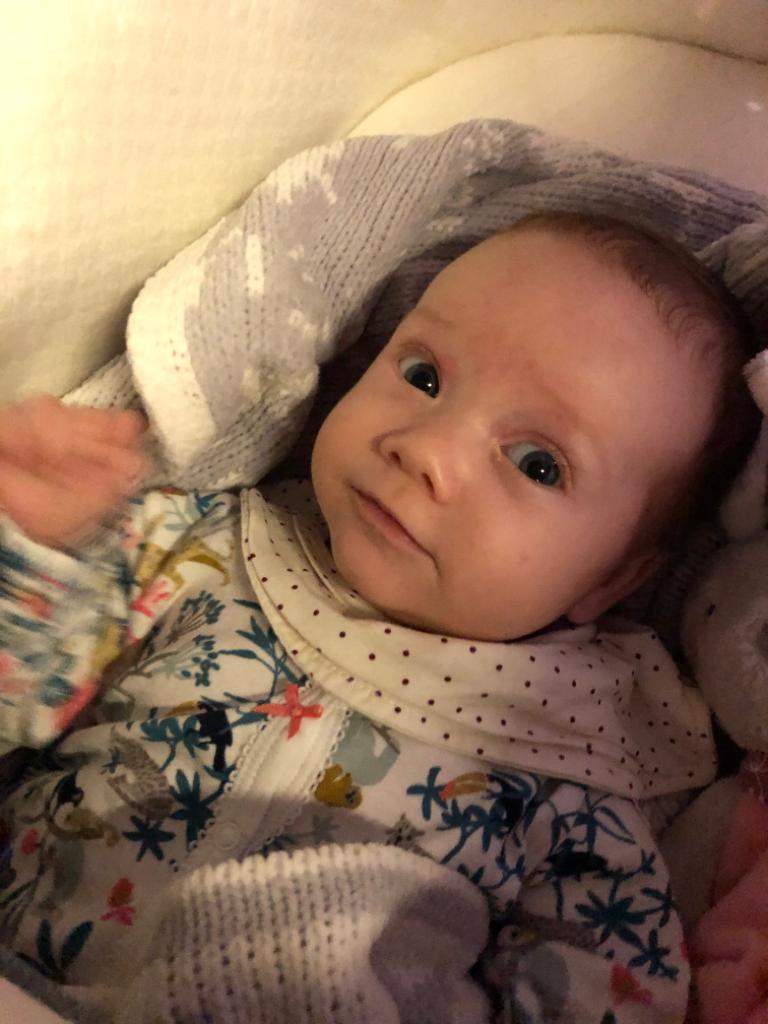
We took advantage of our presence in Madrid to see our sons and their partners and, in particular, our new granddaughter Matilda.
Matilda appreciating life
It was on our way to one of those visits that I was struck by a statue near the metro station we were using. It’s dedicated to the “Atocha lawyers”. They were members of a group involved in the defence of workers’ rights in the early years of democracy, after the death of the dictator Franco. On 24 January 1977, far right terrorists attacked them, leaving five dead and four injured.
Monument to the Atocha Lawyers
The main targets of the attackers were trades union leaders from the Communist Party, at that time still banned. Ironically, its legalisation was accelerated by the attack. That’s the response we should all have to terrorism: when our rights are attacked, we should respond by strengthening of those rights. That’s not always the case: since the murder of Labour MP Jo Cox in England, the momentum for Brexit, which she loathed, has if anything increased.

The statue in Madrid is a moving reminder of how costly it can sometimes be to defend rights. And how important.

Equally touching was a pair of paintings I saw in one of my favourite galleries, the Thyssen-Bornemisza. The first was a portrait of Quappi in a Pink Jumper, full of affection but also of forceful personality. 
Powerful, intriguing portrait by Beckmann
Quappi in a Pink Jumper
I hadn’t previously come across the painter, Max Beckmann. He was German, but he died in the US, and the painting was dated 1932-1934. Which places it in just the time Hitler was coming to power.
Max Beckmann in one of his many self-portraits
Later, I looked him up. When Hitler denounced ‘degenerate art’ in 1937, many of Beckmann’s canvasses were seized and some were included in the degenerate art exhibition of that year. He fled with his wife to Amsterdam, where he somehow managed to survive the war and German occupation, in the course of which the attempt was made to force him into the German Army, even though he was 60.

In 1948, they left Europe for the US where he renewed a successful career not just as an artist, but as a teacher. Far too short a career, as longstanding heart disease killed him in 1950 at the age of 66 (my own age, so I can testify that it’s far too young to die).

According to his widow, he had been on his way to see one of his paintings in an exhibition at the Metropolitan Museum of Art in New York.

And who was that widow? Why, the Quappi of the painting. It seems that the affection it radiates isn’t simply art. It reflects a real sentiment.

Degenerate art? How could the failed painter Hitler have any idea of what was good or what wasn’t? And what a disgraceful abuse of power it was to oppress men like Beckmann, as it was to murder the Atocha lawyers.

The US gained by Germany’s attempt to crush Beckmann. As the Spanish Communist Party benefited from the right-wing attempt on some of its leaders. A lesson worth remembering at a time when many in America, or Britain, seem indifferent to the value of tolerating opposing views to one’s own.

My Halloween trip was full of poignant moments. Leaving a much-loved job. Seeing some much-loved family members. And admiring two works of art dedicated to the protection of much-loved freedoms.

Wednesday, 28 August 2019

BoJo's British coup

Let’s be absolutely clear: the decision to prorogue parliament was taken by Boris Johnson, but it was issued in the name of the Queen. Why? Because Johnson was exercising a royal prerogative.

You thought the British monarchy was just a matter of pageantry and ceremonial? Think again. It is no longer the monarch who rules, but many of the powers of monarchs persist and are exercised by the government. That allows ministers, in particular the Prime Minister, to rule almost arbitrarily at times, and to dismiss any kind of scrutiny by elected representatives.

In a fuller democracy, such behaviour by the executive would not be tolerated. It would be thwarted by a powerful judiciary. By the equivalent of Parliament, in fact. But in monarchical Britain, Parliament can still be overruled, and that’s what Johnson has done. He’s issued a diktat – well, strictly, got the queen to issue a diktat for him – and anyone we actually voted for is out of the picture, apart from those, handpicked by him, who are in his government.
Boris Johnson: author of a very British coup
There’s nothing unusual about this, historically. A man – it almost always is a man – who wants power untrammelled by constitutional niceties, starts on his road to autocracy by a coup d’état against a parliamentary body he finds vexatious.

Julius Caesar took on the Roman Senate. He came unstuck personally, murdered by a group of aristocratic senators, but in the civil war that followed, his successors won the imperial power in Rome that had eluded him.

In Britain, Charles I was no more successful than Caesar in breaking the power of parliament, and he too paid with his life, but again at the cost of a civil war.

Napoleon came to power in a France drained by tyranny, misgovernment and war, and secured his own rule by emasculating parliamentary authority. That meant he could exercise arbitrary and unconstrained power. The consequence was even more deaths in war leading to ultimate crushing defeat.

When Hitler managed to get MPs elected to the Germany parliament, they infamously showed their contempt for the institution of which they were members by turning their backs on the speaker. In short order, the Nazis had reduced parliament to a speaking shop only, wholly docile to Hitler’s rule.

Why do they get support when these would-be autocrats go down that road? After all, the people suffered terribly in every one of the cases I’ve mentioned and, as a general rule, things ended pretty badly, above all for them.

There is a naïve belief among many citizens, even in a democracy, that elected representatives are all lying, corrupt, power-hungry and ineffective. They look instead to a strong man who will sweep all these timeservers and timewasters out of the way and get things done. The things that everyone – by which they mean everyone who thinks like them – know to be necessary and which are being held up by the corrupt opportunists who occupy parliamentary seats.

That, after all, is exactly what has happened with Boris Johnson. Parliament has been unable to legislate Brexit. It hasn’t been able to do so because it is divided within itself, but that is a true reflection of the state of the nation. However, for some voters, the failure of parliament to reach a decision is a simply a failure of parliaments, and it’s time to move on, to find the man free of the corruption and personal ambition which parliamentarians serve, and have him deliver the Brexit the people voted for.

The irony is that the strong man in this particular instance is the most corrupt and lying of them all. But so were Hitler or Caesar. What BoJo’s supporters are looking for is strength, and none of the rest really matters. BoJo provides the strong smack of authority they crave.

The other irony is that in reality, no one voted for a hard Brexit. It wasn’t an option on the ballot paper. And the people who are clamouring most loudly for it will be among the hardest hit by it. But again, none of this concerns them. They see stalemate now, they see action from the strong man, and that’s what they admire.

People will tell me that BoJo’s nothing like the historical characters I mentioned. Certainly, unlike Napoleon or Hitler, he’s not making a bid for indefinite and unlimited power. But make no mistake about it, what he has done today is a coup d’état. He has seized personal power, monarchical power, for himself by eliminating the possibility of parliamentary scrutiny of his actions or opposition to them.

The coup d’état is temporary. It’s due to end on 14 October when parliament will be allowed, by grace of Boris, to convene again. And should take immediate action to cut back on the royal prerogative powers the executive exercises.

Or will it reconvene? Another lesson of history is that once autocrats have tasted such power, they find it hard to give up. And Brexit is going to lead to difficult times ahead, in which a strong man is going to be seen as still more necessary.

Will normal service resume on 14 October? I hope so. But do I think it’s guaranteed? I most certainly don’t.

Saturday, 12 January 2019

Personality cults: toxin of our times

One of the benefits of having dogs is that you have to go for walks. It may be cold and wet, or oppressively hot, but the dogs always know that what you really need is another walk.

And they’re right.

Now, and I hesitate to write these words, in case they read them, but even with the company of two charming dogs, I find those walks not entirely exciting. So I take earphones, and an audible book downloaded to my phone. That passes the time satisfactorily, while Luci and Toffee hunt around smelling any patch of ground that seems potentially interesting, or playing with small dogs and running away from large ones.
Luci with Toffee behind her.
Great fun but walks need a little more...
Currently, I’m listening to a book I previously read, Ian Kershaw’s biography Hitler. I seem to be getting more from it this way than from reading it. Perhaps it’s the intimacy of a voice speaking directly into my ear. But what perhaps 
makes the book more vivid to me now is that it feels so much more topical. 

Whether on the first or second time through, the picture that emerges is of a Hitler who was not unintelligent, but hopelessly limited. Perhaps one could describe him as selectively stupid.

For instance, he warned the Jews before the war that if they dragged Germany into another world war, they would pay the price, through the annihilation of Jewry. 

He then invaded Poland, and found himself at war with France and Britain.

Two years later, with Britain still undefeated, he invaded the Soviet Union, convinced the German army could strike a knockout blow in a matter of months, leading to a complete collapse of the Soviets. So now he was in a major European war.

A few months later, Hitler’s ally Imperial Japan attacked the United States and he declared war too.

So now he was in a world war.

The Jews had absolutely nothing to do with any of those steps. Indeed, they had been increasingly victimised as each military adventure got under way. Even so, this was the point at which Hitler, claiming that the Jews had indeed dragged the nation into this terrible conflict, decided that his warning was about to be verified, and Nazi Germany launched its programme of Jewish extermination.

As Kershaw points out, there’s little doubt that Hitler believed what he was saying, however contrary it was to any real evidence. That’s what I mean by blinkered. It’s also what I mean by selective stupidity. It allowed him to delude himself into adopting a series of views with no basis in reality.

It wasn’t, however, the only form of stupidity at play. Or the only form of delusion. Much more widespread was the poisonous beliefs that formed the bedrock of Hitler’s power: the personality cult that developed around him and which meant that any statement he made had to be true, simply because he’d made it.

Hitler was a self-deluded limited man, and profoundly dishonest, but he came to be thought of in Germany as incapable of error.

No attitude is more dangerous. Because if a man is infallible, to question him isn’t merely an error, it’s a lie. To disseminate such a lie is nothing short of treason.

If such questioning is by someone powerful, say the newspapers, then the treason is particularly deadly. The damage is done not to the revered personality – he is above such damage – but to the people who may read or listen to the lies. To protect them, not the leader, it’s necessary to shut down the purveyors of these distortions. Indeed, it may even be necessary to punish the people who produce them.

This is a crucial step to take. Because democracy itself is based on suspicion of its leaders. We elect people to power, but then we surround them with institutions designed to monitor them and question their actions. We never give way to unqualified faith in leaders but expect them to be, like any human, fallible and therefore likely to have to be replaced at some stage.

Personality cults represent an opposed point of view and, consequently, tend to lead to authoritarianism.

Now in long-established and deeply-rooted democracies, such as the United States or Britain, there are mechanisms in place which may be able to prevent that decline into autocratic rule. It may be possible to remove the personalities at the centre of a cult from power before they can consolidate their hold. The great question of our time is whether they are strong enough. Because, and this is why Kershaw is so topical, personality cults are back with a vengeance.

Donald Trump in the US is the head of a personality cult, that sees him as infallibly right, a view he shares. So anyone who questions him is not merely incorrect, but an enemy. Again, the media, or the mainstream media to use today’s dismissive term, are the among the most dangerous. 

Trump would not, I think, launch a Holocaust as Hitler did. However, I’m convinced that he would have no hesitation in locking up opponents if he could. He’d be sure he would be serving the people by doing so.

It’s no accident that the cry of ‘lock her up’ rings out at his rallies.
Not so different as one might think
as both lead personality cults
We have a similar problem in Britain. The Labour Party has been invested by a personality cult. Jeremy Corbyn is seen by his supporters as incapable of error. I’ve been told that I need to show ‘faith’ in the leader, the most dangerous attitude towards leaders. I’ve been told that he is being ‘savvy’ when he refuses to back either side of the Brexit debate, though that merely strikes me as dishonest. And I see in him the same self-deluding tendency to believe that he cannot err: he’s a man of the left so that all his positions are left wing, even when he is pandering to hard right Brexiters whose support he feels he needs, to win office.

As with Trump’s followers, Corbyns also loathe the mainstream media.

Corbyn is no Hitler, of course. However, he necessarily embodies the same tendencies towards authoritarianism that mark all personality cults. Equally, by their unqualified faith, his supporters encourage and reinforce that trend.

Forget the man. Forget his policies. It’s the qualities of a cult themselves that are toxic and need to be resisted.

I’m indebted to Kershaw for reminding me of that vital lesson. And to my dogs, of course, for obliging me to listen to him again.

Friday, 9 November 2018

A night of shattered glass

Eighty years ago, Nazi Germany took a fateful step towards the ‘final solution’ to the so-called ‘Jewish question’. Mobs of stormtroopers and civilians launched a night of violence against Jewish property and citizens. It was the turning point when legal harassment of Jews gave way to naked violence.

The pogrom was a response to the murder in Paris of a German diplomat, Ernst vom Rath. Ironically, he was a non-Nazi who was under investigation by the authorities for disloyalty. He was shot on 7 November 1938 by a Jewish refugee of Polish roots, Herschel Grynszpan, whose family had been expelled from Germany to Poland. Vom Rath died on 9 November.

Coincidentally, 9 November 1938 was being celebrated in Nazi circles, including by Hitler himself, as the 15th anniversary of the Beer Hall Putsch on 8-9 November 1923. That was Hitler’s first attempt to seize power and led to a shamefully weak response: he was briefly jailed before being released to take up again his drive for power which succeeded ten years later. A sad indictment of the failure of authorities to take appropriate action against right-wing insurgents, and an object lesson of what the consequences can be.

When the news of Vom Raths death reached the party, Hitler left without giving his planned speech. His propaganda chief Goebbels gave it for him, and then announced that if demonstrations broke out, they would not be hampered. That was an instruction to turn for revenge against the Jewish community.
A gutted Jewish shop int he aftermath of Kristallnacht
During the night of 9-10 November 1938, some 7500 Jewish businesses had their shopfronts destroyed. The shards of glass on the pavements gave the attack its name, ‘Kristallnacht’, crystal night. Jewish homes were looted, more than 7000 businesses were attacked and in many cases destroyed, and 1400 synagogues suffered the same fate. The number of immediate Jewish deaths may not have been exceptionally high – perhaps a few hundred including those who died in the following days – but 30,000 were arrested and dumped in concentration camps.

Police stood by and watched but didn’t intervene to stop the violence. Firemen attended but only prevented flames extending to neighbouring buildings when Jewish premises were set on fire.
A synagogue burns
A lot of property was destroyed, which infuriated another leading Nazi, Hermann Göring. In his view, that property should have been seized. He decided it was time to bring anti-Jewish action under more disciplined control. At a meeting with Nazi leaders on 12 November, he announced that he had ‘received a letter written on the Führer’s orders requesting that the Jewish question be now, once and for all, coordinated and solved one way or another...’ To make clear that he really meant one way rather than any other, he demanded that the appropriate agencies ‘take all measures for the elimination of the Jew from the German economy’.

From the elimination of Jews from the economy, the Nazi regime slipped almost inevitably towards the elimination of Jews altogether. The decision was taken in the end at the Wannsee conference in January 1942, and in consequence the final solution – in other words, extermination – went into effect.

The notion of a ‘Jewish Question’ strikes me as a strange one. The only question that ought to be asked about Jews is to antisemites: ‘what’s your problem with Jews?’ Similar questions could be asked of other groups: ‘what’s your problem with gays?’ or ‘what’s your problem with Muslims?’

In other words, the problem isn’t with the people targeted but with the people doing the targeting. And, sadly, there are far more of them around than there should be after the experience of the Second World War.

Despite my own Jewish roots, I’ve experienced no overt antisemitism. Until a year or two ago, I argued that antisemitism, certainly in Europe or the Americas, had shrunk until it was limited to a tiny number of fringe groups.. Islamophobia or homophobia struck me as far more widespread and far more acute.

Today, I’m changing that view. We’ve had scandals about antisemitism in various organisations – including, sadly, my own party – and a failure to take action against it. Not acting on time is dangerous, as the case of Hitler after the Beer Hall putsch showed. The sores are festering, the disease is spreading. Nothing has made that clearer than the murder of eleven Jews in a gun attack on a Pittsburgh synagogue.

Islamophobia and homophobia remain bigger problems. But maybe we can learn to oppose both of those and antisemitism as well. And what better time could there be for revitalising our commitment to the cause than the anniversary of Kristallnacht?

Sunday, 5 August 2018

Progress of a rebel freed from gaol

The young man who was released from Dartmoor Prison at the end of the First World War, and who would later be my grandfather, had been a radical even before he went in. It was what led him to the pacifism for which he was gaoled. And he emerged, after a year or two in the company of such men as the philosopher Bertrand Russell, even more radical than he went in.
Radical Nat on the right. On a postcard from
'yours rebelliously Henry B Offell'
A radical though not quite a Communist. My grandmother, Yetta, had joined the Party and had become quite an activist. My grandfather, Nat or Norman, did attend some meetings though he never joined. One of the meetings he went to was chaired by Yetta. She was an attractive young woman and he decided he wanted to get to know her better.

She had, however, emerged from the aftermath of the war a woman saddened well beyond her eighteen years. She’d been engaged to a young man who managed to survive the entire war, only to come home and succumbing to the terrible flu epidemic that followed. So,  when Nat approached her, Yetta was still recovering from a devastating loss. 

Did that make her more or less open to his advances? Perhaps a little of both. They were engaged relatively soon, but the road to marriage was a stormy one. She told me that on one evening they had such a row in a street on the way home that she tore off her engagement ring and threw it on the pavement at his feet, before storming off.

He, instead of following her at once, got down on his hands and knees and searched for the ring. It was a good ring and he wanted her to accept it. He could settle the argument later.

They were married in 1921. On 8 September, just one week before Yetta turned 21. A week later and she wouldn’t have needed her parents’ consent, but she insisted on getting it, though they were more than a little reluctant: Nat was from a far poorer background than hers, daughter as she was of a skilled craftsman, a shoemaker specialising in orthopaedic shoes for injured or otherwise deformed feet.
Yetta and Nat at their wedding in 1921
He’d picked up the profession in which he’d started before the war, lithography, and had reached a level of expertise such that his company asked him to go into sales and represent them to clients rather than simply do the lithographs himself. It meant that he was able at last to emerge from the backbreaking poverty in which he’d spent his childhood. He still got off his bus from and to home a stop early to save a penny on the fare, but he was soon earning enough to be able to clear the mortgage on a house within four years, something that’s practically unthinkable in England today. He moved his family into a modest house in the new outer London district of Hampstead Garden Suburb, where many Jews entering a middle-class existence were moving.

A Jewish boss of mine once said that to make a man a Conservative, you had to give him something to conserve. Rebellious Nat may once have been, but as the years rolled by, he found himself in ever greater sympathy with the British Establishment. Besides, when it came to the Second World War, he felt that the nature of an enemy led by Hitler meant that a Jew had to abandon pacifism and do what he could to overthrow that violently anti-Semitic regime.

He was too old for combat, but he could volunteer for the Air Raid Protection service, which he enthusiastically did. He knew what Air Raids meant, if only as a result of attempting to travel in to his office in the City of London one day, only to be turned back four stops before his on the Underground. The city had taken a pasting the night before and most of the buildings had been burned out, his company’s included. There was no way through to it.

So, at the end of the Second World War, unlike the First, Nat was far closer in sympathy to the mainstream of British society. And the process continued, notably after the formation of the state of Israel in 1948. My grandparents were never practising Jews (a more religious uncle refused to visit them because theyd allowed bacon into their house), but their sympathies were with the Jews of Israel nonetheless. The result was a continued drift away from the radical Left to which they had both belonged at one time.
A good grandfather with his grandsons in the fifties
Just a bit more staid...
‘I’ve given up reading The Guardian,’ Yetta once told me to explain why she was taking the Conservative Daily Telegraph, ‘because the Guardian keeps writing pieces so critical of Israel.’

I haven’t the hard data to support my view, but it feels to me that this has been a trend in the Jewish community. Radical in the 1920s, strongly pro-Labour in the fifties and sixties, its centre of gravity is with the Tories today – perhaps their more liberal wing, but Tory nonetheless.

I’m not sure where they would stand on the scandal over anti-Semitism in the Labour Party today. I imagine it would only have been the last straw for them. Among those of us who remain linked with the Jewish community, however tenuously, only a minority stay loyal to Labour.

For my part, I wish we could recapture the time when Jews like my grandparents could be counted on to support the Left. But I regret still more that many Jews no longer feel comfortable in the Labour Party. I’d like to see the first problem solved, but I believe something will have died in Labour’s soul if it can’t solve the second.

Wednesday, 13 June 2018

Pleasure, and a timely lesson, from the Hamburgers

There are more bridges in Hamburg than there are in the whole of Venice and Amsterdam. Taken together.

How do I know that? I was told by a taxi driver. And the word of a taxi driver is not to be doubted, is it? Like the word of a US President. So I haven’t checked. I have to admit, though, that if I havent looked, it’s partly just because I wouldn’t want to find out that it wasn’t true.
The Elbe in Hamburg
In any case, it’s highly plausible. The city has water everywhere. It’s a great port, after all, at the mouth of the river Elbe, and with many channels of its tributary, the Alster, flowing through parts of the city centre. Water, hills and parks make a city, in my view, and Hamburg has the first and last of these.
Water, water, everywhere
Many of the waterways are lined with old warehouses, a reminder that the city was once one of the chief centres of a great trading association of northern Europe, the Hanseatic League. Most German cities like to have their car number plates identified by a single letter – B for Berlin or F for Frankfurt, for instance – because a short abbreviation indicates a great city. Hamburg insists on two – HH for Hansestadt Hamburg, recalling its long commercial traditions.

Hamburg warehouses. And more water, of course.
‘England is a nation of shopkeepers,’ Napoleon once said. I realised just what he meant, and just why he said it, when I was recently reading some material on Britain in the eighteenth-century. In the Napoleonic wars, Britain tried for as long as possible to avoid getting involved in fighting on land in Europe, preferring to limit its military commitments to the sea (trade needed the sealanes kept open, after all). Instead, it offered subsidies to its allies to do the actual fighting. It could offer those subsidies because it was a powerful trading nation, though as I argued here recently, even Britain suffered as embargoes and counter-embargoes were imposed.

Hamburg, like Britain, prospered by trade. A message Brexiters and Trumpistas would do well to remember. Erecting barriers makes nations poorer. Knocking them down makes them richer – all of them: this isn’t a zero-sum game, both sides gain from trade. And war damages them.

Alongside parks and waterways, spires help a city too. My eye was caught by a tall church tower as I was walking between meetings, but I couldn’t get to it just then – I was in the city for work, after all. However, later, having seen a colleague off at the station, I found that my route back to the hotel took me close to it. “I could take a look,” I thought.
The ruined church of St Nikolai in Hamburg
It turned out to be the tower of the St Nikolai church. Only the tower and the chancel survive. The main part of the nave was destroyed in 1943 when the Allies bombed the city, in the aptly – and vengefully – named ‘Operation Gomorrah’. The Royal Air Force bombed at night, the US Air Force by day; the RAF carpeted the city indiscriminately, the USAF targeted military works (such as a submarine factory); a fire storm engulfed the city, leaving a number of dead that has never been precisely determined, some of the corpses having been completely incinerated in the flames.
Picasso evoked the terror of the Nazi bombing of Guernica
The museum in the crypt of the ruined church makes it clear that the chief blame for the horror belongs to Hitler and Nazism, that none of this would have happened had they not set Germany on a vain road to world power, and that the Nazis indeed had pioneered the use of mass bombing of civilians before the Allies did: the museum mentions Guernica during the Spanish Civil War, Warsaw, Coventry and, indeed, London, all bombed long before 1943.

That’s generous of the German historians.

However, it hardly lessens the guilt of the Allied strategists. The exhibition quotes Air Chief Marshall Arthur ‘Bomber’ Harris saying ‘There are a lot of people who say that bombing cannot win the war. My reply to that is that it has never been tried… and we shall see.’

Let’s be clear: the bombing of civilian targets has only one aim. In World War 2, the Allies called it ‘breaking the morale of the population’. Today we call such attempts by a single and simple word: terrorism. The destruction of Hamburg by fire was absolutely clearly an act of state terrorism, something we would do well to remember whenever we throw up our hands in horror at state terrorism practised by our enemies today.
Hamburg ablaze during Operation Gomorrah
St Nikolai has been left ruined, like the Memorial Church in Berlin or Coventry Cathedral in England. There is a quiet, stately mournfulness about these monuments to those moments when we get things wrong and build walls instead of bridges. 

Salutary in this city of so many bridges and which has suffered so much.

Are you listening, Trumpistas and Brexiters?

I suppose it would have been appropriate to have had a hamburger
among the Hamburgers. But I resisted the temptation