Showing posts with label Brexit Party. Show all posts

Thursday, 23 January 2020

Thinking of choosing the hard left? You'll end up with the hard right

According to a leftie who keeps on at me on Twitter, the problem for Labour is that the 2019 election merely represents a continuation of its decline over many years now, with the 2015 result an anomalous blip in that downward trend.
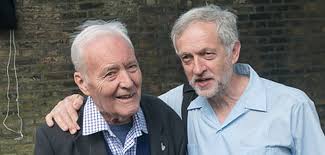
Tony Benn and Jeremy Corbyn: architects of Labour misfortunes
That stance got me interested in taking a longer-term view of British politics. So I looked at percentages of the popular vote in eleven elections over the forty years between 1979 and 2019. Clearly, the relative strengths of the two main parties, Labour and the Conservatives, would be of interest. It struck me, though, that it might also be useful to set them in the context of the overall landscape of parties of the broad right (the Conservatives, but also the hard right parties of today or their earlier embodiments, Brexit Party, UKIP, the British National Party) or of the broad left (Labour, the LibDems and their earlier forms, the Alliance or Liberals, the Greens or Ecology Party, the SNP and Plaid Cymru).
How the left (broadly) performs against the right
compared with Labour alone
What emerges is a curious picture. The ‘left’, in this broad definition (orange line), consistently outperformed the ‘right’ (black line) except in 2015. That surge for the right was principally down to UKIP’s 12.6%; the Conservative result was still an anaemic 36.8%.

With either proportional representation or some arrangement between the constituents of the ‘left’, the ‘right’ would have had a majority of the popular vote for only two years out of the last forty.

Now popular votes don’t necessarily translate into Parliamentary majorities. But if big enough, they can deliver victory, and the ‘left’ tends to be significantly ahead of the ‘right’ most of the time. That suggests that if Labour, the SNP, the Liberal Democrats and the Greens could have pulled together, the Tories would have been out of power for most of the last 40 years, instead of in power for 27 of them.

Interestingly, Labour alone (red line) only outpolled the combined right for three elections – unsurprisingly, the three when Blair was leader and in government. The leftie on Twitter, and others of his ilk there or on FaceBook, are also constantly assuring me that Blair was the lowest of the low and worthy of nothing but contempt. However, if we’re interested in keeping the Tories out of power, it’s worth remembering that he was the only leader in four decades able to ensure that Labour could do that on its own.

For the rest of the time, it would have had to work in partnership with others to oust the Tories. That’s clear from the second graph comparing Labour’s performance (red line) directly with the Tories’ (blue line). Again, only under Blair did Labour outperform the Tories. Otherwise, we’re consistently behind.
Labour performance alone against the Conservatives
Interestingly, the worst results are not under Corbyn. The worst of all, naturally, is 1983. Then Labour was led by Michael Foot, although Tony Benn, the deputy leader, was the main architect of our overwhelming defeat.

Since then, our lowest percentages of the popular vote came in 2010 and 2015. The Tories, however, were down then too, winning by small margins. Looking instead at the gap between Labour and the Tories, the worst elections of all were 1983 and 2019, Benn’s and Corbyn’s. Indeed, it is Corbyn’s greatest achievement to have gifted the Tories their second-highest vote share in that forty-year period. The only higher result was Maggie Thatcher’s first win in 1979.

The significance is that her victory was the first in a series. Johnson’s was the fourth in a row for the Tories, and the first time since the nineteenth century that any party has increased its Parliamentary representation in a fourth election victory.

Corbynists always said that Jeremy would do something remarkable. He has. Although I’m not sure this is what they meant.

This takes us to the nub of the problem for the hard left. One told me recently that whatever we learned from the 2019 election, we should not on any account ‘abandon the programme’. For Corbynites, no compromise is possible on Corbynist policies. That makes any hope of collaboration with other parties impossible. And that, as the last eleven elections demonstrate, means that the right would continue to outperform us.

Above all, with the kind of programme championed by Corbynites now or Bennites in 1983, we ensure not just a Tory win, but a colossal one. Why does this happen? Because Bennites and Corbynites want Labour to mirror their views, not those of the electorate. And the electorate has no time for their policies.

In the current leadership election, we need to choose a leader who reverses that. We need a leader who listens to the voters and goes to them with a programme that they can endorse, even though that means compromise, even giving up on some cherished policies. That way we can win back Labour voters. And if, in addition, we can compromise enough to attract other parties to our banner, why, we could kick the Tories out for a generation.

The alternative is to choose Bennite or Corbynite orthodoxy.

And we know what that gets us: the likes of Maggie or Boris.

Saturday, 7 September 2019

Boris Coup: Day 11

Day 11 of the Boris coup and Brexiters are in a terrible flap. 

They’re shocked. Appalled. Flabbergasted.

It seems that before voting to block a hard Brexit, the cross-party group of MPs opposing no-deal – the people I like to think of as the resistance – spoke to EU officials to check whether a request for a further delay would be granted if Britain requested one. The Brexiters are horrified. David Jones, a Tory MP, and one of BoJo’s accomplices – apologies, supporters – said that this:

... confirms the level of EU interference in our internal affairs and makes the need for Brexit all the more pressing.

I changed the word ‘accomplices’ back there because I’ve been warned about the importance of words. But more of that later.

It’s interesting that British MPs approaching EU officials amounts to unwarranted interference by the EU in our internal affairs. Does that mean that when Boris chatted to Trump at the Biarritz G7 meeting, that was similar interference by the US? Is it now a political sin to talk to our foreign partners before deciding how we should approach our partnership with them? Or is it simply that David Jones wants us only to consult and be guided by Boris?

Meanwhile, the bill to force BoJo to ask for a Brexit delay is due to receive royal assent on Monday. All eyes are on what Boris does next. Will he refuse to send the bill for assent? Will he refuse to abide by it when it becomes law? Is someone who suspended Parliament because he couldn’t get his way prepared to respect the law?

That we have to ask the question at all shows just how far we have sunk in this febrile coup atmosphere in which we live.
Tom Watson.
So annoying that his political antennae are better than his leader’s
It’s an atmosphere that affects Labour as well as the Tories. Mark Serwotka, President of the Trades Union Congress, was insisting on Thursday – or, as I like to think of it, on day 9 of the coup – that “the actions of some of the parliamentary Labour party such as Tom Watson and others have been really unacceptable”. 

Watson, deputy leader of the Labour Party, should it seems now get in line and stop acting against the will of his leader, Jeremy Corbyn. Whose will, according to Corbynists like Serwotka, should be religiously followed in all circumstances. Just like Boris feels all Conservatives should jump to his every whim.

Tom Watson is annoying to people like Serwotka because he has political instincts. Right at the start of the coup, Corbyn rushed off to Glasgow to do some election campaigning. Business as usual, for him. Tom Watson, on the other hand, got stuck in with the resistance, working immediately with the ‘Stop the Coup’ campaign in London. Corbyn only woke up to the importance of what was happening at the end of the week, when he also belatedly joined the movement.

No wonder Serwotka wants Watson silenced. Who’d want a deputy leader who so eloquently demonstrates how far off the pace his leader is? Especially when he shows it in practice and not just words.

Which takes me back to the subject of words.

I’ve had complaints about my use of the word ‘coup’. What Boris has done, my critics claim, is not a coup. It’s true that if a coup means tanks on the streets, military occupation of the TV stations and political opponents arrested, then it wasn’t a coup.

But there are far more insidious ways of seizing power illegitimately. What Boris did was even legal, as several judges have confirmed, but that only makes it more difficult to obstruct his power grab. The only defence we have in Britain to abusive executive power is Parliamentary oversight, an annoyance to would-be autocrats anywhere, so Boris decided to do away with it.

He would have established a precedent, and precedent is everything in a system governed by an unwritten constitution. It would have allowed the executive illicitly to take whatever power it wished, if it couldn’t bend Parliament to its will.

That is a coup.

It has to be resisted, as any coup should be resisted. Parliament deserves congratulations, and thanks, for having so resisted BoJo, so far with success.

While we’re on the subject of words, let’s look at this one too: conservative.

Generally, it means someone who wants to conserve things. In particular, that would include our conventions and political processes. It’s clear that BoJo has no intention of doing so. That makes him a radical, seeking to change Britain radically, though from the right rather than the left. A radical, not a conservative, with a small c, even though he leads the Conservative Party, with a capital C.


David Gauke
Expelled for opposing his leader’s attack on democratic values
That’s why David Gauke, former Justice Minister but one of the 21 Conservative rebels BoJo expelled from his Party for voting against him, says that Boris, to placate Brexiters, has “had to rebadge the Conservative party as the Brexit party”.

That’s the party of Nigel Farage. BoJo’s behaviour is turning him, in Gauke’s words, into “Farage-lite”.

Powerful words. As words can be when you deploy them to maximise their impact. Gauke did it, and I apologise to no one for attempting to do the same.

Friday, 6 September 2019

Boris Coup: Day 10

Day 10. And Boris keeps giving the lie to Karl Marx, who talked about history repeating itself, first as tragedy and then as farce. With Boris, it happens only once, is a farce throughout but is perfectly likely to end as tragedy.

A tragedy for him perhaps. At least, we should hope so. Otherwise it could be one for the rest of us.
BoJo: not so happy these days
Let’s see what he’s been up to.

Well, he’s had to contend with more resistance to his high-handed behaviour, in particular his expelling of Conservative MPs for voting against him. The worst resistance came from his brother Jo, who will stand down as an MP as well as a minister, because of the “unresolvable tension” between loyalty to his family (i.e. his brother) and the national interest. How tough it must be to have your own brother declare your actions not in the national interest...

Boris laughed at Ed Miliband’s victory over his brother David for the Labour leadership back in 2013:

...only a socialist could do that to his brother, only a socialist could regard familial ties as being so trivial as to shaft his own brother

It seems that fraternal shafting isn’t restricted only to the left after all.

What else has Boris been doing? 

He attended a police training academy in Wakefield, in the North of England. The understanding was that it would be a celebration of his decision to recruit another 20,000 police officers, without a word of politics being breathed. But Boris treated that as a firm commitment, so he broke it.

First he kept the police officers and trainees waiting an hour, standing around in the sun. A fine illustration of how deeply he cares about ordinary people. Then he made a wholly political speech, part of his campaign for an election which, much to his frustration, he hasn’t yet been able to call.

In true Trump style, he took advantage of having police as a backdrop to make the speech. Something the police themselves resented, since they value their reputation, or at least the appearance, of being politically neutral. But Boris doesn’t pay much attention to protocol and procedure. If the regulations get in his way, he simply ignores them.

It was the same when he was an undergraduate in the Bullingdon Club at Oxford University: if he felt like trashing a restaurant, he just did it. Mere conventions suggesting that kind of behaviour was unacceptable were never going to deter him then. They don’t deter him now.

It’s interesting that he’s campaigning for an election, given that one of the votes he lost in Parliament, as I mentioned yesterday, was a motion to call a poll. The latest news is that the Opposition parties don’t intend to give him that election until after the Brexit date.

That’s more bad news for poor Boris. A new poll by ICM for Represent Us, a group campaigning for a second referendum, suggests that the Brexit Party’s vote would double from 9 to 18% if an election were held after 31 October and Britain still hadn’t left the EU. That would leave Corbyn and Johnson level pegging on 28%, whereas in an earlier election BoJo would be ahead by 37 to 30% (according to the Financial Times, which has a paywall).

No wonder the Opposition parties want the vote in November.

Especially as the Lords have now ratified the bill requiring BoJo to delay Brexit if he hasn’t negotiated a new deal by Halloween. “I’d rather be dead in a ditch,” he told the Guardian when asked whether he’d request a delay in Brexit.

He keeps claiming he’s making good progress towards a deal, but since the EU says there’s been no progress at all, like the boy who cried wolf, Boris finds few who believe him.

So he could be heading for 31 October with no deal. Then his choice would be to ask the EU for a delay to Brexit, and comply with the new law. Or he could break the law, which would be a serious extension to his coup and might have some difficult consequences. Or of course he could die in a ditch.

By happy chance, it seems that Parliament may well be digging one for him.

Friday, 30 August 2019

The Boris coup: day 3

Boris has announced that he’s now going flat out to get a deal with the EU.

Why now particularly?

Because now he’s doing away with the interference of those pesky members of parliament. Of whom he happens to be one. And by no means the least pesky (ask Theresa May).

If anyone was in any doubt of the plans of the Downing Street junta, a source from inside the bunker cleared them up on Thursday, as Heather Stewart tells us in the Guardian:

We’ve been very clear before that we will deliver Brexit by any means necessary and that remains the case.

Any means that they deem necessary. If that means trampling mere constitutional niceties, say by removing the only means of democratic oversight of government that Britain has, well, you can’t make brain soup without breaking heads.
Citizens out in the streets to resist the coup
And where was the Leader of the Opposition? Nowhere to be seen
Boris Johnson, we have come to learn down the years, may not always be entirely truthful in his public pronouncements. Few can have been naïve enough to believe him when he announced he was proroguing parliament to give himself time to refine his domestic agenda. If they were that innocent, there was a lovely hot-mike moment, also on Thursday, when, as Heather Stewart also points out, the defence secretary Ben Wallace was caught saying:

”Parliament has been very good at saying what it doesn’t want. It has been awful at saying what it wants. That’s the reality. So eventually any leader has to, you know, try.”

He continued: “Our system is a winner-takes-all system. If you win a parliamentary majority, you control everything, you control the timetable. There’s no written separation, so … you pretty much are in command of the whole thing. And we’ve suddenly found ourselves with no majority and a coalition and that’s not easy for our system.”


Ah, yes. He belongs to the lazy right that believes things should be easy. 

In a democracy, when parliament can’t decide what it wants, you wait until at last a majority emerges for one solution or another. A system where one man decides he can do without a majority, and does away with parliament to impose the decision himself, is called an autocracy.

But Boris can dress up what he’s doing as democratic because there is widespread voter support for him. And that shouldn’t surprise anyone either: whenever an autocrat takes power, he does so with a large minority, or even a majority, backing him among the people. Right now, the Tories enjoy a lead over Labour in the low double figures, small but enough to encourage him down the road he’s taken. Indeed, add in the Brexit Party vote, which he would get if Farage’s party chose not to stand candidates against Tories, and he’d be sitting on 45%, a dream level of support for an autocrat.

Also enough to win him a sizeable majority in parliament if he decided to go back to ruling through it. Which, as Ben Wallace indicated, he would probably do if he had the majority that gave him the control he wants.

His strong position isn’t only down to Boris. It equally depends on the sad weakness of the official opposition to him. It’s interesting watching all these developments from abroad, in Spain. One of the better Spanish papers, El País, had this to say about developments in Britain:

A triple offensive, with appeals to the courts to overturn the prorogation, calls to citizens to block the streets and a final attempt in Parliament to prohibit by law a disorderly exit from the EU, are laying the groundwork for a decisive week in the history of the country.

Well, the appeals to the courts have started badly, with a Scottish judge refusing an interim order reversing the prorogation. Still, the efforts proceed, under the leadership among others of the doughty, impressive Gina Miller.

Citizens have been taking to the streets to try to block BoJo’s coup. Now here’s where one might expect a radical left-winger to prove his credentials. A man from that political tendency would, one might imagine, be a strong proponent of direct extra-parliamentary action by the population, to reinforce any action in parliament.

In other words, the protest action called ‘stop the coup’ gave Jeremy Corbyn, the official Leader of the Opposition, the opportunity to prove his worth. Sadly, it has proved exactly that. His is a business-as-usual approach, and instead of joining the protestors, he preferred to go campaigning in a Scottish constituency.

Most of us already knew this about him, but his failure to pick up the baton offered him by ‘stop the coup’ proves it: he’s a Leader of the Opposition who can’t lead, and who doesn’t even oppose much.

No wonder BoJo is opening up a commanding lead in the polls.

That leaves Corbyn with only the legislative route open. To push a bill – or help push someone else’s bill, since there are real leaders in the House of Commons – through Parliament, in the brief time it’s allowed to meet before it’s prorogued.

Then hope for the best against the odds, since BoJo has already shown his readiness to ignore Parliament.

Oh, well. As El País says, it’s a historic moment for Britain. And, given the quality of the leadership on display, a pretty dire one.

Saturday, 15 June 2019

Fake news and 'The Truth'

Terry Pratchett was one of the finest English writers of recent years. That’s not as widely understood as it might be, perhaps because he wrote fantasy novels and too few people realise that they are, in reality, not concerned with his invented ‘Discworld’ but with our own life here on Earth, to which he held up a revealing mirror. Or a searchlight.
Terry Pratchett: excellent writer whose insight we sadly miss
The Guardian recently published an article on the Pratchett biography due to be released next year by Marc Burrows. He discovered that Pratchett, who started his professional career as a journalist, conducted an interview in 1995 with Bill Gates of Microsoft. Pratchett correctly foresaw the arrival of fake news; Gates mistakenly countered that there would be an authority on the net which would classify material and allow readers quickly to establish that certain items were simply untrue. How wrong that was…

Pratchett had said:

Let’s say I call myself the Institute for Something-or-other and I decide to promote a spurious treatise saying the Jews were entirely responsible for the second world war and the Holocaust didn’t happen. And it goes out there on the internet and is available on the same terms as any piece of historical research which has undergone peer review and so on. There’s a kind of parity of esteem of information on the net. It’s all there: there’s no way of finding out whether this stuff has any bottom to it or whether someone has just made it up.

Lisa Forbes, newly-elected MP for Peterborough
Confused about the anti-Semitism of posts she decided to like
It’s ironic that he chose an instance of anti-Semitism to illustrate his point. Today, we see a great deal of anti-Semitic material on the internet, masquerading as anti-Zionism, and plenty of people are empty-headed enough to endorse it unthinkingly. That’s what Lisa Forbes did, before becoming the new Labour MP for Peterborough in its recent by-election. But there’s Islamophobic material out there, and anti-vax material, as well as stuff about conspiracy theories concerning 9/11, the moon landing or pretty much anything else you care to mention, so that the right can fall for it just as readily as the left or the simply naïve.

Pratchett also wrote a novel to explore these problems, aptly entitled The Truth. It focuses on William de Worde who launches the Discworld’s first daily newspaper, the Ankh-Morpork Times. As William comes to grips with his new profession of journalism, he begins to discover some of its more curious aspects.

In the Palace of Ankh Morpork, William attempts to collect information about an offence alleged to have been committed there. But the Commander of the Watch (the Chief of Police), Sam Vimes, refuses to tell him anything useful. However, when William needs something from the kitchens, Vimes is at least good enough to point him in the direction. William decides to poke around there, until he’s challenged.

‘… who are you, askin’ me questions?’

‘Commander Vimes sent me down here,’ said William. He was appalled at the ease with which the truth turned into something that was almost a lie just by being positioned correctly.

He’s absolutely right. Nothing helps a lie gather momentum so much as having it transmitted through a statement that is strictly true. Vimes did indeed send him that way. But Vimes gave him no permission to interview anyone or, indeed, continue his investigation of a crime on which the police were working. And yet, isn’t that exactly the impression William’s words give?

The problem, in William’s view, is summed by an old saying about lies and the truth: ‘…lies could run round the world before the truth could get its boots on.’ But what gives that statement its power is the thought with which he follows it up:

And it was amazing how people wanted to believe them.

Here’s a lovely example of both these notions: that a dash of truth makes fake news more palatable, and that it will be more quickly accepted and spread by people who want it to be true.

In the recent Peterborough by-election I mentioned before, Labour surprised most commentators by holding the seat. Many had expected it to be won by Nigel Farage’s Brexit Party. For Labour to hold it after the previous MP, also Labour, had been forced out following criminal action, was remarkable. And many remarked on it. One such remark I saw on social media, claimed that it was a great success, especially as Labour not only held the seat but increased its majority.

Clearly, the writer really wanted to believe in a Labour triumph in the seat. And since the candidate had indeed increased the majority, the justification for this belief might seem solid. Until we look at more evidence. A little more truth, in fact.

The Labour majority at the previous election had been 607 votes. At the by-election the majority had climbed to 683. So it’s perfectly true that it had increased. But it had increased from a wafer-thin majority, by a wafer-thin amount, to another wafer-thin majority.

And what triumphalism over the election result doesn’t take into account is that Labour’s share of the vote fell, and by a far from wafer-thin amount: from 48.1% to 30.9%, a drop of 17.2%.

Indeed, taken together, the vote of the right-wing parties – Conservatives and the new Brexit party – took 50.3% of the votes, an absolute majority. Labour only won because the right-wing vote was split.

Labour had something to celebrate in holding a difficult seat. But triumphalism? That was hardly called for.

Unless you’re ready to believe a distortion made possible by, as Pratchett shows, positioning the truth in a particular way. Which you’ll be all the happier to do if you just want to believe the lie in the first place.

Just as Pratchett warned.

Friday, 31 May 2019

Old school unspooked

It isn’t really a spoiler to talk about the end of The Italian Job, is it? It’s become a classic. The coach teetering on a cliff edge, its back wheels over a sheer drop, its front wheels still on the road. The bullion robbers are at one end, the bullion itself at the other on a wheeled trolley. If they try to move near it, the gold rolls away towards the back of the bus, threatening to plunge the whole coach into the abyss.

“Hang on lads, I've got a great idea,” says Michael Caine.
I've got a great idea
And the film ends. With absolutely no suggestion of what the idea might be. Or whether there is any possible outcome other than the coach going over the cliff, taking the gold and the gang with it, or at the very least, the gold.

Len McCluskey is one of Britain’s most powerful trade union leaders. One of the keys to his grip on power is the ruthless way he protects it. Challenged for re-election to his post as leader of the Unite union by a fellow official, Gerard Coyne, he ensured that his rival was dismissed from his union role the day before the election. McCluskey won by a narrow margin, with his vote less than half what he had obtained the previous time.

Even more appalling was that the turnout for the election was just over 12%. McCluskey won with a 4% margin over his adversary, among fewer than one in eight of the union members, but the power that gave him was immense.
McCluskey: unrepentant, unspooked, unrepresentative
For instance, look at what happened to the defeated candidate. Coyne sued for unfair dismissal, but McCluskey had the financial clout of the union behind him and could bring up legal firepower far in excess of what his rival could afford. Eventually, Coyne dropped his case.

In the US in the nineteenth and well into the twentieth century, party bosses held sway over city neighbourhoods or even whole cities. They controlled huge funds and used them to offer favours to supporters, whether in the way of jobs or housing or other forms of wealth, to ensure their continued support – or to keep them under control by threatening to withdraw it. They were unprincipled, ruthless and effective.

One of the more famous of the Republican Party bosses was Mark Hanna. He said, “in politics, there are only two things that matter. One is money. I can’t remember the other one.”

McCluskey’s use of his financial clout reveals how true that remains today.

It’s highly ironic. Hanna was a man of the right. McCluskey a man of the left, head of the union which is a huge contributor to the Labour Party. But both men were political bosses, ruthless in their pursuit of power and their crushing of opponents. Both belong to that Old School of politics in which sheer brute power is all that counts, and money provides it.

In particular, McCluskey is ruthless in his support for Jeremy Corbyn as leader of the Labour Party. McCluskey is indeed believed to favour rule changes so that there would always be someone from the same left-wing current in the party, in any future election for leader. In other words, he wants Corbyn kept in his post and, even when he finally goes, he wants to do all in his (considerable) power to ensure he’s succeeded by someone out of the same mould.

This is curious. Because McCluskey’s stated aim is to see a government in office in Britain that will legislate genuine Socialist policies. And yet the man he’s backing to lead the party has taken it to a constant loss of standing in the polls and, only ten days ago, to its worst performance in a national election in nearly 120 years.

So why did I start by talking about The Italian Job? Not because McCluskey is as interesting a character, and certainly not because he’s as entertaining, as that rip-roaring film. No. It was because he told TV presenter Robert Peston, “my message to the Labour Party is don’t be spooked by these euro elections”.

We in Labour have long laughed at the poor third party, the Liberal Democrats, while we contest the position of top dog with the other big player, the Conservatives.

Well, the latest polls have the Conservatives, thoroughly discredited after their lamentable performance over Brexit, on just 19% of the vote – a disastrous level.

And Labour, who should by now have a 20-point at lead at least, are level-pegging with them. Just behind the hard right Brexit Party, itself behind – the Liberal Democrats. For now at least, they are in poll position.

“Don’t be spooked”? Well, no, one shouldn’t be. Spooking means panicking which never serves a useful purpose. But that’s not what McCluskey means. What he’s saying is “stay firm, stay the course”. In other words, just keep going as you are, however clear it may be that you’re on a hiding to destruction.

That’s why I thought of the Italian job. “I’ve got a great idea”. While the whole bunch of us wait to go over the cliff.

Taking all the gold we fought so hard for, down into the depths with us.

Monday, 27 May 2019

Aftermath of a rout: calling time on Corbynism?

Question: what’s worse than a politician who sacrifices political principle to attract a few more votes?

Answer: a politician who sacrifices his principles and doesn’t even get those votes.

Despite being technically leader of the Labour Party, Jeremy Corbyn has spent three years avoiding all leadership on Brexit, the biggest political question of his generation. He has, instead, tried to attract both sides of the debate, explaining that he wants Labour to be the party of both Leavers and Remainers. Apparently, he thinks he has only to express the wish for it to be so.

Unfortunately, and only Corbyn fans will be surprised by this discovery, attempting to please both sides of a bitter debate only puts both off.

Conservative collapse, Labour rout
Those who back Brexit have deserted Labour for the Brexit Party, which came top in last week’s elections to the European Parliament.

Those who oppose Brexit, and there are far more of them among Labour supporters, have abandoned Labour to vote for openly and actively anti-Brexit parties. Encouragingly, for those of us on the Remain side, though none of those parties individually outscored the Brexit Party, taken together they came well ahead of the total anti-EU vote, covering both that party and UKIP.

As for Labour, across the country it came third behind the Brexit Party and the Liberal Democrats.

Of course, Labour’s was not the worst performance of the night. The Conservative Party came fifth. It notched up the lowest popular vote it has had in its history, since its foundation in 1834. Both the big parties are in desperate trouble, with a mountain to climb to win back voter trust.

But, if Labour did less badly than the Conservatives, it nonetheless had a historically awful result.

The Labour Party first presented candidates in a national election in 1900. By 1910, at its fourth election, its share of the vote was struggling towards 10%. In 1920, its fifth campaign, it leaped forward to over 20%. It never fell below that level again until the European Election campaign of 2009. That was the tail end of the government led by Labour’s Gordon Brown. He was a good statesman, notably in the major steps he took towards eliminating child poverty, but he was a lousy politician, finding it hard to build empathy with voters. He achieved 15.2% of the popular vote in 2009 and was roundly, and rightly, criticised for that lamentable performance.

So it’s an extraordinary testimony to the Corbyn era that, in these most recent elections, he managed to reduce Labour’s proportion of the popular vote to an even lower level than Brown did: just 14.6%. The lowest level since 1910. It’s worse even than 1931, when Labour split after its leader, then Prime Minister Ramsay MacDonald, entered into a coalition government with the Conservatives. At the General Election that followed, Labour was reduced to 52 MPs, but it achieved over twice the percentage of the popular vote that Corbyn clocked up last week.

That’s not as impressive as the Conservatives, achieving their worst result in 185 years, but it’s still remarkable: Labour’s weakest performance for 119 years.

What makes this particularly ironic is that Corbyn’s supporters like to point to the increase in the popular vote Labour achieved under Corbyn in the General Election of 2017. It was the biggest increase since the end of the Second World War (though, and they sometimes seem to forget this, he didn’t actually win). His fans attribute that growth in support entirely to him.

I have to admit that I was surprised by the 2017 result. I had expected him to be crushingly defeated. Because I got it so wrong, a sense of shame kept me quiet at the time over what I believed had actually happened. Corbyn was still an unknown quantity that many felt offered them hope. He was also up against one of weakest campaigners I’ve ever seen, Theresa May, our soon to be ex-Prime Minister.

In addition, the Liberal Democrats had done themselves potentially irreparable damage by joining a coalition with the Conservatives in 2010, making them complicit in much of the harm inflicted on Britain in the name of austerity. At the time, I thought it might take a generation for them to come back.

Well, last week normal service resumed. Corbyn is no longer an unknown figure. Voters have seen him and they don’t like what they see. Weak and vacillating, he no longer inspires trust or hope. The damage I expected Corbyn to inflict in 2017 he did instead in 2019. Why, he even pulled off the extraordinary feat of making the Liberal Democrats electable again, only four years after the end of their coalition with the Conservatives, not twenty as I’d expected.

After nearly nine years of austerity, with millions dependent on charity to avoid hunger, the NHS withering for lack of investment, and the most vulnerable driven to despair by benefit cuts, Britain has never needed Labour in government more. But Corbynism has almost certainly left it unelectable.

Corbyn could and should go. He’s trying to change position to back a new referendum on Brexit, but after three years of resisting the proposal, will anyone think him sincere?

A leader who has failed as he has enjoys no right to cling on. The problem, however, is that Corbynistas still have a death-grip on the party. It’s not enough to part with Corbyn, if the Corbynistas can simply impose another of their inept favourite sons on Labour. It’s not clear how we do it, but we need to prise their fingers off Labour, or give up on it altogether.

Which would force anyone looking for a progressive alternative to turn to the Liberal Democrats. The Greens might be preferable, but the Lib Dems seem closest to power. On the other hand, they’re tainted by their association with the Conservatives. Can we trust them not to play the same trick on us again?

Well, we may not have much choice. If Corbynism continues to strangle Labour, what else can we do? We might just have to take our chance on Liberal Democracy.

Interesting times ahead.

And not in a good way.