Showing posts with label China. Show all posts

Tuesday, 20 January 2026

A Trump anniversary needs an Orwell reminder

It may not be the best literary diet for a twelve-year-old, to read Aldous Huxley’s Brave New World one week, and George Orwell’s 1984 the next. Not at least if he wants to retain an innocent, rose-tinted view of the world. I certainly didn’t when I raced through those two books, emerging somewhat shellshocked by the experience.

A mix not designed to encourage an adolescent
It was 1984 that hit me particularly hard. The book introduced the notion of ‘Big Brother’ to the world: Big Brother is a man, who might be no more than a propaganda fiction, presented as the leader of Oceania, the nation where the book’s protagonist Winston Smith lives. Big Brother’s face is on posters at every street corner or on screens in people’s houses. The slogan associated with the face was ‘Big Brother is watching you’, another phrase that has entered mainstream English.

The dystopia Orwell described saw the world divided into three blocs. He finished the book in 1948 (the title came from reversing the last two figures). That was just three years after the Second World War, which had been dominated by the Soviet Union fighting in alliance with the United States and the British Empire. At the end of the war, the Soviets had extended their control significantly westward, into Eastern and Central Europe. The British Empire was in decline, but both Britain itself and most of its former imperial holdings were closely bound to the United States.

A possible view of the world presented in Orwell’s 1984
Note who controls Greenland
It didn’t take a huge effort of imagination to conjure up the bloc Orwell called ‘Oceania’. It covers the Americas as a whole plus Britain and the whiter parts of its former empire. To defend itself against its rivals, it has become an authoritarian dictatorship, policing all thought, ostensibly because only such centralised power can defend against the other blocs.

The second of these, clearly based on the old Soviet Union and just as oppressive as the Soviet state and Oceania, is ‘Eurasia’. That’s Russia extended westward to the Atlantic and including all of continental Europe.

Meanwhile, in the Far East, a third bloc has emerged, covering China and Japan and their neighbours, called ‘Eastasia’. 

The three powers were in a constant state of war, in which Oceania allied with one or other against the third, but in a cynical but highly effective strategic move to guarantee their own survival, all three kept the fighting away from their homelands and concentrated mostly in Africa. There war would cause no damage at home while providing a distraction from domestic troubles.

Government in Oceania was provided through four ministries.

  • Minipax, the Ministry of Peace, concerned with prosecuting war
  • Miniplenty, the Ministry of Plenty, concerned with rationing 
  • Minitrue, the Ministry of Truth, concerned with propaganda
  • And Miniluv, the Ministry of Love, the most frightening of them all, concerned with crushing all possible dissent, though its secret police (the thought police – another phrase of Orwell’s that has entered the general language), its inquisitors and its torture chambers.

At the heart of the regime is the lie. It’s perhaps best summarised by its three slogans, picked out in giant lettering on the side of the ministry building:

WAR IS PEACE  

FREEDOM IS SLAVERY 

IGNORANCE IS STRENGTH

The lie doesn’t concern only the present and future. Minitrue also brings the past into line with present concerns. So when Oceania ends an alliance with Eurasia to fight Eastasia, and instead allies with Eastasia to fight Eurasia, it’s important for history to record that this was always so. Winston Smith, who worked in the ministry, saw people quickly adapting to the new ‘truth’ that: 

Oceania was at war with Eastasia: Oceania had always been at war with Eastasia.

At one point, Smith, who is increasingly at variance with the regime he serves and keeping a diary in which he illegally records his own opinions (behaviour officially classified as ‘thoughtcrime’), writes that he can understand how the system works, but not why. That will be made clear to him later by a senior member of the party:

If you want a picture of the future, imagine a boot stamping on a human face — for ever.

Of course, Orwell meant all this as a cautionary tale, a warning of how things might go if we werent careful to ensure they didn’t. As the actual year 1984 arrived, many of us felt some relief that, while there were clear trends towards the kind of authoritarianism Orwell had warned against, overall things weren’t too bad and democracy seemed reasonably secure.

Today, on the first anniversary of the start of Donald Trump’s second term as president, anxiety seems much more appropriate than relief.

He’s busy constructing himself an Oceania of his own. He’s produced an updated, though not improved, version of the Monroe doctrine, which he calls the Donroe doctrine, identifying the Americas as an exclusive domain of the US. He wants to add Greenland to it. Britain, as attached as ever to belief in a special relationship with the US even though it isn’t reciprocated by the Americans, may let itself be sucked in. After all, Brexit pulled the UK out of its association with its European neighbours, leaving it vulnerable to increased US domination.

Meanwhile, Vladimir Putin seems intent on building Eurasia. For the moment, it hasn’t gone as far or as fast as he might like, with only Ukraine invaded and proving a harder nut to crack than he’d hoped. But it’s clear that he’d be more than happy to move further westward just as soon as he can.

And the great winner in all the global posturing has been China, rapidly moving ahead of the US in key sectors such as green energy production, electric cars and, with increasing probability, even AI. At the same time, it’s growing its military power fast. Doesn’t that sound like a great core for a real Eastasia? 

Internally, the latter day Eurasia and Eastasia are both despotically authoritarian and oppressive regimes. Now Trump is emulating them. He’s sending masked armed men into US cities not sufficiently devoted to his worship. We’ve seen them opening fire on civilians without justification, causing them serious injury or even, in at least one instance, death. And, as in Winston Smith’s Minitrue, this is all backed up by a tissue of lies that presents an innocent victim as a terrorist, and anyone who dares oppose Trump as a criminal. 

Will there be military force deployed at polling stations in the November midterm elections, to intimidate possible opponents? Will they be seizing ballot results to ‘correct’ them to suit Trump? Will this be endorsed by Trump acolytes in an ever-increasing circle of compliant – or complicit – courts and media organisations?

Trumps turning what Orwell meant as a cautionary tale into an instruction manual.

It feels to me as though we ought to pay a lot more attention to Orwell’s warnings. At last, some statesmen seem to be waking up. Gavin Newsom, governor of California, today warned that it’s time for European leaders to end their complicity with Trump. The Canadian Prime Minister, Mark Carney, has called for the non-Orwellian powers to pull together to resist abuse by the superpowers of Russia, China and the US. And French President Emmanuel Macron has warned against the emergence of a world ‘where international law is trampled under foot’.

We need to hear a lot more leaders voicing that kind of message. And a lot more voters backing them, even if it implies new costs. Because the alternative would mean that Orwell only got the date wrong. Perhaps by as little as half a century.

If we’re not careful, 1984 from being a past date will become a future destiny.


Postscript

I need to put in a good word for 1984 (the year, not the book). That was when our youngest son was born. While he could sometimes drive us crazy, he brought us a lot of joy, a lot more often. It’s certain that Trump has brought us much more vexation and, for anyone but his billionaire paymasters, practically nobody any joy at all.

Nicky, our 1984 kid, asleep. A couple of years later


Tuesday, 3 March 2020

Thoughts of the victims of war in a Valencia air raid shelter

If you’re sightseeing around our local city, Valencia, the saddest sight you can see is an air raid shelter. I’ve visited two and there are many others.
Inside the air raid shelter under the Valencia town hall
They date from “the war”. However, I believe when most of us say “the war” we probably still mean the Second World War, if we’re from countries that took part in it. In Spain, “the war” means the Civil War the raged from 1936 to 1939, led to the overthrow of the Spanish Republic and ushered in 36 years of dictatorship under Francisco Franco, ending only in his death.

On the other hand, there are many people, inside and outside Spain, who would reckon that the Spanish Civil War was a part of the Second World War. That makes some sense. After all, despite signing the same non-intervention treaties as the democracies, Germany and Italy, then under Nazi and Fascist control respectively, sent not just weapons but military forces to support the Franco rebellion. Only the Soviet Union supplied the Republic, and then only with toxic strings attached.

So major players in the Europe-wide conflict that was about to break out were involved in the Spanish war. The air raid shelters in Valencia were built to withstand attack by Italian forces, chiefly in the form of bombing raids from bases they had set up on the island of Mallorca.

One of the striking aspects of our visit was a video they played us. At several points, I realised that I wasn’t listening to Spanish any more, but to Italian. What was being played was Fascist propaganda about how ‘heroes’ from the Italian air force were taking part in raids on Valencia to make civilisation safe from ‘Soviet communism’, in a fight many saw as a Christian crusade.

Down in that air raid shelter, that irony was particularly bitter. These were shelters for civilians, and they were the main victims of the raids. The propaganda claimed the bombers were targeting armament factories and military concentrations. In reality, they were dropping their bombs on civilian dwellings.

No one puts that better than the great New Zealand cartoonist David Low, who has Franco being told that his Arab troops are concerned by the ‘unchristian’ behaviour of his army.
David Low has an officer reporting to Franco, Mussolini and Hitler
“Excellency, the Moorish troops are disturbed.
They say our conduct of the war is unchristian.”
The assault on civilians would become the hallmark of the long struggle that the Spanish Civil War announced: heavy bombing of civilian centres, often described as a means of ‘weakening enemy morale’. Killing civilians to undermine morale? There’s a word for that. It’s terrorism.

And I was particularly struck by one of the photos in the air raid shelter. A mother with her child. Both faces are paralysed with fear. And it’s perfectly obvious that neither has been guilty of an act that merits the punishment they’re undergoing.
Part of the display in the air raid shelter
Left, a bombed home. Right, a terrified mother and child
Sadly, this kind of terror bombing was by no means limited only to the enemies of the democracies in those years of war. In fact the worst bombing was carried out by the Western powers themselves, something they should perhaps bear in mind when they denounce terrorism today. Dresden, Cologne, Hamburg all but destroyed, with tens of thousands of dead.

And, to top it all and inflict still greater destruction, there were the atom bombs dropped on the civilian populations of Hiroshima and Nagasaki.

Mentioning those Japanese cities reminds me of the only reason I disagree with those Spaniards who say the Second World War started with the conflict in Spain. That same David Low I mentioned before had a different view, which I share. After all, there was a Pacific Theatre to World War II as well as a European one. Fighting started there in 1931, when Japanese troops invaded Manchuria, five years before the uprising in Spain and eight before the Nazi invasion of Poland.
In the background, the “Japan-China mixup” as a mugging
In the foreground, the USA, France, Britain,
Germany and Italy are walking away
One is saying, “Don’t you think, after all, there
may be something in the idea of having a police force?”
Another replies, “Tut Tut! Too risky! Much wiser and cheaper
to wait until we’re all murdered in our beds
Just as in Spain, the democracies stood back and did nothing. And, just as Low warned, they paid the price. All the enemies they would face in the official Second World War – Japan in the Pacific, German and Italy in Europe – were using the earlier conflicts to get into shape to fight the big one.

A tragedy. Which makes visiting the Valencia air raid shelters such a sad moment. Though perhaps a necessary one.

Sunday, 26 January 2020

More on the life of Immigrants in Valencia: cleaning the woods, revelling with the ‘Chinese’

It has been quite a learning experience, since we became immigrants in Spain and moved to a house near woodland. 

I had no idea how much work it takes to keep it clean and tidy. We’d been out once before, with a bunch of volunteers, picking up litter. On Saturday, we were in the La Vallesa woods near where we live, shifting branches and small trees.
Tidying up the woods at La Vallesa
Professionals had been in before us, with their chainsaws, thinning and pruning. Now we were doing the grunt work of shifting the branches down to paths where they could easily be reached by trucks with equipment to turn them into chips, to be fed back into the ground. Which sounds like a good plan.

Taking some of the trees out lets the others grow more strongly, with less competition for the scarce resources in this not hugely fertile soil. Then, using the felled branches to provide further feed, strengthens them still further. Besides, and this is one of the main aims, the organisers reckon that thinning the woods reduces the danger of disastrous fires. These woods have had plenty of them, even if nothing on the scale of Australia, but then that’s just the fate we’re trying to avoid.
The relatively small fire at La Vallesa in 2014
As has been the case every time we’ve joined a group around here in Valencia, the people we met were immensely welcoming and friendly. One of the organisations, of the six behind the initiative (which naturally meant six, mercifully brief, speeches at the beginning, as each had to have its say), one was an association providing mental health support for young people. Some of their users were there, and it was a great pleasure to see how much they enjoyed being out with the group and doing work that was so useful.

Some were helping us, but others were with the group of children who'd come with their parents and who were planting other trees, oaks and chestnuts, in the hope of introducing a little more diversity in the woods. 

That was the start of the day. In the evening, we went to see the celebration of the Chinese New Year in Valencia city itself. There’s quite a large Chinese community in the region, including a small but growing Chinatown with some excellent restaurants and shops, and an area out by the airport where Chinese companies line up along the road with their warehouses.
The Chinese New Year parade
working its way through the Valencia Chinatown
Still, the parade was by no means exclusively Chinese. I wouldn’t even say that Chinese people were in the majority. But the celebrations involved letting off firecrackers and fireworks around a parade which included at least a dozen groups of drummers, hammering their drums with tremendous energy and enthusiasm. Nothing could possibly appeal to Valencians more. Their great festival each year involves wandering the streets and letting off firecrackers, in two varieties: one that sounds like machinegun fire, and the other like heavy artillery.

The streets in which they do that are decorated with large sculptures in highly inflammable material. So, if it’s inflammable, what do you reckon they do with it? Yep, that’s right. On the last night they set fire to them, while filling the sky with fireworks and the ground, naturally, with yet more crackers.
A sculpture burning at the Valencia ‘Fallas’
With that background, Valencians were bound to take to the Chinese New Year with unbounded enthusiasm. As we discovered when we stood in the crowd in the little Chinatown to watch the parade go by. “Let’s get ourselves some Chinese costumes,” they must have said, “join an appropriate association and go out to beat our drums.” And they did just that, with obvious and infectious joy.
Valencian drummers in Chinese costume, enjoying the parade
A fun way to spend a day, in the woods in the morning, at the parade in the evening.

Afterthought

There were a few, very few, face masks being worn by people in the crowd at the Chinatown parade. I’m not quite sure what they were trying to protect themselves against. Did they think that merely being at a Chinese New Year event would expose them to coronavirus?

At any rate, I’m glad to say that, to my knowledge, there wasn’t a single case of infection from Wuhan at the celebrations in Valencia.

Monday, 28 August 2017

Backing Brexit, because I know it makes sense. Or ought to, apparently

Ah, the pride and joy of Britain as a great power
Putting down the Kenya Mau Mau uprising in the 1950s
Normally I don’t get into debates on Twitter – or what passes as debate – but I’m on leave so I felt I could put in half an hour or so yesterday and today.

What was the issue? Well, the one that’s going to dominate British politics for years. As our local MP points out, if he’s lucky enough to be re-elected for the next ten years, his professional life is going to be dominated by Brexit.

So, as you can imagine, it was Brexiters who were – how shall I put this? – a little exasperated with me.

“What an infantile perspective he has.” That was one of the politer comments. Still, note that referring to me in the third person is delightfully dismissive. Seen as witty, too, I expect. In certain quarters.

Slightly less courteous were references such as “…hundreds of people … ripping the piss out of your preposterous assertion... Pompous ass!”

It’s never easy to come up with an effective response to an argument as well constructed and closely reasoned as that.

Some people decided to focus on another major shortcoming of mine.

“…well you are a fiction writer – a bad one at that.”

It had never struck me that my skill as a writer, or lack of it, was going to be an issue in the Brexit process. But, hey, that process has already amazed me repeatedly, so perhaps I should contain my capacity for surprise.

At the crux of the argument, aside from the gentle remarks on my personality, was the proposition that Britain would be better off out of the EU. I suggested that this view was based on the belief that Britain remains a global power which, I pointed out, struck me as illusory. At work, I felt, was nostalgia, a backward-looking sense of greatness, which has little or no contact with current reality.

“We are a global power,” I was told indignantly. “Despite the best attempts of some. Recognising that doesn't involve 'going backwards'.”

Another commentator put up a pair of tables, showing that Britain still accounts for 3.9% of global GDP, and that the country is fifth in spending on defence, making it a major military force too.

On the face of it, this sounds compelling. At least, if you see military might as an essential component of global importance, a proposition I might question if it weren’t a digression from the main point here

In any case, this writer failed to set his claims in historical perspective.

Comparative GDP
As far as GDP is concerned, Britain’s 3.9%, according to my correspondent’s own figures, represents US$2.9 trillion. That compares with the US’s GDP of $18 trillion – over six times more. When Britain was a genuine world power, its GDP was close behind the US’s: in 1890, British GDP was moving towards $250 billion dollars, when in the US it was nearly $350 billion.

Comparative military strength
It’s also telling that, according to my critic’s other table, Britain, still the fifth most powerful military nation, has a total of 205,330 serving in the three branches of the forces – army, navy and air force. Now, when Britain was still clinging on to its status as a leading power, in 1914, it was criticised for the weakness of its army. On the brink of World War 1, the army’s strength was only 733,514.

A weak force and it made for a difficult start in the fighting that engulfed Europe. And yet – it was slightly more than the three and half times more than the total in all three branches today.

Hence my suggestion that aspiring to be a global power is a backward-looking, vain aspiration for Britain. We simply don’t have the economic muscle or, if military strength really is a key factor, the firepower to play that role. Once, maybe, but not now. “We are a global power”? Wake up and smell the cordite.

And that is my quarrel with these people. They’re refusing to wake up to the reality of our real status. We remain a power, but an intermediate one. In the same league as Germany, France or Italy. To be taken seriously, but in no position to dictate terms to great powers.

Not that I regard the situations as anything to regret. I don’t want to go back to Britain as a world power. When it was, it chalked up a string of horrors: genocide of the aboriginal population of Australia, the cruel putting down of the Indian ‘mutiny’ (in reality, an uprising against a colonial presence that had no right to be installed there), the Amritsar massacre, the hunting of insurgents in Malaya or Kenya or Cameroon – the list goes on and on. Indeed, the British Empire provided the first trial of an innovation that marked the twentieth century: concentration camps used against its Boer adversaries – civilians and not just fighters – in South Africa. Torture, of course, was commonplace across the Empire.

No, I want those things behind us. I’d like us to recognise that they already are. I’d like us to come to the realisation, as Germany, France and Italy have, that we are now intermediate powers. Alone, we’ll be pushed around by the US, China, Russia, Japan and others who may well grant us free trade deals, but on terms we’re not going to like. Together, on the other hand, in the European Union, we, Germany, France, Italy and 24 other countries can truly influence the way the world travels.

That’s why I feel the Brexiters are missing the point. They’re grasping at a mirage. And missing the real opportunity in front of us.

But, hey, who am I to have a view? It seems that “the arrogance of [my] position is breathtaking. And hilariously stupid”. The hilariously stupid should, presumably, just shut up and let others do the talking.

Which is what I’m going to do now.

Sunday, 1 January 2017

Happy 2017

1861 was a lousy year for the United States.

It started with southern States tumbling over each other to get out of the Union. Then in April civil war broke out. That was followed in July by the inexplicable conversion of the major Union victory at the First Battle of Bull Run into a catastrophic Union defeat (though it should be said that the notions of ‘major’ and ‘catastrophic’ would have to be significantly revised later in the war).

It’s no surprise, then, that on 31 December diarist George Templeton Strong wrote:

Poor old 1861, just going. It has been a gloomy year of trouble and disaster. I should be glad of its departure were it not that 1862 is likely to be no better.

155 years on, I feel we can safely echo Strong’s words. Particularly as 1862 turned out not only to be no better than 1861 but was, in fact, considerably worse. A feat 2017 is likely to repeat with respect to 2016.

The year just ended was one where many people, tired of the consensus that has predominated since the Second World War, decided that building bridges was no longer the way to go and we should have some new walls instead.

In June, the British people voted to turn the Channel once more into a moat rather than a mere waterway. Those who knew the sixties and seventies will remember the troubled times in which a former imperial power struggled to find a new vocation. By joining what became the European Union, Britain seemed to find one: no longer merely a diminishing force in the world, it would be a major contributor to the emergence of the Continent as a world power.

In deciding to leave, it has chosen to go back to the time of its decline. Those were the days when Britain was regarded as the sick man of Europe, plagued by poor productivity and constant strikes, where only the wealthy could enjoy a good restaurant meal or a holiday abroad. The nation steadily sank through the economic league table, with Italy at one point celebrating il sorpasso, the moment when its economy overtook the UK’s.

The EU turned that around, but it also opened the doors to immigration from Continental Europe. Those arrivals continue to play a vital role across the British economy, in the health service, transport, farming and catering. Such, however, is todays fear of the outsider that most voters preferred to give up on the benefits of EU membership in the hope of controlling immigration. Ironically, the hope is likely to prove vain. The loss of benefit, however, will be real.

The American vote, however, was far more significant than Britain’s. It’s sad, though constitutional, that the victor took nearly 3 million fewer votes than his adversary. Donald Trump’s lack of a popular mandate is, however, going to have no impact on the way he exercises power in a democracy.

He’s the wall-builder extraordinary. Not that the one he promised, along the Mexican border, is likely to be built. Even if it is, he’s already made clear that much of it will be fence. But that’s part of his style: he feels he can make any promise he wants, without being bound to deliver – presumably, he has convinced himself that his intentions are pure and, in our post-truth society, honouring his word matters less than getting into a position in which he can mould it as he feels it needs.

His principal concern seems to be to make a friend of Vladimir Putin and an enemy of China. Whatever he does with physical walls, he has a metaphorical one in mind which will include Russia on his side and China firmly on the outside.

Aleppo: handiwork of Trump's pal Putin and his mate Assad
Putin has shown himself to be a strongman and supporter of strongmen, such as Assad in Syria or his new-found friend in Turkey, Erdogan. It’s telling that Trump wants to be associated with that club, perhaps because he also rather likes the homophobic, patriarchal and autocratic views it represents. If so, the US is going to become a considerable less pleasant place to be if you’re gay or a woman (how long will abortion remain a right?) and a great deal more unpleasant for African Americans, Hispanics or Muslims.

Meanwhile, we’d better hope that his attitude towards China represents another promise he has no intention of keeping. If he sticks to the collision course he’s plotted so far, the Trump presidency risks being not just bad but terminal.

Oh, well. George Templeton Strong survived 1862. He got through the end of the Civil War and Lincoln’s assassination. He saw the US reunited and prospering. We too may need to keep our nerve and nurse our patience and wait for better days to emerge in the future.

It happened for Strong, so it could happen for us.

In the meantime – happy New Year!

Sunday, 21 August 2016

Lessons of Rio

So Britain has come second in the Olympics medals table.

Most of us Brits will take some pleasure in that result.

Letting the elation pass, though, and thinking about the symbolism of the games, gives a somewhat less satisfactory picture.

Iconic moment from the iconic athlete Mo Farah:
Completing the double double: 5000 and 10,000 metres in successive Olympics
First of all, what were taking so much delight in isn’t winning, it’s coming second. Winning would have meant beating the US, and no one even dreams of pulling that trick off. Not just in the Olympics, come to that. 

Secondly, while finishing ahead of China is satisfactory, it’s not entirely down to British prowess. A part of it reflects China’s underperformance. Again, that’s probably a reasonably accurate reflection of the world situation: between Britain and China, what’s being played out is a zero-sum game. What one gains is lost by the other, good performance here is mirrored by poor performance there. Similarly, in other fields, China’s growing economic and political might won’t pull Britain up with it, but lead to her decline.

Finally, add together the medal hauls of all the other EU nations – a post-Brexit EU, in effect – and they’d be way out in front, with 74 golds and 235 medals in total. In comparison, the US took 44 golds and 119 medals in all.

So, if they pull together, the European nations can beat the world – even the US. Only if they pull together.

The big lessons for the British? They could do it without us.

Still. We can enjoy the Olympics results for now. As long as we don’t think too hard about our post-Brexit future. In a world where we face the real China and the indomitable US. On our own.


Postscript: the talk today is of Mo Farah, who took gold in both the 5000 and 10,000 metre men's races, in both London and Rio, being given a knighthood. 

Sir Mohammed? Wouldn’t that be fabulous? A magnificent poke in the eye for all the xenophobes and Islamophobes: a Somali immigrant and devout Muslim winning a knighthood for the glory he brought Britain...

Friday, 1 July 2016

Deadly centenary

A hundred years ago today, nearly 60,000 British young men – not for the most part soldiers, but civilians in uniform – who had been reasonably fit and well in the morning, were injured or dead in the evening.

Nearly 20,000 of that number had been killed. It remains the worst single day's losses by the British Army in its long and not always glorious, but usually bloody, history. The French, heavily engaged on another part of the front, at Verdun, were less involved but still lost 1500. The Germans, on the other side, lost 10,000 – 12,000.

This was the first day of the Battle of the Somme. It was the British Army’s first massive engagement of the First World War. In the end, the battle would last another 140 days and cost 1.3 million lives. Both the French and the British lost 400,000 and the Germans 500,000.

To set that 1.3 million in context, the English city of Birmingham has a population of 1.1 million, the German city of Munich 1.26 million and the French city of Marseille 800,000. The four-month battle had the equivalent effect of wiping out the entire population of any of those cities, and in the case of France, you could chuck in Lyon too.


Achievements of the Somme offensive
At its greatest extent, the Allied advance was five miles.

It was unfortunate that Lord Kitchener, probably the only British officer whose authority might have imposed a different plan from the one carried out, was drowned at sea. But even Douglas Haig, who had direct responsibility for the offensive, wasn’t anxious to attack on the Somme. He preferred an offensive near Ypres in Belgium, where the Germans were far less well dug in. He got his way a year later, in what came to be known as the Second Battle of Ypres, by which time the Germans had much improved their defences, so the battle was again a massacre and failure.

At the Somme, it didn’t help that the seven-day artillery barrage that preceded the offensive had little effect on the German trenches of even the barbed wire in front of them. Indeed, because the shells cut some paths through the barbed wire, it gave the Germans a clear indication of where to concentrate their fire when the British came.

It also didn’t help that the barrage stopped ten minutes before the assault started. Ten minutes were more than enough for the Germans to emerge from their deep dugouts and be ready to greet the British advance with the deadliest of fire.

Still, the battle wasn’t an entire failure. One of the aims was to relieve the pressure on the French at Verdun, and it achieved that. But did it achieve anything else?

Should the Germans or the British govern Tanganyka? Or isn’t it better to leave it to the Tanzanians?

Should the Germans or the Japanese hold on Tsingtao in China? Or is it best to leave it to the Chinese, so that the only legacy of that foreign occupation is quite a pleasant, light, German-style beer served in Chinese restaurants?

Is it appropriate that a government in Vienna should run Prague? Or could it be left to the Czechs?

For these things, the civilians in uniform died or were maimed. I suspect few people feel today that the cause they died for was worth the sacrifice. And the worst of it is that twenty years later, their heirs were called on to fight out the conflict again.

Leaving the only real lesson to learn today, the hundredth anniversary of that great killing, is that we should never, but never, do it again.

Sunday, 29 May 2016

Brexit backers: careful what you wish for

This week’s Observer publishes the results of a survey of economists, 88% of whom agreed that leaving the EU would damage the UK economy. 

The newspaper rightly points to the surprising degree of consensus among experts who usually thrive on tearing each other apart. Their agreement is encouraging, though I wish I could free myself of the suspicion that getting things right is as uncommon among economists as is agreement.

What I found more interesting was the views of the small minority of economists who believe Brexit would benefit Britain. One of the leading members of this band is Professor Patrick Minford of Cardiff University, a solid supporter of the kind of economics favoured by the most fervid of free market ideologues. Here’s what he has to say about the damage being done to the UK economy by the EU, and I make no apology for quoting him at some length:

Manufacturing is a declining industry in the West: it is uncompetitive for obvious reasons, because we have emerging markets like China that undercut it so massively. What is left is in specialised, high-tech and niche areas. In our economy we have largely let market forces take effect, with generally favourable results for employment and growth; as a result we have let manufacturing go where it was essentially uneconomic. That has not happened to the same extent on the continent. As a result we find there a great deal of protectionist pressure. The EU is accordingly a customs union: for raising tariffs externally on manufactured imports, so that prices are kept up inside the European Union for manufactures. In addition to tariffs the European Union protects manufacturing through quotas in certain areas like textiles, but mainly through informal agreements (as in cars) and anti-dumping measures. Anti-dumping operates both through explicit duties and more generally through the threat of levying them, which results in importers raising their prices instead.

Let’s be absolutely clear. What he’s saying is that the EU holds Britain back because it takes action to protect people, specifically wage earners, against the effect of an unbridled free market. The EU tries to take action against, for instance, dumping of cheap products in Europe by nations such as China.

Chinese steel production: crucifying European competitors
You might think, for instance, of steel. Chinese steel is produced to lower quality standards than European. Chinese workers’ incomes are held even lower than our own. Many feel that the EU ought to protect our workers against the dumping of a sub-standard product, made cheap by brutally restraint on wages. 

Not it seems David Cameron and George Osborne, who blocked such moves. 

Nor, clearly, Patrick Minford who feels that this is a matter of letting “market forces takes effect, with generally favourable results for employment and growth.” That’s a view that will be received with interest by the steel workers in Wales and England who recently learned that their jobs were going. “Favourable results for employment”? Meanwhile, growth in Britain remains anaemic. When are we likely to see the “favourable results … on growth” from preventing the EU taking action against unfair competition?

We need to get this right. Going with the views of Patrick Minford and voting for Brexit means ensuring that the dreams of Conservatives are realised: the free market is allowed to trample unhampered over the rights of workers. Or rather, a market that isn’t even truly free: it’s being blithely manipulated by economies like the Chinese who don’t have the slightest concern for British or other European workers.

The EU tries to prevent that; the Minfords, the Camerons and the Osbornes work to block it. Pulling us out leaves us completely at the mercy of these characters. As it leaves us at the mercy of powerful trading blocs utterly uninterested in protecting British rights.

Is that really what we want?

Above all, is that what Brexiteers in the British Labour Party, aligned with the Minfords of this world, really want? They claim to speak for workers’ rights. Minford shows they’re acting to undermine them.

Friday, 23 October 2015

Born to lead, apt to fawn

Hasn’t it been demeaning, the spectacle of David Cameron and George Osborne down on their bellies before Xi Jinping, the Chinese President, begging him to buy up bits of Britain?

Please, sir, do help yourself. It's all for sale...
Cameron, born to lead, is in his element fawning on the powerful
The thing about Cameron and Osborne is that they come out of what people like them like to think of as “the top drawer” of British society. Cameron inherited money; he was educated at Eton, the very top of the British public school system, and Oxford University; George Osborne is in line to inherit a baronetcy and become the eighteenth holder of the title; he was educated at St Paul’s School, only marginally less prestigious than Eton, and of course Oxford.

Both young men distinguished themselves there as members of the Bullingdon Club. With the future Conservative Mayor of London, Boris Johnson, they left a trail of havoc through repeated evenings of drunkenness and vandalism. The damage, for instance to restaurants they trashed, was paid for by one Daddy or another. Johnson even put a flowerpot through the window of an Indian restaurant, an offence for which a poorer perpetrator would probably have served time, or at least probation, and would have found distantly career-limiting.

This background classifies such people as members of the old English ruling class. You understand that you don’t actually have to be good at anything, or particularly competent, or even particularly hardworking – you just have to be what you were born. There are enough voters prepared to give you their preference simply on that basis – “you’re in the ruling class, so you should rule over us.”

This, you might think, would make them imperious and arrogant. As indeed it does, but only to people below them in the social scale. George Osborne, for instance, is overseeing the introduction of massive cuts in the system of tax credits which allows the working poor to pay survive on low incomes. The policy was the subject of a high-profile attack on live television recently, in which a woman who'd voted Conservative wept as she accused the Party she’d supported of breaking its explicit word not to make these cuts – “Shame on you,” she called out.

But Osborne feels no such shame. He’s described himself as “comfortable” with the policy. Well, why wouldn’t he be? He’s been comfortable since birth. By birth, indeed.

Where all trace of arrogance disappears, and indeed all pride, to be replaced by the most obsequious subservience is when such people meet others wealthier or more powerful than they are. And that is the sight we’ve enjoyed with the Chinese leader.

No other country in Europe, and certainly not the United States, is prepared to open up its nuclear industry to the Chinese. Simple security considerations rules such a notion out – the Chinese are trading partners, but they are also formidable adversaries of the West.

One might imagine the British Conservatives would feel the same way. After all, they criticise the views of the opposition Labour Party as inimical to national security. You might therefore expect them to be highly touchy on the subject of Chinese control on matters so sensitive.

Indeed, it’s interesting that Germany, the most successful economy in Europe, has not only not allowed foreigners to control its nuclear industry, it is moving rapidly towards eliminating any nuclear power stations at all. Far from suffering by this policy, Germany has become more prosperous and more powerful still by taking a dominant position in renewable energy technology.

Cameron and Osborne, on the other hand, have been pleading with the Chinese to make serious investments in British nuclear technology. The main business of the visit by Xi Jinping has been to tie up that deal. So not only do we remain dependent on dangerous technology, we’ve made it still more risky by giving a measure of control over it to a nation with little in common with Western values. And all this has been done in response to the supplication of our leaders-by-birth.

There were also other deals, of course. One involved an agreement not to carry out cyber attacks. Since many of the cyber attacks around the world originate in China, this sounds terribly like the kind of deal that’s struck with someone in a long overcoat and a fedora hat: “give us a piece of your nuclear industry, and nothing nasty will happen to your computer systems. Just remember: we know where you live, and some of my associates are far less scrupulous than I am.”

Meanwhile, there are other issues that need dealing with. Cameron has spent so much time wining and dining Xi Jinping that he has found it difficult to turn his attention to them.

For instance, the NHS is under pressure to generate savings of £20 billion. It spends some £5.1 billion annually on treating the effects of obesity. In an intelligent move, Public Health England was asked to investigate the problem and come up with suggestions. It has produced a report one of whose principal recommendations is a tax on high-sugar food and drinks. The researchers found that consumption of such products is sensitive to tax levels.

Cameron’s response? To rule out such an option. And, as he admits himself, without even reading the report.

He has, no doubt, been too busy doing what he does best – hanging around with the rich and powerful, flattering them and enjoying sumptuous banquets. Actual work has had to be rather sidelined.

You see? You don’t have to be particularly able. You don’t have to be particularly assiduous. All you need to rise to the top in Tory Britain is to have been born and brought up in the right circles.

And know how to fawn on wealthy autocrats.

Monday, 19 October 2015

The bishops denounced the government that fawned on China that bought the companies that cripple the people...

There’s something wonderful about news stories that tumble in on top of each other, reinforcing each other and occasionally producing some delicious ironies.

So we recently had 84 Anglican bishops denouncing the “increasingly inadequate” British government response to the current refugee crisis. As well as being a welcome reminder that, however widely they may be shared, the xenophobic views currently in vogue are deeply immoral, the Bishops’ message also further undermines repeated claims by Tory Ministers to endorse Christian values.

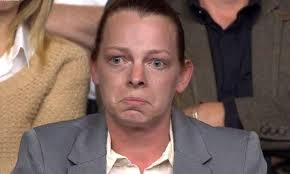
That came within days of some remarkable TV, when Michelle Dorrell, attending the recording of the BBC programme Question Time, launched a forceful attack on Tory Minister Amber Rudd.

I voted for Conservatives originally, cos I thought you were going to be the better chance for me and my children. You're about to cut tax credits after promising you wouldn’t. I work bloody hard for my money, to provide for my children to give them everything they've got - and you're going to take it away from me and them. I can hardly afford the rent I've got to pay, I can hardly afford the bills I've got to do, and you're going to take more from me. 

Shame on you!


Michelle Dorrell: denounced the betrayal by the Tories she trusted
It was a powerful denunciation of a betrayal Labour predicted before the General Election. What a sad indictment it is that the Tories were able to dupe people like Dorrell, saddling us with Conservative government for at least another four and a half years. Dorrell, it seems, has learned the lesson and decided to vote Labour next time; to those who haven’t, I’d merely pick up her closing words “Shame on you”, and repeat the old American saying: fool me once, shame on you, fool me twice, shame on me.

On top of that, we have the edifying sight of Conservative Ministers – first George Osborne visiting China, now David Cameron with China’s leaders here in Britain – fawning on the Chinese. It seems the Conservatives want to hitch the British economy to China’s, so that it can draw all the benefits from such an advantageous relationship. Cameron is famously lazy; perhaps he hasn’t got round to the reading the recent briefing papers warning him that China’s economy’s slowing down.

The obsequiousness towards China has an ironic quality. The Tories are deeply opposed to state ownership of industry – or at least, they are if the state is British, which is a little odd, since they tend to be on the nationalistic end of politics. They’re apparently more than happy to invite the Chinese state to take positions in some key industries in Britain, notably in the second high speed railway line and more questionably still, in the nuclear power industry.

They seem happy with French state industries, too, buying into the British economy.

It appears that it’s only the British state the Tories distrust which, considering they run it, may say a lot about them.

One part of the state they’re running particularly badly right now is the National Health Service. It’s facing a financial crisis of historic proportions. The latest horror story is that neonatal intensive care units are unable to provide adequate staff cover any more. Terribly vulnerable infants – babies, mind – are at risk of death thanks to government policies.

A lot of the deference to China flows through the Foreign Office. So it was instructive to read of the cleaners there who wrote directly to the Minister – Foreign Secretary Philip Hammond – to complain about the lamentable wages they’re paid.

The cleaners aren’t employed by the Foreign Office but by a subcontractor, Interserve. Hammond passed the letter on to them. The cleaners now face disciplinary action and several of them, including their spokesperson, redundancy.

Michelle Dorrell got it wrong when she voted Tory. Perhaps it’s time for a lot of people to wonder whether they got it right when they go along with Tory Trade Union bashing. It seems that if you need any kind of help, you need someone powerful in your corner: the Labour Party or a Union.

Because while they may fawn on foreigners with a lot of money, the Tories certainly don’t have the time or the inclination to look after the less fortunate at home.

Even though they like to call themselves Christians…

Wednesday, 12 August 2015

Interesting times for the world. Or a Chinese curse at least

What we tend to forget about economics, is that it takes a long time for changes to work their way through. A long time, that is, relative to political careers.

Ronald Reagan, enthusiastically supported and followed by Maggie Thatcher, began to dismantle economic regulation in the 1980s. The process culminated in the repeal of the US regulations (the Glass-Steagall Act) that prevented any individual bank providing both retail functions, such as current accounts or personal loans, as well as much riskier investment services, in 1999. The repeal was initiated by Republicans, but backed by President Clinton, so no party is blameless in this sorry episode.

That means that over nearly twenty years, the structure of regulation that had been set up in the wake of the great crash of 1929, and which had prevented any bank failures in the States for half a century, was deliberately dismantled. Because the process took so long, a lot of people could claim credit for the prosperity apparently generated as a result: Reagan, Bush, Clinton and little Bush in the US, Thatcher, Major and Blair in the UK.

These leaders seemed sound managers of their own nations’ and the world’s economy. But that’s because the eventual consequences of the deregulation were only incubating below the surface. Apparent success was being furthered by a wild drive for increasingly risky financial gambling, building up a mountain of unreal value which had, eventually, to collapse.

In 2008 it did. As a result, in Britain blame for the failure tends to be assigned to Gordon Brown, Prime Minister at the time; in the US, although the crisis began to break at the tail end of the Dubya Bush presidency, Obama was in office as it spiralled out of control, and he had to take the steps needed to restore stability. For which he can then be blamed or praised, depending on taste.

It feels to me as though we’re about to see a similar phenomenon. For over twenty years now, the West has been watching the Chinese economic miracle with amazement. At times when our economies have struggled to grow by 2 or 3%, China has seen growth of nearer 10%, year after year after year. Some economists warned that the rate was too high, and could not be sustained in the long run. Indeed, a time of reckoning would come, when this house of cards too would fall.

If you keep saying that for several years, and the growth just keeps happening, eventually you sound like the boy who cried wolf. A belief becomes established that the good times will continue indefinitely, and that those claiming otherwise are merely doom sayers.

Sadly, the reality is simply that it just takes economic phenomena that long to become manifest. In recent times, we’ve seen increasing signs of weakness in the Chinese economy. There has been a steady decline in growth so that, though still high by Western standards, it has now fallen to around the 7% level (though some suspect that the true figure is lower: facts arent always easy to come by in China). The trend is firmly downwards.

Economic Growth in China: the International Monetary Fund view
In the last few months, there have been interest rate adjustments, share suspensions and now, for two days in succession, devaluations of the currency (the first of them trumpeted as a “one-off” measure).

It’s beginning to feel as though the wheels may be coming off the bus, as some economists were warning years ago. Once again, we have been lulled into false security by the fact that such processes take so long. Once they start to unravel, they can slide fast and be acutely painful for a long time – look at Greece.

The comparison with Greece is an interesting one. Because the Greek economy is a sideshow, in the global scale of things. China, on the other hand, is the world’s second economy. If it gets into trouble, Greece is going to look like a gentle dip in the smooth running of the international financial system. It’s encouraging that voices are already being raised in the US to protect its economy against the possible effects of a Chinese downturn. They need to be heeded.

As far as I can tell, it’s an urban myth that “may you live in interesting times” is a Chinese curse. It does, however, look as though we may be about to enter some interesting times. And the cause may well be a curse from China.

Monday, 13 July 2015

Greek debt: parallels and contrasts with the US

Greeks who remember the German occupation, according to the BBC, are now talking about another invasion by Germany without a shot being fired.

Greece will, it seems, stay in the Euro. At least for the moment. It will do so at the cost of measures that apparently represent more severe austerity than the terms rejected by Greeks in a referendum just over a week ago. It feels like Greek voters have lost, but German politicians – apparently the fiercest critics of Greece and the harshest in their demands of them – have won.

Merkel may have avoided this destiny so far
But certainly not be being gentle with Greece
This reminds me of how the United States dealt with a similar crisis, when it faced debt problems not unlike those of Greece within the Eurozone.

The original constitution of the United States was deeply unsatisfactory, giving almost no power – certainly no power to raise funds – to the national government, and leaving most authority in the hands of the States. It became increasingly clear over just a few years that the situation was untenable and something with a more serious Federal government at its centre would have to be set up.

A Convention met and drew up the Constitution of the United States that we know today (though at that stage without any amendments, of course). George Washington became the first President and, among an all-star cast of Ministers, he appointed Alexander Hamilton as his Secretary of the Treasury (Minister of Finance).

Now there’s little on which I agree with Hamilton, particularly his views of popular sovereignty, but that’s for another debate. On finance, he was something of a wizard. And one of his first major measures concerned what came to be known as Assumption – not a religious moment, except for those whose God in Mammon, but the initiative by which the Federal government would take over the debts incurred by the individual States in fighting the War of Independence.

That was great news for Massachusetts and South Carolina, which were saddled with heavy debts (viz Greece) but not so good for Virginia and North Carolina which had cleared most of theirs, and didn’t appreciate having to pick up the tabs for the others (viz Germany). There was a battle royal. James Madison, destined to become the Republic’s fourth president, was a Congressman at the time and led the campaign against Assumption. He defeated the proposal.

The story has it that Alexander Hamilton met Thomas Jefferson, then Secretary of State but destined to be the third President, in the street outside Jefferson’s house. He was distraught and Jefferson invited him in. Hamilton explained that without Assumption, certain States would be driven towards bankruptcy, and also the Federal government would be shown to be powerless to face up to dealing with a financial crisis (viz the Eurozone).

What’s more, Hamilton maintained the apparently paradoxical view that the Federal government would be accepting a “national blessing” by taking on the debt: it would oblige it to collect taxes and establish it as creditworthy (viz the Eurozone again).

Jefferson was a close ally of Madison’s and increasingly an opponent of Hamilton’s. But he allowed his then-colleague to convince him, and took it on himself to win Madison round.

The two allies came up with a compromise solution: Madison would not block the question of Assumption coming up again in Congress; he would vote no, but would not speak against the proposal. That’s what happened, and Assumption was adopted, over the silent opposition of Madison.

At the time, the US had a population of under 4 million. Even the UK had 8 million, and France 20 million. GDP was around $200 million, corresponding to about $4.5 billion today – when US GDP is about $17.7 trillion. The US was, in other words, a minor sideshow in geopolitics back then; today it is the wealthiest and most powerful nation on Earth.

There is no need for Europe to aspire to that status. European nations have been massive global players in the past, and places like Amritsar or Algiers testify to how badly that went. But it strikes me that Europe needs to get its act together if it is only to defend its status in a world increasingly dominated by huge nations, such as the US, China and Russia.

The success of the US wasn’t naturally entirely down to acceptance of Hamilton’s proposals on handling debt. But they certainly contributed: they set up the notion of the Union has owing a duty to all its components, and therefore being more powerful than any of them, capable of playing a full role on the world stage.

So the US passed its test over Assumption.

I’m not sure the Eurozone has done anything like so well over Greek debt.