Showing posts with label Philip Hammond. Show all posts

Monday, 2 September 2019

Boris coup: Day 6

Confidence is surging in the Downing Street junta on Day 6 of the Boris coup.

Indeed, Boris Johnson is so sure of himself that he’s decided he can simply break off any further discussion with members of his own party who oppose a no-deal Brexit. Indeed he, or more likely Dominic Cummings, Lord High Executioner in this particular Junta, has decided that any Tory MP who votes against the government will have the whip withdrawn.

That means expulsion from the party and would prevent them standing in an election as Conservative candidates. Since expelling them would wipe out BoJo’s majority – currently one, with the support of the Democratic Unionist Party from Northern Ireland – that election could happen pretty soon after so drastic a step.
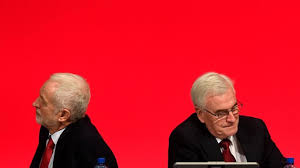
BoJo (l) and Philip Hammond
Once Cabinet colleagues, now friends no more
Two of the MPs targeted by this threat were until recently cabinet ministers: Philip Hammond, former Chancellor of the Exchequer, and David Gauke, former Justice Minister. That makes the threat still more remarkable. Unprecedented, even. But BoJo has shown that he’s not going to be tied by dull old traditions like consultation or fair play, at least not if they seem to be roadblocks to his unbridled ambition for his own advancement.

Indeed, it’s hard to talk about BoJo as a conservative any more. The way he systematically trashes anything like convention or protocol means he’s conserving little. A true radical, indeed, happy to change anything that irritates him, as long as it’s from a right-wing perspective.

Hard right wing, at that. Today an independent MP, Nick Boles left the Conservative Party precisely over BoJo wing’s relentless drive for a hard Brexit. He told the BBC ‘Today’ programme this morning:

The hard right has taken over the Conservative party. The Conservative party has fallen prey to an almost religious obsession with the hardest form of Brexit.

Where does BoJo draw his confidence from? Well, that’s not difficult to discover. He’s decided, as many pollsters and commentators have realised, that there are enough voters out there simple enough to confuse authoritarianism with authority. What most of us identify in BoJo and Cummings as obsession and blinkered focus on their own desires, many voters take as strength and firmness. And they like them.

That’s what BoJo’s gambling on. That there are enough of these simple souls to see them through to victory. A bold stance, but then nobody can question this coup leader’s boldness, whatever other qualities he may lack.

And it may pay off.

Thursday, 1 November 2018

How the hard left embraces the right

The trouble with the hard left is that it has no anchor.

The hard left, including the group that currently controls the British Labour Party, is the ideological wing of the left. So where others are more pragmatic and look to evidence to guide their thought, the hard left is driven principally by its beliefs. It has faith in the leader, for instance, or faith in its purity of principle.

The trouble with faith is that it depends on nothing but one’s own thinking. Change your mind, which is pretty easy, and your political stance changes with it. This can lead to some serious dysfunctions.

The most painful currently is the British hard left’s stance on Brexit. This is apparently ambivalent. The reality, which the leadership will not admit, is that they back Brexit. Recently, interviewed by Robert Peston of the ITV channel, Chuka Umunna from the right of the Labour Party referred to ‘whether Brexit actually happens.’ John McDonnell, Shadow Chancellor of the Exchequer and a leading figure of the hard left, replied ‘It will’.

John McDonnell (right) with his pal and ally Jeremy Corbyn
That ‘will’ may not be the expression of a wish, but it certainly does not show any kind of attachment to the official Labour position of backing the EU, which is supported by some 80% of the membership. At one level, veiling one’s true position seems to undermine the claim of people like McDonnell, the most senior parliamentary lieutenant of Labour leader Jeremy Corbyn, to represent political integrity on the one hand and a full commitment to representing members’ views on the other.

At another level, though, it puts these people in strange company. Brexit is chiefly backed by the hard right, specifically by a xenophobic and anti-immigrant right. These are the tendencies that Labour is expected to oppose with all its strength.

Some attempt to justify this position by arguing that many Labour MPs represent constituencies which voted for Brexit. Again, this is a curious position to take by people who claim to stand for strict principle. Electoral calculation when it involves compromising a fundamental tenet of the left? Not what one would expect from self-proclaimed socialists.

That the hard left finds itself in bed with those who oppose everything it ostensibly stands for should, one might imagine, cause it to question itself. But it doesn’t. Because it is unanchored, it can drift anywhere, even into the arms of the xenophobes and nationalists.

Still, Brexit’s just one question. It could be a one-off.

That’s why the latest development by the same John McDonnell is so interesting.

The Conservatives, currently in government, generally try to lighten the burden of taxation on the richest and shift it to the people least able to bear it. That has been a main thrust of the latest budget proposed by the British Chancellor Philip Hammond. He has proposed income tax changes that will greatly benefit the wealthiest while delivering far less to the poorest, who desperately need it.

In other words, it’s a deeply regressive approach to taxation, making the poor pay more while the rich pay less. The Labour Party is normally committed to the opposite, a progressive policy that makes the rich pay higher taxes while lightening the load on the poor.

So it’s curious to find McDonnell declaring that Labour would not be opposing the Hammond measures.

One of the principal roles of an Opposition is to oppose. I suppose the clue is in the name. An Opposition should never back a government unless it absolutely has to, perhaps because it would endanger national security if it did not.

Certainly, the reason I’ve been given for not opposing the budget tax cuts is indefensible: the suggestion is that they provide some benefit to the poor, even though far less than to the rich, and therefore opposing them would be presented as ‘robbing me of my tax break’. This comes down to setting party policy by what the hostile press would say about it.

In other words, it’s handing control over Labour policy not to the members, not even to MPs, but to Labour’s opponents.

There’s another irony here. It is the hard left that never stops denouncing the media – the ‘mainstream media’ or ‘MSM’ – for its perverse behaviour towards Labour. So allowing what it might or might not say about a policy to determine the behaviour of its leaders in parliament defies belief. What’s more, the result is the same as over Brexit: it puts Labour in the same bed as the right.

Their intentions may be good. But we know which road is paved with good intentions. And what matters is less the road than the destination.

That’s the trouble with having no anchor in reality. That’s the hard left’s problem. But sadly, because it controls the leadership, it’s a problem for the whole of Labour.

Well. It controls the leadership for now.

Wednesday, 22 November 2017

Austerity buried? And the NHS too?

Britain has a new budget.

The Chancellor of the Exchequer, Philip Hammond, for whom the word ‘beleaguered’ might have been specifically invented, has announced the government’s plans for spending and tax over the next year. And though it does little enough, what it does do is more noteworthy than one might have expected.

Hammond with the traditional red box for the budget
He has admitted at last that the prospects for economic growth are a lot worse than the government had previously claimed. What’s more, debt is at twice the level the Tories inherited when they first came to office in 2010, and which at the time they described as intolerably high. 

Indeed, their primary goal was to reduce the debt level massively. To achieve it, they launched a painful programme of austerity, to get government spending in balance within one parliament (five years), later extended to two parliaments, and now to some time in the next decade. Meanwhile, debt climbed inexorably.

This track record ought to be enough to prove to any but the most ideologically blinkered that austerity isn’t working. But the dogmatism of the Tories has prevented them ever accepting as much previously. So it’s interesting to discover that in this budget they have at last made the admission, if only tacitly: the Chancellor has announced plans for actual spending, most notably on housing, as a way of addressing the parlous state of the economy.

Sadly, however, he is doing a lot too little, particularly after the damage of the last seven years. For example, faced with a warning from the Simon Stevens, Chief Executive of the National Health Service in England, that healthcare needs another £4bn a year as a minimum, he has come up with £2.8bn over the next two and a half years. That’s going to mean that the service must still make choices that will be tough to the point of grief: certain treatments will simply not be available or will be denied so long as to lead to suffering or even death among patients.

What makes this even more depressing is that Hammond has also earmarked a further £3bn for Brexit preparations. In other words, we have to stump up more money that is being denied to healthcare, to cover the costs of a step – leaving the European Union – which will itself cause us even worse and longer-lasting economic damage. Not just shooting ourselves in the foot, but paying for the privilege.

There’s a special irony in the fact that we’re having to come up with this money for Brexit at a time that the NHS needs it so badly. A major element of the Leave campaign was the notorious claim that Brexit would free up £350m a week for the NHS. £18bn a year which would certainly sort the underfunding of the service.

Curious that in reality Brexit is costing us money, while the NHS crisis deepens.

Sunday, 15 October 2017

None of the above, when October feels like November

October in England this year has had many days that felt like September at its best, but a few that resembled November at its gloomiest. That’s how today dawned. Grey, dull, wet, not exactly cold but far from inviting. The kind of day that makes you want to pull the covers back up and pretend the day’s not yet begun, or perhaps wallow in a bath till you outwrinkle a prune while you read the paper.

Except, unfortunately, the news in that paper only adds to the November feeling of such a day.

Honestly, the state of British politics is enough to make you want to turn to the sports pages instead. Personally, I find the underperformance of the grossly overpaid on the pitches of the English so-called premier league (more of a might-have-been league these days) more edifying than the political news these days, and Lord knows the self-styled premiership’s pretty dire.

We now have a glorious spectacle in the Tory Party entirely divided against itself. It continues to rule in this country, if only by its fingernails. The parliamentary party seems split between two groups.

On the one hand, stand the archi-Brexiters who’d like to see the Chancellor of the Exchequer, Philip Hammond, sacked for pushing a ‘soft Brexit’ approach. This would involve trying to maintain the best possible relationship with the EU after Brexit, especially as concerns trade, even at the cost of accepting some continued EU influence on British affairs.

On the other hand, the ranks of Brexit-deplorers are calling for the sacking of the Foreign Secretary, Boris Johnson, for an altogether too cavalier attitude towards Brexit. Convinced that the British lion can emit a roar to be heard around the world, he wants the country out of the EU at the earliest possible moment with no deal for the future if necessary.

Between these two groups stands the Prime Minister, Theresa May, herself. She must at least feel a certain relief that the talk of sacking is concentrated on her two most senior ministers instead of herself. Ever since the disastrous General Election she called in June when, instead of increasing her Party’s majority substantially, she lost it and found herself heading a minority administration, she’s been beset by calls for her to go. It must be a pleasant change to see others the target of such calls, for the time being.

For a great many of us, this is all a little ironic. Because the issue isn’t getting rid of Johnson, Hammond or May. The Brexit question needs solving and needs solving urgently. A hopelessly divided government can’t do it, so why don’t we just sack the lot of them? Someone has to come up with some kind of coherent negotiating stance to try to limit the damage to Britain after the country leaves the EU. Sadly, however, there’s a sense that the Opposition may well be as heavily, if more discreetly, riven on the issue.

Labour is, in principle, committed to remaining in the EU. If we absolutely must leave, Labour should therefore be seeking the softest of soft departures, perhaps even remaining in certain structures such as the Single Market or the Customs Union. However, it’s far from clear that the leadership, and in particular the leader, Jeremy Corbyn, entirely buys into that scenario. And he’s not saying.


The Don't Knows in the lead
Really feels like November in October
That may be why, for the first time since pollsters YouGov started asking, it has found that the most popular answer to the question “who would make the best Prime Minister” is “Don’t Know”. That feels a bit like “none of the above”.

A dismal state of affairs.

Enough to make you want to pull the covers up and snuggle down for another hour or so. Except that now it’s the evening and the last of the day – which has, unexpectedly, turned pleasantly September-like. I think I’ll take the dogs out.

That at least I can be sure of enjoying. As will they.

Wednesday, 8 March 2017

Stephen Hawking identifies another black hole, called Corbyn

The possessor of one of the most formidable minds of the world today, Stephen Hawking, has joined the growing chorus of Labour supporters calling for the leader, Jeremy Corbyn, to resign.

“I regard Corbyn as a disaster,” he told the The Times newspaper, and “I think he should step down for the sake of the party”.

Stephen Hawking sees politics clearly as well as physics
Hawking is one of the leading experts on black holes. No wonder he sees the black hole into which Corbyn’s taking us. Many voters share his vision but not, unfortunately, most Labour Party members: an Election Data poll of members found that he would be re-elected leader if he had to stand again today.

They’re clearly not reading the evidence of approaching disaster the same way as the rest of us, including Hawking.

As is well known, Hawking is a long-term sufferer from Motor Neurone Disease. This led to a fine transatlantic interchange in 2009, when Republicans opposed to Obama’s healthcare reforms made the bizarre claim that the NHS would have regarded Hawking’s life as “worthless” because of his disabilities and refused to treat him. As Hawking replied, “"I wouldn't be here today if it were not for the NHS.”

That’s particularly relevant today, faced as we are by a new Conservative budget. It continues the seven years of austerity that we have already had and which have had no impact on the scale of the country’s debt, which keeps climbing to peacetime records. Another group of people has now been attacked, this time the self-employed who are being forced to pay higher national insurance contributions.

This explicitly breaches a pledge made by the Conservatives in the run up to the last election under two years ago.

The Chancellor, Philip Hammond, has found some additional funds to back the ‘free school’ initiative, in reality a most expensive form of schooling, for which the results have been at best mixed. Education desperately needs funding but not in this unnecessary way.

Meanwhile, even the police and prison service, generally the parts of the public sector least abhorrent to the Conservatives, are creaking at the seams, unable to act effectively against smaller crime or control the prison population.

What’s most terrifying, though, and must be particularly hurtful to Hawking is that there is no attempt to address the desperate financial crisis facing the NHS. Two thirds of English hospitals are running at a deficit. Accident and Emergency services are struggling, and frequently failing, to cope. Waiting times for operations are on the climb again, having been brought down to acceptable levels – eighteen weeks maximum – by the last Labour government.

Why is this being allowed to happen? The Conservative majority is wafer thin. With a half-way effective opposition, it would have to think carefully about continuing to undermine the NHS. It would have to wonder whether it could get away with breaking its election pledges.

None of that applies if the opposition has an ineffective leader, leaving it incapable of mounting an effective resistance to its rule. Labour is reduced to meaninglessness under Corbyn, seen by too few as an alternative Prime Minister. The Conservatives could even, as has been rumoured, hold an election shortly and trounce him. Why would they do that? They may be bold enough to feel they can count on Corbyn refusing to step down, on the grounds that he’s had too short a tenure, encouraging Conservative hopes that they could thrash him again five years later.

In February, Theresa May, the Prime Minister, held a 17 point positive rating: 53% of respondents to a survey by Ipsos MORI were satisfied with her against 36% who were not. The same poll found Corbyn had a 38 point negative rating: 24% satisfied and 62% dissatisfied.

If you’re tempted to object that polls get figures wrong, it’s worth bearing in mind that in the UK they tend to overstate not understate Labour support.

The Election Data poll of Labour members meanwhile tells us that 51% of Labour members think Corbyn is doing well, against 47% who think he’s doing badly.

It feels to me as though the gulf between voters and Labour Party members is as wide as I’ve ever seen it. No wonder people like Stephen Hawking feel things are heading in a catastrophic direction.

Sometimes I have a nightmarish vision in which backing for Corbyn continues to fall until there are only 300,000 supporters left. Sadly, they are precisely the 300,000 Corbyn supporters who dominate the Party and keep him in office. Giving the Conservatives all the encouragement they need to break their pledges and decimate public services vital to us.

The police. The prison service. Education.

Above all the jewel in the crown, the service that matters so much to Hawking, the National Health Service.

Monday, 3 October 2016

The Devil's tunes. And his great singers in the Tory Party

The devil, they say, has the best tunes. In the Tory Party, he’s lined up some fine singers.

I’ve said it before and I’m sure I’ll be saying it again: there’s been a change of gear between David Cameron and Theresa May. Cameron wasn’t much good at what he did, but he was above all one of the laziest of politicians. He preferred to make up policy on the hoof, wandering unbriefed into meetings with other leaders, as he did when he decided to veto the use of EU premises for discussions about the Euro. It was only afterwards that he discovered that he didn't have the authority. But reacting's so much easier than thinking things through. 

Because it was far too difficult to deal with the divisions over Europe within his own party, he took the easy route of calling for a referendum on the issue.

And, because they found it too difficult to put together a good argument in favour of the EU, he and his pal and Chancellor George Osborne simply resorted to scare tactics – “vote Brexit and we’ll need a harsh emergency budget to save the economy from collapse” – which just got up everyone’s noses.

They lost. I’d claim that Britain itself lost. And Cameron and Osborne lost their jobs.

May: skilled singer of even the most devilish tunes
May’s not like that.

She knows what needs to be said. So in recent days she’s been stealing some of clothes, just enough to attract some wavering voters without actually committing to anything like compassionate behaviour. She has, for instance, softened the attack on the poor and sick that the previous regime had been running for six years, by not demanding that people with long-term illnesses and no hope of improvement submit to regular check-ups. Compared to what was happening before, it sounds like a humane measure, though it means not a penny more going into benefits.

She keeps piling it on. She talks about working in the interests of everyone. She even got her Chancellor of the Exchequer, successor to Osborne, to slacken austerity: the government will borrow money to stimulate some building work. Only £2bn, pretty insignificant when government is already borrowing £1.3bn a week, but it sounds good. Without costing much.

So much for what the Tories say. But May’s just as good at not saying things. For instance, she’s kept very quiet about her exact position on what kind of Brexit she favours. She has a legitimate argument for being so coy: she’s going into negotiations with the EU and sees no reason to reveal her hand in advance.

But doesn’t it feel tremendously convenient that her reticence means she can keep quiet on an issue which continues to torment her party? Let the dust settle, she seems to be thinking. “When tempers have cooled, and when I have something to say about the negotiations,” I suspect she tells herself, “I’ll get off the fence. When doing so does me, and the Tory Party, least damage.”

Oh, I wish we too could learn to behave with such supreme self-control. But then the angels don’t have the best tunes. Or the most skilful singers.

Monday, 19 October 2015

The bishops denounced the government that fawned on China that bought the companies that cripple the people...

There’s something wonderful about news stories that tumble in on top of each other, reinforcing each other and occasionally producing some delicious ironies.

So we recently had 84 Anglican bishops denouncing the “increasingly inadequate” British government response to the current refugee crisis. As well as being a welcome reminder that, however widely they may be shared, the xenophobic views currently in vogue are deeply immoral, the Bishops’ message also further undermines repeated claims by Tory Ministers to endorse Christian values.

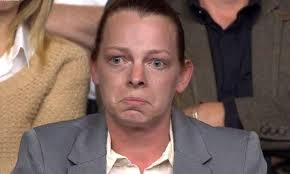
That came within days of some remarkable TV, when Michelle Dorrell, attending the recording of the BBC programme Question Time, launched a forceful attack on Tory Minister Amber Rudd.

I voted for Conservatives originally, cos I thought you were going to be the better chance for me and my children. You're about to cut tax credits after promising you wouldn’t. I work bloody hard for my money, to provide for my children to give them everything they've got - and you're going to take it away from me and them. I can hardly afford the rent I've got to pay, I can hardly afford the bills I've got to do, and you're going to take more from me. 

Shame on you!


Michelle Dorrell: denounced the betrayal by the Tories she trusted
It was a powerful denunciation of a betrayal Labour predicted before the General Election. What a sad indictment it is that the Tories were able to dupe people like Dorrell, saddling us with Conservative government for at least another four and a half years. Dorrell, it seems, has learned the lesson and decided to vote Labour next time; to those who haven’t, I’d merely pick up her closing words “Shame on you”, and repeat the old American saying: fool me once, shame on you, fool me twice, shame on me.

On top of that, we have the edifying sight of Conservative Ministers – first George Osborne visiting China, now David Cameron with China’s leaders here in Britain – fawning on the Chinese. It seems the Conservatives want to hitch the British economy to China’s, so that it can draw all the benefits from such an advantageous relationship. Cameron is famously lazy; perhaps he hasn’t got round to the reading the recent briefing papers warning him that China’s economy’s slowing down.

The obsequiousness towards China has an ironic quality. The Tories are deeply opposed to state ownership of industry – or at least, they are if the state is British, which is a little odd, since they tend to be on the nationalistic end of politics. They’re apparently more than happy to invite the Chinese state to take positions in some key industries in Britain, notably in the second high speed railway line and more questionably still, in the nuclear power industry.

They seem happy with French state industries, too, buying into the British economy.

It appears that it’s only the British state the Tories distrust which, considering they run it, may say a lot about them.

One part of the state they’re running particularly badly right now is the National Health Service. It’s facing a financial crisis of historic proportions. The latest horror story is that neonatal intensive care units are unable to provide adequate staff cover any more. Terribly vulnerable infants – babies, mind – are at risk of death thanks to government policies.

A lot of the deference to China flows through the Foreign Office. So it was instructive to read of the cleaners there who wrote directly to the Minister – Foreign Secretary Philip Hammond – to complain about the lamentable wages they’re paid.

The cleaners aren’t employed by the Foreign Office but by a subcontractor, Interserve. Hammond passed the letter on to them. The cleaners now face disciplinary action and several of them, including their spokesperson, redundancy.

Michelle Dorrell got it wrong when she voted Tory. Perhaps it’s time for a lot of people to wonder whether they got it right when they go along with Tory Trade Union bashing. It seems that if you need any kind of help, you need someone powerful in your corner: the Labour Party or a Union.

Because while they may fawn on foreigners with a lot of money, the Tories certainly don’t have the time or the inclination to look after the less fortunate at home.

Even though they like to call themselves Christians…

Thursday, 20 August 2015

Immigration: time to get the question right

In 1951, Rosalind Franklin took a series of pictures of DNA which a colleague, J.D. Bernal, described as “amongst the most beautiful X-ray photographs of any substance ever taken.” They led to the finding of the double-helix structure of DNA.

In 1995, Michael Portillo reached the pinnacle of his political career, when he was appointed Defence Secretary.

In 2004, Kelly Holmes took gold medals in both the 800 and 1500 metre women’s races at the Athens Olympics, the first time a British athlete had won two golds at one Olympics since 1920.

What do these three stories have in common? They all concern Britons of immigrant stock, remote or recent. Franklin came from a long family of British Jews. Portillo is the son of a Spanish refugee from Franco. Holmes’s father is Jamaican.

Admire them or not, they’ve all notched up significant achievements in Britain. We need to remember them especially in today’s atmosphere, when all we seem to talk about is the terrible danger posed by immigrants gathering ominously in Calais and threatening to invade our shores. You’d think they were a latter day Wehrmacht, from the tone of the debate, ready to undermine all we hold dear to us.

They are a “swarm” to Prime Minister David Cameron, they’re “marauding” according to Foreign Secretary Philip Hammond.


The joy of an immigrant camp in Calais
In reality they are 5000 underfed, ill-lodged, unfortunates trying to find somewhere they can rebuild their lives after fleeing their homes. Most of them come from Iraq, Syria, Lybia, Somalia. These are countries devastated by war, often initiated or sustained from outside, by nations such as the US, Britain, Russia, even Kenya.

You might think that those at least whose homelands have directly suffered at the hands of Britain, notably Iraq and Libya, might expect more tolerant treatment. But our behaviour towards them is shameless: we bombed you into the dark ages, we seem to be saying, now live with it.

In any case, it’s extraordinary what a fuss we’re making about them in Britain. Only a small proportion of those 5000 will ever make it across the Channel. By contrast, Germany is expected to take 750,000 asylum seekers this year alone. And yet Britain squeals as though mortally wounded by a somehow unique crisis.

Our response is simple, too. We invest money in building more fences in Calais. We send over police to enforce the law. We treat what’s happening as a security problem, not a humanitarian one. In that respect, I’m reminded of the “war against drugs”, perceived almost entirely as a law and order issue. We make penalties more stringent, we lock up people for longer. We pay no attention to the evidence that all this effort is producing no useful results, and drug consumption stubbornly refuses to go down.

We’re coming up with the wrong answer, because we’re asking the wrong questions. The right questions are about protecting people from exploitation and helping them to find a better solution. The wrongs ones are about police action.

That’s equally true of immigration. Fences and police won’t do it. Indeed, the problems are going to get a lot worse, as immigration grows many times in the face of the effects of global warming: violent weather, food shortages, even lack of water.

Do we really want to do something about it? Then we need to make a genuine effort. Above all, on ourselves. Principally by learning generosity.

First, we need to stop making such such casual, ill-judged use of military force. Many of the migrants in Europe today have been displaced by our incompetent interventions in the Middle East.


The Iraq War:
solved nothing and contributed to the migrant problem
Next we need to invest more in the countries from which most migrants come. It’s true that as well as refugees, there are economic migrants trying to get into the advanced economies. Well, help develop their home economies and fewer of them will go looking for a better future in strange countries whose language they don’t speak and whose customs they don’t know.

So if you’ve ever whinged about overseas aid, now would be a good time to stop. It’s money well spent, and we need to spend more. As much for our sakes as for the recipients: it takes the pressure off our borders.

The other form of generosity is even more important. We need to treat incomers with humanity. They need help, and we should provide it, because we can. Who knows, some of them may turn into tomorrow’s Roger Bannister or Mo Farah, the immigrants we can celebrate. Even if they don’t, we’d do well to emulate a German woman I heard this week. As she dropped off a donation at a refugee camp, she told the BBC that there was already more than enough evil in the world, and showing a little kindness to the most unfortunate would make it a better place for all of us.

That attitude would be a great starting point to work out the right questions about immigration. Because for now we’re coming up with entirely the wrong answers.