Tuesday, 3 March 2020

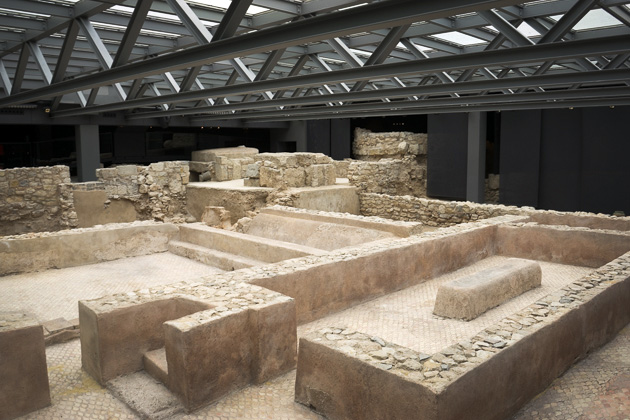
Thoughts of the victims of war in a Valencia air raid shelter

If you’re sightseeing around our local city, Valencia, the saddest sight you can see is an air raid shelter. I’ve visited two and there are many others.
Inside the air raid shelter under the Valencia town hall
They date from “the war”. However, I believe when most of us say “the war” we probably still mean the Second World War, if we’re from countries that took part in it. In Spain, “the war” means the Civil War the raged from 1936 to 1939, led to the overthrow of the Spanish Republic and ushered in 36 years of dictatorship under Francisco Franco, ending only in his death.

On the other hand, there are many people, inside and outside Spain, who would reckon that the Spanish Civil War was a part of the Second World War. That makes some sense. After all, despite signing the same non-intervention treaties as the democracies, Germany and Italy, then under Nazi and Fascist control respectively, sent not just weapons but military forces to support the Franco rebellion. Only the Soviet Union supplied the Republic, and then only with toxic strings attached.

So major players in the Europe-wide conflict that was about to break out were involved in the Spanish war. The air raid shelters in Valencia were built to withstand attack by Italian forces, chiefly in the form of bombing raids from bases they had set up on the island of Mallorca.

One of the striking aspects of our visit was a video they played us. At several points, I realised that I wasn’t listening to Spanish any more, but to Italian. What was being played was Fascist propaganda about how ‘heroes’ from the Italian air force were taking part in raids on Valencia to make civilisation safe from ‘Soviet communism’, in a fight many saw as a Christian crusade.

Down in that air raid shelter, that irony was particularly bitter. These were shelters for civilians, and they were the main victims of the raids. The propaganda claimed the bombers were targeting armament factories and military concentrations. In reality, they were dropping their bombs on civilian dwellings.

No one puts that better than the great New Zealand cartoonist David Low, who has Franco being told that his Arab troops are concerned by the ‘unchristian’ behaviour of his army.
David Low has an officer reporting to Franco, Mussolini and Hitler
“Excellency, the Moorish troops are disturbed.
They say our conduct of the war is unchristian.”
The assault on civilians would become the hallmark of the long struggle that the Spanish Civil War announced: heavy bombing of civilian centres, often described as a means of ‘weakening enemy morale’. Killing civilians to undermine morale? There’s a word for that. It’s terrorism.

And I was particularly struck by one of the photos in the air raid shelter. A mother with her child. Both faces are paralysed with fear. And it’s perfectly obvious that neither has been guilty of an act that merits the punishment they’re undergoing.
Part of the display in the air raid shelter
Left, a bombed home. Right, a terrified mother and child
Sadly, this kind of terror bombing was by no means limited only to the enemies of the democracies in those years of war. In fact the worst bombing was carried out by the Western powers themselves, something they should perhaps bear in mind when they denounce terrorism today. Dresden, Cologne, Hamburg all but destroyed, with tens of thousands of dead.

And, to top it all and inflict still greater destruction, there were the atom bombs dropped on the civilian populations of Hiroshima and Nagasaki.

Mentioning those Japanese cities reminds me of the only reason I disagree with those Spaniards who say the Second World War started with the conflict in Spain. That same David Low I mentioned before had a different view, which I share. After all, there was a Pacific Theatre to World War II as well as a European one. Fighting started there in 1931, when Japanese troops invaded Manchuria, five years before the uprising in Spain and eight before the Nazi invasion of Poland.
In the background, the “Japan-China mixup” as a mugging
In the foreground, the USA, France, Britain,
Germany and Italy are walking away
One is saying, “Don’t you think, after all, there
may be something in the idea of having a police force?”
Another replies, “Tut Tut! Too risky! Much wiser and cheaper
to wait until we’re all murdered in our beds
Just as in Spain, the democracies stood back and did nothing. And, just as Low warned, they paid the price. All the enemies they would face in the official Second World War – Japan in the Pacific, German and Italy in Europe – were using the earlier conflicts to get into shape to fight the big one.

A tragedy. Which makes visiting the Valencia air raid shelters such a sad moment. Though perhaps a necessary one.

Saturday, 29 February 2020

Hamburg after Bologna, or glimmers of hope when prospects are dire

With the far right dominant in so many countries, we need to take what pleasure we can from the glimmers of hope that show up every now and again in certain places.

I wrote recently about the surprising but heartwarming achievement of a popular movement called the ‘Sardines’ in keeping the hard populist right out of power in the Italian region of Emilia-Romagna. That’s the area that includes Bologna and Parma, and I’d learned to respect it already as the home of Bolognese sauce, Parmesan cheese and Parma ham.

“Also the best mortadella,” my wife Danielle admonished me, when I made the mistake of buying some of the Spanish variety in our local supermarket.

Emilia-Romagna doesn’t have a coastline, so I wouldn’t have expected sardines from there. The human variety, however, so-called because their rallies are so well attended they have to squeeze into public squares, have proved even more appealing than the mortadella.

Their impact? Matteo Salvini, homophobic and xenophobic leader of the far right League movement, was denied a much anticipated victory in the region despite having personally devoted significant time and prestige to the campaign. A rare upset to a rampant right, still in the ascendancy across a world where even someone who has done as much as Donald Trump to torpedo his own prospects, nonetheless stands a good chance of re-election.

This week produced another glimmer of hope to set alongside Reggio Emilia. Another regional election, this time in the great German city and federal state of Hamburg, on 23 February.
SPD members celebrating the Hamburg results
Curiously, the standard party of the centre left, the Social Democrats or SPD, lost four seats. They were left with 54 out of 123 seats in the state chamber, eight short of a majority.

That, however, was more than made up for by the Greens gaining an extraordinary 18 seats, more than doubling their representation to 33.

The party of the far left, simply called ‘The Left’ (Die Linke) also increased its presence by two seats to 13.

If you’ve been adding up these numbers as we go, you’ll have seen that the three parties of the Left between them accumulated 100 seats, a huge majority of the Chamber. So what happened to the Right?

The traditional conservative party, the Christian Democrats or CDU, lost five seats to emerge with just 15. That was the CDUs worst-ever result in the city. It was probably being punished for having flirted with the far-right Alternative for Germany party or AfD in another State recently. 

The party that likes to present itself as liberal, the Free Democrats or FDP, was reduced to a single seat. 

But the best result of all was what happened to the hard-right AfD itself.

Far from making any advance, it lost a seat to just seven and its vote share fell to 5.3%. The threshold for a party list to win any representation is 5%, so it is teetering on the brink of exclusion from the State Parliament. That was the price of having maintained unremitting anti-immigrant rhetoric which was rightly seen to having contributed to a right-wing terrorist attack in Hanau a few days earlier. 
Mourning the ten victims of right-wing terrorism in Hanau
That made the slap in the AfDs face all the more deserved. And all the more welcome. Couldn’t have happened to a better bunch.

Two such results so far this year. It’s not much. Straws in the wind and no more. But they’re encouraging straws in a wind blowing in the right direction.

They show it can be done. Which means we can do it again.

Thursday, 27 February 2020

Preparing for the pandemic

A crisis! A crisis! It’s a time to rise to a challenge, to show your mettle, to confront and overcome whatever life throws at you.

Of course, the first thing is admitting that theres a crisis at all. I’ve always preferred what might be called the Jim Callaghan approach, after the Labour Prime Minister of Great Britain, who in 1979 is said – wrongly as it happens – to have declared, “Crisis? What Crisis?”

The nice thing about that kind of denial is that it allows you to show your mettle by returning to the sofa and having another glass of wine.

The problem with denial, unfortunately, is that while comfortable, it doesn’t actually solve any problems. Jim Callaghan discovered that to his cost a few months later when Maggie Thatcher gave him a drubbing in the 1979 General Election.

Danielle and I decided that it was time at last to treat the Coronavirus threat with a little respect. I have to admit that a part of me still says that it’s what an Italian Minister called an ‘infodemic’ rather than an epidemic. That’s a spreading pool of anxiety, if not panic, caused by the sheer volume of information, and mostly rather shrill information, swilling around all the conceivable media today.

Still. It’s certainly true that many communities are already facing the tedious inconvenience of quarantine. So it struck us that, while we can’t do much about the disease itself except cross our fingers and hope it doesn’t get us, we could at least take some steps towards preparing ourselves for isolation, just in case it happens to us too.

We are, therefore, beginning to build up some stocks. We’ve got quite a lot of water, though I do feel we ought to add some beer, preferably Corona, if only out of a sense of appropriateness. We’ve also bought a lot of flour, so Danielle can make bread, and a lot of pasta and rice, plus various tins, so we can cook some basic meals if the need arises.
Flour, rice, pasta, tins: our Coronavirus quarantine survival kit
It seems to me that we’ve probably assured our survival. Surviving isn’t quite the same as living, though, is it? I suppose I can still pop out to buy some more wine. Or I might just have to reconcile myself to the idea that the idea isn’t to have a good time, it’s just get through it.

We can live on pasta with tomato sauce, alternating with rice with tomato sauce, with a tin of something thrown in from time to time for variety. And bread for breakfast, since we have enormous stocks left of Danielle’s excellent marmalade, made just a few weeks ago.

Overall, I’m reasonably satisfied that we’ve made some adequate preparations.

It’s true, though, that we’ve only got enough for about three weeks. That may not seem long. On the other hand, on such a diet, I can’t help feeling that it might seem more than long enough.

Beyond three weeks, I’m not sure whether Coronavirus infection might not start to seem the lesser evil.

Tuesday, 25 February 2020

Jesus: how do you play him at badminton?

How on earth do you play badminton against the redeemer of all mankind?

The Spanish have an idiosyncratic system of forenames. Or perhaps I should say Christian names, since that term, rather frowned on in England now, does literally apply in this case.
How do you take him on at badminton, let alone with a hope of winning?
That's not a photo of my opponent. It’s a detail from Cornelis Massijs’ 
Christ driving the merchants from the temple
The other day I found myself on a badminton court about to play against a man who warmly shook my hand and introduced himself as ‘Jesus’.

Now, I have to confess, I hope without causing offence to my many Christian friends, that I am no Christian myself. It’s not at all clear to me that the Lord has redeemed us all, by sending his son to Earth to suffer and die for us, or in any other way. After all, had we been redeemed, I can’t see how Trump could possibly be sitting in the White House.

Even so, Jesus is quite name. A prestigious name. A name of power. How on Earth could I be expected to win a badminton game against Jesus? Why, it felt almost sacrilegious to attempt it.

In the end, the problem didn’t arise. He won. Not by a lot, but in a two-person game, there are no prizes for coming second, as Jeremy Corbyn has discovered. At least it was more Corbyn 2017 (a close defeat) than 2019 (a thorough thrashing).

One of the other players is called Maria Jesus. You might think that would make her still more unbeatable, with the virgin Mary on her side as well as the redeemer. As it happens, she’s a relatively weak player, so if Mary is full of grace, it reveals itself in the good feeling her partner enjoys on the rare occasions when they win.

The administrative side of the club is managed by Maria Jose. This name tactfully avoids calling on the redeemer himself. Instead, the allusion is to his parents. But then again, perhaps not. His mother certainly, but Joseph actually wasn’t the father, was he? The husband of the mother but not the father.

That kind of thing happens in ordinary human society too but as a general rule, the Church takes a dim view of it. Not though in the case of the holy family. It’s a complicated religion, Christianity, which is why its greatest theologians have been such subtle thinkers.

All this came to my mind when I was stopped by a man I didn’t know from Adam, or indeed from any other Biblical character, in the street just outside my house. One of the great pleasures of moving to Valencia has been the extraordinary friendliness of the locals. He was no exception.

He turned out to be a neighbour, if ‘neighbour’ is the right term for someone who lives in the same street but 51 houses away. The Spanish term means something more like a ‘nearby’, which feels more accurate. This man was a nearby of ours.

He started off by welcoming us to the area. I always wax lyrical about the place whenever anyone does that. Much the most pleasant neighbourhood we’ve ever lived in, lovely people, beautiful surroundings, etc. I try to avoid mentioning the weather because that seems so trivial. But they always home right in on it themselves.

“And the climate,” he said, “isn’t the climate wonderful?”

Well, having moved her from England which, proverbially, has no climate, only weather, the answer to that question was pretty obvious.

Before we parted, I thought I ought at least to introduce myself.

“I’m David,” I said, holding out my hand.

“Santiago,” he replied vigorously shaking it.

Santiago? That’s Saint James.

“Ah,” I said, “I’ve never met a saint before.”

“Well,” he said, “there’s a first time for everything. Now you have.”

Curious. I wonder whether he plays badminton?

Saturday, 22 February 2020

Romans, Arabs, Fascists and hard drinks

Organising events is something a great many of us have done at some time. 

It might be a bring-and-buy-sale. It might be some worthy public meeting, or a concert, or a festival stand, perhaps raising money to defend women’s rights, or protect the polar bear, or prepare the overthrow of capitalism. It might just be an amateur dramatics evening.

What I think few of us are likely to have done is organise a stand at risk of being attacked by Fascists, or to make a major archaeological discovery as we do so. But that’s what our friend Marisa did.

The thing about Marisa is that she’s extremely bright and frighteningly well-informed. She also happens to be a Valencia City guide, by which I don’t mean that this is what she really is in any essential way, only that among the many things she does is act as an official guide around Valencia. In either English or Spanish, naturally, as monolingualism would be far too limiting.

Her brightness and depth of information make her tours particularly fun, so we join them whenever we can.

Regular readers of this blog will know that Terry Pratchett is one of my favourite writers. Ankh Morpork is the biggest city in his fictional Discworld. In Men at Arms, he says of it:

Technically Ankh-Morpork is built on loam, but what it is mainly built on is Ankh-Morpork; it has been constructed, burned down, silted up, and rebuilt so many times that its foundations are old cellars, buried roads and the fossil bones and middens of earlier cities.

As with most of Pratchett’s comments about the Discworld, this one is equally true of a lot of the world we inhabit. Especially its older cities. What the centre of the city of Valencia is built on is Valencia. Or, more accurately, Valentia.
The baths of Roman Valentia
Underneath the present city. Naturally
Valentia was founded by the Romans and, as Marisa explained, it was used to settle former soldiers of the legions that had fought the Lusitanians under their iconic commander Viriathus. Those Lusitanians had been too benighted to appreciate that the Romans were there to liberate them from their primitive way of life and initiate them into the wonder and glory of life as Roman citizens.

The Romans were prepared to go to great lengths to help them attain civilisation, even if that meant massacring them in large numbers to attain that noble goal.

To be fair, the Romans were enlightened enough to settle quite a few of Viriathus’s soldiers in Valentia. After all, they were veterans too, weren’t they? Besides, as a boss of mine once told me when I mentioned we were buying our first house, “the best way to make a man a conservative, is to give him something to conserve”.

It didn’t work with me, I’m glad to say. We sold that house, anyway.

It didn’t work that well for the early Valentians either, or at least not for that long. 75 years later the city was razed in the Civil War that raged throughout the Roman possessions, to decide which of two power-hungry autocrats, backed by big money and large armies, should rule over them.

Can you imagine? A state of the world in which ordinary people have their lives wrecked because plutocrats are fighting each other for power. How sad it would be if the same kind of thing happened today.

It took half a century, but eventually the city was rebuilt, on top of the Roman ruins and sometimes using stones from them, as is traditional. Eventually it morphed into Spanish Valencia.

Which is just as well, as we might have found it difficult to live here otherwise.

In between, it spent a time under Arab rule. After Marisa had shown us some of the Roman remains under the modern-day city, she asked whether we’d like to visit the fragments of Arab wall that can still be seen in certain basements.

Well, we decided we would, so we did. In particular, she took us to the place where, back in the 1980s, there was a patch of wasteland with a slowly collapsing house at the back of it. At that time, Marisa was a student at the art school, then called the Royal Academy of Saint Charles.
The Fallas are the great festival of Valencia
They're about to come around again
A latter-day Valencian tries the traditional costume
One year, when the great annual festival of the ‘Fallas’ came around, she and some of her friends decided to organise a drink stand to raise a little money. The Council gave them permission to use the wasteland.

It was full of rubbish that people had been throwing there for years, if not decades. The first job was a long and tedious clean-up of the whole site. In particular, they had to clear the stairs that led down into a basement where they were planning to sell their drinks. When they got there, they found that one side of the basement was made of what looked like old, strongly cemented and thick walls.

They thought little of it and went ahead selling soft drinks, along with Agua de Valencia, which looks like orange juice but isn’t, and is certainly not soft. It all went well, in general. Their only problem was that this was the eighties and there were still a lot of unreconciled Fascists around, who hadn’t accepted the return to democracy after the death of the dictator Franco.

Sadly, some of these people are making a comeback again today, with the hard right surging in the polls. That’s one of the biggest issues that Spain, like many other countries, now has to face.

Back then, some of these Fascists identified, correctly as it happens, the students on the drink stand as left-wing and decided that they would make a great target for violent attacks. Ultimately, the students had to hire a security guard to protect them.

I’ve worked on drink stands before, but I’m glad to say I’ve never needed to protect myself from physical injury.

What was most remarkable, however, was the wall. Eventually, the students decided that it might be rather more significant than they had originally imagined. They mentioned it to the council.

It turned out that what they’d stumbled across was one of the best-preserved segments of the old Arab wall around the city, significantly bigger in Arab than in Roman times, lying under the newer buildings.
Marisa, with the Arab wall she helped uncover, behind her
It was a privilege to have one of the people responsible for its discovery showing us that stretch of wall, now well-preserved and set up for visitors to admire. Especially as they’d uncovered it in order to sell Agua de Valencia, a drink it strikes me as particularly apt for celebrating such a find.

It just goes to show. Facing down Fascist violence can have some remarkable consequences. Though this has to be one of the least expected.

Wednesday, 19 February 2020

Almond hunt

Never heard of hunting for almonds? It’s an excellent pastime.
A burst of almond blossom stands out amongst the olive groves
It’s true that almonds don’t dodge around like animals do, but then you don’t have to stalk them for hours, you don’t have to carry a gun, and there’s no killing involved. Which I feel more than makes up for the lack of suspense a wilier and more evasive quarry might provide.

Besides, to be strictly accurate, we weren’t hunting almonds, but almond blossom. ’Tis the season. Nearly the end of it, in fact, since global warming has brought the season forward a bit. 

I know, I know. I keep being assured by authorities as authoritative, or at least authoritarian, as the White House, that no such warming is happening. But hey, I’m a bit old fashioned, and stick with theories I’ve come to be familiar with, even if that does mean disagreeing with that fine Mr Trump.
Sunlight strikes through the clouds on the almond groves
at Famorca, in the hills above Alicante
We travelled down from Valencia, where we live, to near Alicante, a couple of hours by car. Which would have been tedious alone, but fortunately we had two American friends with us, and they were – are – excellent company, so there was no boredom. We even had the dogs, who made us proud by quietly lying on the back seat, each with her head in the lap of one of the passengers (one of them being me).

The higher we climbed into the hills, the better the display of almond blossom became: the non-existent global warming phenomenon may have advanced the season in the plains, but in the hills the it was still in full swing.
Almond tree near the village of Quatretondeta
We even found a bee visiting one blossom-laden tree. A sight, sadly, that is becoming increasingly imbued with nostalgia these days. Oh, to see the bees come back…
Bee at work among the almond blossom
Bottom right if you can't spot it.
I tried to get it pose for me so I could focus properly but it was too busy
(or do I mean buzzy?)
By way of a change from looking at blossom, we also had fun looking around the village of Millena, which had kindly crocheted winter coverings for some of its trees. I’ve seen that before in other places in Spain, but it always makes me smile when I see it again.
Keeping the trees wrapped up warm
The same town had a sculpture at its entrance, as do many around this region. In most cases, they’re pretty unprepossessing, but at Millena it was rather better than most. It seemed to be concerned with trees, though quite what's going on in it I can’t work out: it looks like villagers are trying to set up a tree without its roots. Commendable to want to put trees back up again but, hey, guys, without its roots, I wouldn't bank on its longevity.
Villagers raising a (rootless) tree at Millena
Still, the sculpture’s also quite curious for the way it echoes the iconic photo of US marines raising a flag on the Japanese island of Iwo Jima.
Marines raising the US flag on Iwo Jima
Eventually, we became hungry. One of the pleasures of driving around the Spanish countryside is that every little town has its little local restaurant where you can get a set lunch – ‘set’ in the sense that the choices for each course are highly limited: two, perhaps three options at most. It goes for a song and usually the cooking is anything between acceptable and good.

We decided to have lunch in Millena, the village with the pampered trees. The set mean was certainly more than acceptable, and we enjoyed it. Especially in the company which was, as I said, excellent. In an unnecessary move, but one that was as kind as it was unexpected, our friends even insisted on covering our lunch.

Of course, we then had the two-hour trip back home, but the conversation was as good as ever. All in all, it had been a great day. We’d seen some attractive places and some lovely blossom. And enjoyed the company.

Which is what I regard as a successful almond hunt.

Monday, 17 February 2020

The Skwawkbox, or master class in writing fake news

“The TV News is lying to us. I get my information from Facebook, friends and social networks.”

An interesting comment. Many people in the England, the US or other nations might well share the sentiment. In this instance, it came from Spain.

It could also have come from the left as plausibly as the right. The BBC has been upset by the attacks on it from the left, just when its very existence is coming under threat from a right-wing government. We might soon see a great public broadcaster muzzled by the right while the left does nothing to defend it.

In this case, the speaker was from the right. He was a supporter of the far-right Spanish party, Vox. The left-leaning paper El País was interviewing him for a study of where Vox gets its support.

He prefers to get his news from Facebook, his friends and social networks. Which is another way of saying that what he wants isn’t information, it’s confirmation. He will find those groups and posts, or friends, who believe what he believes, and always strengthen rather than challenge his views.

That’s much more comfortable. It’s also how fake news spreads. That’s true whether the fake news is generated by a propaganda mouthpiece of the right, such as Guido Fawkes in the UK or the White House in the US, or the left, such as England’s Skwawkbox.
Purveyors of fake news
A rare photo of publicity-shy Skwawkbox founder Steve Walker (l)
Paul Staines of Guidow Fawkes (c) and the White House ranter
In answering a recent FaceBook comment of mine, a critic pointed me to a link to a Skwawkbox page which had the headline:

EXCL: NCC FORCED TO REJECT UP TO 90% OF ANTISEMITISM EVIDENCE AS UNFIT – MULTIPLE DEATHS FOLLOW EXPULSIONS

The claim, right at the start of the headline, to exclusivity is clearly a source of pride to the writer. To me, it just says, ‘no reputable journalist has picked up this story’. Clearly, the poster of the link was, however, entirely disinclined to wonder about the item’s reliability.

The story itself opens with:

A Manchester woman has died within days of her expulsion from the Labour Party under a new disciplinary system.

The woman, whose identity has been confirmed to the SKWAWKBOX, is understood to have died on Tuesday as a result of a brain haemorrhage that locals are linking to stress brought on by her summary expulsion under a new ‘fast track’ process in which the party’s National Executive Committee (NEC) is expelling members against whom antisemitism complaints have been made.


It seems the person who pointed me to this piece had confidence in it. But all it’s saying is that someone, unnamed to us though the Skwawkbox claims to know who she is, is said by some anonymous source and their equally unnamed friends, to have died within days of being expelled from the Labour Party.

Given the headline with its reference of the lack of validity of ‘90% of Antisemitism evidence’, the implication is that the evidence against this woman was weak.

However, we can check none of this. We don’t know the name of the woman. We don’t know the names of the people living locally who commented on her death. We don’t know what evidence was brought against her, let alone whether any proportion of it, or none at all, was deemed invalid.

In fact, we don’t know whether the 90% figure is accurate. Any more than we know whether evidence rejected by the disciplinary bodies of the Labour Party ought in fact to have been admitted.

The piece is written in such a way that it’s impossible to verify any of its allegations. It may be that I’m too cynical, but I believe that anyone who makes claims that can’t be verified, is afraid of any kind of questioning. That’s likely to be because they’re afraid the case will fall apart if it’s examined too closely.

The naivety of certain commentators, such as my critic, lies in the refusal to see this obvious truth.

As a result, I thought the best response was to write a piece of my own, applying exactly the same journalistic standards as the Skwawkbox.

A reliable source leads me to understand that the woman who died in Manchester soon after being expelled from the Labour Party, had faced multiple charges of antisemitism backed by overwhelming evidence.

While a proportion of the evidence submitted was found to be too circumstantial or too weak, more than enough was both conclusive and believable, in many cases confirmed by multiple, independent sources.

Her death soon after the expulsion was a tragic coincidence. 


The same source confirms that the woman had a serious and long-term circulatory condition which was both inoperable and likely to lead to life-threatening trauma if triggered by, say, an external shock. My source confirms that she had such a shock, unrelated to the expulsion, before suffering a massive and tragically fatal aneurysm.

My heartfelt sympathy goes to the woman’s loved ones in this terrible moment for them. However, it has to be stressed that her death, while tragic, was not associated with the disciplinary action Labour had taken against her. Her expulsion was inevitable, given the incontrovertible evidence that she made antisemitic statements, repeatedly, over a long period.

There is no place for anti-Semites in the Labour Party.


Now here’s your challenge: prove that any of what I’ve said is untrue.